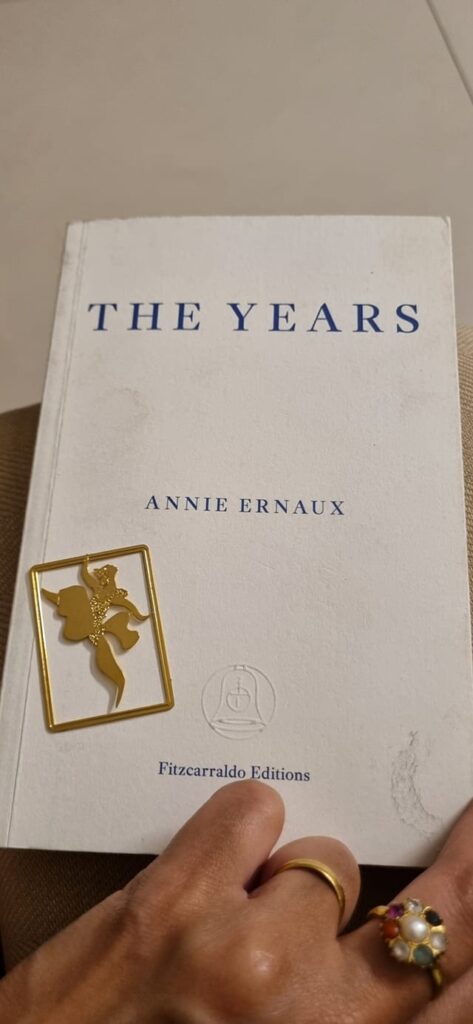
We reflected on our lives as women. We realized that We’d missed our share of freedom — sexual, creative, or any other kind enjoyed by men. We were as shattrteded by the suicide of Gabrielle Russier as by that of a long lost sister, and were enraged by the guile of Pompidou, who quoted a verse by Eluard that nobody understood to avoid saying what he really thought of the case. The Women’s Liberation Movement had arrived in the provinces. “La Torchon Brule” was on the newsstands. We read “The Female Eunuch” by Germaine Greer, “Sexual Politics” by Kate Millet, “Stifled Creation” by Suzanne Horer and Jeanne Socquet with the mkngled excitement and powerlessness one feels on discovering a truth about oneself in a book. Awakened from conjugal torpor, we sat on the ground beneath a poster that read “A woman without a man is like fish without a bicycle” and went back over our lives. We felt capable of cutting ourselves loose from husband and kids, and writing crudely. Once we were home again, our determination faded. Guilt welled up. We could no longer see how to liberate ourselves, how to go about it, or why we should. We convinced ourselves that our man was neither a phallocrat nor a macho. We were torn between discourses, between those that advocated equal rights for the sexes and attacked patriarchy, and those that promoted everything feminjne: periods, breast-feeding, and the making of leek soup. But for the first time, we envisaged our lives as a march towards freedom, which changes a great many things. A feeling common to women was in its way out, that of natural inferiority.
The Years by Annie Ernaux, translated by Tanya Leslie ( Fitzcarraldo Editions)
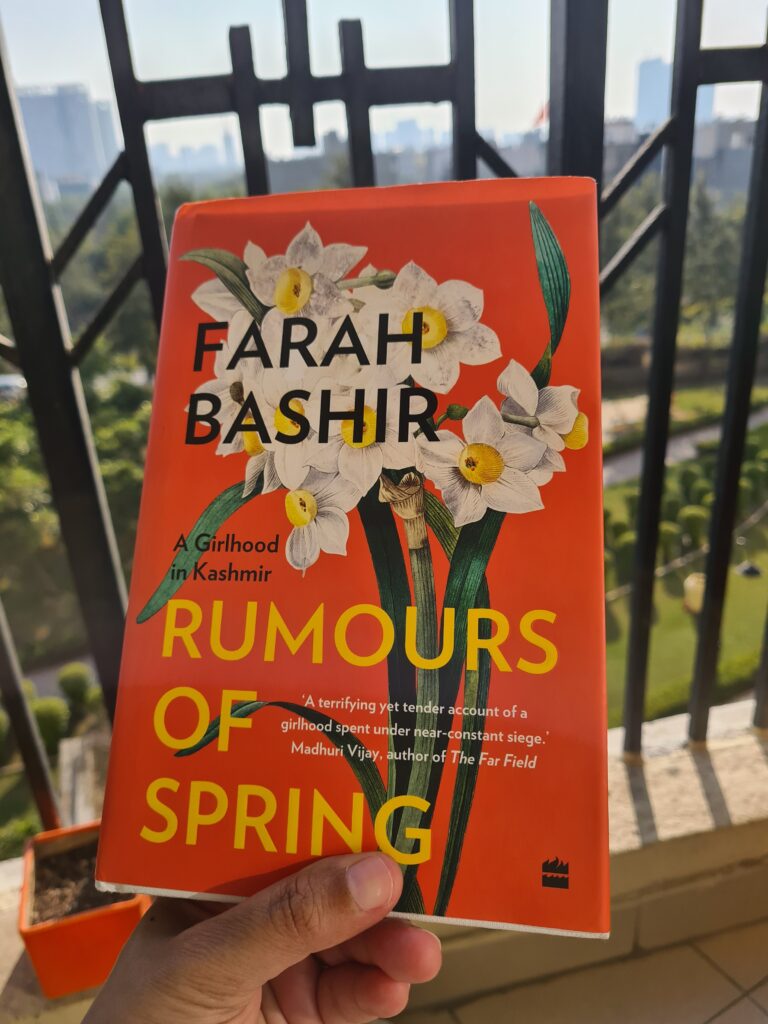
Farah Bashir’s memoirRumours of Spring: A Girlhood in Kashmir( Harper Collins India) is an extraordinary book. While keeping vigil by her grandmother’s body, the older Farah Bashir recounts her childhood memories of living under siege in Kashmir. These events are interspersed with stories that her grandmother told the young Farah.
I read Rumours of Spring a long time ago but there are some books that make it impossible to write about immediately. This is one of them. This book brought back memories of my trips to Kashmir. I was able to travel to the state with my father as he was a Customs & Central Excise officer and his beat included Jammu & Kashmir when he was posted as Chief Commissioner, Customs, Amritsar. We visited places in the state that were mostly inaccessible. Those trips were unforgettable. The stunning beauty of Kashmir are of course talked about but what really struck me in those trips were to see signs of conflict everywhere. For instance, the empty bottles and tin cans that were strung at regular intervals on barbed wire fencing. These could be around fields or properties or simply rolled up wire being used as barricades. The idea being that if anyone tried crossing these wires, there would be a clatter and a bang and the security forces on patrol would be alerted. The normalisation of this constant state of alert was unsettling. We would only visit the state for a few days at a time but I could never get over the fact that this was the way the locals lived 24×7. There have been many firsthand accounts of living under siege in Kashmir. It never fails to disturb. Farah Bashir’s book is a fine addition to the list. It is particularly unnerving to read it as she recounts much of what is in our living memory. At the same time, it brings back memories of other similar situations. For me, for example, it is witnessing the riots of 1984 in Delhi, after the assassination of the prime minister Indira Gandhi. Recalling the anxiety of my grandparents who had lived through Independence and the subsequent riots. So the moment, news broke, my grandmother sent my brother and me to buy provisions and stock up. My grandfather, N.K. Mukarji, who was a young ( and the last) ICS officer of the Punjab cadre in 1947, helping government teams manage the division of Punjab, was suddenly remembering incidents of 1947 that were eerily similar to 1984. Later, we were staying with our father in Shillong and we witnessed the flag marches the Army carried out and how society was brought to a standstill. Buying basic provisions became a feat to achieve. Much later, I recall watching the demolition of Babri Masjid on television on 6 Dec 1992, followed by the maha artis in Maharashtra and the rising communal tension in Delhi. Then of course, we have had many more incidents of violence that are too horrific to recount. Reading Farah Bashir’s book during the pandemic brought it all back in flurry. But it also made apparent the parallels between our pandemic way of living with that of life in a conflict zone. Without sounding callous, the difficulties in trying to manage daily life while constantly living with uncertainty and never too sure when systems will be brought to a grinding halt, makes the individual anxious. Yet, there are even more chilling parallels between what Farah Bashir witnessed as a child in Kashmir with Nazi Germany. For instance, security forces pulling out men from their home and making them assemble in large fields in an attempt to identify “militants”.
It was during one winter morning in 1990. Ramzan Kaak had gone out to buy bread but was sent back by the troops even before the announcement was made. The announcement, usually made twice, in Urdu and in sometimes Kashmiri, sounded more like a threat: ‘Apne gharoon se baahar niklaliyey. Koi aadmi ghar pe na paaya jaaye.’
Mother, Bobeh and I huddled in our living room, while Ramzan Kaak and Father left the house to be assembled in a large ground of a public school nearby, alongside all the other men from the neighbourhood. The morning passed in a daze, punctuated with the abrupt thuds of doors being slammed and the sound of steel utensils being flung about. Later, of course, these would become the all too familiar ‘crackdown noises’.
That morning we felt completely numb, unable to move around; we didn’t get any work done, nor speak to each other. ‘The trepidation of our turn being next induced a sickness. I felt completely nauseous. Towards afternoon, the troops walked into our courtyard. Mother and Bobeh turned paler upon seeing them. I too must have looked like them. I do remember feeling dizzy and light-headed.
Suddenly, the appearance of our frail neighbour, Ghaffur, added some confusion to the already tense situation. Why was he with them? Both Mother and Bobeh wore a quizzical expression upon seeing him.I too was thoroughly puzzled to see Ghaffur with the troops. But I didn’t dare to ask anyone anything. The expression on his face was unforgettable. He looked almost dead, like a body that was breathing. His face had ashedned, and his lips were taut and white.
After the troops walked nitou our kitchen wearing muddy boots, soiling everything, they flung open the cabinets. Upon discovering the trapdoor on the floor –the voggeh — they went berserk! They ran amok with suspicion, as if they’d unearthed a tunner to the other side of Kashmir, in Pakistan. Quickly, they broke into two batches: one group cordoned off the house from the outside in the courtyard and the other lot disappeared into the voggeh, into what they seemed to assume to be an imaginary escape tunnel. They did not expect it to be an ordinary floor of an ordinary home with ordinary things. They ventured into the ground floor vehemently, and because they couldn’t find anything there, they ransacked the gaan. Suspecting militants to be in hiding behind the gunny sacks, they poked the bayonets of their rifles into them. They slashed upon the large rice bags, callously unleashing rivers of grains on to the part-stone, part-mud storeroom floor. They scattered chunks of coal that were hoarded in large tin drums by overturning them. Perhaps it was the adrenaline from discovering the mysterious door that led them nowhere, or their hurt pride and disappointment for not having recovered any arms, ammunition or even militants from our home. When they left, they left behind nothing but misery that was pasted on to the floors and walls of our house. A misery that couldn’t be wiped away.
Since that first time, Mother remained stoic when the troops searched our house. Soon after they’d leave, she’d take stock of the destruction and then, break down. That afternoon, however, seeing our storage room turned upside-down, we succumbed to a deep despair after. To clean up after the crackdown wasn’t easy. While the scattered wooden logs could be picked up and stacked backinto tall columns, the task of separing bits of coal from rice grains brought me to tears of helplessness and frustration.
….
That day in 1990, when Father and Ramzan Kaak returned in the evening, we heaved a sigh of relief. Father didn’t speak much. Ramzan Kaak told us how the men were paraded in front of a Gypsy that had an informer sitting inside, whose job was to identify militants and militant suspects. The latter could be anybody. All of this would be routine in a few month. That day, as Father locked the house, he remarked onthe uselessness of bolts and doors. Even I had understood by then that their safety was by no means guaranteed and that just because the men had been assembled, there was no assurance that they’d return together or return at all.
Each time a house was searched and found ‘clean’ — that is, no arms or ammunition was recovered — a date was inscribed on the facade of the house, usually near the main gate. Our house, being in the heart of downtown, had accumulated nine such dates in less than four months. (p.96-99)
There are many more passages that I can quote but this long extract is sufficient. It gives a sense of the violence that Farah Bashir and rest of Kashmir faced on a daily basis. The disruption to normal life. Living in constant fear. Living in constant anxiety. Living with uncertainy; not knowing what will come next. Feeling nauseous. This is a neverending cycle that has not as yet come to an end. Decades later, on 29 Jan 2022, Farah Bashir said in a conversation organised by the Hyderabad Literature Festival that for the first time, the various aches and pains she had been experiencing were greatly reduced. The trauma of constantly living in fear had had its physical impact on the child and later adult but writing this book was therapeutic. It had literally helped ease some of her pain. Small mercies in otherwise bleak times.
Read Farah Bashir’s Rumours of Spring. It is unforgettable.
Tender Bar that is currently streaming on Amazon Prime is a wonderful adaptation of award-winning author, J. R. Moehringer’s memoir (2005) of the same name. It has been directed by George Clooney and has Ben Affleck acting in it. It is a wonderful film that shows the tender relationship between an uncle and a nephew, but also of the immediate clan and close circle of his uncle’s friends. Somehow the writer manages the fine balancing act between masculinity and tenderness without it becoming toxic. J. R. Moehringer’s mother is a single parent who returns to live with her parents and her brother. It is a full house at home. The mother is restless and despite living many years in it finds it hard to call it home whereas her son has no difficulty in doing so.
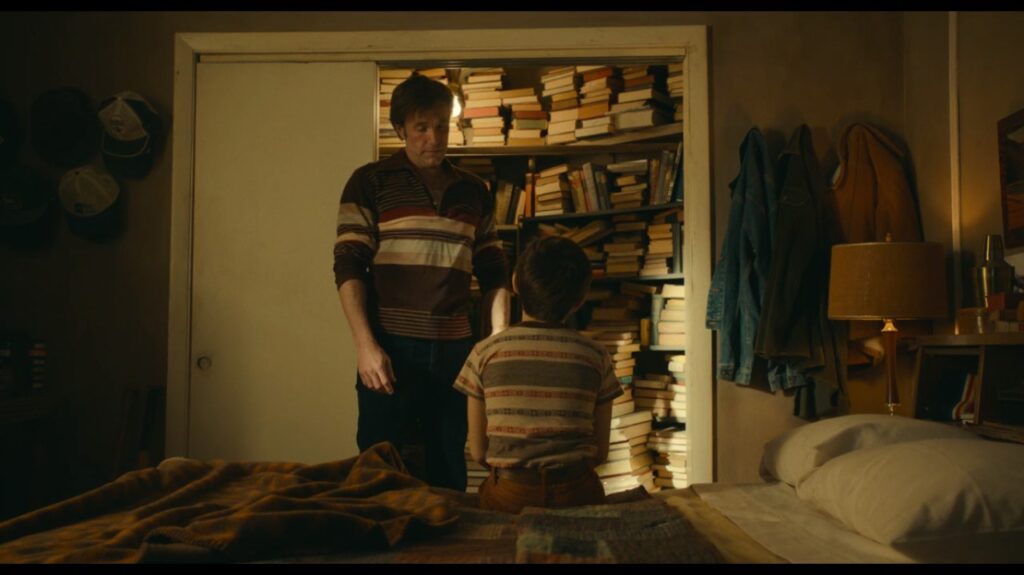
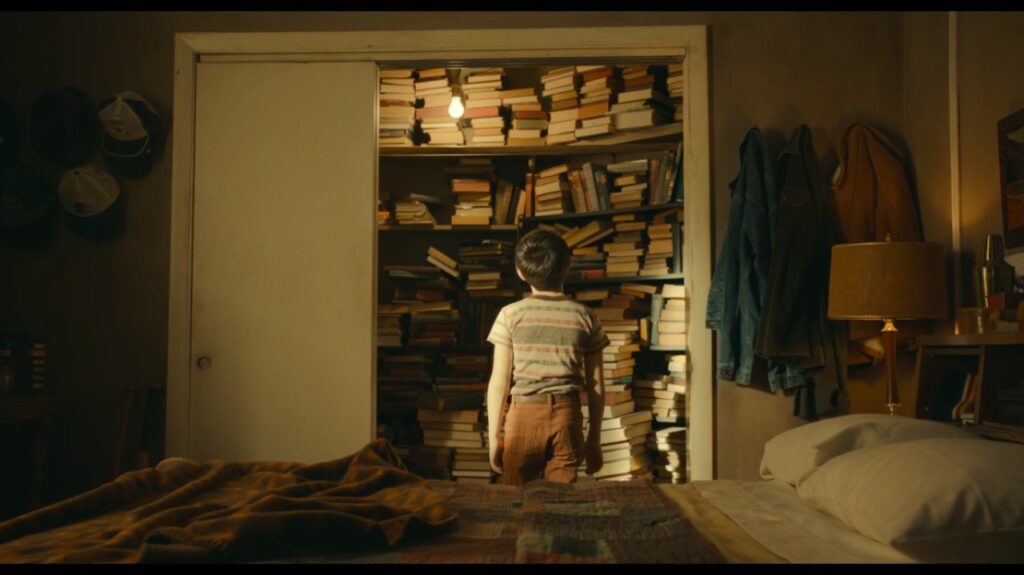
There are many scenes in the film that are worth discussing but my favourite scene is when the uncle, played brilliantly by Ben Affleck, recognises the talent his nephew has for writing. Uncle encourages nephew to read and does so by throwing open the cupboard that houses his book collection and simply says, “Read”. At no point does the uncle ever say to his nephew that this is inappropriate for you or is not at your reading level. Incredibly liberating! The reading/writing bug big bit the nephew. Ultimately, he got a place at full-sponsored seat at Yale University.
It is not a mushy film. Just about right in its tenor. No wonder Ben Affleck has been shortlisted for some awards such as the Screen Actors Guild. He has been nominated in the category: “Outstanding Performance by a Male Actor in a Supporting Role”.
J. R. Moehringer won the Pulitzer Prize (2000; shortlisted in 1998) for journalism and subsequently co-authored tennis star, Andre Agassi’s “Open: An Autobiography” ( 2009). He also ghostwrote Nike co-founder, Phil Knight’s “Shoe Dog” (2015). He has now been asked by Prince Harry, Duke of Sussex, to collaborate on the Duke’s forthcoming memoir that is to be published in late 2022.
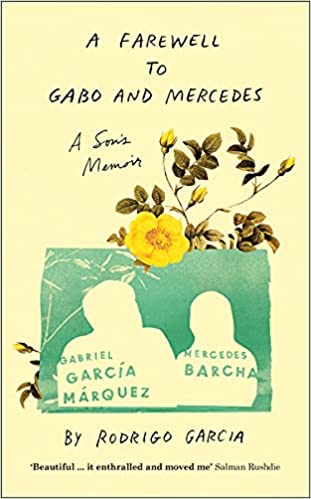
In March 2014, Gabriel Garcia Marquez came down with a cold. He was eighty-seven-years-old. His wife was not hopeful about him surviving and phoned her sons, based in Los Angeles and Paris, respectively, to tell them. Rodrigo Garcia reached Mexico City before his brother and realised that his father needed hospitalisation. It was then that he also discovered their mother’s resistance to admitting her husband to hospital as she did not think he would make it. Gabriel Garcia Marquez was diagnosed with pneumonia and in the course of medical investigations, cancerous patches on his lung and liver were also detected. The chances of recovery were bleak given his frailty and his ill-health. It was decided that the Nobel Prize winning author would be taken home and made comfortable. The doctors were not sure about how much time he had. It could range from a few weeks to a few months.
A Farewell to Gabo and Mercedes: A Son’s Memoir is by Rodrigo Garcia ( HarperVia). His son realised that this was the end game for his illustrious father and he should write about Gabriel Garcia Marquez’s final moments on earth.
Writing about the death of loved ones must be about as old as writing itself, and yet the inclination to do it instantly ties me up in knots. I am appalled that I am thinking of taking notes, ashamed as I take notes, disappointed in myself as I revise notes. What makes matters emotionally turbulent is the fact that my father is a famous person. Beneath the need to write may lurk the temptation to advance one’s own fame in the age of vulgarity. Perhaps it might be better to resist the call and to stay humble. Humility is, after all, my favorite form of vanity. But as with most writing, the subject matter chooses you, and so resistance could be futile.
Rodrigo Garcia chose to publish it after both his parents had passed away. “I know I will not publish this memoir until she is unable to read it.” His mother passed away in August 2020. Hence, the memoir has been published in 2021. Rodrigo Garcia is a filmmaker based in Los Angeles. He is a screenwriter and director. His theatrical films include Nine Lives, Albert Nobbs, and Last Days in the Desert, and he has directed episodes of Six Feet Under, The Sopranos, and the pilot of Big Love, for which he received an Emmy nomination. Obviously, his career has helped him hone his skills as a storyteller. Although nothing can prepare you to tell the story of your parent’s declining health and eventual death. To maintain a clear-eyed perspective on the events that occurred in quick succession from the time Gabriel Garcia Marquez fell seriously ill requires immense amounts of self-will and training as a skilled and sensitive narrator.
Standing near the foot of the bed, I look at him, diminished as he is, and I feel like both his son (his little son) and his father. I am acutely aware that I have a unique overview of his eighty-seven years. The beginning, the middle, and the end are all there in front of me, unfolding like an accordion book.
…
I fly to Los Angeles again to spend a few more days in the cutting room. My second night at home, I go to bed early, but after I turn out the lights I’m worried that the phone will ring in the middle of the night and scare the wits out of me. It does both. I hear my brother’s voice on the other end, sounding deliberately calm.
“Hey. He has a high fever. The doctor says you better come back.”
After I hang up, I book an early flight on my phone . . .
****
Later a gerontologist of about forty stops by to advise on end-stage care. (He is himself is in remission from lymphoma. He has advice for us on the last stages, vis-à-vis hydration and sedation.) …We listen in silence, like we’re watching a strange monologue in an experimental play. The ideas are intriguing and absurd. Practical, compassionate, murderous.
****
Yet, while preoccupied with his father and the arrangements it would take to organise home care, the author is able to spare a thought on the nurse:
The beauty of witnessing someone who is outstanding at what she does, in conjunction with the comfort brought about by the support of an empathetic health worker, makes her a compelling presence.
There are many instances in the memoir when he comments upon the staff busying themselves with their chores but it is never written as if there is a divide between “us” and “them”. He does it with great poise. There is an exquisite moment in the book when the staff come to pay their last respects Gabriel Garcia Marquez as he is laid out on his bed.
Rodrigo Garcia then goes on to describe the funeral arrangements followed by the memorial service. His mother had insisted that the cremation take place on the same day itself. There were chaotic scenes outside their home but they managed to conduct the funeral on time. It was a very private affair. Four days later the Mexican and Colombian presidents held a joint memorial service at Mexico City. Marquez had been born in Colombia but chose to spend more than fifty years of his life in Mexico City. It was a grand affair.
This beautiful memoir is peppered with references to his father’s craftsmanship as a writer. Memories come flooding back. One of these is a poignant episode the son recalls of his father appreciating songwriters and singers for their techniques.
My dad greatly admired and envied songwriters for their ability to say so much and so eloquently with so few words. While writing Love in the Time of Cholera, he submitted himself to a steady diet of Latin pop songs of love lost or unrequited. He said to me that the novel would be nowhere so melodramatic as many of those songs, but that he could learn much from them about the techniques with which they evoked feelings. He was never a snob about art forms and enjoyed the work of people as diverse as Béla Bartók and Richard Clayderman. He once walked by as I was watching Elton John playing his best songs on television, alone at the piano. My dad was only vaguely aware of him, but the music stopped him in his tracks, and he eventually sat down and watched all of it, enthralled. “Carajo, this guy is an incredible bolerista,” he said. A singer of boleros. It was very much like him to refer something back to his own culture. He was never intimidated by Eurocentric references that were common everywhere. He knew that great art could blossom in an apartment building in Kyoto or in a rural country in Mississippi, and he had the unwavering conviction that any remote and rickety corner of Latin America or the Caribbean could stand in powerfully for the human experience.
He was an omnivorous reader . . .
A Farewell to Gabo and Mercedes: A Son’s Memoir is a very touching tribute to a larger-than-life father who was venerated by millions around the world. But it is also an equally moving account of Gabriel Garcia Marquez’s wife, Mercedes. They had met when they were little children as ten and fourteen-year-olds. From the moment he met her, Marquez knew he would marry Mercedes. But she had her own space and identity and was respected for it. So, when the Mexican president referred to her at the memorial service as “the widow”, she was infuriated, saying rightly so, “I have an identity. I am not just the widow.”
Read the book. Weep, but also celebrate life as Rodrigo Garcia does.
Sonora Jha’s How to Raise a Feminist Son: A Memoir and Manifesto is what it sets out to be — to raise a feminist son ( Penguin Randhom House India). She recounts those essential parts of her life that can be justifiably linked to her being a feminist / feminist awakening. From the incident of bathing on the railway platform in a tiny bathing area constructed for male pilgrims to analysing the violence she witnessed or experienced first-hand at home. The desire to nurture a child with her refreshing outlook on life but always encountering patriarchal structures. Whether it was in her then-husband’s wish to relocate to Singapore for better career prospects without any thought to Sonora’s flourishing career as a journalist in Bangalore. She quit it. Became a full-time mother who loved her son dearly but was surrounded by baby babble 24×7, unlike her husband who worked in an office or later in the evening attended social events whose invitations were not necessarily extended to Sonora. Soon, with her husband’s encouragement she applied for a doctorate programme in the United States, assuming that this would be the first step in their move to the country. Instead, after a horrific car accident that left her incapacitated for months, confined to a wheelchair with a little boy, her husband paid her a visit but declared that he preferred living on in Singapore. Through it all, Sonora redefined her life and understanding of what it takes to bring up a son who would not be like the men in her life — violent men, sexual predators, hostile men, racist men, misogynist men etc. It seemed like minefield as systemic patriarchy reared its ugly head everywhere.
She spells out the hideous ways in which men perpetrate trouble upon women. Whether it is the nonchalant manner in which her ex-husband chose not to move to USA with her, the violence of all the other men she encountered. Much of this is never discussed in decent middle-class houses as if it is an internal matter and no one should be privy to it. What is truly maddening is how much middle-class women suffer because of the socio-economic space they occupy; it is presumed that all is well with them and their lives. Many times, it is not. It is worse than a golden cage. It is precisely why books like this are essential and add to the existing body of women’s literature. It is in the documentation of these tiny details and sharing of experiences that hopefully more and more women will be empowered. Perhaps even men who witness women in their lives being abused are equally emboldened to take action. Who knows? More and more it is imperative that stories need to be shared and not doctored. It is critical to share.
Slowly, her recovery period from the car accident that left her with a crushed ankle and many other injuries, coincided with her discovery that it is not demeaning in any manner for a strong, independent woman like herself to seek assistance from others. Steadily she created a sisterhood, a well spring, a nurturing ring, that enabled her to heal and grow. It was also a web of strength and power that stepped in to look after her son, even if it meant admonishing him without hurting his feelings. These tiny, tiny events added up to make Sonora what she is today — a confident, well-loved, highly respected academic and mother. She never hides the importance of balancing her professional and personal lives.
She brought up her son in this positive environment even though at times it was challenging financially and emotionally. She made mistakes that she is quick to admit such as her bad second marriage with a white, racist man. In her inimitable style of being generous and seeing positive in others, despite being at the receiving end of much brutality, Sonora chose to date and ultimately, marry this man. But his inability to understand or even comprehend the need to be sensitive to others, especially to people of colour, confirmed his outlook as a supremely privileged white man. When he is unable to understand her misery at racist incidents, and she quits the marriage, even though it was not yet a year. This happened close on the heels of her son trying to enter their home and having the police called upon him by the neighbours who could not understand why an Asian boy was trying to enter the home through a window. (He had forgotten the front door keys.) To the police who came and the neighbour, they could only see a burglar and not a resident as this was a white man’s house. The prejudice that exists inherently in society is terrifying. Something that Sonora and her son could perceive but not her white husband. This was another event in her life that made her resolve stronger to have a son who is sensitive and understanding towards others, rather than entitled. The book ends with an adorable account of an exchange between Gibran and his maternal grandmother, Nani. Sonora’s mother is in denial regarding stories about her daughter having been molested while she was growing up in India. Her mother is convinced that Sonora is lying and trots these stories out as attention-seeking tactics. Listening to the heated conversation, Gibran asks his Nani gently to believe Sonora. When his Nani refuses, Gibran points out wisely that she may consider why Sonora never told her mother, perhaps the fact that social structures are give precedence to boys as opposed to girls. A fact that even Gibran has had first-hand experience of as he is “treated like a god”. He reasons with his Nani that perhaps his mother, Sonora, found it hard to share the truth with her own mother for precisely this reason – she would not be believed. He pleads with his Nani to believe Sonora at least once.
She outlines her definition of feminism. It consists of compassion, empathy and kind people. It is labelled as feminism as it focuses upon half of humanity – the female condition, It is also alert to misogyny. Feminism is about love. She advocates strongly that boys are taught this way of loving too. It will grow and take new forms. This is a pertinent point that she raises as it also addresses the challenges women feel about being labelled as a feminist or not, even though everything in their action points to being a feminist.
Sonora has written about a hard subject. The manner in which she has negotiated the personal spaces and extrapolated learnings to share with the world is truly admirable. The pain she went through while writing this book is unimaginable. It is hard to define How to Raise a Feminist Son. No wonder the subtitle of the book is “a memoir and manifesto”. It has a box of instructions/ exercises at the end of every chapter and a list of resources in the appendix.
It will become classic reference material in gender studies and other disciplines. It helps answer many questions as well as encourages readers to introspect. The manual-like element in the book may not appeal to gender specialists but it will prove to be a handy guide to many who are keen to explore these areas but too shy to ask. This book is written with such an assured confidence despite the violence and abuse Sonora has faced from men within her inner circle. There is almost a motivational quality to the book. She includes a lot of PoC narratives and other intersectionalities. It will encourage others to speak up for themselves and focus upon raising the next generation of more empathetic and sensitive boys. This is irrespective of whatever intersectionality they may inhabit. It cuts across cultures and races and formulates a brand of feminism that borrows heavily from the feminist literary canons in India and America. She focuses upon creating her own feminist village, a sisterhood, a collective, that saw her through some tough years. It is interesting that Sonora focuses on this aspect as many strong women are encouraged to be a part of a sisterhood but at the same time fend for themselves. Rarely do women ask help of each other. It is their one weakness. It is not pride but a form of self-sufficiency and self-preservation to prove to society that as single mothers or independent women, they can survive. It is extremely brave of Sonora to document the physical and sexual abuse that she has faced.
I have truly liked this book. Read it. It speaks to everyone.
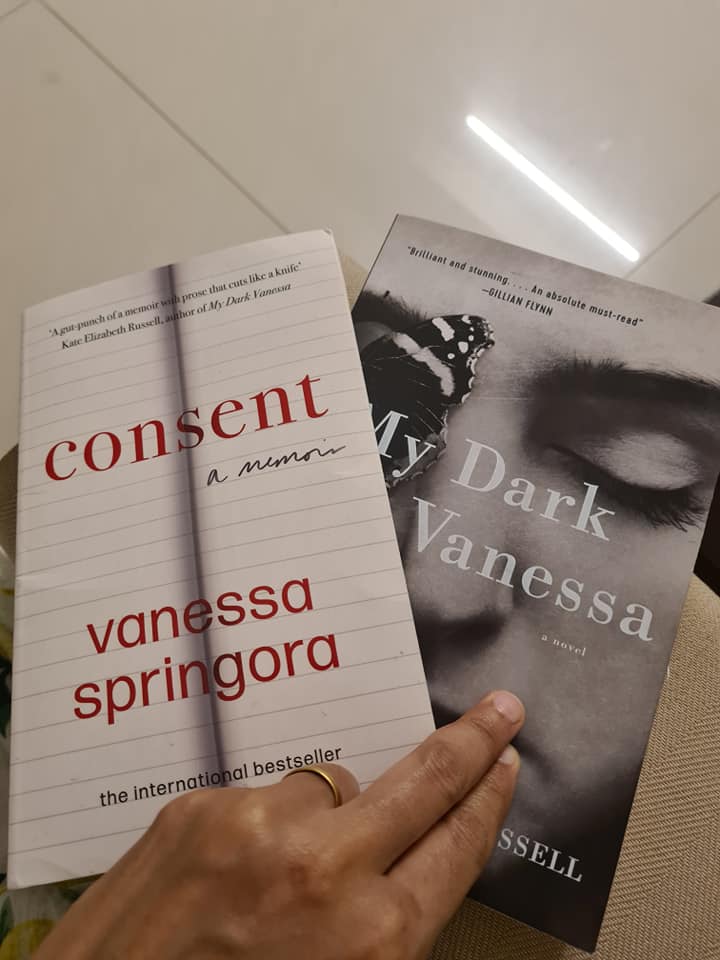
I read two books in quick succession — Consent and My Dark Vanessa ( HarperCollins). Both deal with the same subject. Grooming of a young school girl by a much older man, a writer / school teacher. The difference being that “Consent” is a true account by Vanessa Springora about her being groomed by French literary giant Gabriel Matzneff. It is a horrifying account of a 14-year-old girl groomed by a man who was at the time fifty years old. It is sickening. Springora, the head of the Julliard publishing house, met Matzneff at a dinner with her mother. ( https://www.theguardian.com/…/french-publishing-boss…) She was going through a troubled childhood as her parents were divorcing. Springora began a relationship with Matzneff but despite breaking it off two years later, she was not rid of the man for the next few decades. He pursued her. He stalked her. To the extent he wrote letters to her bosses in the publishing publishing she worked in. Ultimately, the Me Too movement happened, giving her the space to write her account of the events. Consent has been translated by Natasha Lehrer.
It is a memoir that flits between the perspective of the 14yo school girl and the 47yo Springora. It is disturbing. The school girl participates in the relationship with a much older man, but the adult Vanessa questions some of the acts/moments. She is able to see through the sexual exploitation and misogyny of the male writer and the protection he got from his social circle. It is incomprehensible to her. Consent is minimalistic. It does not delve into too many gory details but what the author chooses to share are emotionally shattering. It is inexplicable why this man was protected so well by the French establishment. If anyone had dared to look close enough, the evidence was apparent in the “illustrious” literary career where Matzneff published books that were thinly veiled accounts of his paedophilic acts, letters with his under-age mistresses and his regular visits to the Philippines to sexually exploit boys as young as eleven years old. Yet, Springora too only found the courage to reveal her dark secret after the Me Too movement became popular. She was relieved when she showed her mother this manuscript, who upon reading it said, “Don’t change a thing. This is your story.”
Towards the conclusion of the memoir, she writes:
I spent a long time thinking about the breach or confidentiality, particularly on a legal area that is otherwise strictly controlled, and I could only come up with one explanation. If it is illegal for an adult to have a sexual relationship with a minor who is under the age of fifteen, why is it tolerated when it is perpetrated by a representative of the artistic elite — a photographer, writer, filmmaker, or painter? It seems that an artist is of a separate caste, a being with superior virtues granted the ultimate authorization, in return for which he is required only to create an original and subversive piece of work. A sort of aristocrat in possession of exceptional privileges before whom we, in a state of blind stupefaction, suspend all judgement.
Were any other person to publish on social media a description of having sex with a child in the Philippines or brag about his collection of fourteen-year-old mistresses, he would find himself dealing with the police and be instantly considered a criminal.
Apart from artists, we have witnessed only Catholic priests being bestowed such a level of impunity.
Does literature really excuse everything?
It is a question that the reader is left asking with My Dark Vanessa. Nearly twenty years in the making and endorsed by Stephen King, it too explores the grooming of a young school girl by her English teacher. King calls it is a “hard story to read” and it is. Maybe because Kate Russell’s imagination is very detailed and sometimes gut-wrenching. It is torture to read this story. Initially I stopped reading it after a few pages but then managed to resume reading it after having finished reading Consent.
Somehow My Dark Vanessa comes across as a brilliantly crafted story but it is not as easy to read as Consent. Every despicable encounter/event in “Consent” is meticulously documented but it is shocking to read for the complicity of the French elite in permitting the writer to flourish. Not only did his books sell well, but he was lauded with honours, practically given an expense account by his publishers and the French state. It is astonishing. Whereas My Dark Vanessa reads like fiction although the events described in it are plausible. It is fiction but it sometimes seems to stem from an overactive imagination. The distinction is real. It is unsurprising that My Dark Vanessa has been shortlisted for the Dylan Thomas Prize 2021.
Interestingly Vanessa Springora’s memoir Consent has been endorsed by Kate Elizabeth Russell, My Dark Vanessa, as “A gut-punch of a memoir with prose that cuts like a knife.”
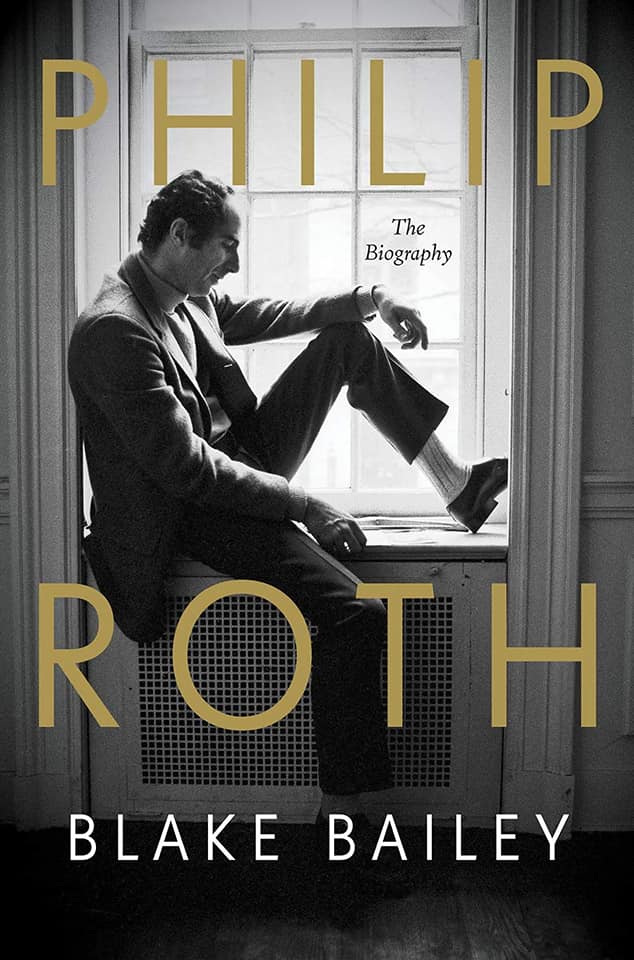
Currently the controversy about Blake Bailey, the biographer of Philip Roth, is raging in the world of Anglo-American publishing. Take for instance this article published in the Slate, called “Mr Bailey’s Class“. It eerily parallels the events described in My Dark Vanessa and Lisa Taddeo’s nonfiction Three Women, where the only girl who agreed to be identified by her real name was Maggie. She spoke about her grooming by her teacher and later taking him to court. It is hard at such moments to distinguish between what is real and what is fiction.
These kinds of stories are not going away in a hurry. There are many, many more. Predatory men and women exist. It is a fact. Children are vulnerable. These books may only focus upon young girls but there is no denying that boys too are victimised.There is no telling how much longer will these stories have to be constantly told for there to be some positive change in the attitude of individuals and society. But for now, read these stories.
In 2019, en route to attending the Jaipur Literature Festival, Nikesh Shukla lost his necklace at Heathrow Airport. It was very precious as it contained some of his mother’s ashes. He was extremely distraught. I happened to meet him as well and his grief was palpable. I will not forget that shattered look of his. He was numb. He put out a tweet announcing the loss of his locket. The power of social media being what it is, after more than 10,000 retweets, the necklace was discovered. At least that is what this article states: https://www.indiatoday.in/…/author-loses-necklace-with…
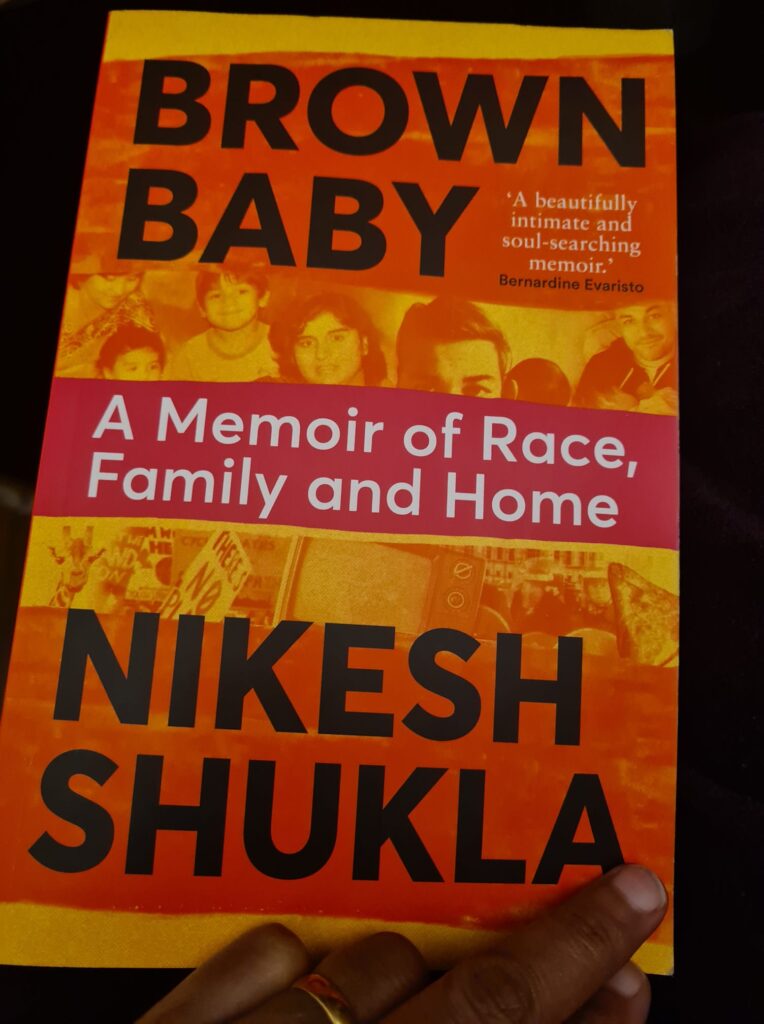
Brown Baby is Nikesh Shukla’s memoir that’s opening line refers to his mother’s death. It is a powerful, all-consuming moment in his life and he forever returns to it in his book. The loss of a dear one, especially a parent, is devastating. Shukla’s mother passed away due to lung cancer and once the death knell had been sounded by the oncologist, the family was heartbroken. A grief and despair that took ages and ages to get back their lives to some semblance of normalcy. The structure of Brown Baby is ostensibly a conversation with his elder daughter, Ganga, who seems to have been born after his mother died but he also uses the book as a reason to talk about racism in UK in minute detail. It is an interesting space for him to explore as he realises the immense responsibility that comes with becoming a parent. How much does one teach the munchkins, how do they navigate their world, how do they straddle worlds etc? He reminiscences how his mother brought up his sisters and him — children of Asian origin growing up in a white country. How they learned to preserve their culture ( food forming a large part of their life) and yet learned how to survive racist slurs and develop identities of their own. While his anger in the first half of the book is understandable and how much of it defines him as an author, publisher and parent today, some of it is also self-defeating. His arguments for being a minority because of his skin colour in a country where white is privileged are based on firsthand experience and other facts he has collected, but he makes the same majoritarian mistake that he is accusing the whites of not recognising the variety of cultures that now exist in modern UK. For example, he falls into the same trap by eliding the definition of India being linked to Hinduism whereas Hindus constitute the majority. He says, “In India, the Ganges river is worshipped as representative of the goddess Ganga.” A true statement that would have read as a more powerful statement if he had clarified by adding that “In India, the Ganges river is worshipped [by the Hindus]…”. In this day and age, when everyone is super-sensitive about identity and cultures, it stands to reason that someone like Nikesh Shukla who is very influential globally in the world of letters would be a little more careful in the choice of his words. He has a responsibility not only towards his daughter who he is introducing to their Indian roots, but also to his multi-cultural readers and the Indian diaspora. His word would carry more weight if he recognised these finer distinctions. In India, all of us are different shades of brown, but thrive in a syncretic and casteist culture, so it is not as easy to make these distinctions between white and brown, but these different identities exist. Yet, we manage to live.
The second half of Brown Baby is far calmer and easier to read. He discusses in detail what it means to talk in Hindi, to be a Hindu in Britain, be an Asian etc. There is a fascinating anecdote he shares about submitting a manuscript to a literary agent who dismisses it for not being authentic Asian. Understandably it makes Shukla hopping mad. Anyone would be under such circumstances. Fortunately he puts this anger to good use and has established The Good Literary Agency with Julia Kingsford.
Inspired by a desire to increase opportunities for representation for all writers under-represented in mainstream publishing, we are focused on discovering, developing and launching the careers of writers of colour, disability, working class, LGBTQ+ and anyone who feels their story is not being told in the mainstream.
It also explains this passage in the concluding pages of Brown Baby:
What does it mean to be British when conversations around the subject have their core in protecting Britain’s whiteness? When the multiculturalism ‘debate’, if you wish to call it such doesn’t scratch any deeper than ‘saris, steel bands and samosas’. Where debate events by sixth form debate clubs like the Institue of Ideas present multiculturalism as a threat to the West, as something worth of debate, as if we never got past that basic point, as if the only conversation we can have about immigration and the place of people of colour in society is about their inherent threat to Western values, rather than how we come to a decision about what an inclusive Britishness looks like.
Nikesh Shukla’s heart is in the right place. He knows how to channel his anger that wells up due to the injustice and discrimination he has either faced or witnessed. He wishes to correct some of these social ills by ensuring that his daughters generation learns to be proud of their identities. A spirit his mother imbued him with as well. At the same time by speaking clearly on these issues and offering an inclusive and diverse publishing platform to others, he hopes to create enough of a difference in the mainstream that will enable everyone to be recognised as equals, irrespective of colour, religion, sexuality etc. The mantra in his memoir seems to be that it is imperative everyone learns to be humane to others. This sensitive understanding needs to prevail. It is only then racist/casteist/communal attitudes will be tackled. Otherwise they will continue to exist for generations.
How does one write about a book that has been published to mark the author’s centenary? A book that is promoted as the last will and testament of a figure who is giant in contemporary American cultural history. A man who is a poet, a bookseller, a literary star and iconic publisher whose circle of friends included the Beat poets etc. A man who exhibits a joi de vivre for life despite having had a complicated childhood where he was shunted from family to family as his own mother was incapable of looking after him. Lawrence Ferlinghetti says he writes about “my lonely self and the only plot of this book of my life being my constant aging”. It is an account of an extraordinary life. His sharply perceptive comments on the past and the present are a pleasure to read. It begins from the title itself that is a play on the name of the bomb dropped on Hiroshima by the Americans on 6 August 1945 — “Little Boy”! Ferlinghetti’s presence in the American literary scene is no less explosive. He has certainly left his mark with his association with the Beat Poets and the City Lights Bookstore, San Francisco, USA.
The format of the book is mindblowing. It is a single paragraph with sentence breaks occurring when the capital letters appear as they should at the beginning of a grammatically correct sentence. Otherwise the only way of recognising a break in the story is by reading out the text aloud as if it were poetry and the pauses are where the periods should exist but do not. There is a very strong rhythm that is in step with the episodes narrated. The bridges in the narratives happen with his commentary on his own life. There is no other way if explaining it. But there is a refreshing bold experimentation in the literary form that many of the younger writers can learn from a master like Ferlinghetti.
Maya Shanbag Lang’s memoir What We Carry is an extraordinarily powerful memoir about looking after her mother. Dr Shanbag, Maya’s mother, was a doctor and a fiercely independent woman who always was in charge of her life. She was a very respected doctor in her professional circles. Her outstanding characteristic was that she lived life on her own terms. So much so, she decided when she would quit her marriage or take on a gruelling job at a hospital as it ensured her a pension. Maya describes her mother as being miserly with her money and scrimping and saving all the time. It is not as if Maya and her brother were in want of anything, their mother ensured that her children were well provided for. But it is when her mother begins to show signs of forgetfulness, lose alarming amounts of weight in a very short period of time, have mood swings etc that her children decide to have her medically evaluated. At the consultant’s room in a particularly lucid moment, Dr Shanbhag surprises everyone by acknowledging her dementia. Yet, as the doctor advises that the decline will happen and their mother will no longer able to live alone. She needs supervision and caregiving. This is when Maya decides to step in and take care of her mother. She moves her lock, stock and barrel into her own home. She merely informs her husband via a text message that she is bringing her mother home to live with them. He is so wonderfully accepting of his wife’s decision. While juggling her relatively new daughter, now her mother and her own professional commitments as a writer, Maya has her hands more than full. This memoir is about that one intense year of trying to manage everything singlehandedly and be on top of things. Yet at the same time Maya is perceptive enough to recognise the different stages of caregiving, the spiralling downwards of the patient and the transformation it wrought upon the entire family unit with a heartwarming scene of even the young granddaughter recognising her grandmother’s frailty and holding her hand. While combing through her mother’s papers, Maya discovers that her mother had the astute foresight to invest in an expensive insurance scheme that permitted her coverage indefinitely in one of the plushest old age homes. Maya was astonished and relieved to discover this fact but she reveals this with such grace and dignity in the memoir. Moving her mother to the home is done out of pure love as Maya chooses a place that is not too far from her own home. It also has all the amenities required for old age care but does not traumatise the patient with its forbidding interiors. On the contrary, it is warm and welcoming. Her mother takes to it happily.
You don’t have to be a caregiver yourself to appreciate this gem of a book. But if you are, it is overwhelming to read for its perceptiveness — the kindness it requires to look after a loved one especially a parent, the sharing of one’s grief at witnessing the deterioration of the person as they disappear into a fog from which there is no coming back, sharing also the frustration that relentless caregiving brings with it and most certainly the exhaustion that is never ending. Maya discovers her stress busting moments are frequenting the gym. It helps at times for primary caregivers to look the other way and indulge in a bit of self-presevation and self-care.
As Maya discovers caregiving for the two bookends of life can be brutal but it has its rewarding moments too. It is a very moving account of three generations of her family. It is played out in innumerable homes every day. It is the circle of life.
The Museum Of Whales You Will Never See by A. Kendra Greene is an extraordinary book. It is going to become one of those books that will constantly sell and continue to mesmerise readers by occupying that magical space between reality and folklore. On the face of it, the book is a travelogue by an essayist, printer and maker of artist’s books. Greene travels to Iceland to visit some of the 265 museums and public collections that exist in a nation of 330,000 people. These are astonishing collections ranging from.the phallic to rocks. It is impossible to succinctly sum up what this book contains except to say that once done reading this book slowly, it is a satisfying read. Greene does a phenomenal job in promoting Iceland by delving into its history through the various collections browses through. In recent years, it has become fashionable to tell histories through “a object” as if that one object can symbolise a moment in time and culture. In many case by decontextualising the object and focussing upon it, scrubs away layers and layers of history that actually enrich the experience of appreciating the objet d’art. This is exactly what Greene happily undoes in this stupendous book by introducing the reader to various art forms or those that can be called and valued as art by the locals, but the true value of the objects emerges from the interactions of the tourists and locals. Greene also uses different stories as a springboard to go back in time to introduce readers to the vastly rich Icelandic cultural heritage. A past that has not been formed by religious considerations alone but by socio-economic concerns such as trade and the very particular glacial topography. She weaves it all together superbly with the abundant folklore. So much so that it does not seem unusual to move seamlessly between the real and imagined realms. Even the long book title that does hint at the magic that resides within the pages does not prepare the reader sufficiently for the beauteous prose and very fulfilling reading experience.