migrants Posts

Interview with historian and editor Chandana Dey

For Moneycontrol, I interviewed Chandana Dey on publishing her Russian/Lithuanian Jewish grandmother’s memoir — Kotia to Ketaki: At Home Away from Home. It is published by Writers Workshop.

Interview with historian and editor Chandana Dey

Chandana Dey studied Modern Indian History at the Jawaharlal Nehru University, Delhi and
International Affairs at the School of International Studies (SAIS), Washington D.C. She has recently published her Russian/Lithuanian Jewish grandmother’s memoir — Kotia to Ketaki: At Home Away from Home. It is published by Writers Workshop India. In fact, Chandana Dey more or less, co-authored the publication by adding a substantial afterword to the original memoir entitled My Life. Ketaki Sarkar was born Kotia Jonas to a middle-class family in Moscow in 1907. She lived through the Russian Revolution, famine and the civil war. The family moved to Switzerland in 1921. Kotya met her husband, Nitai De Sarkar, a medical student. They married in 1930 and came to India in 1934. Kotia learnt Bengali, always wore a sari and made India her home. On one of their visits to Santiniketan, Rabindranath Tagore bestowed the name, Ketaki, on Kotia Jonas. This is the name she retained for the rest of her life. Ketaki made Santiniketan her home and died at the age of ninety-one.  Kotia to Ketaki is a slim book but packed with detail – by both grandmother and granddaughter, stretching across time. Truly worth reading!

Here is the interview conducted with Chandana Dey conducted via email.

  1. When and why did your grandmother, Ketaki Sarkar nee Kotia Jonas write this Memoir? Was it all from memory or did she consult any living relatives at the time?

My grandmother has dated the memoir as 1972. My mother typed the manuscript on her portable typewriter. I would imagine that my Dida got the time for reflection and thought after 1971. She retired from the Alliance Francaise and came to live in Santiniketan, in her home, ‘Akanda’ permanently. Before this, she used to visit Santiniketan only on holidays or occasional weekends. My family members who had heard stories of her childhood in Russia kept urging Dida to write her memoir. I don’t think she consulted any family members, although she was in regular touch with her sister, Tina. When I started the research for the book, no one in the extended family knew that such a document existed. The only people who had read the memoir were people in Santiniketan whom my grandmother was close to — among these were Kshitis Ray, (Teacher of English in Patha Bhavan and Tagore researcher), Rani Chanda (artist and Freedom Fighter) and Uma Das Gupta (foremost scholar of the history of Santiniketan and Sriniketan). Part of the reason for not passing around the Memoir much was partly my grandmother’s own diffidence and the fact that the Jonas family members were not comfortable in English. This discomfort with English also affected many potential readers in Santiniketan in my grandmother’s circle.

  • The memoir reads swimmingly well for a modern reader, even if a little sparse on the historical details. Did you print it in its entirety or is this an abridged version?

It has recently come to my attention that there may have been an original version of the memoir that was written in French. I have never seen such a document. From the 1970s, family members heard of the memoir and each family member was given a typed copy of My Life. This is the entire text that I was given by my mother. I put it and the photographs my mother gave me in a small black suitcase. I think the genesis of Kotia to Ketaki was in my mind for the past 40 years. However, as all precious things are stored away, so was the black bag! When I went to retrieve the contents, I found the black bag empty. My late aunt came to my rescue. As my cousin and I went through her things, we found the copy of My Life. I immediately scanned the single copy and sent a copy to each living family member.

Unfortunately, the memoir ends in 1946. I think we did not pester my grandmother sufficiently to compel her to write about her remaining life history. It was a fascinating one. She was the sole breadwinner of the family. She worked in multiple jobs and made enough money to send my mother to Europe for her higher studies. She also built three houses. I really regret not recording her life and bringing out a companion volume. I also regret not asking her about the memoir in sufficient detail.

  • Your grandmother was a Lithuanian Jew who had been born and brought up in Russia before and after the Russian Revolution and in parts in Switzerland and France. Her memoir observes a smoothish transition for her to living in British India, especially in Shantiniketan; to the extent she learned Bengali so as to speak to family members. How did she assimilate in the Bengali Bhadra society? Did she have to forego her Judaism?

My grandmother spoke Bangla fluently. She did not manage to learn the language to be able to read or write in Bangla. But she used to listen to poetry, would attend all the functions in the Ashrama. Both my uncle and mother studied in Patha Bhavan and Bengali was spoken at home. My grandparents, however, spoke in French with each other. Perhaps it was my grandfather’s support that enabled such a smooth transition into Bengali society. The story goes thus: once they were settled in Calcutta, Dadu said to Dida, ‘Come, let me take you somewhere you will feel at home’- and this was Santiniketan — where there were many Bengalis married to foreigners. Besides, Rabindranth Tagore was almost singlehandedly responsible for trying to turn Santiniketan into a cosmopolitan place, while retaining its fundamentally Bengali ethos. Yet, it continues to be a mystery as to how Dida adjusted so well to Dadu’s family — a joint family that was extremely hierarchical and patriarchal. My grandmother’s mother-in-law was known to be a stern figure and extremely harsh with her daughters in law. My grandmother became her favourite daughter-in-law — and was given privileges, unheard of at that time. This remains a mystery to me and to everyone else.

A word on the Judaism is required here: my grandmother never had any Jewish artefacts in her home. Not even a menorah. The first menorah was one that my mother’s Jewish friend presented to her during their stay in the US. Nor did my grandmother ever step into a synagogue. Yet, the idea of Israel was very important to her since she felt that the Jews deserved a homeland after the Holocaust. This was a reason for perpetual strife in the family since my late brother was a vehement supporter of the Palestinian cause. The ‘Russianness’ revealed itself through a love of literature, music, language. She never taught Russian but never forgot the language. It was a great help to me when I started learning languages. I think I chose French and Russian so as to be able to speak to Dida.

  • Depending on the audience they are addressing, women tend to bifurcate their narratives for private or public consumption. You knew Ketaki Sarkar. Do you think her memoir is true to her personality, the person you knew, or did she skip information in writing that she may have told you verbally.

Interesting question. The memoir was written originally for her children — Maya and Nandan. In fact the memoir is addressed to them. Once written, my uncle and my mother persuaded my grandmother that it should be published. Initially reluctant, my grandmother acceded to their wishes. Dida was always very conscious of the lack of educational foundation in her growing years. She felt that she was self-taught to a large degree. In Santiniketan, she was surrounded by literati. But I think she held her own even in these circles. ‘Kotia Mashi’ was much sought after and she remained close to her friends and their children and grandchildren. Santiniketan is still a very small place where most people know each other. It would be natural therefore for Dida to eschew anything critical about the people she met. When she wrote the memoir, the characters in the narrative were all living. Besides, the memoir is a narrative where she looks back forty years. (She is writing in 1970 about what happened in 1930.). She is taking a look at her previous self.  

  • Why did your grandmother’s family move to Switzerland? Were conditions conducive for a Russian/Lithuanian Jewish family to relocate to the fairly newly established country, Switzerland (established 1874)? Did the internal passport issued by the Lithuanian authorities play a key role or was it linked to the Bolshevik Revolution and the ‘threat of communism’?

My great grandfather, David Jonas, had purchased a piece of land in a place called Richielien, near the Lac Leman. Doctors in Moscow had suggested he go and take rest somewhere and since the family traveled widely, he chose Switzerland. This was around 1912. By 1914, the Swiss doctors gave David a clean bill of health and the family returned to Moscow. After the Russian Revolution, famine and civil war, David was keen to leave Russia. This was only possible because of the internal passport, issued by the Ober-Ost government. A large part of Lithuania was then under German rule.  If David had been born in Moscow, it would have been impossible for the family to leave Russia after the Revolution. David’s sister, Sonya,  lived in Lithuania. Sonya and her husband, Dr Frumkin, helped David get the Lithuanian passports. During my research, a Lithuanian researcher, Elena Borik, found proof of my grandmother’s family’s passports in the Lithuanian archives. My grandmother has written about the large Russian émigré community in Switzerland at the time the Jonas family lived there.

  • What was your Bengali grandfather doing in Geneva when he met Ketaki at a student dance before they moved to Orsieres as a married couple? Or to put it another way, was Geneva a regular landing spot for Indian/Bengali students going overseas to study and work?

My grandfather was studying medicine at the University of Geneva. He had first tried his luck in Paris (where there were more Indian students) and then moved to Geneva. He studied French and even wrote his thesis in French. Some Swiss friends located his thesis in the University of Geneva archives. This Swiss degree was not really recognized as a proper degree when my grandfather returned to India. He struggled to land a proper job and did not manage to have a very successful practice either. My grandfather came from the Amrita Bazar family. The family consisted of staunch nationalists. My grandfather did not want to go and study in a colonial setting. He therefore chose France, then Switzerland. There were many Indian students in Britain. This was the most popular choice and there was no need to learn a foreign language here.

  • Your grandmother and you make references to the Yonas family being related to Eliezer Ben Yehuda (ne Perlman), the founder of the modern Hebrew language. How did you verify your grandmother’s account?

My grandmother spoke often of Eliezer Ben Yehuda. When my parents visited Israel (my father was then in the World Bank, therefore travel was possible), they met Dola BenYehuda, Eliezer’s daughter by his second marriage. (Eliezer Ben Yehuda would marry two of the Jonas sisters, first the eldest Devorah, then the youngest, Pola). Dola presented my mother with a copy of Robert St. John’s book, The Tongue of the Prophets: the Story of Eliezer Ben Yehuda. The Ben Yehuda family considered this the authoritative account of their illustrious forefather. I corroborated the account by delving further into the Ben Yehuda family. The genealogical website revealed a lot of information. I cross-checked this with writing to family members and asking them for more information. I watched films on Eliezer Ben Yehuda and read what he had written. I consulted my friend Dr Brenda McSweeney who taught in Brandeis University and asked her to suggest any colleague who might have worked on the role of women in early nineteenth century Palestine. She suggested the name of Margaret Shilo and I read her work and corresponded with her also. I tried all manner of ways to get information on the Jonas children. The two most interesting remain the most undocumented — Boris and Penina. Of course, the person who wrote the most was Eliezer’s second wife —Pola — who took on the name of Hemda. By all accounts, she had a terrific personality. However, I tried to stay clear of hagiographic accounts as much as possible. It was Hemda who stayed in touch with the entire Jonas clan.  

  • Your afterword is packed with historical context to Ketaki Sarkar’s memoir. Why did you feel the need to write this detailed account? Why did you decide to write a separate section, rather than heavily annotate Ketaki’s text?

My mother tried hard to get the memoir published. Everyone she spoke to said it was too short and could not be a standalone volume. Early on, I thought a short historical background was important to buttress the memoir. While working at the Social Science Press as an editor, I had approached Esha Beteille with the idea of the manuscript. She showed great enthusiasm, as did her daughter, Radha. I wrote a first draft but Radha found that the historical part should be more detailed and Esha di felt that something should be written on my grandmother’s siblings as well. I realized this would mean much more secondary research. Eventually, a chance meeting with Anada and Swati Lal at their iconic home at Lake Gardens allowed me to raise the matter with Ananda. He accepted the manuscript without question. I shortened the text to make it more reader-friendly and budget-friendly. Ananda did meticulous editing and this took time also. I started the research in 2017. My father passed away in 2018. My brother passed away earlier this year. I kept urging my brother to look at the various manuscripts, but he said he would wait to read the final book. This did not happen.

  • What was your research methodology? When did you realise you had sufficient material to put into this book?

I had thought, originally, of writing a very short background to the memoir. I felt that most people knew about Russia’s history, certainly about the Indian National Movement, the Bengal Renaissance and the genesis of Santiniketan. On rereading the memoir after many years, I just had so many questions on the veracity of my grandmother’s story. Surely my great-grandmother could not have ridden on horseback from Siberia to Moscow? I remember seeing her photographs and hearing stories about her. This was just one example. Another question in my mind and one that caused me sleepless nights was —what exactly were my great-grandparents’ political affiliations? Were they card-carrying Bolsheviks? My grandmother did not mention this anywhere. But I know they supported the Revolution. Were they Anarchists? I did not think so. So I went to consult Prof. Hari Vasudevan and he confirmed every single doubt I had. He gave me solid historical evidence to validate my grandmother’s memoir. Prof. Vasudevan passed away from the first round of Covid, leaving me and countless others bereft. I think that the ‘introduction’ developed into a ‘book’ when I found documentary evidence of the burgeoning Jewish ex-mercantilist, educated bourgeoisie and the wealth of secondary material on the Pale of Settlement, the Haskalah (Jewish religious reform movement) and the extent of education for Jewish girls in Russia. When I read about the Haskalah, I thought I was reading about the Brahmo Samaj and the Bengal Renaissance; when I turned to girls’ schools in Palestine or Russia, my thoughts turned to education for girls and women in nineteenth century Bengal. There were so many commonalities that could not be discounted as coincidence. And oh, the wealth of secondary material in English, French and Bengali! A veritable treasure trove. My one regret was that I had completely forgotten my Russian. As I read more and more, sitting in the India International Centre Library, New Delhi, I realized that there was material for a book, and this would be interesting for readers, if I could tie up the history with the narrative covered in the memoir.

  1. What did it mean to you to delve into this history and discover details about your lineage? More importantly, make visible linkages in global movements of the early twentieth century that would have remained hidden from view, but probably continue to have ramifications today.    

Global events such as the terrible treatment of migrants and refugees were the constant backdrop to researching and writing this book. I kept asking myself — were the barriers between countries really insignificant in the early twentieth century? It was indeed possible for my Russian grandmother to meet and marry my Bengali grandfather, live and work in Switzerland, and then come back and live in India. Would this story ever happen today? I have tried meeting and corresponding with Jonas/Frumkin/Ben Yehuda family members. It is astonishing how well we seem to ‘commune’, although I have to say that my fluency in French helps immensely. The global movements you speak of became visible during the research. But I think that more needs to be written on the commonalities of different historical events and movements. We should be linked by our common faith in humanity. I think Rabindranath Tagore thought deeply about so many issues and problems of the twentieth century. His answer was establishing Visva-Bharati — the world in one nest. But we who live and breathe Santiniketan have not been successful in taking his message of peace and brotherhood far enough.  

7 Nov 2025

Tuesday Reads ( Vol 8), 13 August 2019

Dear Reader,

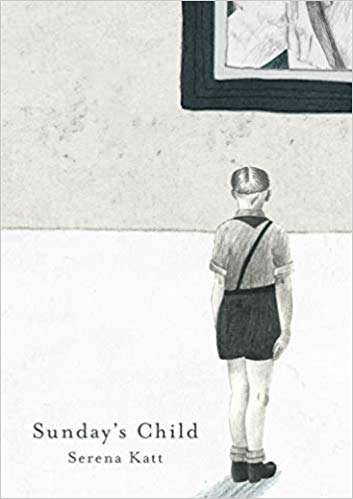
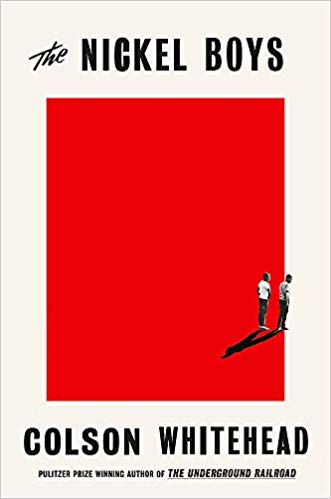
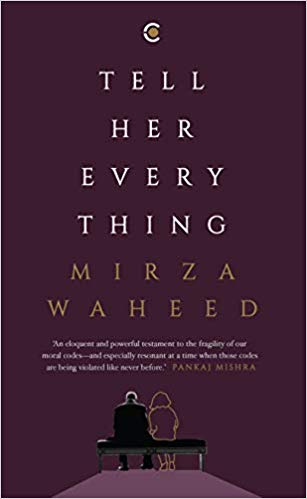
It has to be the oddest concatenation of events that when the abrogation of Article 370 was announced by the Indian Government on 5 August, I was immersed in reading Colson Whitehead’s The Nickel Boys and Mirza Waheed’s Tell Her Everything. Two mind-blowing powerful novels that are only possible to read when the mental bandwith permits it. Colson Whitehead’s novel is as darkly horrific as it imagines the time in a reform school when racial segregation was openly practised. It is extremely disturbing to read it Mirza Waheed’s novel is an attempt by the narrator to communicate to his daughter about his past as a doctor and why he chose to look the other way while executing orders of the powers that be. Orders that were horrific for it required the narrator surgical expertise to amputate the limbs of people who had been deemed criminals by the state. Tell Her Everything is a seemingly earnest attempt by the narrator to convince his estranged daughter that what he did was in their best interests, for a better life, a better pay, anything as long as his beloved daughter did not have to face the same straitened circumstances that he was all too familiar with while growing up. It is the horror of the justification of an inhuman and cruel act by the surgeon that lingers well after the book is closed. Such savage atrocities are not unheard of and sadly continue to be in vogue. And then I picked up Serena Katt’s debut graphic novel Sunday’s Child which tries to imagines her grandfather’s life as a part of Hitler’s Youth. She also questions his perspective and the narrative is offered in the form of a dialogue. She refers to the “chain hounds” who hunted, and executed, deserters. Something not dissimilar to the incidents documented in The Nickel Boys too.

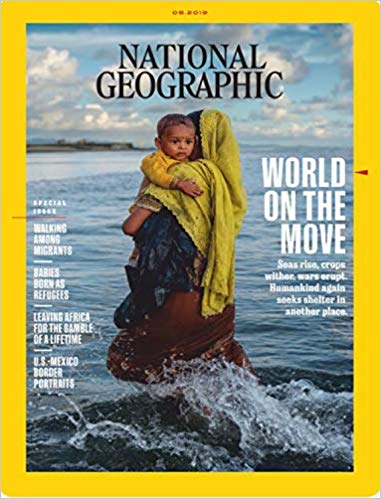
Then this month’s issue of National Geographic magazine arrived. It’s cover story is on migration and migration called “World on the Move”. In it the writer Mohsin Hamid has an essay, “In the 21st century, we are all migrants“. We are told not only that movement through geographies can be stopped but that movement through time can be too, that we can return to the past, to a better past, when our country, our race, our religion was truly great. All we must accept is division. The division of humanity into natives and migrants. … It is the central challenge and opportunity every migrant offers us: to see in him, in her, the reality of ourselves.

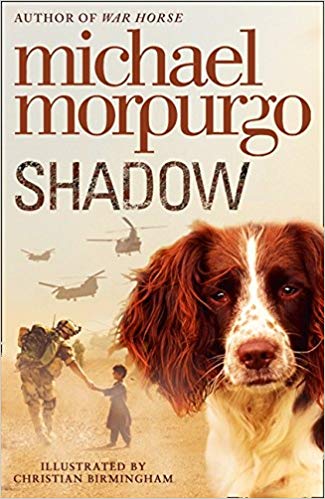
To top it I read Michael Morpurgo’s Shadow. It is about the friendship of two fourteen-year-olds, Matt and an Afghan refugee, Aman. Shadow is the bomb sniffer dog who adopted Aman as he and his mum fled Bamiyan in Afghanistan from the clutches of the Taliban. The mother-son pair moved to UK but six years after being based there were being forcibly deported back to Afghanistan despite saying how dangerous their homeland continued to be. Shadow, a young adult novel, is set in a detention camp called Yarl’s Wood, Bedfordshire, UK. While terrifying to read, Morpurgo does end as happens with his novels, with a ray of hope for the young reader. Unfortunately reality is very different. So while helping tiddlers connecting the dots with reality is a sobering exercise for them, it can be quite an emotional roller coaster for the adults.

In an attempt to look the other way, I read a delightful chapter book called Tiny Geniuses : Set the Stage! by Megan E. Bryant. It is about these historical figures who are resurrected into present day as mini figures by a couple of school boys. In this particular book, the two figures wished for are Benjamin Franklin and Ella Fitzgerald. It can make for some amusing moments as the school boys try and complete their school projects. A delightful concept that is being created as an open-ended series arc. It did help alleviate one’s gloomy mood a trifle but only just.

Read this literature with a strong will, patient determination and a strong stomach. Otherwise read the daily papers. For once you will find that the worlds of reality and fiction collide.

15 August 2019
Tuesday Reads ( Vol 3), 25 June 2019

Dear Reader,

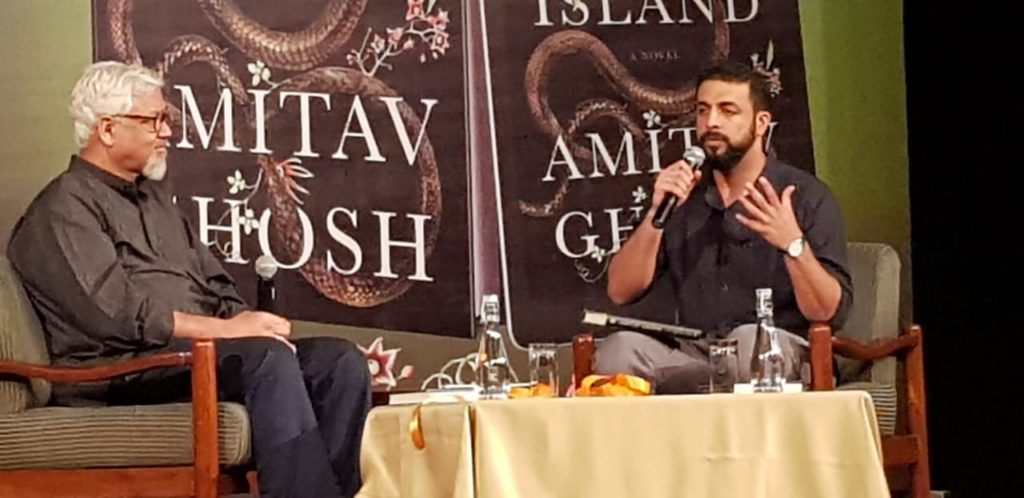
I have just finished reading Amitav Ghosh’s magnificent novel Gun Island. It is about Dinanath Datta, a rare books seller whose life gets entangled with an ancient legend about the goddess of snakes, Manasa Devi. It is a fascinating story that begins in the Sunderbans to New York to Venice. Gun Island has a fantastic cast of characters but it is also a story very relevant to our times for its focus on the situation of migrants and climate change.

At the New Delhi book launch held on 13 June 2019, India Habitat Centre, Amitav Ghosh was in conversation with Raghu Karnad. It was a very special evening as it occurred two days after the untimely demise of the playwright, Girish Karnad. So the book launch morphed into this public memorial for Girish Karnad too. It began with the new Jnanpith winner Amitav Ghosh’s tribute to another Jnanpith winner Girish Karnad. The conversation began with Raghu Karnad, son of Girish Karnad, saying, “My father was a chronicler of Karnataka and of this country, I consider you to be a chronicler of this planet. Interconnecting the countless parts we are in the midst of but miss. They are forces of language, war, or even eco-system.” These opening remarks triggered off a fascinating conversation about “unlikely coincidences” and “meaningful resonances” that exist between space and time. Also what does it mean to try and rationalise events that defy rationalist thinking but at times it is impossible to do so. A significant proportion of Gun Island dwells upon the global migrant crisis. During the conversation Amitav Ghosh commented that “the central literary question is how do you talk about the slow violence that eats itself into peoples lives and never finds its way into newspapers? In the papers every day there are so many reports about violence but this slow violence does not get attention. We have learned to turn our eyes away from it. The issue is how do we find ourselves back to recognise the violence unfolding around us. Poetry is better able to respond to the catastrophe and cataclysm we see around us. Poetry does not have that commitment. Poetry has always responded to every natural event. You see it in Byron and in pre-modern Indian poetry which is not poetry for the sake of poetry — it is devotional. We have to find ourselves back to that…back to being able to talk about other things apart from us.”

Gun Island is an unputdownable book. It will sell well but more so because of the old fashioned word-of-mouth recommendations. At the book launch there were whispers overheard of Amitav Ghosh probably being a contender for the Nobel Prize for Literature in the coming years. Who knows?! But for now it would be interesting to see if this book makes it to the shortlist of the more prominent literary prizes around the world like The Booker Prize. It is certainly a book that cannot be ignored!

Of all the books I read in the past week Gun Island was exceptional.

More anon,

JAYA

25 June 2019

Valeria Luiselli’s “Lost Children Archive”

Everything that was there between Arkansas and Oklahoma was not there: Geronimo, Hrabal, Stanford, names on tombstones, our future, the lost children, the two missing girls.

All I see in hindsight is the chaos of history repeated, over and over, reenacted, reinterpreted, the world, its fucked-up heart palpitating underneath us, failing, messing up again and again as it winds its way around a sun. And in the middle of it all, tribes, families, people, all beautiful things falling apart, debris, dust, erasure.

Valeria Luiselli’s Lost Children Archive is a modern road novel about a young family moving across states. They are unnamed. For most of the novel the mother is the narrator till it switches to the young boy in the last part. Along the way the narrator is preoccupied with an immigrant mother for whom she helped translate in court and now the mother is trying to get two of her daughters across the border into USA. Unfortunately it goes wrong with the two daughters missing. While on this long drive across the country, the unnamed narrator and her family also witness a group of young children flanked by armed guards being deported. The family watches the little children board a small plane. It is a journey at multiple levels — the actual journey on the road, the journey that the couple are taking in their marriage which is slowly unravelling, the journey their two little children travelling in the back seat are making as step-siblings and as two children transforming into thinking individuals in their own right. This is a book that is the first written originally in English by Valeria Luiselli. It is loosely based upon her experiences as volunteer interpreter for young Central American migrants seeking legal status in the United States.

While Lost Children Archive has been notably longlisted for the Women’s Prize for Fiction 2019 and may even justifiably be shortlisted for it, it may be a long shot if it wins it. The author who is obviously more than moved by the plight of the immigrants in USA has created this incredibly magnificent piece of fiction but unfortunately loses her grip on the art of creating characters and voices when seemingly in empathy she wishes to share the litte boy’s perspective too.

Claire Messud writing in the New York Review of Books says about Valeria Luiselli “Art is an act of transformation: the passage of material through an imaginative crucible, and the creation of something new. That something new must have its own integrity, must be greater than the sum of its parts. Camus’s explorations of the absurd in The Stranger and The Myth of Sisyphus measure the distinction between a novelistic embodiment of human experience and an essayistic distillation of thought. Many elements of Lost Children Archive are extraordinary, and yet the ultimate act of transformation has not occurred. One might of course contend that, in this ghastly time, such a transformation is no longer possible; but Luiselli’s decision to write a novel at all surely affirms otherwise.” ( “At the Border of the Novel“, NYRB, March 21, 2019 issue)

Lost Children Archive is worth reading for the fictional landscape gives space to a critically relevant issue about migrants and their children — more than an editorial or a feature article can ever hope to achieve.

6 April 2019

Mohsin Hamid’s “Exit West”

We are all migrants through time. 

Mohsin Hamid’s latest novel Exit West published nearly a year ago in spring 2017 was received positively worldwide to rapturous reviews. Despite the extremely long and breathless sentences with innumerable sub-clauses the story itself moves smoothly while unveiling a bleak yet monstrously fragile world of migrants, violence and lawlessness. It is told through the lives of Saeed and Nadia but the narrator remains in complete control, much like a cameraman choosing to tell the story through selected frames. The prose is structured almost like a slow dance fusing reality with elements of speculative fiction. Take the black doors for instance which open like portals to another land, not necessarily another dimension of time, leading refugees away from one physical space to the next.

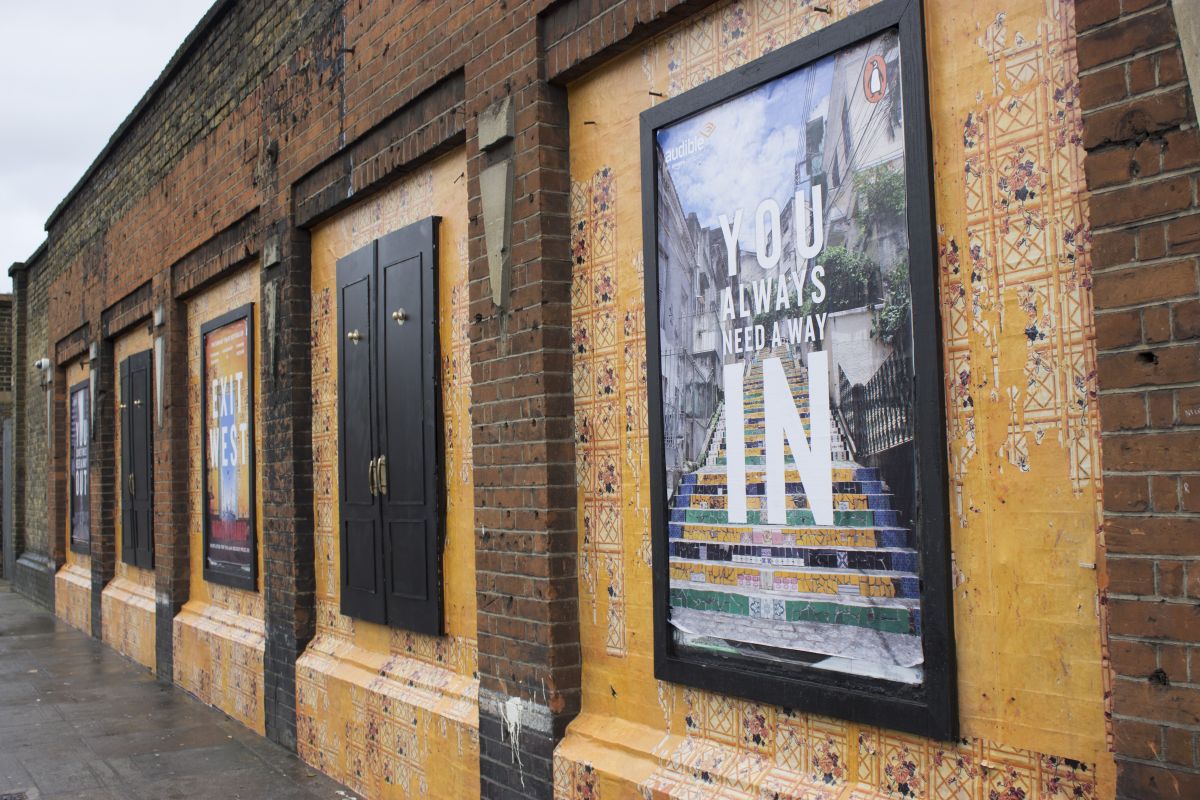
This aspect of the story has in fact resulted in an incredible art installation in London. It can be viewed till 20 February 2018. According to The Bookseller, Penguin Random House UK has teamed up with Audible and Jack Arts to celebrate the paperback launch of Exit West. To quote the article:

Penguin is partnering with Jack Arts and Audible to celebrate the paperback publication of Mohsin Hamid’s Exit West (Hamish Hamilton) with an interactive poster installation on Commercial Street, London.

Working with Jack Arts, themes explored by the Man Booker shortlisted novel such as movement and migration – and, as Penguin puts it, “the thin boundaries that exist in our world” and “the doors between neighbours” – will be “brought to life” in the form of poster art.

Taking a recessed wall space on Commercial Street, Penguin and Jack Arts have replicated the book jacket artwork of Exit West and installed posters with book extracts and cityscapes from locations in the book. Functioning doors open onto the posters, inviting people to engage with the story and to “rethink what the doors around them might mean”, according to Penguin. The campaign strapline reads: “You sometimes need a way out. You always need a way in.”

Penguin also teamed up with Audible, identifying the Commercial Street site profile as “directly overlapping” with Audible’s audience. The audiobook retailer is tagged on the installation and will promote the audio edition of the book to its four million UK social followers. Exit West will be an Audible Editorial pick and a recorded interview with author Mohsin Hamid will be available as an Audible Session.

The book’s author, Hamid said: “It was kind of magical for me to see the black doors on Commercial Street, to discover they could open, and to find words from Exit West inside.”

It is very exciting to see how many forms a good story will take. More so in this information age when readers have very high expectations and there are behavioural changes apparent in how people approach a book. With the blending of formats making it available in physical reality is truly marvellous — just as this unique book.

Read it if you have not already done so!

Mohsin Hamid Exit West Hamish Hamilton, an imprint of Penguin Random House, 2017. Hb.pp. 230 Rs 599

18 February 2018 

“The Photographer” by Meike Zeirvogel

In the wagon there is no space to sit. There are air holes running along the top of the train’s sides. Everyone has turned their face upwards in the hope of catching a fresh breeze. The train jolts and shakes but there is no space to fall. The only thing that is shoved around at their feet is the metal bucket. Initially no one uses it – after all, the journey should only take a couple of hours – but then the train halts for ages in open fields. The doors remain closed in case it begins to move again. First the children use the bucket, afterwards the men and eventually the women too, peeing into it while standing. To begin with Trude is still trying to think of what they will do once they reach Berlin. And she hopes they will return soon: she doesn’t want Albert coming home to an empty place. But even these thoughts eventually stop and all she wants is for them just to endure the journey. Every now and again she quietly asks, ‘Mum?’ Agatha replies with a ‘Hm.’ Peter is standing between the two women, his cheek against his mother’s stomach. Trude feels him breathing. A couple of times she nearly dozes off, but then with a start she regains consciousness. ‘Mum?’ ‘Hm.’ And she feels the breathing of her son.

And so it was that Agatha, Trude and Peter became part of the 11 million Germans who were fleeing westward in the 75 winter of 1945. None of them knew where they were heading. But they all hoped to return home soon. Little did they know that the world was changing behind them and borders were being redrawn. Their homes now belonged to others and they were crossing into a foreign land.

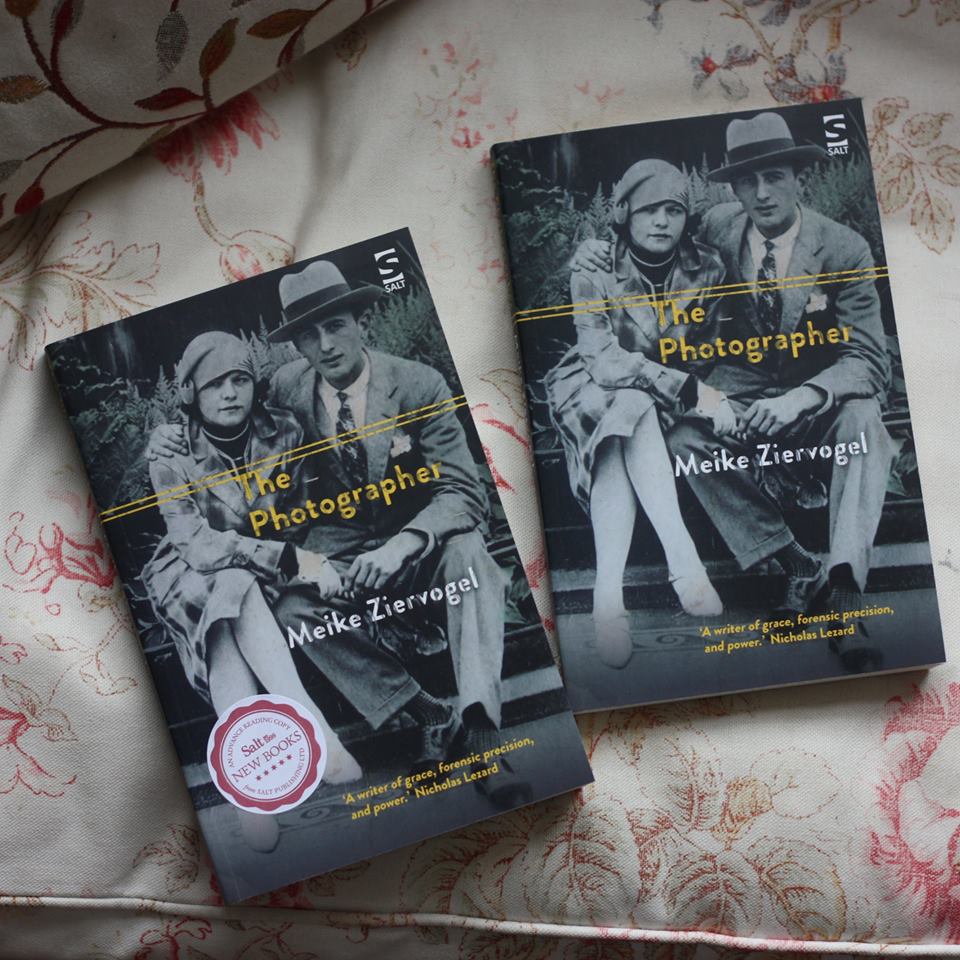
Meike Zeirvogel’s latest novel The Photographer is on the surface of it about Albert, his wife Trude, their son Peter and his mother-in-law Agatha, a seamstress. It is a quietly told tale which opens in 1920 but most of the action is set during the second world war. It revolves around this tiny family which is managing to live peacefully despite the raging war when suddenly Albert is picked up by the police and whisked away. For a while his wife Trude is mystified at his arrest and cannot understand what the matter is till she realises after seeing her ransacked home they were after the hidden radio. Albert and Trude used it to listen to music and dance every night. But to possess a radio during the war was considered a serious offence and Albert is taken away. Agatha had always disapproved of Trude’s marriage to Albert so had conspired to tell the local police. For a long time Trude is unable to fathom who let on to their little secret till she deduces it was her mother.

The Photographer is a seemingly deceptive simple story but is also complicated for the many layers to it. The relationship between the mother and daughter is worse than any imprisonment. It is living with the horrible truth about the mother’s distaste for Albert with Trude caught between that is like a slow death. Ironically it is the wisdom of the mother ( and her savings) that leads Trude and Peter to safety. The saving grace in the hostile environment of the family is Peter who is loved by all the adults in their own way and for whom they will do anything. Meanwhile Peter too has to figure out a way of surviving particularly when his father returns home with his own archaic expectations of how a young boy should behave. Later while setting up a business that slowly begins to flourish Agatha persuades Trude to join her as a seamstress.

Like with any conflict the second world war too was disruptive especially for the family. If people were fortunate to survive they did so with many hidden scars and learned to exist with new arrangements to their established relationships. There were subtle shifts and these hard-to-define transformations that occurred in families is exactly the grey area which Meike Zeirvogel explores. The war torn landscape may be a useful backdrop to the story providing immediate explanations for changing family dynamics. But at another level the war and the changing borders can function as a metaphor for the fluid changes that are constantly happening within a family unit at any point of time — like a slow dance. As Albert discovered as a professional photographer “Taking photographs of families is pretty straightforward – they all look the same, want to look the same.” And yet it is not.

Curiously this slim book lingers in one’s imagination long after one is done with it.

Read it.

The Photographer is published by Salt Publishing, 2017. 

13 March 2017 


Hanif Kureishi “Love + Hate”

Love + HateThe cultural collisions he [Powell] was afraid of are the affirmative side of globalisation. People do not love one another because they are ‘the same’, and they don’t always kill one another because they are different. Where indeed, does difference begin? Why would it begin with race or colour?

Racism is the lowest form of snobbery. Its language mutates: not long ago the word ‘immigrant’ became an insult, a stand-in for ‘Paki’ or ‘nigger’. We remain an obstruction to ‘unity’, and people like Powell, men of ressentiment, with their omens and desire to humiliate , will return repeatedly to divide and create difference. The neo-liberal experiment that began in the eighties uses racism as a vicious entertainment, as a sideshow, while the wealthy continue to accumulate. But we are all migrants from somewhere, and if we remember that, we could all go somewhere — together. ( p.166-7)

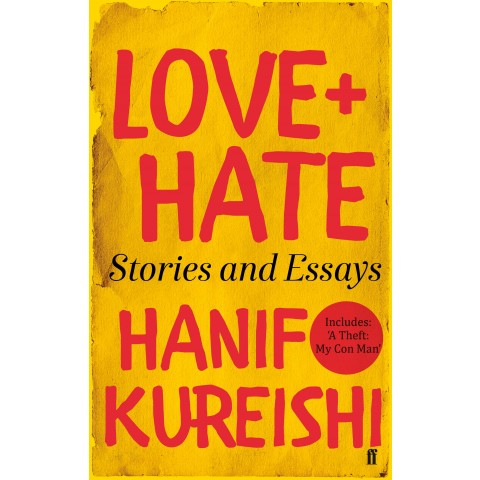
Hanif Kureishi’s latest book Love + Hate is a wonderful blend of essays, commentaries and some fiction. It marks a period of time wafting in and out of his life. The theme of the immigrant that is evident through much of his writing is noticeable here too. The publication of Love + Hate takes significant proportions given the media coverage about refugees fleeing conflict zones, economic crisis globally and the astounding reaction to this humanitarian crisis by some nation states. The concluding essay, “A Theft: My Con Man” is a deeply personal one. It is an account of Hanif Kureishi’s life savings being stolen by a con artist. I still remember the number of Facebook posts he posted the day he discovered the theft. Naturally he was distressed at discovering the loss. But this essay is a little calmer than the facebook posts since it was written a little later, when the author had had time to reflect, but it does not take anything away from the shockingly painful experience.

Read this anthology. It is an excellent commentary and a sobering reminder on what we are witnessing today has happened before. The horror is no less.

Hanif Kureishi Love + Hate: Stories and Essays Faber & Faber, London, 2015. Pb. pp. 220 Rs 799 

8 October 2015 

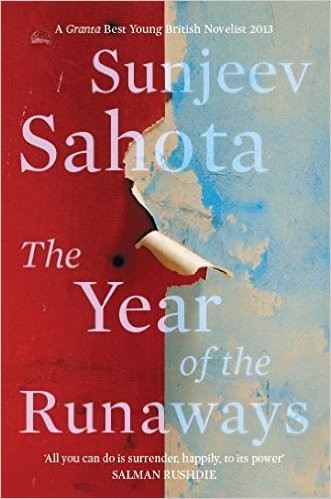
Sunjeev Sahota, “The Year of the Runaways”

Sunjeev Sahota‘It really is a pathetic thing. To mourn a past you never had. Don’t you think?’ 

p.216

Sunjeev Sahota’s The Year of the Runaways is his second novel. According to Granta in 2014, he was one of the promising writers from Britain. I have liked his writing ever since I reviewed his debut novel, Ours are the Streets, for DNA in 2011. The first chapter of The Year of the Runaways was extracted in Granta, Best of British novelists. It is about a few men from India who choose to migrate to the UK. They are from different socio-economic classes. Tochi is a chamar, an “untouchable”, from Bihar who had gone to Punjab in search of a job, but with his father falling ill, returned to the village. Unfortunately during the massacres perpetrated by the upper castes his family was destroyed too. So he gathered his life-savings and left India. The other men who leave around the same time are Avtar and Randeep, migrants from Punjab. Randeep is from a “better” social class since his father is a government officer and he is able to migrate using the “visa-wife” route. But when these young men get to Britain, they are “equal”. It is immaterial whether they are working as bonded labour or on construction sites or cooking or even cleaning drains. They are willing to do any task as long as it allows them to stay on in the country. Apparently living a life of uncertainty and in constant fear of raids by the immigration officers is far preferable to life at home.

The women characters of Narinder, Baba Jeet Kaur and Savraj are annoying. Maybe they are meant to be. Given how much effort and time has been spent figuring out the male characters, the women come across as flat characters. Narinder, Randeep’s visa-wife, seems to have the maximum social mobility in society as well as amongst these migrants but she remains a mystery. It is only towards the end of the novel that just as she begins to find her voice and asserts herself, the story comes to an abrupt end.

I like Sunjeev Sahota’s writing for the language and sensual descriptions. He makes visible what usually lurks in the shadows, confined to the margins. He makes it come alive. It is remarkable to see the lengths a storyteller can go to tell a story that has a visceral reaction in the reader. Also it is admirable that while living in Leeds, UK, Sunjeev Sahota has written a powerful example of South Asian fiction that is set in Britain without ever really showing a white except for the old man Randeep had befriended while working at the call centre. Sunjeev Sahota admires Salman Rushdie’s Midnight’s Children. ( It was also the first novel he read as he admits in the YouTube interview on Granta’s channel.) Rushdie too has given a glowing endorsement to The Year of the Runaways saying, “All you can do is surrender, happily, to its power”. ( http://granta.com/Salman-Rushdie-on-Sunjeev-Sahota/) True. The only way to read this novel is to surrender to it. But has Sunjeev Sahota broken new ground as his literary idol, Rushdie did with his award-winning novel? The purpose of literary fiction is to make the reader unsettled rather than just hold a mirror up to the reality. As a tiny insight into the hardships economic migrants experience this novel is astounding. But it falls short of being thought-provoking and disturbing or breaking new ground in literary fiction. I doubt it.

Sunjeev Sahota’s gaze on India is an example of poverty porn in literature. He has got the migration patterns, the hostility at ground level in Bihar and Punjab and the nasty descriptions of the Ranvir Sena or the Maheshwar Sena as they are referred to in the novel accurately. ( I think the novel alludes to these massacres as described in this wonderful article by G. Sampath in the Hindu, published on 22 August 2015 http://www.thehindu.com/sunday-anchor/sunday-anchor-g-sampaths-article-on-children-of-a-different-law/article7569719.ece ) Disappointingly Sunjev Sahota’s voice is clunky at times and comes across as well-researched but a trifle jagged in the Indian parts. The British bits are brilliant as if to the Manor born, which Sunjeev Sahota is! Much is explained by what he hopes to explore in this novel in an interview he gave Granta ( https://www.youtube.com/watch?v=65mtLCbODCk : 23 April 2013) :

What does it mean being unmoored from your homeland and what does that do to a person and subsequent generations? What happens to that hold that is created? What fills it? Then where does one go from there? 

This is a strong and fresh voice. Sunjeev Sahota must be read even if this novel ends with a bit of a convenient ending. This is an author whose trajectory in contemporary literature will be worth mapping.

The Year of the Runaway is wholly deserving to be on the ManBooker longlist 2015 but I will be pleasantly surprised to see it on the shortlist.

Sunjeev Sahota The Year of the Runaways Picador India, Pan Macmillan India, New Delhi, 2015. Hb. pp. 480 Rs 599 

27 August 2015

Web Analytics Made Easy -
StatCounter