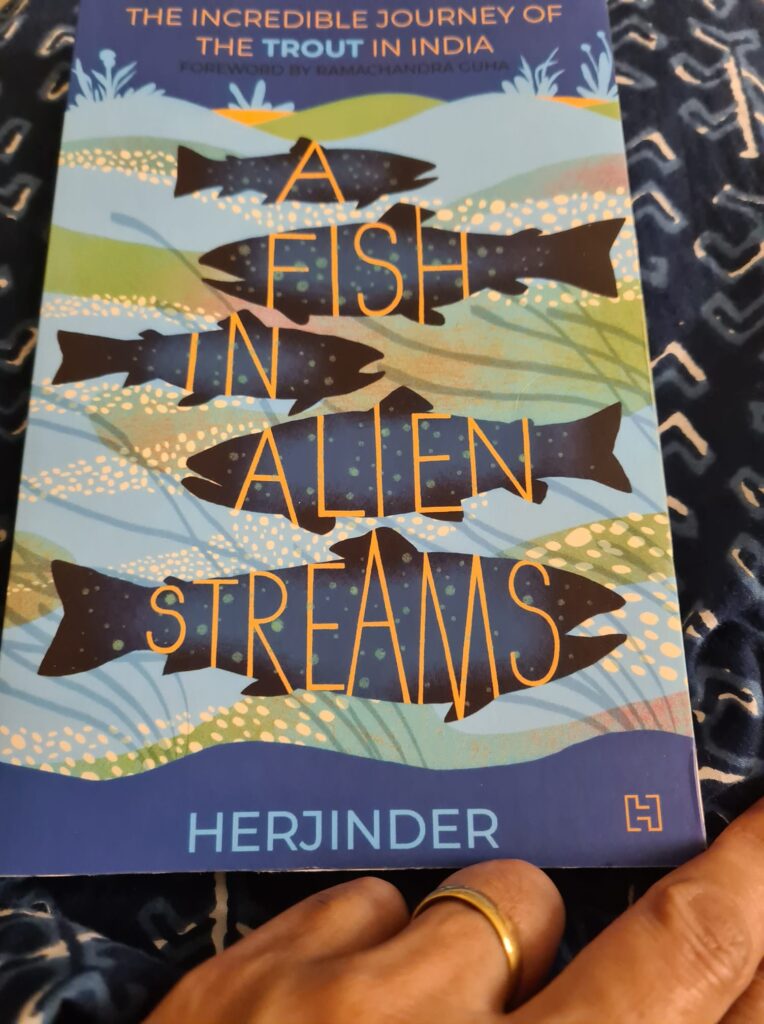
A Fish In Alien Streams by Herjinder is an extraordinary book. An account of the introduction of trout by the British. The colonial rulers missed angling as they did “back home”. So they figured out ways in which to transport ova, by sea, in cold conditions to lands as far as Tasmania and India. The Victorian Age was known for some incredible innovations but to discover a viable method of transporting trout ova from Europe to Tasmania and India was astonishing.
I picked up lovely fun facts. One of them being that the original British owners of Kissan jams and sauces were responsible for introducing trout into the sub-continent. Also, how floods have been responsible for dissemination of the fish into the streams of Kashmir, Nilgiris and Sri Lanka. The last interview in the book is with an eighty-three-year-old Jimmy Johnson, an angler. He is a Himachali / Anglo-Indian, whose father, Lt. Col. C. R. Johnson, was one of these British officers who were deeply involved with trout culture farming. But Jimmy learned angling not from his father but by watching the famous angler of the valley, T. Tyson ( the author of “Trout Fishing in Kulu, 1941”). Jimmy’s school was in Mahili, across the river from Katrain where Tyson used to fish virtually every day. And Jimmy would watch the great angler while playing with his friends on the left bank of the river. He started to like Tyson’s ‘game’ more than his own childish ones, seeing it as ‘an interesting game in which delicious lunch and dinner were also guaranteed’.
But in nearly a century since there was abundance of trout in the rivers, the fish is fast disappearing. One of the prime reasons being the rampant construction in the valley and global warming. There are many occasions that Jimmy goes to fish and returns home empty-handed. Yet he renews his angling license annually. In his lifetime, Jimmy has seen trout-abundant rivers to sparsely populated ones now.
It impossible to recapitulate the essence of A Fish in Alien Streams by Herjinder. Suffice to say that this is a wonderful mix of historical narrative and primary source material such as books and interviews. It is very easy to read even if you are not interested in fishing or trouts.
The book cover by Harshad Marathe deserves a special mention. It is unique.
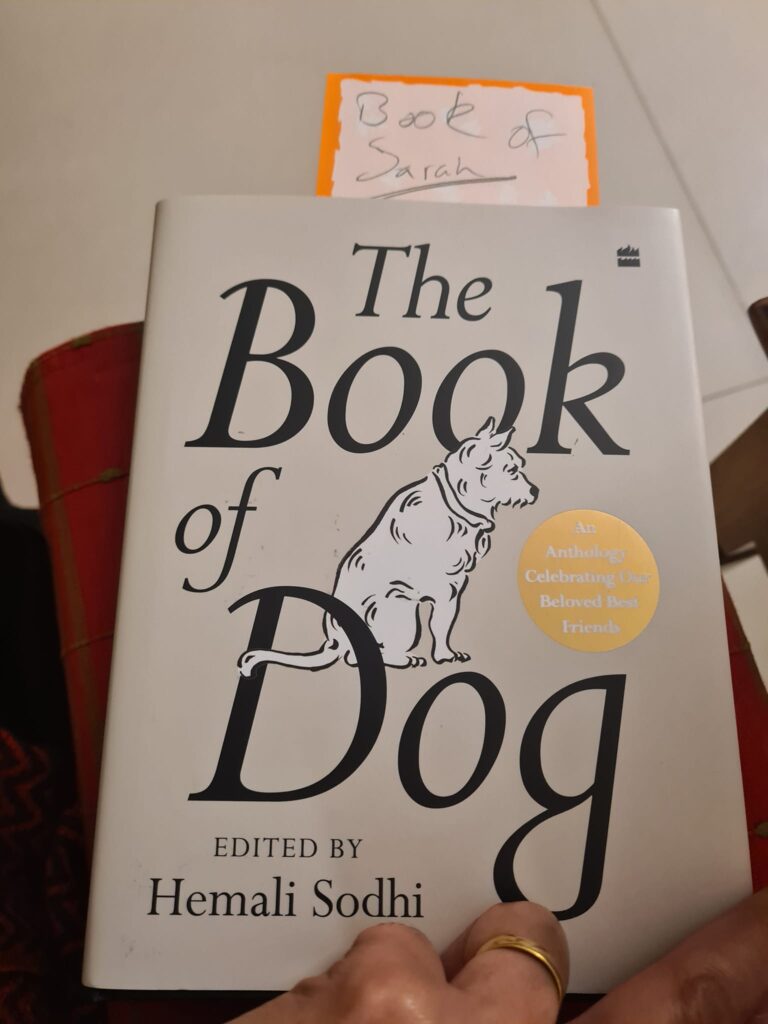
Once upon a time, I too had dogs. They were an integral part of my life. They would sit at my feet while I studied. We travelled by road for lovely, long trips. Dad would ensure that we were booked into accommodation that welcomed the dogs. In our family, dogs were and are a part of our lives and this has been true across generations. A lot of memories came flooding back while reading the stories in The Book Of Dog edited by Hemali Sodhi ( published by HarperCollins India). And most certainly one of the memories being that of calming a petrified Hemali when she spotted a pet dog across a vast hall at an event. So her transformation into an ardent doglover is the stuff that myths are made up of. If I had not witnessed it for myself, it would have been hard to believe what she narrates in her introduction. But it is true. The kindness, gentleness, warmth, unconditional love that the animals offer has to be experienced at least once and I am glad Hemali Sodhi has. Sadly, with the joy comes the pain, grief and the gaping hole in one’s heart that the dog’s departure leaves. The Book of Dog is a gorgeous collection of essays, photographs, poems, and illustrations by pawrents. And you know it is a winner when munchkins adopt it by slipping in notes, appropriating it as their own.
At the best of times parenting can be exciting, thrilling and challenging. It is a heady cocktail that is a constant but wow! It can get explosive, unpredictable and at times, unmanageable, when the kids transition from childhood to adolescence. For no fault of theirs, their mood swings and irascible temperament coincides with their hormones kicking in. It requires immense amounts of patience and emotional reserves that no sane adult ever thought they were capable of possessing. Inevitably, there are moments when parents and child clash. It is all part of growing up.
For generations, Indians have gone through various stages of life, without any conversation revolving around the body and of course, sex, as taboo. It is simply not spoken about. So the dangers of experimentation and being ill-informed can lead to disastrous consequences. Or even hilarious instances as I discovered years ago while reading a newspaper report. The article was about precisely this — starting a helpline for youngsters to educate them about sex. One of the girls who called in was terrified that she may become pregnant as she had worn her brother’s trousers. This was an anecdote printed on the front page of the morning newspaper. The level of ignorance is abysmal. Fortunately, this scenario is changing slowly and steadily. Misinformation continues to exist but at least middle-class parents are actively seeking literature meant for youngsters that talks about bodily changes and sexuality. Schools too have taken the initiative to conduct sessions with students, in the presence of their counsellors and parents, discussing the body. Interestingly these classes are organised for children of upper primary onwards. Of course, the information is graded according to the level of the children. Even so, the point is that it is becoming a tad “easier” to introduce these topics of conversation rather than facing a complete shut down. The classic argument being that we do not talk about such things in our culture. And God forbid if these topics are to be introduced or discussed in the presence of girls or even about girl sexuality. These are conversations that lurk in the background, even now.
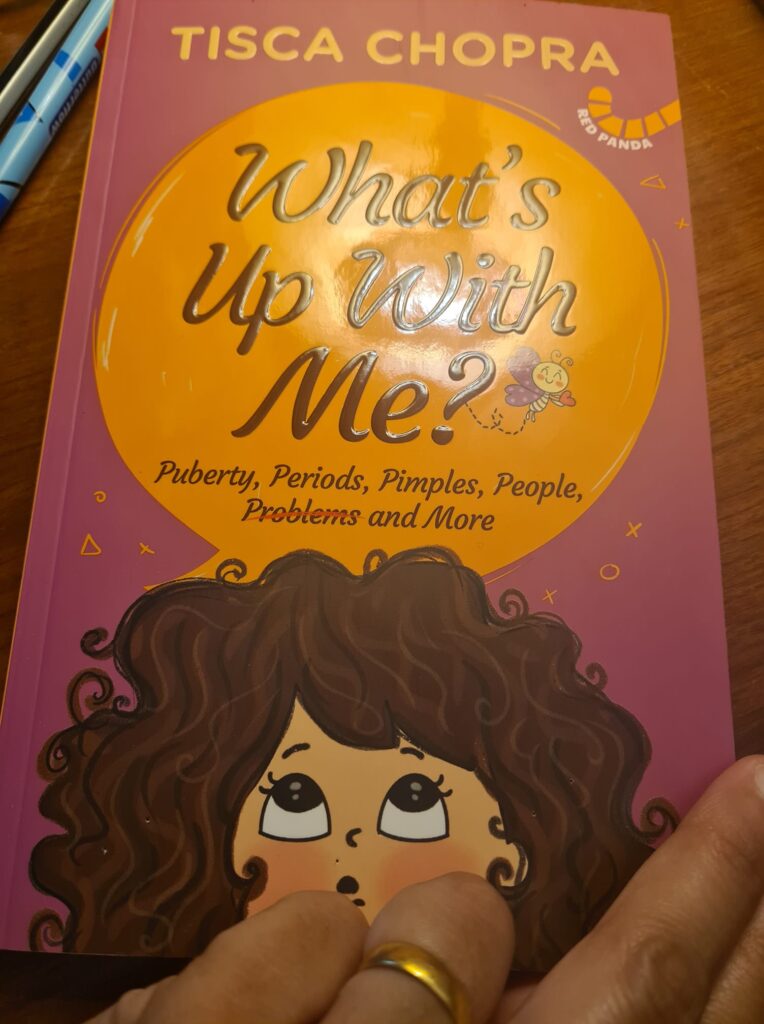
This is why books like What’s Up With Me?: Puberty, Periods, Pimples, People, Problems and More by Tisca Chopra are created. ( Published by Westland Books.) The author is a young mother. Realising that her daughter would soon be hitting puberty, she decided to create this book. It is written in a fun style. Flip any page and there are short entries that speak clearly to the young reader. There is no shame in talking about the body. In fact, Tisca Chopra actively encourages viewing one’s body and being familiar with it. It is an integral part of self-love and self-care. Of course, the book focuses upon personal hygiene, discusses the various kinds of changes the body will undergo such as sprouting hair and bleeding, describing the menstruation cycle etc. There are other aspects too that address the emotional and psychological changes that will occur such as friends drifting apart, emotional roller coaster, crushes and matters of the heart, its okay not to be okay, shout out the doubts, maintaining one’s mental equilibrium, developing good physical habits, exercise, being disciplined about using digital devices, and of course the big one —- (mis) understanding parents. Essentially communication is the key to navigate the choppy waters of adolescence and trusting the advice elders, especially parents, impart.
This is a slim book and for some inexplicable reason, very pink. But that should not deter children and adults alike to pick it up, read and have frank conversations. Sometimes it is easier to leave accessible literature lying around conveniently at home or in schools for kids to browse through. It is easier to read and glean information than have “embarassing” face-to-face conversations. Hence, it is imperative to have well-made material. In this case, the book has been created with inputs from gynaecologist, Dr Mala Arora, and practising counselling psychologist, Malavika Varma. No wonder the tenor of the book is spot on. So much so, when my eleven-year-old daughter browsed through the book, she asked in amazement, “Mum, have you been giving the author inputs on what to say?!” Err, no, I had not. But that is where the value add lies in this book. It validates what parents, especially mothers, have to say to their daughters. When they are at the cusp of childhood and adolescence, kids begin to shut their parents out. So a book like this is helpful as it speaks directly to the kiddos and enables constructive conversations within the family. Akanksha Agnihotri’s illustrations are smart and not girly at all. Yet, very expressive and never distracting from the text. The illustrations, in fact, complement the text beautifully.
It is a good book.
Having said that it may be apt at this juncture to recall an absolutely fantastic book on the female body that was created by Kali for Women in the 1990s. It was called “Shareer ki Jankari” ( “About the Body”). It was written by 75 village women and sold at a special price. It was a very simple paperback that discussed the body, especially menstrual taboos. It had these little paper flaps that you could lift and see the particular part of the body beneath and the changes it underwent. It was a phenomenal bestseller and if I am not mistaken, was translated into multiple regional languages as well. It was a path breaking book and if still available, continues to be relevant.
All in all, I would certainly recommend Tisca Chopra’s book for girls on the verge of becoming young women.
The Longest Kiss: The Life and Times of Devika Rani by Kishwar Desai ( Context, Westland Books), is a biography of the famous Bollywood actress, Devika Rani. It is a biography that Kishwar Desai has put together after poring over thousands and thousands of the actress’s personal correspondence. It creates an image of woman who was a strong individual, had an identity of her own, knew her mind and was very sure what she wanted out of the film industry. She was then the only, and perhaps even now, actress/filmmaker/producer and owner of a film studio – Bombay Talkies. She was known internationally in the 1930s, a feat that is hard for many to achieve even today, nearly a century later!
The Longest Kiss is informative and an absorbing read even if one is unfamiliar with the Bollywood landscape of the 1930s to 1940s. Bombay Talkies produced some of the better-known films of its time. It helped launch careers of many actors such as Ashok Kumar and Dilip Kumar. Kishwar Desai captures the tumultousness of setting up a new business, in what was then uncharted waters, but the manner in which Devika Rani supported her first husband and business partner, Himansu Rai is astonishing. There are glimpses of the tough life she had and the balancing act she had to do often especially with Himansu’s failing mental health and irascible temper. Apparently in private he would take it out on Devika Rani, at times leaving her unconscious and yet she persisted in supporting him and working hard to preserve their business. Often she was also the leading lady in the films they produced together. Having said that she ensured that Bombay Talkies ran smoothly, the women actresses hired found it to be a safe haven and a respite from their domestic drudgery, the employees found it to be professionally run and the presence of the German cinematographers were more a blessing than an interference. So much so when the British arrived at the height of World War II to whisk the Germans away to detention camps, Bombay Talkies continued to work smoothly as the Indians had been trained well by the Germans and Devika Rani ensured that there was no break in the production schedules. Of course, Kishwar Desai details a great deal of the financial ups and downs the firm faced and how deftly Devika Rani steered it through. The actress even survived successfully a revolt within her firm and the board and continued to make films that were a critical and a commercial success. It was later that she was introduced by Bharati Sarabhai to the former Russian aristocrat and painter Svetsolav Roerich. They got along famously well and the rest as they say is history. This too is documented fairly well documented by Kishwar Desai except that it forms a very slim portion of the book. Devika Rani died a wealthy woman, a far cry from the days with Himansu when she had to starve herself or hide the fact that she did not have sufficient clothes to wear.
This is a fascinating book that was fifteen years in the making and will forever be referred to by cinema buffs, researchers and historians curious about India’s past, and of course feminists who would be keen to review how a young woman, newly returned from Britain, left her mark on the film industry in this astonishing manner. All this despite the trials and tribuulations she faced at home, Himansu was known to beat her but she hid it from public, he had reduced her to penury and she had pawned her jewels to help him maintain his illusion of a successful man. There are so many wrongs in this and yet so many women readers will recognise the eternal truth of being caught in this bind of being themselves while being “supportive” of their male partners. There is this particular sentiment that wafts through the book that is difficult to pin down. It is a feeling that develops within the reader curious as to why Devika Rani despite all odds chose to stay with an abusive partner like Himansu even if the rationale of sharing a business interest is offered. Of course, the love that Svetsolav and she had for each other was a blessing. Even so, this steadfast loyalty to Himansu is inexplicable.
Kishwar Desai writes ( p.430):
It was ironic that all these years, she had longed to be looked after. In all her relationships, she had wanted a mentor,a father figure to replace the one she had lost so early — but the men in her life would always lean on her, instead. Somewhere, then, did she always feel unfulfilled? Perhaps it was the loneliness. . . .
I had to take a break from this increasingly bewildering feeling about Devika Rani as to why she stuck it out with Himansu and I was not convinced by the argument that it was loneliness. While on a break, I picked up Arshia Sattar’s lucidly written collection of essays about Maryada, or ‘boundary’ and ‘propriety of conduct’. It is a complicated concept especially since the one version that has held supreme is the idea of ‘maryada purshottama’ or the ‘ideal man’ as the defining virtue of Rama in the Ramayana. But in her essays, Arshia Sattar sets out to explore how the Hindu epics are driven by four ‘operators’ — dharma, karma, vidhi ( fate) and daiva (intervention by the gods). How these especially the various kinds of dharma are fulfilled by individuals by the choices they make. In Maryada ( HarperCollins India) Arshia Sattar tries to delineate the various ways in which these can be achieved or even recognise how others apart from Rama practise this concept. In her concluding remarks in the essay on “Ayodhya’s Wives” where she tries to understand Rama’s arguments about love, she writes:
Rama indicates that Dashratha, too, has acted out of love for Kaikeyi, as Rama is about do now for his wife Sita. Acts of love have to be the most subjective, individual choices that anyone can make, for surely no two people love alike. And yet, Rama feels compelled to transform these acts of will, acts located deep within the sweetest and most expansive spaces of the human heart, into choices that lie within the framework of dharma such as the one that controls him and his father, both as kings and as husbands.
Acting within the constraints of dharma, taking on the roles and walking the paths that have been circumscribed for an individual who is a man, a king, a husband, a son, a brother, minimizes the potential these personal choices have for subversion. …Free will has been eliminated from the discourse of right and wrong, and once again, dharma has been instrumental as the basis not only of action, but also of choice.
It may be a bit far-fetched to think that Devika Rani was at some level following the ideals of the faith she had been brought up in and was whether self-consciously or otherwise fulfilling her dharma. Who knows? And we shall certainly never know. But it is this very fundamental concept of choices that a woman makes that is at the core of the third wave of feminism. Perhaps this angle could have been explored further if Kishwar Desai had chosen to exploit her strength as a novelist to create a thinly veiled fictionalised biography based on facts as David Lodge had done in his novel Author, Author that is about American novelist Henry James. For now I have reservations about The Longest Kiss kind of a biography that oscillates between sharing documentary evidence, especially of the financial aspects of running Bombay Talkies, and ever so often delving into the fiction when imagining the romance between Devika Rani and her husbands, does not quite come together seamlessly. The non-fiction narrative is absorbing to read even if it is based on facts that are never footnoted in the text. So why disrupt the flow of reading with romantic episodes that do not sit well in the text? It does not make any sense even if Devika Rani was a romantic at heart.
Having said that Kishwar Desai’s biography of the actress will be considered as a seminal piece of work even if my Eureka moment of attempting to understand who Devika Rani was by reading some of Arshia Sattar’s brilliant essays. But isn’t that what reading is all about? It raises questions reading a book and that may or may not get answered by reading another one?
One of the advantages of making books available across platforms –digital and print– has been the increase in the voracious appetites of readers. It is enabling readers to be at ease with inter-discilinary texts. It has also given publishers the joy of commissioning texts that appeal to lay readers but are encyclopaedic in material with the possibility of many spinoffs in rights deals. The Invention of Surgery, A History of Modern Medicine: From the Renaissance to the Implant Revolution is one such book. Packed with information, anecdotes, historical facts etc detailing the revolution in technology through history reformed surgical practices. And it is an evolutionary process that is ongoing. It is also an astonishing reminder that much of the surgical theory and practices that we are familiar with were discovered during the Victorian Age and twentieth century. Somehow this book reminded me of of the superb BBC TV documentary series made in 1985 called “Soldiers”. It was hosted by author Frederick Forsyth and scripted by renowned historian John Keegan. ‘Soldiers’ told the history of men in battles, bringing together footage, oral histories, interviews etc. It was a fascinating patchwork that really brought the life of soldiers during the World Wars to life. Same holds true for Schneider’s book with regard to modern medicine and surgery. It is a connecting of dots with minute details that makes for a fascinating historical account. I only wish that the font size was bigger and margins broader.
Nevertheless I hope it is turned into a television series soon!
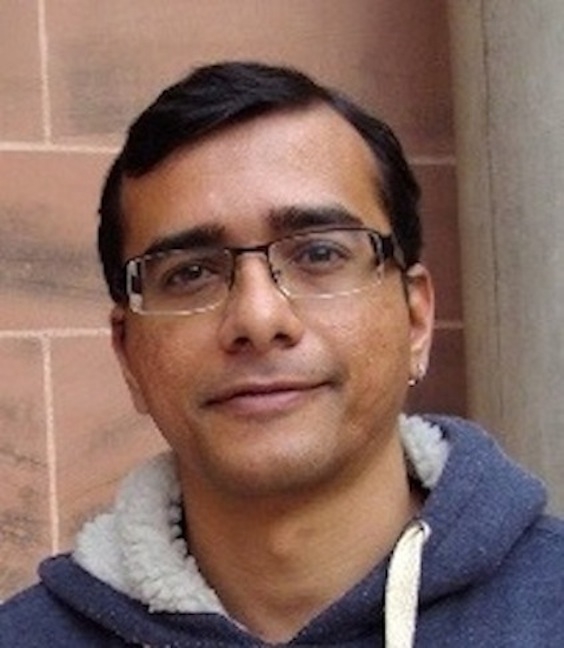
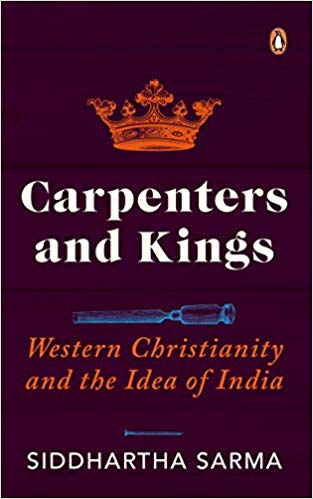
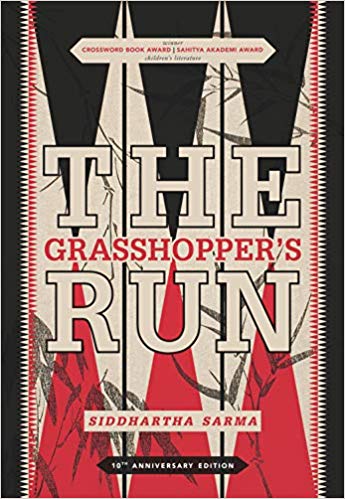
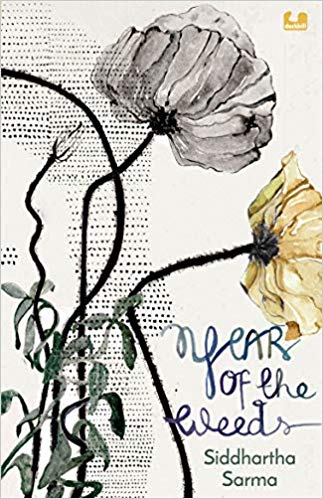
Siddhartha Sarma is a journalist, writer and historian. He has covered insurgency, crime and law in the Northeast and other parts of the country and written for newspapers and magazines as an investigative journalist. His debut novel, The Grasshopper’s Run (Scholastic India, 2009), received the Sahitya Akademi Award for children’s literature in English in 2011 and the Crossword Book Award in 2010. His second novel, Year of the Weeds (Duckbill, 2018) is based on the land rights agitation in the Niyamgiri Hills of Odisha. His latest published work, Carpenters and Kings (Penguin Random House India, 2019) is a history of Western Christianity in India.
Why and how did you get into writing? Where do you find your stories? How long does it take from inception to completion?
A.: When I was seven, my school
was bringing out a commemorative magazine to celebrate an anniversary. I was
told anybody could contribute anything they liked for it, so I wrote an
approximately 400-word story based on real events. A bit of a tragedy. They
printed the story with no edits on the first page, with my name on it. But what
I remember now and in the intervening years is not the feeling of seeing my
name in print, or of reading my story in printed form, but the joy of writing
it, the process of slowly putting things together in my head and of banging it
out, over several hours, on my father’s old typewriter, literally sitting on
his desk because I was too short to type from the chair. The fear of making a
typo (which is such a frustrating experience on a typewriter, unlike on a
computer where a typing error is merely an inconvenience). I have found no
greater joy in life than in the process of writing a story, of entering or
discovering a world, and of narrating it for myself and for any reader I might
find. That is how I began writing, and what I still try to do.
I began my career in journalism as a
reporter. It is a much-repeated saying in the newsroom that a good reporter
never runs out of story ideas. I have never had a problem thinking up story
ideas. The problem is deciding which are worth taking up. One does not have
this luxury of choice as a reporter, but a writer has to be very selective
about which idea she will devote her time and energies to. If my time as a
journalist has helped me as a writer in any manner, it is in two: I can be
objective in deciding which stories to write and which to shelve, temporarily
or permanently. And second: I can be objective in editing my own work. One of
the criteria I have for deciding on a story is whether I have the competence to
write it. There are many genres that I have a bit of an interest in, but I know
I might not be able to execute a story in them very well. Such as fantasy or
science fiction.
The complete arc from story idea to research to writing and editing and the final draft depends on the length of the work, its complexity, scope of research and treatment. My first novel, The Grasshopper’s Run, took me a year and half to research and seven months to write. My newest non-fiction book, Carpenters and Kings: Western Christianity and the Idea of India took up nine years of research and eight months of writing. So it varies. But I do seem to spend more time thinking about a story than in actually writing it.
2. Is it only the long form of a novel that appeals to you? Would you ever consider other structures such as short stories or a series arc?
A.: My first work published in a book was a short story, in a humour anthology by Scholastic. Some other commissioned short stories have also been published. But, yes, I find the novel’s longer form more suitable for the kind of stories I have to tell. I have not yet thought of a series of books, although I can’t rule it out in the future. A standalone novel, however, suits the way I want to tell a story for one major reason. While working on a story, I spend a lot of time building the narrative arcs of individual characters. I go back in time, and also forward, into their futures. I create their backgrounds and populate it with other characters and circumstances. Most of these never get written in the final novel, but they do exist. So for me writing a novel is like baking a whole cake and cutting out just a slice of it for publishing. Or creating a tapestry and (again) cutting a slice of it. A short story might give me a much smaller, possibly unsatisfactory slice, while a series might need tough decisions about how many slices to make, or from which part of the cake or tapestry. So far, novels have worked for me.
3. How much research do you delve into before you begin writing a book? How do you organise your notes? What is your writing routine?
A.: Researching for a book is among the
most interesting parts of the writing process for me. Over time, I think I have
become a bit more organized in my methodology. The Grasshopper’s Run caused me a lot of anxiety during the
research process because I was not accounting for the volume of material I
would end up having. For instance, I asked my sources for visual material to
base my description of events and topography on, from the China-Burma-India
theatre of World War II. I asked for un-curated photographs. I received some
1,800 photos, and most were directly relevant to my research. I had to sift
through about 6,000 pages of correspondence and records from that theatre. For Carpenters and Kings, I examined 46
medieval and ancient manuscripts and translated seven of them from Latin
because the previous translations were themselves dated. So gathering material
is not a problem, particularly in these times. The more difficult part is
knowing when to stop researching, or learning to leave out the peripheral or
marginally relevant. Otherwise every book becomes a doctoral thesis.
I begin with a basic idea about the
plot, in case of non-fiction the general outline of my argument. The notes I
take from my research are based on their direct relation to this bare plot or
argument. The most directly connected bits of evidence or material gets the
highest weightage. Additionally, for fiction, any bit of non-fictional material
which can help flesh out a character’s story arc or background (that part of
the background which will get written rather than get left on the cutting room
floor) also gets priority.
I have no particular routine. My best time is late in the night, but the slow cooking that happens before the physical act of writing can happen at any other time during the day.
4. How did you decide to write historical fiction set in Nagaland during the Japanese invasion in WWII? And why write it for young adults?
A.: I wanted to base my first novel in the Northeast, as a mark of respect for my homeland. I thought a coming-of-age story during a conflict might work, because I had been asked to write a young adult novel by Sayoni Basu, then editor of Scholastic India. I did not want to base the story during any of the region’s numerous insurgencies, although I have covered them, because the political aspects of those insurgencies were too complex for a novel of the size I had in mind. That left the 1962 war and WWII. The actual fighting in 1962 took place in rather remote places where the human interest aspect did not play out much. WWII was, for my purposes, more suitable.
5. Did winning the 2011 Sahitya Akademi Bal Puraskar and the 2010 Crossword Award for Best Children’s Book for your debut novel The Grasshopper’s Run apart from pleasantly surprising you also put undue pressure on you to excel with your next book?
A.: ‘Pleasant surprise’ is very
appropriate. I was surprised and gratified that readers and people who know a
lot about children’s and YA literature liked the novel. It was very
encouraging, and I met some noted writers afterwards and received valuable
advice on writing from them. It was a very pleasant experience.
There has been no pressure. I have always been fortunate in the publishers and editors I have worked with. I just try to work on each story on its own merits, and don’t think much about expectations. The only expectation I have from myself is to write, at each stage, a better story than I have written before. If that happens, I am content. Ultimately, I have to write stories that I would like to read, and re-read.
6. Your second young adult novel, Year of the Weeds, is written nearly a decade later. The plot of the novel is reminiscent of the Niyamgiri movement of the Dongria Kondh Adivasis in Odisha who fought mining company Vedanta’s attempts to exploit their land and emerged victorious. How do you achieve this fine balance between journalistic writing and creating fiction for young adult readers?
A.: Year
of the Weeds is indeed based on the Niyamgiri movement and was inspired by
it, although the novel ended up containing elements from other similar peoples’
movements, while the workings of the government and companies is based on what
I have seen across the country as a reporter. I follow peoples’ movements and
Niyamgiri was inspirational and unexpected, so I wanted to commemorate it, even
though I suspect it was just a provisional victory. While writing it, I was
conscious that my treatment had to be that of a YA novel. However, I have also
tried to include in it ideas and insights I have had as a journalist covering
different aspects of India, such as how most Indians in the hinterland live,
how the government interacts and often exploits or victimizes them, and what
the true face of development is in these parts of the country. So, while it
remained a YA novel throughout, with the frame of reference being mostly that
of the two YA protagonists Korok and Anchita, I also tried to make sure these
insights and ideas were properly written into the plot.
Around the time that I began researching for The Grasshopper’s Run, I realised I could not continue as a reporter and simultaneously as a writer of fiction and non-fiction. I was increasingly not content with the limitations (as I saw it) of a reporter, at least in terms of autonomy. I wanted to tell stories which could not be accommodated within my work as a reporter. So I shifted to the desk and have worked as an editor ever since, while writing books. I chose writing at the expense of reporting. I have not regretted it.
7. You have an enthusiastic passion for the Crusades and yet your first narrative nonfiction was Carpenters and Kings: Western Christianity and the Idea of India. Why?
A.: I have studied the Crusades, and my
thesis for an M Litt degree was on strategy during the Later Crusades. I find
the Crusades very significant in understanding world history in general and
European history in particular, because those conflicts sit at the centre of a
wide range of connected events, including the Renaissance, the Reformation and
the Age of Exploration.
There is a number of good, accessible and recent works on the Crusades by scholars from the West, so I did not intend to write a work of my own, which would not have made any significant contribution to the subject. However, something interesting happened during my research for the thesis, which was a study of three proposals for crusades by scholars in the late thirteenth and early fourteenth centuries. One of these scholars, a Dominican monk, wanted to launch a crusade from India. My supervisor suggested that I could refer to a secondary source on what these Europeans were doing in India in the period before the Age of Exploration. We discovered that there was no work which explained the political history of Western Christianity in India in the pre-colonial period. In December 2017, I realized I had enough material for a book which dealt with this subject, so I wrote Carpenters and Kings. And yes, I did include a brief history of the Crusades in it, and one of the chapters is about the Dominican who wanted a crusade from India, because all these are connected events. What was the Dominican doing in India? Also, much later, what was Vasco da Gama doing here? The answer to both questions is the Crusades.
8. You write young adult literature, travelogues and non-fiction. This is a diverse range of genres. How did this happen?
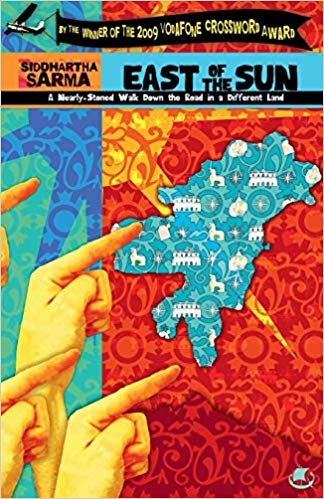
A.: Each book happened in a specific context and for unique reasons. The Grasshopper’s Run was meant to be a YA novel. While researching it, I travelled in the Northeast and Myanmar, and afterwards wrote a series of emails describing my travels, which I sent to friends. These were read by a publisher, who asked me to expand them into a travelogue, from which East of the Sun (Tranquebar, 2010) happened. Meanwhile, I wrote two books for the popular 103 series by Scholastic, one on great travellers I admire and the other on historical mysteries. And then I wrote Year of the Weeds followed by Carpenters and Kings. I guess one reason why this is an eclectic mix is I follow a story to its natural place and write it accordingly. So we have a situation where, although history is what I am academically suited to writing about, Year of the Weeds is contemporary political fiction. I am comfortable with chasing a story wherever and to whichever genre it leads. I think the only concern for a writer should be whether the story is told well or not. Having said that, I am still learning, so if I discover that I should stick to specific genres, I shall do that.
9. Do the methodologies of research and writing for young adult literature and narrative nonfiction vary?
A.: It is possible that some researchers
might have different research methodologies depending on what genre they are
planning to write in. I do not have different methodologies. I choose a
subject, start reading about it, examine primary and secondary sources, select
those sources which are suitable for the story I have in mind, and then sift
through the material I obtain.
There are certainly differences in writing YA fiction and narrative nonfiction for general readers, including tone, scope, complexity of ideas, presentation of this complexity. In some ways, like channelling all the research into suitable concepts, narrative nonfiction is more challenging. In several other ways, like writing in a manner which holds the reader’s attention, and creating believable characters and plots, YA literature has its own set of challenges. Both are very rewarding genres to write in.
10. What are the kinds of books you like to read? Any favourites?
A.: I have followed several genres over the years, although now because of demands on my time I have to limit myself to those genres which I have consistently read. Of these, apart from literary fiction, I seem to have read crime and espionage fiction fairly consistently. Fantasy, which I was reading a lot of till some years ago, seems to have dropped off. I do not know if this is a temporary phase.
11. Who are the writers you admire and may have influenced you?
A.: These are among the writers I have liked almost consistently. In literary fiction: Peter Carey, JM Coetzee, Saul Bellow, John Updike, Ernest Hemingway, Graham Greene, Nelson Algren, John Steinbeck. In crime: Dashiell Hammett, Chester Himes, Henning Mankell, Elmore Leonard, PD James, Janwillem van de Wetering. In espionage: John le Carre, John Buchan, Len Deighton.
12. What next?
A.: Perhaps a dark story. One of the problems with India after 2014 has been we have been affected by the doings of the ideology and the people in power on a daily, personal level. On a daily, personal level, one finds it increasingly difficult to feel joy in most things, or to happily coast along choosing stories to read or tell at a leisurely, whimsical pace. I would have liked to write a story I was working on in 2013, but that will have to wait for some time. At the moment, we need stories that deal with or are related to the situation we have in India, or which go some way towards explaining things. We can’t ignore that. So, perhaps something dark, something angry.
Given how more and more children are being reared in urban settings it is getting tougher for them to be close to nature. For instance I was very surprised to watch the look of astonishment on a seven-year-old boy’s face when I was explaining crop cycles. Till then he was under the impression that the fresh produce arrived in the shop magically. Well, he was clued in sufficiently to realise people carted it in but was not curious enough to ask where did it actually come from? Where was it grown? So if urbanisation is robbing children of this basic knowledge of farming / nature under normal circumstances. Imagine how challenging it is to explain to the children on how to manage themselves in diverse ecosystems particularly at the time of natural disasters.
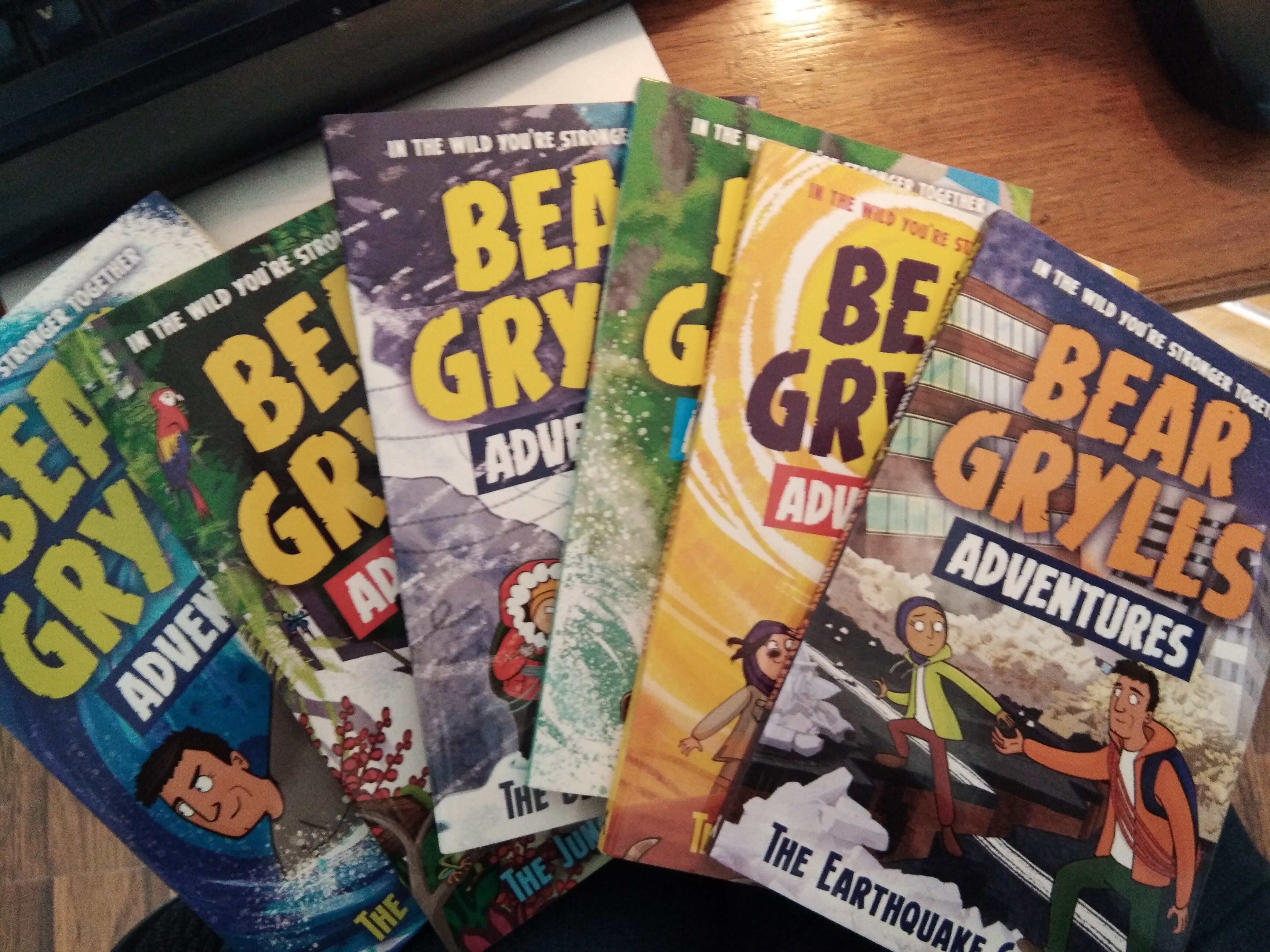
There is a paucity of literature on how adults should behave when a natural disaster strikes. What are the immediate responses and how to survive the long haul. ( Within this there are other complications of gendered responses, fragile situations and how to rehabilitate.) There is even less literature available for children on how they should respond in such situations. And if there is, it is mostly confined to Girl Guide or Boy Scout manuals, not necessarily accessible to the majority of children. Also books on disaster management need to be pitch perfect while communicating to the children rather than talking down to them. It will inevitably result in a brain freeze on the part of the kids and builld a resistance. This is where the Bear Grylls Adventures, a series of slim chapter books, created by noted adventurer and survival expert Bear Grylls are a delight to read. Simply told adventure stories in different settings where within the plot the young readers are shown how to respond and behave in different scenarios — earthquakes, blizzards, desert, jungles, sea and river. A pleasure to read these pitch perfect books.
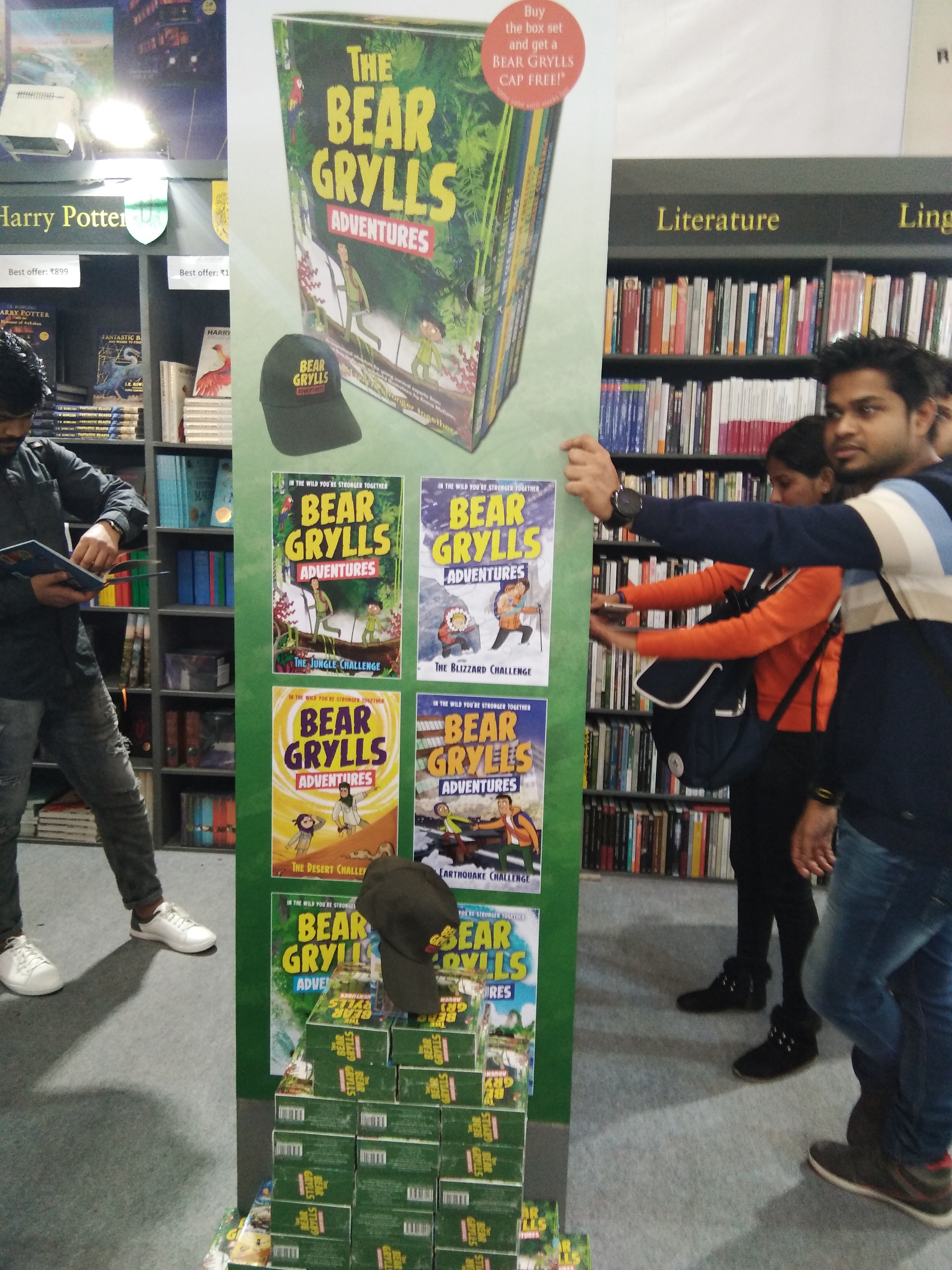
In India the books have been published by Bloomsbury India. They are a set of six books reasonably priced and a must in every school library if not in every child’s personal library. In fact the importance the publishers rightly give to these series was evident at the posters displayed in their world book fair stall held in Delhi.
Bear Grylls Adventures by Bear Grylls. Illustrated by Emma McCann. Bear Grylls is an imprint of Bonnier Zaffre, a Bonnier Publishing Company, Great Britain, 2017. ( In India the books are distributed by Bloomsbury India and are priced at Rs 199 each.)
In the past few months new imprints have been announced by publishing houses in India.
The first was Niyogi Books launching their three imprints — Thornbird for translation ( H S Shivprakash), Olive Turtle for Original Fiction ( Keki Daruwalla) and Paper Missile for Non fiction ( Udaya Narayan Singh).
The second was the translation programme announced by Ratna Sagar led by Dinesh Sinha. They have launched with three titles and have a few more planned in 2018.
The third is the children’s imprint launched by Readomania.
This afternoon Westland ( an Amazon company) announced the launch of a new literary imprint called “Context”. It will include serious, thoughtful, politically engaged fiction and non-fiction, mostly in hardback, by writers from the Indian subcontinent.
And if the rumours are true then there are some more to be announced later this year.
On 12 July 2017 a terrible incident happened in Noida, a suburb of Delhi. It involved the alleged illegal confinement overnight of a maid, Zohra, accused of having stolen money from her employers living in one of the recently constructed gated communities. Early next morning people from the village where Zohra lived surrounded the housing complex where she was supposed to be. After that it became ugly — events on the ground and the narratives being circulated and published. One version says she says her employers had not paid her for months. Another one says she asked for a loan against her unpaid wages. Another version says the employers had suspected her of stealing earlier but were only able to confront her now and Zohra had confessed. Whatever the truth in this case ( as it is still under police investigation) the fact is such events expose the vast socio-economic divide which exists between employers and domestic staff, particularly the maids. There are many stories such as this that happen every day, most of which go unreported.
With growing demands and increasing number of nuclear families there is an exponential rise in the demand for maids. Also women from poorer families are being sent to work in middle-class homes as it is perceived as a “win-win” situation where the woman not only earns an income, saves money since her food is taken care of by the employer and she is also “safe” in the employer’s home. But it is far, far more complicated than that; impossible to analyse in one article or book.
Of late there have been books and articles published in India exploring the status of maids. These range from memoir, non-fiction to fiction. The first of these books about maids was Baby Haldar’s memoir A Life Less Ordinary. Baby was working as a maid in Delhi when her employer gave her a notebook and pen to write her story. She wrote it in Bengali and it was translated from Hindi to English by Urvashi Butalia to resounding international acclaim in 2006. Earlier this year Speaking Tiger Books published Pooranam Elayathamby’s Perhaps Tomorrow: The Memoir of a Sri Lankan Housemaid in the Middle East. Pooranam has co-authored it with her husband Richard Anderson.
Recently there have been other perspectives published as well. A seminal book is Tripti Lahiri’s Maid in India just published by Aleph. It is a sobering and disturbing account of maids. It is based on innumerable interviews.
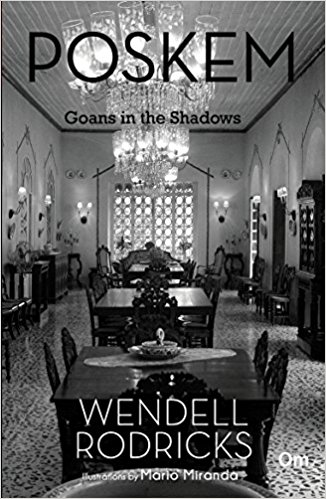
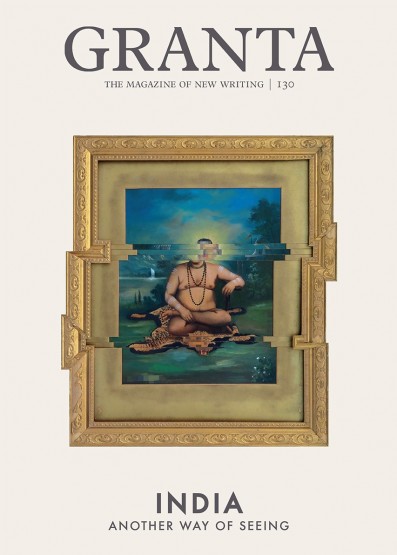
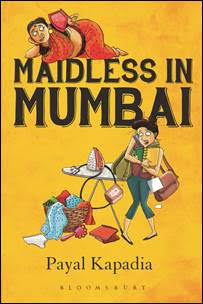
Award-winning fashion designer Wendell Roderick’s extraordinary collection of short stories Poskem: Goans in the Shadows. It is about the Poskim of Goa. These were young children taken in by wealthy families and retained most often as servants. Through a bunch of short stories focused on events which he says are “all tragically true” though the names and characters are his creations Wendell Rodericks shows another side to this complicated relationship. In the Winter 2015, Granta 130 issue which focused on writing from India, Deepti Kapoor wrote a hard-to-forget story, A Double-Income Family, about a Mrs Mehra and her domestic living in a gated community. And then there is award-winning children’s literature writer Payal Kapadia’s first “grown-up” book Maidless in Mumbai. It has been published by Bloomsbury India and promoted with the blurb: “A funny, irreverent, tongue-in-cheek look at the maid-memsahib relationship on the cusp of social change: the horrifying prospect of being wholly dependent on those we employ; the terrifying notion that maids are a dying breed; and the spectre of surviving in a world without them!”
It is an extremely tangled socio-economic relationship that exists in Indian society today. As Veena Venugopal, journalist and author, wrote recently in “Pop goes the class bubble” ( Hindu Blink, 30 June 2017) :
Class and caste difference are, of course, endemic to India. Yet, never before in our history have so many people managed to employ so many others in their service. Predictably, we are unsure about the exact terms of that engagement. An Indian upbringing instinctively teaches us to negotiate for everything. And so we do, browbeating the maid to take ₹1,000 less in her salary, offering the driver an overtime and then arguing about the calculation of it. And then we go shopping, and hey! everything’s on sale, and we don’t even realise when the bill gets to ₹15,000. The maid sees this. She knows enough mathematics to calculate how many months’ salary that is. But we carry on — consumption is our entitlement, social parity is not our problem. Until, one day, we turn around and find two decades of resentment standing in our kitchen, bearing a knife that is not intended to be used for dicing potatoes. “Shocking”, we’ll all say when we hear that account.
For a while, a couple of years ago, with the intention of writing a book, I researched stories of housemaids in India. The accounts of employers — people like us — that I heard were horrific. No holidays, no food, no increments, no healthcare and, more often than you’d think, no pay even. In an ad that was running on television those days, Amitabh Bachchan scolded his help for buying the wrong brand of bulb, and said, “Please stop this habit of thinking”. Several helps I spoke to referred to this ad. “It’s bad for you when we think,” one said, “because in your hearts you know that you haven’t done anything to deserve happy thoughts from us.”
In this uneasy, mutually suspicious cohabitation lies the real future of the country’s social fabric.