Profile Books Posts

“The Economic Consequences of Mr Trump: What the Trade War Means for the World” by  Philip Coggan 

Economic policy set at the whim of one man.

Tariffs up one day and down the next.

Businesses bewildered, consumers alarmed.

As Donald Trump wages his trade war, what will become of a global economy dependent on close trading links?

Leading financial journalist Philip Coggan lifts the lid on Trump’s economic gamble, why it’s a universal threat and how we can make sense of this new ‘age of chaos’. This is his clear-sighted and powerful rallying cry in defence of global trade — and why it matters for the world.

On 2 April 2025, President Donald Trump unveiled a package of tariffs on products from almost every nation in the world. The scale of these tariffs (which are taxes on imports) surprised observers around the globe and quickly sent financial markets into a tailspin. While Mr Trump said the announcement represented ‘Liberation Day’, the Economist quickly dubbed it ‘Ruination Day’.

Exactly 100 years previously, in 1925, Winston Churchill, as chancellor of the exchequer, took Britain back onto the gold standard. John Maynard Keynes, the great economist, advised again the decision and published a book lambasting the move called The Economic Consequences of Mr Churchill. This book is a homage to Keyne’s polemic and argues that Mt Trump’s package, and the confusing announcements that followed it, was one of the great economic mistakes in history.

The tariffs, or Trump tax, are a mistake in many different ways. But the most important error is a fundamental misunderstanding of the global trading system. The US does not make wholly American goods, nor the UK wholly British goods. Products are constructed from materials and components brought in from all over the world. Around half of all US cars are made from imported parts, for example. When you impose tariffs on imported components, you increase the cost of domestic producers.

The decisions of Winston Churchill and President Trump have some striking parallels. Keynes lamented that the consequences of a return to the gold standard would be a decline in the standard of living in the form of lower wages. Economists today worry that US workers will face a reduced standard of living in the form of higher prices.

Nostalgia also links the two proposals. Churchill was trying to recreate the conditions that existed before the First World War when Britain was the centrepiece of the global financial system, sterling was the pre-eminent currency and British industries were matched only by those of Germany and the US. Mr Trump is trying to recreate the conditions of the 1950s and 1960s, when US industry dominated the world and the men (and they were mostly men) employed in manufacturing could afford a house, a gas-guzzling car and all the latest gadgets.

If there are similarities between the mistakes of Trump and Churchill, there are also big differences. With the exception of Keynes, most experts in 1925 urged Churchill to rejoin the gold standard. Most modern economists would advise Mr Trump against hist trade policies – but he relies on his own instincts and the support of a narrow coterie of acolytes. Worst of all, Churchill’s policy mainly did damage to his own economy, but Trump’s approach is causing turmoil both in the US and in the rest of the world.

Read an extract from the book on Moneycontrol. It has been published by Profile Books/ Hachette India.

Philip Coggan is a former Economist and Financial Times journalist. In 2009, he was voted Senior Financial Journalist of the Year in the Wincott awards and best communicator in the Business Journalist of the Year Awards. Among his books are The Money Machine; The Economist Guide to Hedge Funds; the highly acclaimed More: The 10,000-Year Rise of the World Economy and Surviving the Daily Grind.

17 August 2025

“Inner Sense: How the New Science of Interoception Can Transform Your Health” by Caroline Williams

Inner Sense: How the New Science of Interoception Can Transform Your Health (published by Profile Books/Hachette India) looks at the intersection of many sciences to understand how humans can improve their health. It does not necessarily focus on those identified as clinically sick for whatever reason. Even able bodied individuals have their moments of anxiety, self-doubt, and possible physical manifestations thereof. It is about knowing oneself better without advocating positive toxicity. Caroline Williams attempts to understand scientifically the underlying reasons for a diverse group of individuals feeling the way they do. Her sample cases are fairly varied. She also advocates trusting one’s gut, following one’s instincts and trusting one’s heart.

On p.78 she makes a valid observation:

The brain’s predictions and interpretations of what’s happening in the body can carry a lot of weight in the equation that adds up to how we feel. So it stands to reason that if we could somehow change what the brain thinks is happening in the body, it mught help to change how energised we feel.

An important aside: I’m not suggesting that anyone with chronic fatigue is able to think themselves better. Research suggests that this condition is usually the result of a physical glitch in the system, not an imagined one, and the same is true of many instances of everyday fatigue.

Later she discusses at length about the importance of gut health and recognising the signals.

p.101ff …gut feelings are so important. If hunger didn’t make us feel bad and eating didn’t feel good, our prehistoric ancestors might have wasted away in a cave rather than risk going out hunting and gathering. If being sick didn’t feel so miserable, we might not learn to avoid bad food, and the next rotten piece of meat could kill us. And if we didn’t know to stop eating when we felt full, we might keep seeking out food at the expense of other important things, such as staying safe and warm and fostering life-enriching relationships.

These relationships are as important for our survival as finding enough calories. Humans are relatively puny compared to our natural predators, and we have long childhoods, during which we are dependent on others for food. It makes sense that at some point in our evolution, the basic motivational feelings for finding food were recycled as motivators that prompted us to seek out social institutions. As a result, we get hungry for food but also for human connection and comfort. We feel sick not just when we’ve eaten something rancid but also when a creepy stranger stands too close to us. And we feel warm and fuzzy inside when eating our favourite meal and when we’re with someone we love. For most of our evolutionary history this system has guided us well. But in a world where comfort food is easier to come by than meaningful human connection and where much of what we eat is tastier than it is filling, it can be a struggle to know what our bodies — and minds — are asking for.

To make things even more complicated, food and comfort aren’t the only things our guts communicate with the brain about. The gut is hardwired into the fight-of-light system, meaning that it also sends out signals that are a side effect of a body-wide call to action. We all know what it feels like when our stomach flips when we are nervous; when we are faced with a life-or-death situation (or a more trivial social encounter that feels like one), digesting our last meal can wait. The blood that would usually be required for digestion is diverted to the muscles and brain, so its share of glucose and oxygen can be used to deal with the emergency. The sensation of a knot deep in your stomach, the fluttering of butterflies or a cold wave as the blood drains from your belly is a direct result of digestion grinding to a halt while the blood is sent elsewhere.

This system also works well — at least, when we need a burst of energy to deal with a cahllenge — but it can easily get out of whack in the stressful modern world. The link between emotional issues and digestive problems that has long proven difficult to explain is becoming increasingly clear — and even harder to treat in a medical system that thinks of conditions as being either physical or ‘all in the mind’.

All things considered, the overlap between our gut feelings and emotional state means taht trusting your gut is not always as straightforward as it might be.

p.111ff It is often said that the gut has a ‘second brain’ that operates semi-independently from the brain in our heads. The enteric nervous system is embedded in the gut walls along most of the gut, and contains more neurons than the spinal cord. It’s reputation as a second brain comes from the fact that it can manage the complex process of digestion without any input from the actual brain, regulating the contractions that push food through the gut and the hormones involved in the digestion.

While the enteric nervous sytem can do a lot without the say-so of the brain, they are not totally disconnected. Over the past decade, it has become clear that the insides of the gut not only talk among themselves via the enteric nervous system, but are also in constant contact with the brain, via the vagus and spinal sensory nerves. These lightning-fast connections mean that the brain hears what’s happening in the gut in miliseconds. It also means that whatever is happening in the brain affects the gut just as quickly. This is the much-talked-about gut-brain acix, which is proving to be a new frontier in understanding what makes us tick — and what makes us sick.

This is a fascinating book. It goes into a fair amount of biochemical details about how these systems are interconnected inside us. Also, sharing new scientific discoveries or rather finding scientific evidence for statements (as mentioned above) that people have made for a long time and discovering the truth.

Perhaps this book is for you, if you are an eclectic reader, perhaps it is for you, if you are a specialist interested, but it is definitely for you if you are charmed by Ozempic and Wegovy.

27 July 2025

“Victory in the Kitchen” by Annie Gray
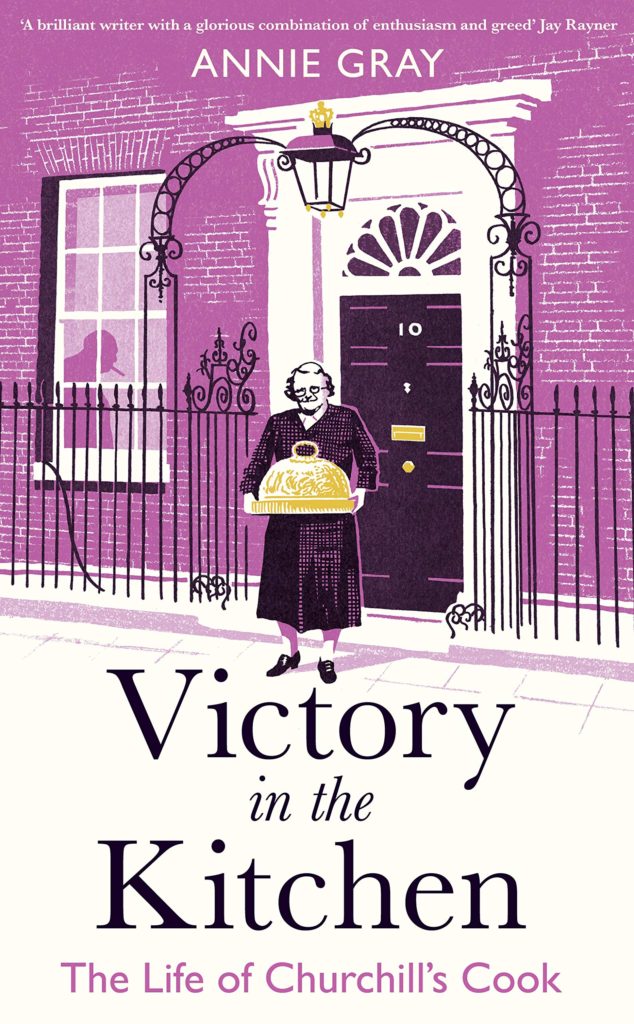
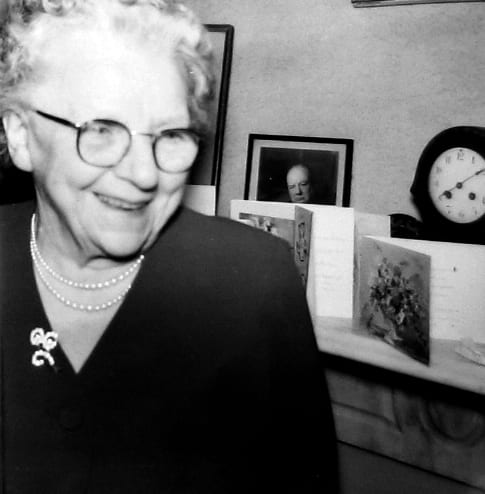
Victory in the Kitchen is a biography of Winston Churchill’s cook, Georgina Landemere. She worked for the Churchills from 1940 to 1954, the longest serving of any of their domestic servants. She was also particularly close to Clementine and remained in touch, sending each other cards at Christmas, till the late 1970s. Annie Gray, the biographer is an established food historian who has also written books like The Greedy Queen: Eating with Victoria and The Official Downton Abbey Cookbook.

Georgina ( 1862 – 1977) was born during the Victorian period when being in service was acceptable and probably the only reliable option for young girls. She was schooled till such time it was mandatory for children to be educated but as soon as it was legal for her to leave school, she did. She went into service beginning her career as a scullery maid. Georgina’s life span coincides with a fascinating time in food history. During the Victorian Age dishes were still created from scratch and needed time and patience. The Edwardian period had far more elaborate dishes that called upon the skills of the cook to create dishes that were not only magnificent to look at but were fine in taste too. It also coincided with the variety of copper dishes and moulds that were being mass-manufactured from the late 1870s onwards, enabling food to be served that looked nothing like in it’s natural form. During the war years, there was severe rationing and many of the ingredients required to create these elaborate meals were no longer easy to come. It relied upon all the skills and magical expertise of the cook to conjure up fantastic dishes. It was also the time of modern kitchen conveniences such as the gas stove, refrigerators, ice cream machines etc began to be readily available. Post-war years continued to be hard as rationing continued.

Toward the end of Georgina’s lifetime, dishes were no longer required to be elaborate. It was possible to have TV dinners. Recipe books explaining the basics of cooking were popular and a thriving segment for publishers. In fact, Georgina too had written a cookbook, endorsed by Clementine Churchill. It consisted of her tried and tested recipes. Unfortunately she was criticised for putting together recipes that were hard to make. But if her handwritten recipes, some of which have been reproduced in “Victory in the Kitchen”, are read, they are simple instructions easily understood by experienced cooks. With least fuss she is able to share recipes.

Georgina was fortunate to have found work in upper middle class households from her first assignment. She turned out to be an asset in any household that she was employed. She also remained in the good books of former employers who continued to correspond with her and on occasion employ her for an event or two. The Churchills called upon her to create the last meal to be served at 10 Downing Street when Winston Churchill finally quit the place for the last time and a dinner had been organised in his honour to which the young Queen Elizabeth had also attended.

The Churchills were familiar with Georgina’s cooking having sampled it before at dinner parties. So by the time she joined their household as a full time employee, they were known to each other. A factor that helped tremendously given their temperaments. Winston Churchill had a notoriously irascible temperament and could barely recall the names of his domestic staff. He was rude and inevitably used derogatory descriptions while referring to any particular person. He also loved to entertain. Sometimes he would organise large gatherings at very short notice and expect a good meal served, in keeping with his office. He was a firm believer in the informal dinner-party diplomacy. Many cooks left the household as being unable to keep this gruelling schedule. Not Georgina. She was calm and could create a variety of dishes, from the simplest to the most elaborate. Churchill’s clear chicken soup that were the doctor’s orders. So much so that Georgina was one of the few people from his staff who was authorised to use the official bunkers at 10, Downing Street. In fact, Churchill was known to admonish her while hustling her down to the shelter that, ‘I always have to be out after you. If Mr. Hitler gets you, I won’t get my soup!” On VE day, after his victory speech, he thanked Georgina personally for her work, taking her to the balcony to see the cheering crowds.

Victory in the Kitchen is a fascinating account of Georgina’s life. Given that she married a French chef, twenty-three years her senior, that the book also becomes a wonderful excuse for Annie Gray to investigate he food histories of France and England and the transformation that these cuisines underwent in the late-nineteenth and early twentieth centuries. Using the life of Georgina as a springboard to delve into the past to understand the position of women, the impact of the world wars on women, their employment, and of course the evolution of food tastes is well out together by Annie Gray. Surprisingly though Georgina’s name is missing from the book cover given how much effort the author has put in rescuing the history of a “cook” who could otheriwse have easiy been forgotten. Nevertheless except for this minor glitch Victory in the Kitchen is an excellent book.
1 August 2020

Mary Beard, “SPQR: A History of Ancient Rome”


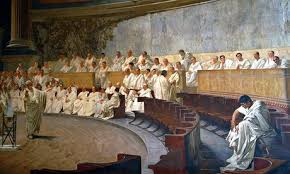
I have spent a good deal of the past fifty years of my life with these ‘first millennium Romans’. I have learnt their languages as well as I can. I have read a good deal of the literature they have left us ( no one has read it all), and I have studied some of the hundreds of thousands of books and papers written over the centuries about them, from Machiavelli and Gibbon to Gore Vidal and beyond. I have tried to decipher the words they carved into stone, and I have dug them up, quite literally, on wet, windy and unglamourous archaeological sites in Roman Britain. And I have wondered for a long time about how best to tell Rome’s story and to explain why I think it matters. … .

I no longer think, as I once naively did, that we have much to learn directly from the Romans — or, for that matter, from the ancient Greeks, or from any other ancient civilisation. We do not need to read of the difficulties of the Roman legions in Mesopotamia or against the Parthians to understand why modern military interventions in western Asia might be ill advised. … .

But I am more and more convinced that we have an enormous amount to learn — as much about ourselves as about the past — by engaging with the history of the Romans, their poetry and prose, their controversies and arguments. Western culture has a varied inheritance. Happily, we are not the heirs of the classical past alone. Nevertheless, since the Renaissance at least, many of our fundamental assumptions about power, citizenship, responsibility, political violence, empire, luxury and beauty have been formed, and tested, in dialogue with the Romans and their writing. 

We do not want to follow Cicero’s example, but this clash with the bankrupt aristocrat, or popular revolutionary, with which I started this book still underlies our views of the rights of the citizen and still provides a language for political dissent: “Quo usque tandem abutere, Catilina, patientia nostra?’ The idea of ‘desolation’ masquerading as ‘peace’, as Tacitus put into the mouths of Rome’s British enemies, still echoes in modern critiques of imperialism. And the lurid voices that are attributed to the most memorable Roman emperors have always raised the question of where autocratic excess ends and a reign of terror begins. 

(Mary Beard, SPQR, p. 534-6)

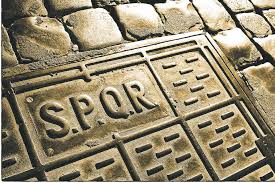
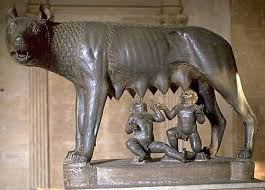
SPQR: A History of Ancient Rome by Mary Beard takes its title from a famous Roman Romecatchphrase, Senatus PopulusQue Romanus, ‘The Senate and People of SPQRRome’. For a scholar who has lived with her subject for nearly half a century to produce a clean narrative and create a thoroughly readable book, not packing it with jargon is indeed very commendable. As she says in the opening pages of the book her intention is to write a story that “has to be a bold work of reconstruction, which must squeeze individual pieces of evidence — a single fragment of pottery, or a few letters inscribed on stone”. What is truly incredible with crystal clear clarity she make innumerable connections with the literature (written material, myths and oral legends) left by the Romans to the evidence found at archaeological sites and linking it to contemporary politics. Not for a moment does it become dull. One of my favourite examples is how she analyses the founding myth or legend of Rome to the legend of Romulus and Remus, linking it to Cicero, and interestingly enough to Benito Mussolini. Apparently the nurturing wolf was an addition made in the fifteenth century explicitly to capture the founding myth Wolf and baby twinsand baby twins. But copies of the famous image are found all over the world thanks to Mussolini who distributed them far and wide as a symbol of Romanita. Later she adds that Livy was one of the Roman sceptics who tried to rationalise this particularly implausible aspect of the tale. “The Latin word for ‘wolf’ ( lupa) was also used as a colloquial term for ‘prostitute’ ( lupanare was one standard term for ‘brothel’). Could it be that a local whore rather than a local wild beast had found and tended the twins?” ( p.59) Similarly throughout the book there are many more examples of such absorbing detail. Whether it be about marriage, politics, elections, citizenship, status of women, adoption, warfare, military, trade, migration etc.

For those in Italy and Britain who live surrounded by Roman ruins and have constant engagement with Roman history this book must be utterly fascinating. Mary Beard has a wonderful agreeable style of writing that makes the history of ancient Rome accessible to everyone. It is not a prerequisite that a fair understanding of the history is required. And yet she has packed SPQR with a detailed bibliography, a timeline, an index and plenty of illustrations/photographs that it can work for the lay reader or the scholar.

In India most Indians go about their daily lives doing exactly what this book is spelling out — talking about the huge impact mythology and ancient literature has had through the ages and in modern times. Indians do it all the time with their oral traditions, myths, folklore and ancient texts. A testimony to this is the immensely successful commercial fiction. It is a fine art by contemporary storytellers to create fantastical stories that blend the modern with the ancient and myth with history. Since these writers are not historians like Mary Beard they take full advantage of their creative license to spin imaginative yarns. Whereas Mary Beard points out in the utterly fascinating SPQR that there is sufficient empirical evidence at ancient Roman archaeological sites whether in Italy or abroad to prove much of the written records inherited over two millennia is more or less authentic.

SPQR has been on the list for many literary prizes including the inaugural British Book Industry Awards, in the adult category for the 10th IBW Book Award and a finalist for the National Book Critics Circle — deservedly so!

Mary Beard SPQR: A History of Ancient Rome Profile Books, London, 2015. Hb. pp. 600 Rs 2250 ( Distributed in India by Hachette India) 

5 April 2016


Ox-Tales, Profile books

Ox-Tales, Profile books

This is a comment I wrote to a friend who asked, “I was looking for a good book of modern short stories – European and or American. preferably written in the last 10 years. could you recommend anything?” There is a set of four anthologies called Ox-Tales, published by Profile Books and Oxfam. It consists of 38 short stories by contemporary writers. I think it is a mixed bag, but sounds very promising. I am itching to read it. It should be available in India soon, if not already. Hachette India is now representing Profile Books Ltd in India. Some of the authors are: Kate Atkinson, Beryl Bainbridge, William Boyd, Jonathan Buckley, Jonathan Coe, Geoff Dyer, Michel Faber, Sebastian Faulks, Helen Fielding, Giles Foden, Esther Freud, Xialou Guo, Mark Haddon, Zoë Heller, Victoria Hislop, A.L. Kennedy, Hari Kunzru, Hanif Kureishi, John le Carré, Marina Lewycka, Alexander McCall Smith, Michael Morpurgo, David Park, DBC Pierre, Ian Rankin, Vikram Seth, Nicholas Shakespeare, Kamila Shamsie, Lionel Shriver, Helen Simpson, Ali Smith, William Sutcliffe, Rose Tremain, Joanna Trollope, Louise Welsh, and Jeanette Winterson.

Retelling myths

Retelling myths

Recently I have read a bunch of books aimed at children and YA that retell well-known mythologies. Maybe it is only a moment in time when they are being published or re-issued. For instance, Anthony Horowitz retelling of classic myths and legends, published my Macmillan. Horowitz first wrote them in 1985. It is a set of six books, although I have only read two. Familiar tales told with the zip and zing that are Horowitz style of storytelling. His introduction is so straightforward, “I can’t pretend I’m any great expert on this subject, and everything I’m writing in this introduction may be quite wrong, but I’ve always thought that this is how myths must have begun. People need explanations for the world that was around them, and the most imaginative of them — the shamans or the storytellers — began to weave together stories that did just that.” As with many of his stories, there is a zip and zing to his style. Great fun to read. Unfortunately, while reading the two volumes in quick succession, I realised that a couple of the illustrations had been repeated. It should not be a problem really, except in this case it is of a coy “nymph” who is used to represent Aphrodite and a portion of the Scylla and Charybdis story as well. A bit confusing. 🙂

Hachette has a new series called “The Book Mine” where they reissue classics. One of these is the gorgeous retelling by Nathanial Hawthorne of six great Greek myths for children — A Wonder-Book for Girls and Boys”. Definitely a treasure trove, apart from the genteel style of storytelling.

Another book preoccupied with the retelling of myths, but this time Norse is Francesca Simon’s The Sleeping Army Imagine a world where the official state religion is that of the pagan Saxons and Vikings. People still worship the Norse gods. Christianity has been reduced to a minor exotic cult. (Although the Nordic religion being practiced has all the familiar institutional structures of Christianity.) The young heroine, Freya, is named after the Nordic goddess. Her parents have separated. Her mother is a priestess and her father is a guard at the Museum. While spending the night with him at the museum, Freya is fascinated by the Lewis Chessmen on display. And it is from there that this lovely story takes off.

This is the first children’s book published by Profile Books Ltd and Faber and Faber. It is a story inspired by the Lewis Chessmen on display at the British Museum last year in the exhibition — “History of the World in 100 objects”. Strong storytelling with a good connection between contemporary events, debates (there is even a neat little conversation about religion and Richard Dawkins) and mythology. Highly recommended! ( )

The myth quest series by Hachette India, written by Anu Kumar retell popular and lesser known, but equally fascinating tales from Indian mythology. I have not finished reading the books, so am unable to comment sufficiently, but here is a link of a review in the Hindu. ( http://www.thehindu.com/life-and-style/kids/article3296420.ece )

Web Analytics Made Easy -
StatCounter