Simon & Schuster India Posts

“In Those Days There Was No Coffee” by A.R. Venkatachalapathy

Since it was first published in 2006, this beloved volume of essays by A. R. Venkatachalapathy on the cultural history of colonial Tamilnadu has been enjoyed equally by scholars looking for rigorous history-writing and lay informed readers in search of a classic good read. The new expanded edition hopes to do more of the same.

The author draws from sources as varied as poetry, fiction, essays, reviews, comments, advertisements, and notices to bring to life a rich and vibrant cultural history. As authoritative as they are captivating, the ten essays in the volume represent a valuable addition to the small corpus of history titles which also qualify as accomplished writing.

Read an extract from the book on Moneycontrol. It is published by Yoda Press/ Simon & Schuster India.

A.R. Venkatachalapathy, historian and Tamil writer, is a Professor at the Madras Institute of Development Studies, Chennai. He has taught at universities in Tirunelveli, Chennai, Singapore, and Chicago. A recipient of the V.K.R.V. Rao Prize, the Mahakavi Bharati Award, and the Ramnath Goenka Award he has also received the Vilakku Pudumaippithan Award and Iyal Virudhu, both for lifetime contribution to Tamil. In 2024, he won the Sahitya Akademi award for Tamil. Venkatachalapathy has written/edited over thirty books in Tamil. His publications in English include Swadeshi Steam: V.O. Chidambaram Pillai and the Battle Against the British Maritime Empire (winner of the Ramnath Goenka Award for Excellence non-fiction, 2024); The Brief History of a Very Big Book: The Making of the Tamil Encyclopaedia; Tamil Characters: Personalities, Politics, Culture; Who Owns That Song?: The Battle for Subramania Bharati’s Copyright; and The Province of the Book: Scholars, Scribes, and Scribblers in Colonial Tamil Nadu.

15 Oct 2025

“The New Age of Sexism: How the AI revolution is reinventing misogyny” by Laura Bates

‘Laura Bates explains how they built the future – and forgot to put women in it’ CAITLINMORAN

‘Fascinating and essential… I urge you to read every syllable’ JO BRAND

‘All men must read this book if they have any interest in a truly just, fair and equal society’ ROBIN INCE

AI is here, bringing a seismic shift in the way our society operates. Might this mean a future reimagined on equitable terms for women and marginalised groups everywhere?

Not unless we fight for it. At present, power remains largely in the hands of a few rich, white men. New AI-driven technologies, with misogyny baked into their design, are putting women in danger, their rights and safety sacrificed at the altar of profitability and reckless speed.

In The New Age of Sexism, Sunday Times bestselling author and campaigner Laura Bates takes us deep into the heart of this rapidly evolving world. She explores the metaverse, confronts deepfake pornography, travels to cyber brothels, tests chatbots, and hears from schools in the grip of online sexual abuse, showing how our lives – from education to work, sex to entertainment – are being infiltrated by easily accessible technologies that are changing the way we live and love. What she finds is a wild west where existing forms of discrimination, inequality and harassment are being coded into the future we will all have little choice about living in – unless we seize this moment to demand change.

Gripping, courageous and eye-opening, The New Age of Sexism exposes a phenomenon we can’t afford to ignore any longer. Our future is on the line. We need to act now, before it is too late. ‘Urgent reading for anyone who is interested in the intersection of tech and gender equality, and indeed anyone who wants to be a part of building a better future, free from misogyny’ EMMA-LOUISE BOYNTON

‘A brilliantly researched, incredibly illuminating and frequently chilling account of the next chapter in tech’s ongoing assault on our core values. A chapter that is already unfolding around us all’ JAMES O’BRIEN

Read an extract from the book on Moneycontrol. It is published by Simon & Schuster India.

Laura Bates studied English at Cambridge University and went on to be a freelance journalist. She has written for The Guardian, The Independent, The New Statesman, Red Magazine and Grazia among others. She is also contributor at Women Under Siege, a New-York based organisation working to combat the use of sexual violence as a tool of war in conflict zones worldwide. She is the founder of the Everyday Sexism Project.

15 Oct 2025

“Golwalkar: The Myth Behind the Man, the Man Behind the Machine” by Dhirendra K. Jha

Madhav Sadashiv Golwalkar, or Guruji as he is reverentially referred to by his followers, is regarded as the demi-god of Hindutva politics and often accorded a status higher than even the founder of the Rashtriya Swayamsevak Sangh, K. B. Hedgewar.

In 1940, when 34-year-old Golwalkar unexpectedly assumed charge of the RSS on Hedgewar’s death, the Hindu militia was still in its nascent stage, with pockets of influence mainly in Maharashtra. Under Golwalkar’s leadership over the next three decades, the RSS and its allied organizations, known as the Sangh Parivar, extended its network across the entire country and penetrated almost every aspect of Indian society.

Golwalkar’s ideological influence was enormous—and it did not end with his death. Golwalkar’s prescriptions in his incendiary book We or Our Nationhood Defined, published in 1939, now became central to the ideological training and radicalization of youth dedicated to the idea of a Hindu Rashtra. Here, Golwalkar prescribed a solution to India’s ‘minority problem’ based on the Nazi treatment of Jews in the Third Reich. As Dhirendra K. Jha conclusively establishes in this book, this would eventually provide the core of the Sangh’s credo and, as events in the recent past have borne out, have a lasting influence on Indian politics .

Drawing from a wealth of original archival material and interviews, the deeply researched and scholarly Golwalkar: The Myth Behind the Man, the Man Behind the Machine pierces through the many legends built around the man in the biographies written by his loyalists during his own lifetime. Jha traces Golwalkar’s path from a directionless youth to a demagogue who plotted to capture political power by countering the secularist vision of nationalist leaders from Nehru to Gandhi. Ambitious, insecure, tactical and secretive—Jha draws a compelling and sinister portrait of one of the most prominent Hindutva leaders, and of the RSS and its worldview that evolved under him. The book has been published by Simon & Schuster India.

Read an extract from the book on Moneycontrol.

Dhirendra K. Jha is a Delhi-based journalist. He is the author of Gandhi’s Assassin: The Making of Nathuram Godse and His Idea of India; Shadow Armies: Fringe Organizations and Foot Soldiers of Hindutva; and Ascetic Games: Sadhus, Akharas and the Making of the Hindu Vote. He is the co-author of Ayodhya: The Dark Night—The Secret History of Rama’s Appearance in Babri Masjid.

12 May 2025

Times Lit Fest, Delhi, panels on “Cultivating the passion of reading in children” and “What India Reads”
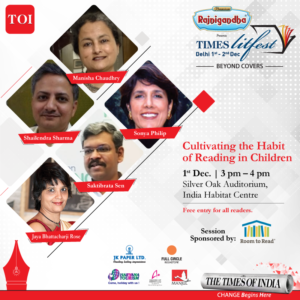
The Times LitFest Delhi ( 1-2 Dec 2018) was organised at the India Habitat Centre, New Delhi. I moderated two sessions with the both panel discussions focussed on reading.  The first panel was on how do cultivate the love of reading amongst children.
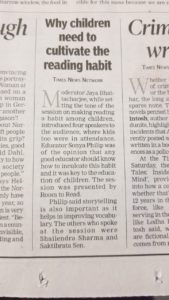
TOI, 2 Dec 2018

My co-panelists were Saktibrata Sen, Programme Director, Room to Read India Trust; Manisha Chaudhry, co-founder Manan Books; Sonya Philips, Founder, Learning Matters Foundation and is a reading specialist and Shailendra Sharma, Principal Advisor (Hon) to the Director Education, Government of NCT Delhi, India. The freewheeling conversation was on ways to promote reading. Every panelist spoke about their strengths and initiatives. From being a part of the government as is Mr Sharma and realising that it is critical to have a reading corner in every class and every section. So much so that the Delhi government has now allocated a handsome budget of Rs 10,000 / section to buy books.
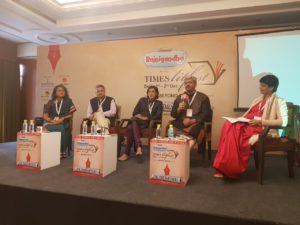
L-R: Manisha Chaudhry, Shailendra Sharma, Sonya Philips, Saktibrata Sen and Jaya Bhattacharji Rose

Fact is that even today few families can afford to buy newspapers, magazines, let alone books. So the first time many children particularly in the government primary schools hold a book is their school textbook. Few have any role models in the adults and older children in their immediate environment and as Principal Advisor to the government, Mr Sharma’s job is to introduce the love of reading. Both Mr Sharma and Mr Sen were of the view that reading is a lifeskill that is critical and needs to be learned beyond just being able to identify your name in whatever written script the individual is familiar with. Mr Sen, representing Room to Read, is involved in setting up partnerships with the governments to set up libraries. In India the Room to Read India Trust is working with 11 state governments. Ms Philips stressed on how till Grade 2 a child learns “how to read” but after that the emphasis is on “learning to read”. Ms Chaudhury with her many years of experience in publishing, looking at multilingual publishing and the critical need for children to have books in their own languages rather than only in English is what spurs her on to create new material every single day. She has recently launched two new magazines in Hindi called Mithvan and Chahak, the latter is meant for the early grade reader.

Everyone was of the agreement that it is important to create the joy of reading and align it as closely as possible to the child’s lived experience rather than alienate him/her from using complicated language in the written word. This was illustrated beautifully by an anecdote Mr Sharma shared about the complicated language used in a Hindi textbook to describe food which was a far cry from what is commonly used at home on a daily basis. Manisha Chaudhry spoke of her earlier initiatives to publish in tribal languages.

Alas we ran short of time otherwise it was promising to become a wonderful conversation on how to cultivate the joy of reading in children.

Join Sonya Philip, Manisha Chaudhury, Shailendra Sharma and Jaya Bhattacharji Rose in conversation with Saktibrata Sen – brought to you by Room to Read in the session, 'Cultivating the Habit of Reading in Children' at #TLFDelhi

Posted by Times Lit Fest – Delhi on Saturday, December 1, 2018
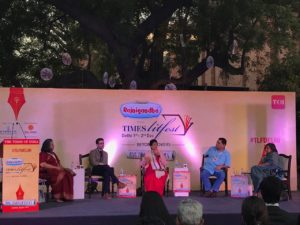
L-R: Ranjana Sengupta, Parth Mehrotra, Jaya Bhattacharji Rose, Udayan Mitra and Himanjali Sankar.

The second panel discussion was on “What is India reading?”. The panelists consisted of commissioning editors of four prominent publishing houses — Himanjali Sankar, Simon & Schuster India; Ranjana Sengupta, Penguin Random House India; Parth Mehrotra, Juggernaut and Udayan Mitra, HarperCollins India. Once again a freewheeling, adda-like, conversation about trying to figure out what India reads. The role of a commissioning editor has changed quite a lot in recent years. Traditionally commissioning editors were responsible for forming reading tastes but as Udayan Mitra pointed out that at times now the editor has to commission based on events and trends too. It is a kind of commissioning that did not exist earlier.

Today readers are accessing books through multiple platforms and in various formats — ebooks and audio books. It becomes increasingly difficult to ascertain how and what anyone is reading, let along a sub-continent like India where so many languages abound and there is rich regional literature too. Measuring reading tastes as Juggernaut is doing with their app and also because they are able to control their production pipeline while platform is something few are able to do even now. Most editors and publishing houses rely on print products that once released into the market are impossible to track. Some may be sold through brick-and-mortar stores, others through online spaces and yet other copies get sold as remaindered copies and secondhand books.

Listen to the conversation. So much was said. Many important bases within the Indian publishing landscape were touched upon. So much to think about.

What is India Reading? watch the conversation live at #TLFDelhi with Udayan Mitra, Himanjali Sankar, Ranjana Sengupta and Parth Mehrotra talking to Jaya Bhattacharji Rose.

Posted by Times Lit Fest – Delhi on Saturday, December 1, 2018

All in all two fantastic conversations that I was glad to be a part of.

2 December 2018 
Jaya’s newsletter 3 – 11 November 2016

( Please feel free to write with suggestions and comments: jayabhattacharjirose1 at gmail dot com )

Hello!

On 8 September 2016, the demonetization of Rs 500 and Rs 1000 was announced by the government of India. Newly designed currency, freshly minted with embedded chips will be brought into circulation. It is a move to counter black money in the country but it would be interesting to know how this impacts many of the publishers and booksellers in India, many of whom deal predominantly in cash. For now it is impossible to tell.

New Arrivals

  • Jorge Carrion Bookshops (MacLehose Press)
  • Cecilia Ahern Lyrebird ( HarperCollins India)
  • Jeff Kinney Diary of a Wimpy Kid: Double Down ( Puffin, PRH India)
  • Twinkle Khanna The Legend of Lakshmi Prasad ( Juggernaut)
  • Bina Shah A Season for Martyrs ( Speaking Tiger)
  • Ritu Menon Loitering with Intent ( Speaking Tiger)
  • T.J.S. George Askew ( Aleph)
  • Anthony Horowitz Magpie Murders ( Hachette)
  • Jeffrey Archer This was a Man ( Pan MacMillan India )

Jaya Recommends:

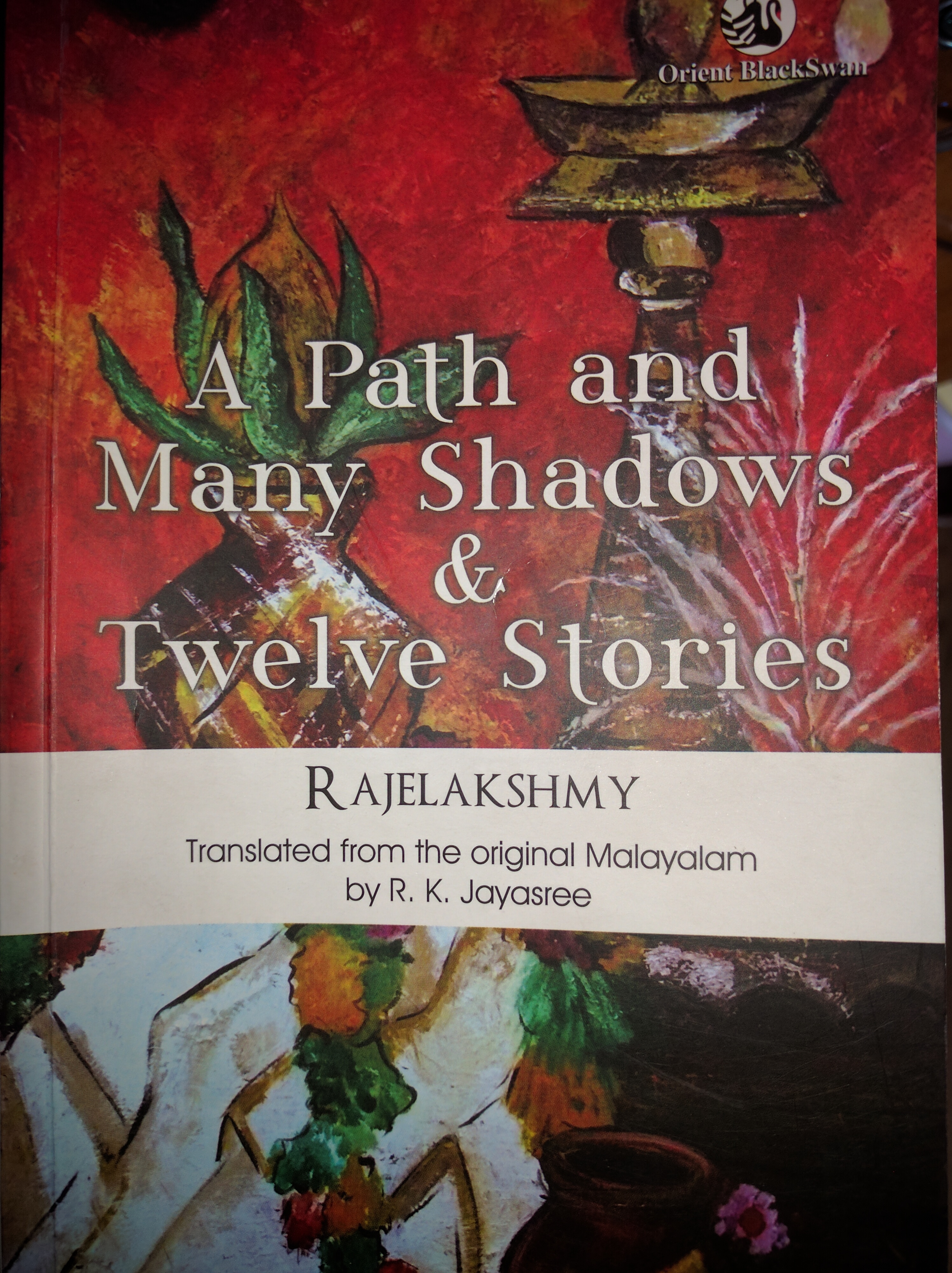
  • Rajelakshmy, a physicist by training who published these extraordinary “feminist” stories in the weeklyimg_20161111_102225 Mathrubhumi and monthly Mangalodayam. She committed suicide in 1965 but the stories and the incomplete novel have been compiled together for the first time as A Path and Many Shadows& Twelve Stories  (Translated from Malayalam by R.K. Jayasree, Orient Black Swan)
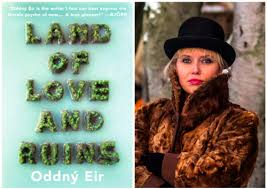
  • oddny-eirOddny Eir’s incredibly stunning Land of Love and Ruins.  It is a semi-autobiographical reflection on nature, literature, philosophy and commerce. Oddny Eir has also written songs for Bjork.  (Translated from the Icelandic by Philip Roughton, Restless Books)
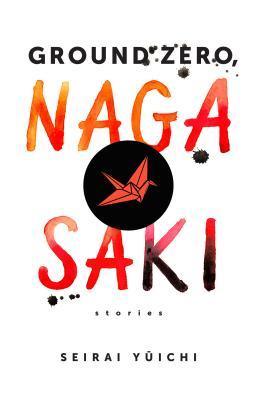
  • Seirai Yuichi’s magnificent Ground Zero, Nagasaki : Short Stories . These22329531 chilling stories set in contemporary Nagasaki are about the  minority community of Japanese practising Catholicism and trying to survive the endless trauma of the atomic bomb. (Translated by Paul Warham. Columbia University Press)
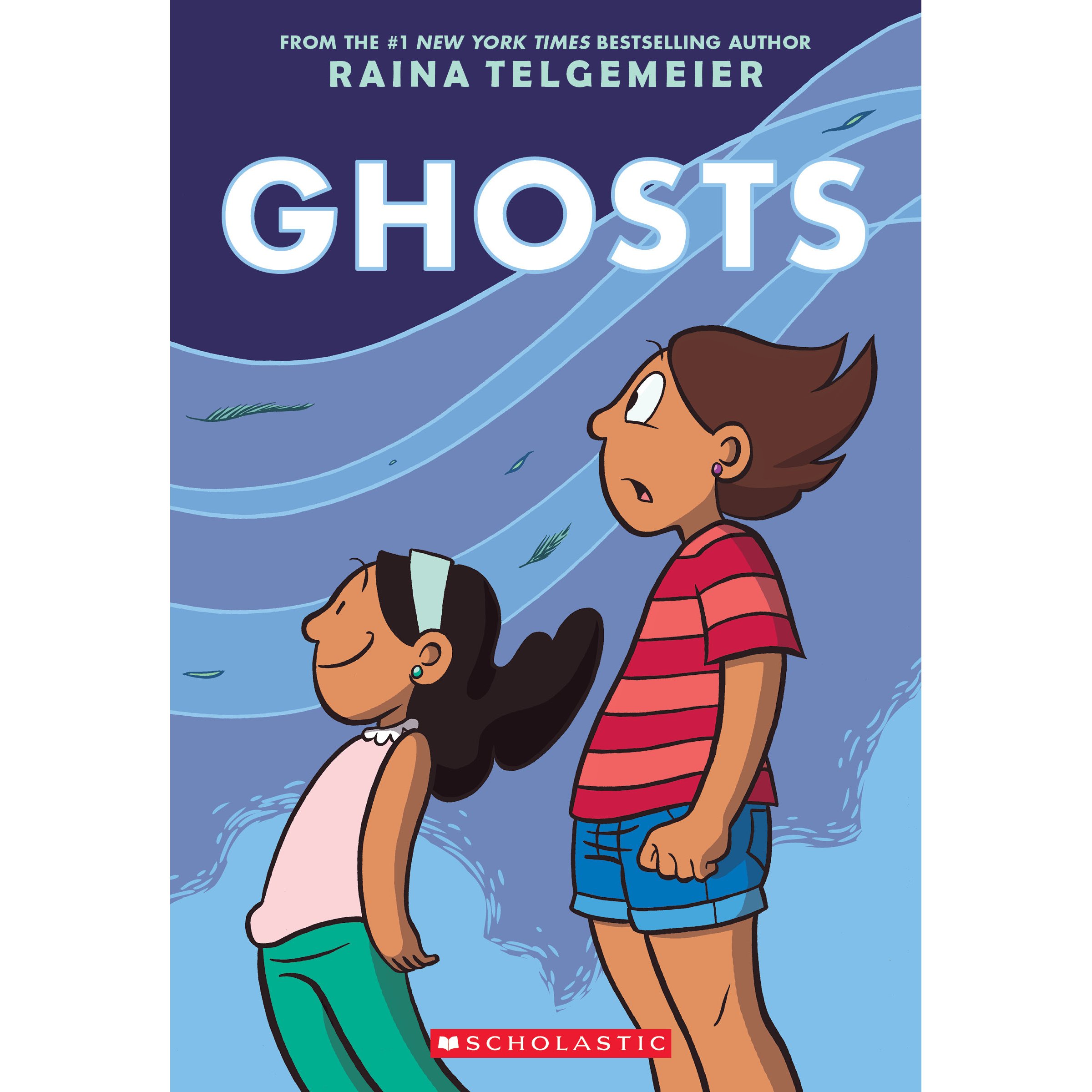
  • Raina Telgemeier’s absorbingly brilliant graphic novel Ghosts. It is about ghostslittle Catrina who has cystic fibrosis and celebration of Dia de los Muertos or the Day of the Dead. It is to be released at the Comic Con, Bangalore. (Scholastic India)

Book Events

11 Nov: Sahitya Akademi symposium on Rajelakshmy at 5:30pm

11-13 Nov: Kathakar, Children’s Literature Festival, IGNCA New Delhi followed by 14 November at the IGNCA Bengaluru and on 17 November at the CSMVS, Mumbai

12-13 Nov: Comic Con, Bangalore

14 Nov: Simon & Schuster India will be celebrating 5 years in India (By invitation only)

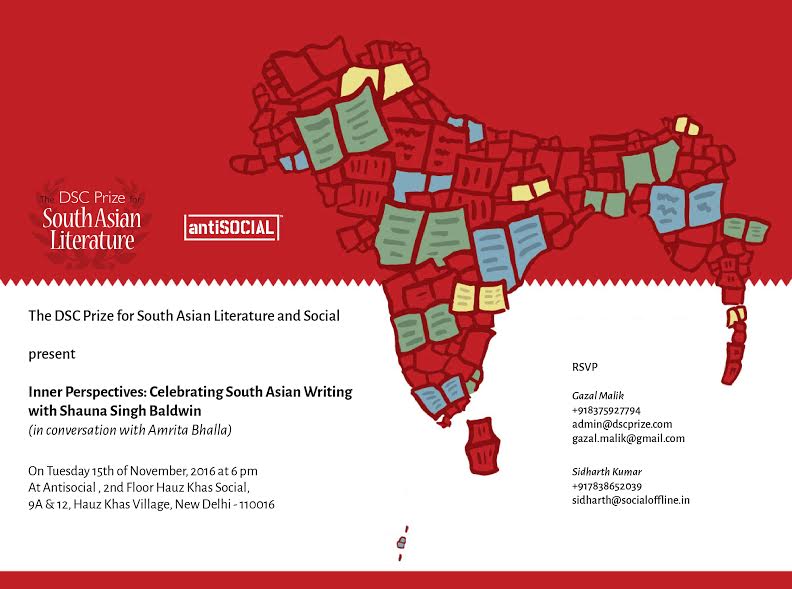
15 Nov: Shauna Singh Baldwin will be in conversation with Amrita Bhalla to discuss the diasporic writings about shaunas-conversationSouth Asian life and culture and will also talk about and read from her latest book “Reluctant Rebellions”.

People & Jobs 

Rahul Dixit has been appointed Sales Director, HarperCollins India. He was earlier with PRH India.

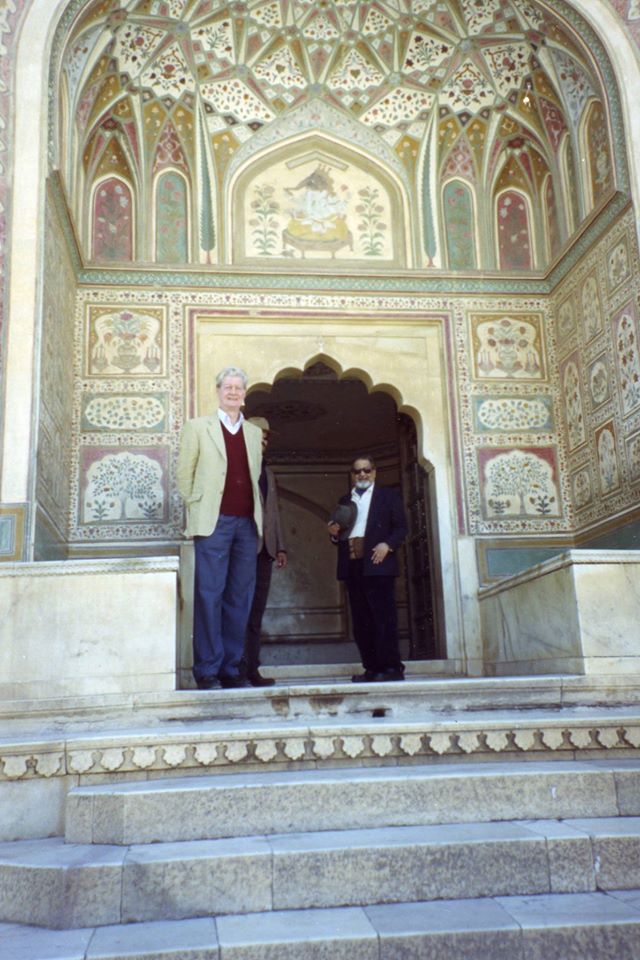
gillon-aitken-and-v-s-naipaul

Gillon Aitken with V.S. Naipaul, Amer Fort, Jaipur. (C) Patrick French

A few days ago legendary literary agent, Gillon Aitken, passed away. Patrick French posted a short tribute on his Facebook page along with some marvellous photographs. Republished with permission.

A one-year vacancy of the books editor at The Caravan Magazine has been announced.

Prizes

  • The Order of the Rising Sun – Gold & Silver Ray, the highest civilian award by Imperial manorama-jaffa-2-japan-award manorama-jaffaMajesty of Japan, was conferred on Manorama Jaffa in recognition of her contribution to children’s writing in India. After Prof. Brij Tankha, Mrs. Jaffa is the second Indian to have been honoured.
  • SPARROW Literary Award 2016: The SPARROW panel of judges (N Sukumaran, Kannan Sundaram and Ambai) for SPARROW-R Thyagarajan Literary Award decided to choose the category of translation for award this year. Translations from one Indian language to another and direct translation from a foreign language (other than English) to Tamil were taken for consideration. The SPARROW-R Thyagarajan Literary Award 2016 will go to Kulachal S M Yoosuf for his translations from Malayalam to Tamil, Gowri Kirubanandan, for her translations from Telugu to Tamil and Sridharan Madhusudhanan for his translations from Chinese to Tamil.
  • French-Moroccan writer Leïla Slimani won the Goncourt, France’s top literary prize. The former journalist is only the seventh woman to have won the Goncourt in its 112-year history. The novel has been a best seller — more than 76,000 copies have been purchased so far.
  • Madeleine Thien’s Do Not Say We Have Nothing won the Giller Prize ( $100,000)
  • Lynne Kutsukake’s The Translation of Loves won the 2016 Canada-Japan Literary Award (English category). And Genevieve Blouin’s Hanaken: Le Sang des Samourais won in the French category.
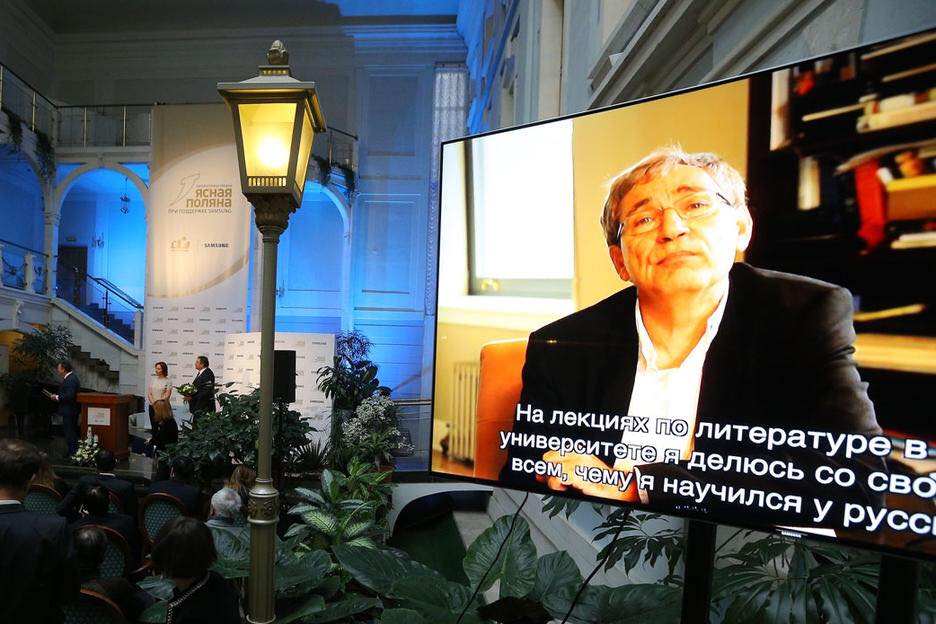
  • orhan-pamukOrhan Pamuk won the 1million rouble (US$15,715) Russian Yasnaya Polyana Literary Prize, based at Leo Tolstoy’s estate. Pamuk’s novel A Strangeness in My Mind  translated into Russian in 2016, won in the “Foreign literature” nomination of the award, which aims to support both the traditions of classical literature and new trends in contemporary writing. ( http://bit.ly/2fnbDxT ) The Russian translator of Pamuk’s novel, Apollinaria Avrutina, receives a prize of 200,000 rubles (US$3,143). The Yasnaya Polyana Literary Prize was founded in 2003 by Samsung Electronics and the museum and estate of Leo Tolstoy in Tula. According to the jury chairman Vladimir Tolstoy, Leo Tolstoy’s great grandson and cultural advisor to the Russian president, the award is meant to help readers find their way in the world of Russia’s literature and international contemporary books—a universal reply to the question “What to read?”

Meanwhile PEN America has released a revised version of its modified contract for literary translations . It is worth looking at.

Miscellaneous

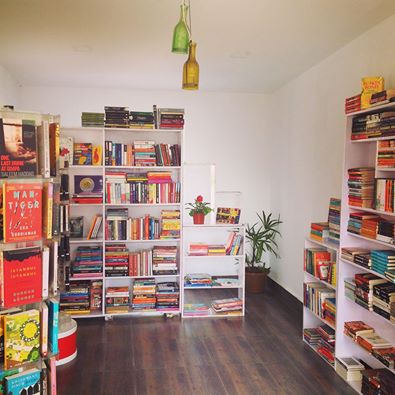
walking-bookfairsBookshops: In Lucknow the iconic Ram Advani’s bookshop closed down on Sunday, 6 November 2016 as there was no one left to run it after his death. But there was good news with the resurrection of Walking Bookfairs, Bhubaneswar, Odisha. After the book shack was demolished the founders Satabdi Mishra and Bahibala Akshaya built a new bookstore saying “Bookstores around the world are closing down. And we are opening a new one. Because we are madly in love with books and bookstores. Long live bookstores!”

reemLondon-based publisher, Reem Makhoul, of Ossass gave a tremendous interview to Marcia Lynx Qualey, ArabLit on children’s literature where Reem says they wanted to give the children what they are familiar with, so began creating beautiful books in colloquial Arabic.  Amazon too seeing the potential of a reading habit has launched an app for children – Amazon Rapids Recently the Financial Times listed a series of smartphone reading apps or a mobile library such as The Pigeonhole, Alexi and Oolipo.

11 Nov 2016 

PrintWeek India Books Special 2013

PrintWeek India Books Special 2013

The cover of the PrintWeek India Book Special 2013 and the first page of my editorial.

The cover of the PrintWeek India Book Special 2013 and the first page of my editorial.


The Books Special 2013 is out! I have collaborated with PrintWeek India for the past eight months on this project. It consists of over 25 interviews with the senior management of the Indian publishing industry. In this 116-page publication, there are interviews, viewpoints, profiles and analysis. It provides a snapshot of the publishing industry, discusses the challenges facing publishing professionals in this ecosystem and most importantly delineates the the manner in which publishers are coping with the major changes that are sweeping through the publishing landscape. Ultimately the Books Special celebrates the future of books in India.

There are only printed copies available for now.

The list of contents is:

Introduction – Jaya Bhattacharji Rose

Perspective 

National Book Trust, India – M A Sikandar

Viewpoint – Urvashi Butalia, Zubaan

PK Ghosh – Homage by Rukun Advani, Permanent Black

Ramdas Bhatkal – Profile by Asmita Mohite

Motilal Banarsidas – Chronicle

In Memoriam – Navajivan & Jitendra Desai

Spotlight – Book printers of India

Trade publishing 

Westland – Gautam Padmanabhan

Random House India – Gaurav Shrinagesh

Seagull Books – Naveen Kishore

Aleph & Rupa – David Davidar & Kapish Mehra

HarperCollins Publishers India – PM Sukumar

Hachette Book Publishing India – Thomas Abraham

DC Books – Ravi Deecee

Pan Macmillan India – Rajdeep Mukherjee

Penguin Books India – Andrew Philips

Harlequin India – Manish Singh

Diamond Books – Narendra Verma

Kalachuvadu Publications – SR Sundaram

Bloomsbury Publishing India – Rajiv Beri

Simon & Schuster India – Rahul Srivastava

Children’s Books Publishing 

ACK Media – Vijay Sampath

Scholastic India – Neeraj Jain

Education, Academic and Reference Publishing 

Sage Publications – Vivek Mehra

S Chand Group – Himanshu Gupta

Cambridge University Press India – Manas Saikia

Wiley India – Vikas Gupta

Sterling Publishers – SK Ghai

Springer India –  Sanjiv Goswami

Tulika Books – Indira Chandrashekhar

Manupatra – Deepak Kapoor

Orient Blackswan – R Krishna Mohan

Publishing Process 

Pearson Education India – Subhasis Ganguli

Palaniappa Chellapan – Palaniappa Brothers

Sheth Publishers – Deepak Sheth

Hachette Book Publishing India – Priya Singh

Mapin Publishing – Bipin Shah

Prakash Books – Gaurav Sabharwal

7 Sept 2013 

Jaya Bhattacharji Rose is an international publishing consultant and columnist. Her monthly column on the business of publishing, PubSpeak, appears in BusinessWorld online.

@JBhattacharji

Web Analytics Made Easy -
StatCounter