
“A Sip in Time: India’s Finest Teas and Teatime Treats” by Pallavi Nigam Sahay
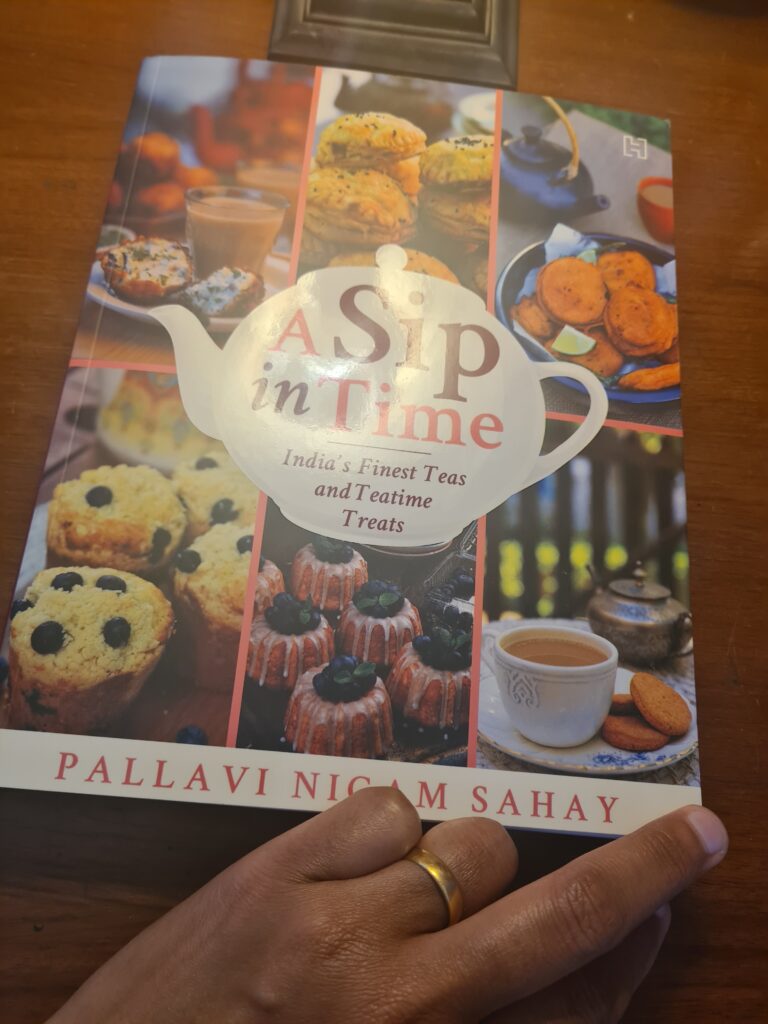
A Sip in Time: India’s Finest Teas and Teatime Treats by Pallavi Nigam Sahay is a fabulous collection of easy-to-make recipes that are paired with different kinds of teas. It has been published by Hachette India. The recipes read like a handwritten recipe book that is passed down generations within a family for its mad combination of dishes. To have Amaretti biscuits, pakoras, kathi rolls, scones, gur ke parathe, raisin bread, spicy macaroni, chicken nuggets, theplas, Kerala Golden Sev, and sponge cakes in one place can only be the handiwork of a practitioner. Otherwise most cookery books are organised due to category of dishes. Whereas in this case, the excuse for pairing dishes with teas, is the perfect springboard to put together favourite dishes. The teas that she refers to are perennial favourites in India at least, probably elsewhere too — Assam tea, masala chai, phalap, Assam orthodox, English Breakfast tea, Darjeeling tea, Alle Sang, Earl Grey, and Munnar. The descriptions of making tea on the tea estates to offering tips on the best way to brew a cup of tea is easily shared. One of the gems is not to pour boiling water over tea leaves as it excessively boiled water implies that the oxygen in the water is reduced; thus affecting the flavour of the tea. Ideally, simmering water should be poured over tea leaves / tea bags and let it stand for the time stipulated. And voila, it works!
The no fuss manner in which every recipe is explained is a delight. It makes it convenient to understand a recipe and figure out the time required to prepare the dish. The idea of having snacks accompanying tea is an old fashioned one but this book ensures that a wide variety of recipes are presented while recognising the new reality — many popular ingredients are available worldwide. So it is relatively easy to assemble these dishes. Offering titbits of advice such as some of these dishes make wonderfully wholesome breakfast or ready-to-go meals, is an excellent touch. Hopefully, it will inspire more people to cook healthy homemade meals rather than rely on takeaways. Sadly, as with most Indian cookery books, food photography is always not up to the mark. But it should not deter anyone from buying the book and using it extensively. A Sip in Time is a great gift for beginners and experienced cooks. It is easy to carry. It has wide margins and generous layouts, making provision for plenty of scribble to scribble upon.
Buy it. Use it. Gift it.
24 Feb 2022