Tuesday Reads ( Vol 9), 15 October 2019
Dear Reader,
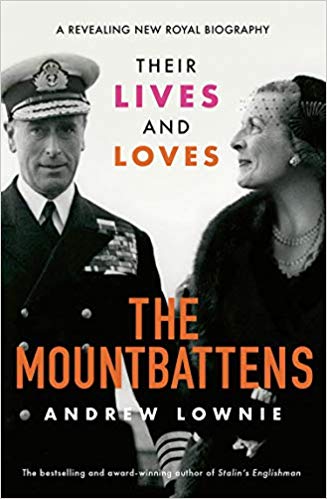
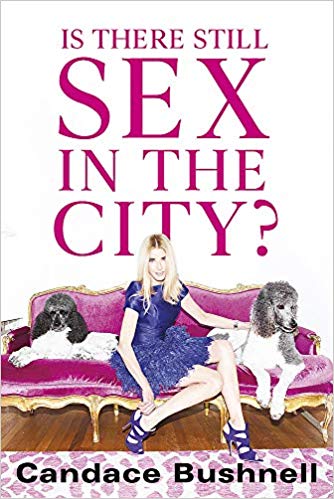
There is a sudden deluge of books being released to coincide with the ongoing Frankfurt Book Fair, the mecca of publishing and of course, as a run-up to Christmas/ gifts. Some of the big name releases that have happened in recent weeks have been Ann Patchett’s incredibly stunning The Dutch House and Jio Talentino’s absorbing collection of essays called Trick Mirror. There have been other books too like Melinda Gates The Moment of Lift, Candace Bushnell’s Is there still sex in the city? Or the absorbing but light biography of The Mountbattens: Their Lives and Loves by Andrew Lownie.
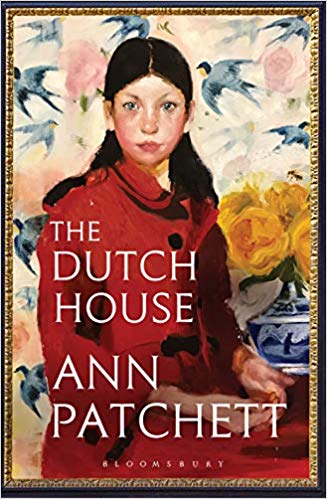
Ann Patchett’s The Dutch House is such a beautiful book that it is impossible to describe. I read it weeks ago but could not bring myself to spoil the heartbreakingly fabulous experience of reading it. It is historical fiction for it is set at the time of the second world war in Philadelphia. It is about two siblings –Danny and Maeve– whose father, Cyril Conroy, a landlord, made it supremely rich through sheer hard work and wise investments. As a result he was able to haul his family out of impoverished circumstances to buy a magnificent house with its contents built by Dutch immigrants – the VanHoebeek. It is an unsettling experience for their mother who soon abandons their family to mysteriously vanish from their lives. It is said she left for India. Meanwhile Cyril Conroy marries again. This time a woman with two daughters. The stepmother in true fairy story style banishes the children from the home once Cyril dies unexpectedly. Maeve and Danny learn to fend for themselves. Slowly putting their lives back together. Years later they reflect upon their childhood. As Ann Patchett points out in an interview with The Guardian that we are embarrassed by grief, and The Dutch House is multi-layered because of the varieties of grief it addresses. Every time leaving a large gaping hole even in the reader’s heart but a sense of yearning to read more. It is a stunning novel which will haunt one for a long time to come. It is bound to find a place on the longlist of next year’s Women’s Prize.
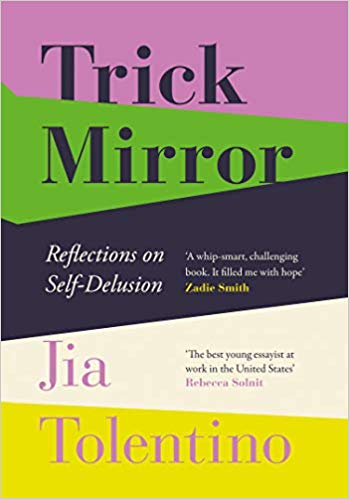
New Yorker staff writer Jio Talentino’s Trick Mirror is a collection of her essays published previously. It is a combination of reportage and memoir. It is not easy to read at one sitting for its very thought provoking ideas on feminism, sexual assault, universities, wedding festivities etc. It is such a wide range of subjects that she tackles, always with an incisive feminist outlook, that it becomes immaterial after a point that many of her observations are based on very local and personal experiences. This is the beauty of essay writing that if the ideas discussed in the essay resonate with readers beyond a specific geographic landscape – beyond Trump, UVA in Charlottesville etc– and cut through borders of all kinds to have the desired impact of evaluating and challenging one’s thoughts, then it is extremely powerful writing. There are two excellent reviews of Talentino’s book — “Songs of my Self-Care” by Jacqueline Rose in the New York Review of Books ( 10 October 2019) and “Trick Mirror by Jia Tolentino review – on self-delusion” by Lidija Haas ( 2 August 2019).
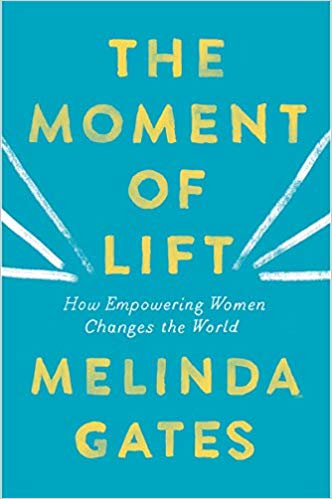
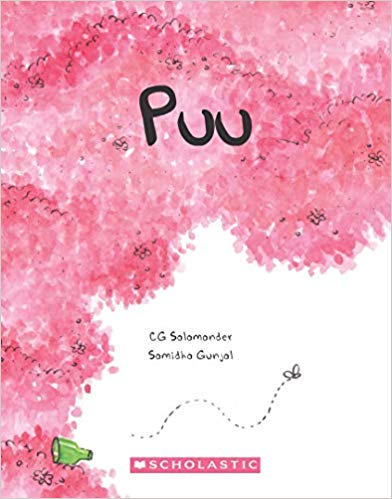
Billionaire Melinda Gates’s The Moment of Lift is a curious little book. The Gates couple are known for their philanthropy and have been in the public eye for years. They are very guarded about their private life which is fair. For instance, when their children were enrolled in school it was using their mother’s surname rather than their father’s more famous last name. This strong desire to withhold their personal space from the public eye in the memoir is also fair except that it makes the tenor of the book very bland. There are glimpses of the tussle Melinda Gates may have had with herself in making what are seemingly “simple” decisions such as venturing into the promotion of contraceptives for women. Given her very Catholic upbringing where her mother attends mass five times a week, this could not have been an easy focus area for Melinda to pick for her philanthropy. There are many instances in the book that while it is obvious Melinda Gates has the privilege to access information easily, she remains a reserved individual who does not allow any glimpses than are absolutely necessary into her private space. Justifiably a fair choice except that in a memoir that functions more than just an account of her life but is more like a publicity statement for her magnificent work in women’s healthcare. These barriers to her privacy as well as to the information that she is being shown that can cause complications creating a very insipid book for its statistically rich in data but bland in context. Her ambiguity about expressing herself strongly about her Catholic upbringing with the reality she sees in the poverty stricken parts of the world. Or for that matter her problematic narrative of India which seems very focussed on it being a casteist Hindu society with absolutely no mention whatsoever about the syncretic cultural fabric of this democracy. Even the heavy sprinkling of anecdotes cannot relieve the boredom, this despite the celebrity buzz with even President Barack Obama releasing videos supporting the book. Having said that there is one incident that Melinda Gates refers to in her book of a little girl child of a scavenger’s community in Kanpur. The child was bold enough to ask the Gates Foundation delegates for a teacher. This is a perfect match to a beautiful wordless picture book called Puu published by Scholastic India.
The other big ticket release recently has been the unauthorised biography of the Mountbattens – Lord Mountbatten, the last Viceroy of British India who oversaw the independence of India and Pakistan—one of the many prestigious positions of authority he held. He was also Prince Philip’s cousin and instrumental in insisting that the British Royal family taken on the name “House of Windsor”. The Mountbattens is written by Andrew Lownie and based on extensive research, interviews with family members as well as those who knew the Mountbattens well. Lownie even acknowledges Queen Elizabeth II for granting access to her archives as part of his research. So for the first time there are accounts of Lord Mountbatten’s career, his mistakes and successes as well as of bisexuality (denied by the family). The “detailed” account of Lady Mountbatten as the poor little rich girl, who was the richest heiress of her generation when she married Lord Mountbatten is equally focused on her promiscuity as it is with all other details of her life. There are photographs, an extensive bibliography, footnotes and a detailed index. The book has plenty of anecdotes that make for a rollicking good read except that it all falls apart towards the end when Lownie acknowledges that the Mountbatten’s myth is managed by exercising control at the archives in Broadlands or closed under Ministerial Directive at the Hartley Library. All said and done it is a book that makes for an interesting read and will probably be optioned for a film or a TV miniseries very soon for its got all the razzmatazz that will go down well with a global audience of a period drama.
In a similar vein is the memoir that Candace Bushnell has written after crossing sixty — Is there still sex in the city? It is a light and superficial read about a woman worrying about money and life even though she and her girlfriends can afford to own homes at the Hamptons, New York. Privileged women can offer quite a bit through their memoirs as they are privileged not just in financial security but have easy access to information, data, statistics — which increasingly have a price barrier to them. Thus offering a broader perspective on issues that preoccupy women as they become older. Issues like marital relationships, separations, losing dear friends, how to come to terms with old age, healthcare, having the energy to be with family and friends, increasing loneliness, managing busyness of life etc. Of course there will be vast degrees of differences between those in different points of the socio-economic scale but certain learnings are the same. Oh well! It is an opportunity lost with Candace Bushnell’s memoir.
More later,
JAYA
15 October 2019