JK Paper and the Times of India proudly present 𝐒𝐞𝐚𝐬𝐨𝐧 𝟕 of India’s most prestigious literary celebration, AutHer Awards, honouring the brilliance, creativity, and powerful voices of women authors who continue to redefine storytelling.
We invite publishers and Indian women authors to submit their works for the prestigious award. Entries are open across six categories:
Kavitha Rao is a London-based author and journalist. Her work has appeared in the Guardian, New York Times, South China Morning Post, Mint, The Hindu and various other publications. She is the bestselling author of Lady Doctors. Spies, Lies and Allies is her latest books and is published by Westland Books.
We spoke on TOI Bookmark regarding her Spies, Lies and Allies. Here is a snippet:
Well, you just sink yourself in it. I mean when you are writing historical fiction this book is curious because as you pointed out, it has won a couple of prizes for historical fiction and both those prizes have a rule which is that it has got to be set sixty years before the date of publication. So, we were just kind of over a line. I don’t claim to be an expert, there is a lot of smoke and mirror involved, you try to get a feel and a sense of what it might have been. So yes it is research, reading, and the kind of stuff a scholar might recognise, but we are not scholars.
TOI Bookmark is a weekly podcast on literature and publishing. TOI is an acronym for the Times of India (TOI) which is the world’s largest newspaper and India’s No. 1 digital news platform with over 3 billion page views per month. The TOI website is one of the most visited news sites in the world with 200 million unique monthly visitors and about 1.6 billion monthly page views. TOI is the world’s largest English newspaper with a daily circulation of more than 4 million copies, across many editions, and is read daily by approximately 13.5 million readers. The podcasts are promoted across all TOI platforms. I have recorded more than 145+ sessions with Jnanpith, Padma Bhushan, and Padma Shree awardees, International Booker Prize winners, Booker Prize winners, Women’s Prize for Fiction, Nobel Laureates, Pulitzer Prize, Stella Prize, AutHer Awards, Erasmus Prize, BAFTA etc. Sometimes the podcast interviews are carried across all editions of the print paper with a QR code embedded in it.
Some of the authors who have been interviewed are: Banu Mushtaq, Deepa Bhashti, Samantha Harvey, Jenny Erpenbeck, Michael Hoffman, Paul Murray, V. V. Ganeshananthan, Hisham Matar, Anita Desai, Amitava Kumar, Hari Kunzro, Venki Ramakishnan, Siddhartha Deb, Elaine Feeney, Manjula Padmanabhan, NYRB Classics editor and founder Edwin Frank, Jonathan Escoffery, Joya Chatterji, Arati Kumar-Rao, Paul Lynch, Dr Kathryn Mannix, Cat Bohannon, Sebastian Barry, Shabnam Minwalla, Paul Harding, Ayobami Adebayo, Pradeep Sebastian, G N Devy, Angela Saini, Manav Kaul, Amitav Ghosh, Damodar Mauzo, Boria Majumdar, Geetanjali Mishra, William Dalrymple, Abdulrazak Gurnah, Dr Rachel Clarke, Charlotte Wood, Catherine Chidgey, Andrew Miller, Sam Dalrymple, and Annie Ernaux.
‘Absolutely riveting’ Peter Frankopan, author of The Silk Roads ‘Disturbing and enlightening’ Chris Miller, author of Chip War ‘Hugely important’ Rana Foroohar, author of Makers and Takers ‘A once-in-a-generation read’ Robert D. Kaplan, author of Waste Land
As Trump wages a tariff war with China, seeking to boost domestic electronics manufacturing, this book offers an unparalleled insight into why his strategy is embarrassingly naïve.
Apple isn’t just a brand; it’s the world’s most valuable company and creator of the 21st century’s defining product. The iPhone has revolutionized the way we live, work and connect. But Apple is now a victim of its own success, caught in the middle of a new Cold War between two superpowers.
On the brink of bankruptcy in 1996, Apple adopted an outsourcing strategy. By 2003 it was lured to China by the promise of affordable, ubiquitous labour. As the iPod and iPhone transformed Apple’s fortunes, their sophisticated production played a seminal role in financing, training, supervising and supplying Chinese manufacturers – skills Beijing is now weaponizing against the West.
Investigative journalist Patrick McGee draws on 200 interviews with former Apple executives and engineers to reveal how Cupertino’s choice to anchor its supply chain in China has increasingly made it vulnerable to the regime’s whims. Both an insider’s historical account and a cautionary tale, Apple in China is the first history of Apple to go beyond the biographies of its top executives and set the iPhone’s global domination within an increasingly fraught geopolitical context.
Read an extract from the book on Moneycontrol. The book has been published by Simon & Schuster India.
Listen to our conversation on TOI Bookmark* podcast.
Review
‘Apple is more than the world’s greatest company. It is integral to the whole culture of globalisation. Patrick McGee not only narrates the epic history of Apple, but explains how, in effect, it got taken over by China, the world’s greatest illiberal power. To call this book a page-turner is almost to diminish its importance. It is a once-in-a-generation read‘ — Robert D. Kaplan, author of the New York Times bestseller The Revenge of Geography and the forthcoming Waste Land: A World in Permanent Crisis, and Robert Strausz-Hupé Chair in Geopolitics at the Foreign Policy Research Institute
‘Absolutely riveting. An extraordinary story, expertly told – and one that has important implications for Apple, for tech and for global geoeconomics.’ — Peter Frankopan, Professor of Global History at Oxford and author of the bestselling The Silk Roads
‘Deeply researched, disturbing and enlightening, Apple in China reveals how Apple enabled China’s rise, seemingly at the cost of its own future. In these pages we watch as the world’s most profitable company gets outmaneuvered by the world’s most powerful dictator. Using an impressively broad palette, McGee paints a picture of Apple CEO Tim Cook resolutely trying to save costs by placing nearly all of the company’s advanced manufacturing base in Beijing’s grip, only to find it impossible to wriggle free’ — Chris Miller, New York Times bestselling author of Chip War
‘A masterpiece of investigative journalism, replete with revelations. Every iPhone owner will want to read this book, but no Apple employee will risk being seen with it. McGee shows how China played the long game, convincing Apple to invest on an unprecedented scale and, inadvertently, help build its grand authoritarian project. This book is a warning for anyone eager to do business in hostile countries.’ — Geoffrey Cain, author of Samsung Rising and The Perfect Police State, and a former sanctions investigator for the US Congress
‘There is little doubt that Big Tech companies – like the world’s richest and most influential one, Apple – wield as much power as many nation states. But what’s less well known is how these companies are themselves manipulated by the Chinese state for its own economic and political ends. In this hugely important new book, Patrick McGee shows us how Apple’s quest for wealth and power in China may in the end be the undoing both of the company and of America’s quest for technology supremacy’ — Rana Foroohar, Financial Times Global Business Columnist, CNN Global Economic Analyst, and author of Makers and Takers: The Rise of Finance and the Fall of American Business
‘A tour-de-force account of how the world’s most influential company empowered the inexorable rise of the regime that now shapes its – and our – future. Paced like a thriller and spanning the years from before Steve Jobs’s fateful decision to outsource production to more recent times which shine a fresh spotlight on Tim Cook’s careful wooing of Donald Trump, Apple in Chinacaptures every twist and turn of the tech giant’s off-kilter and decidedly off-script relationship with the authoritarian state. What will surprise many is how China ensnared a corporate titan by matching and then surpassing its knack for ruthless efficiency and global dominance’ — Megan Murphy, former Editor in Chief of Bloomberg BusinessWeek
‘A masterful and deeply reported portrayal of how Apple gained China and lost its soul’ — Isaac Stone Fish, author of America Second and CEO of Strategy Risks
Patrick McGee has been a journalist with the Financial Times since 2013, reporting from Hong Kong, Germany, and California. He led the FT’s Apple coverage from 2019 to 2023 and won a San Francisco Press Club Award for his deep dive into Apple’s HR problems. Previously, he was a bond reporter at The Wall Street Journal in New York. He has a Master’s in Global Diplomacy from SOAS, University of London, and a degree in Religious Studies from the University of Toronto. He resides in the Bay Area with his wife and two daughters.
6 June 2025
*TOI Bookmark is a weekly podcast on literature and publishing. TOI is an acronym for the Times of India (TOI) which is the world’s largest newspaper and India’s No. 1 digital news platform with over 3 billion page views per month. The TOI website is one of the most visited news sites in the world with 200 million unique monthly visitors and about 1.6 billion monthly page views. TOI is the world’s largest English newspaper with a daily circulation of more than 4 million copies, across many editions, and is read daily by approximately 13.5 million readers. The podcasts are promoted across all TOI platforms. I have recorded more than 142+ sessions with Jnanpith, Padma Bhushan, and Padma Shree awardees, International Booker Prize winners, Booker Prize winners, Women’s Prize for Fiction, Nobel Laureates, Pulitzer Prize, Stella Prize, AutHer Awards, Erasmus Prize, BAFTA etc. Sometimes the podcast interviews are carried across all editions of the print paper with a QR code embedded in it.
Some of the authors who have been interviewed are: Banu Mushtaq, Deepa Bhashti, Samantha Harvey, Jenny Erpenbeck, Michael Hoffman, Paul Murray, V. V. Ganeshananthan, Hisham Matar, Anita Desai, Amitava Kumar, Hari Kunzro, Venki Ramakishnan, Siddhartha Deb, Elaine Feeney, Manjula Padmanabhan, NYRB Classics editor and founder Edwin Frank, Jonathan Escoffery, Joya Chatterji, Arati Kumar-Rao, Paul Lynch, Dr Kathryn Mannix, Cat Bohannon, Sebastian Barry, Shabnam Minwalla, Paul Harding, Ayobami Adebayo, Pradeep Sebastian, G N Devy, Angela Saini, Manav Kaul, Amitav Ghosh, Damodar Mauzo, Boria Majumdar, Geetanjali Mishra, William Dalrymple, Abdulrazak Gurnah, Dr Rachel Clark, Charlotte Wood, Catherine Chidgey, Andrew Miller, Sam Dalrymple, and Annie Ernaux.
Recording every episode of TOI Bookmark is an honour and a privilege. I get to speak with incredible writers and publishing professionals around the world. This interview with Hisham Matar was truly special. I have read every single book that he has written so far. My Friends was exceptionally good and I devoured it in one sitting.
Here is a snippet from the conversation:
Going through… if you have ever lived through a moment of great political upheaval and rupture in your country and therefor you have experienced it beside and alongside people whom you know very well, whom you have grown up with, and known for a very long time. I am sure many of your listeners can find many examples in their mind of this. What’s fascinating is that some of those people will agree with you totally about you know what is a hopeful future and how might it look like but then you notice over the years that each one of you ends up in a different place. I think part of the question isn’t ethics or ideology or political persuasion but it is actually questions of temperament. And within political conversations it is impossible to talk about this because nobody knows what you are talking about, but we all know what is temperament. For example, some of our friends are excited by argument and they get really heated up, and I have other friends who grow poetic saying arguments will convince no one. They think that in order to get to the truth, you have to have a different kind of conversation. And they tend to be quieter perhaps and more reluctant. So those are questions of temperament. And I think, I have always thought of the novel really, the novel really is the place for human temperament. Here, I am focussing more on questions of politics, but of course these questions touch and they do deal with these characters, questions of belonging, what love is, friendship is, intimacy is. They affect all of these.
Listen to it on Spotify:
TOI Bookmark is a weekly podcast on literature and publishing. TOI is an acronym for the Times of India (TOI) which is the world’s largest newspaper and India’s No. 1 digital news platform with over 3 billion page views per month. The TOI website is one of the most visited news sites in the world with 200 million unique monthly visitors and about 1.6 billion monthly page views. TOI is the world’s largest English newspaper with a daily circulation of more than 4 million copies, across many editions, and is read daily by approximately 13.5 million readers. The podcasts are promoted across all TOI platforms. I have recorded more than 130+ sessions with Jnanpith, Padma Bhushan, and Padma Shree awardees, International Booker Prize winners, Booker Prize winners, Women’s Prize for Fiction, Nobel Laureates, Pulitzer Prize, Stella Prize, AutHer Awards, Erasmus Prize, BAFTA etc. Sometimes the podcast interviews are carried across all editions of the print paper with a QR code embedded in it.
Some of the authors who have been interviewed are: Banu Mushtaw, Deepa Bhasthi, Samantha Harvey, Jenny Erpenbeck, Michael Hoffman, Paul Murray, V. V. Ganeshananthan, Hisham Matar, Anita Desai, David Nicholls, Amitava Kumar, Hari Kunzro, Venki Ramakishnan, Siddhartha Deb, Elaine Feeney, Manjula Padmanabhan, NYRB Classics editor and founder Edwin Frank, Jonathan Escoffery, Joya Chatterji, Arati Kumar-Rao, Paul Lynch, Dr Kathryn Mannix, Cat Bohannon, Sebastian Barry, Shabnam Minwalla, Paul Harding, Ayobami Adebayo, Pradeep Sebastian, G N Devy, Angela Saini, Manav Kaul, Amitav Ghosh, Damodar Mauzo, David Walliams, Boria Majumdar, Geetanjali Mishra, William Dalrymple, Abdulrazzak Gurnah, and Annie Ernaux.
In the middle of December 2022, TOI Bookmark, weekly podcasts on books and literature was launched by The Times of India (TOI) . TOI has a new vertical dedicated to podcasts called Times Specials / ( @TimesSpecialTOI). It is specially curated premium content from across the Times Group, for digital audiences. I record every week with incredible writers and publishers, based around the world. The Times of India, of course, is the world’s largest newspaper and India’s No. 1 digital news platform with over 3 billion page views per month. Times Specials podcasts will be promoted across all TOI platforms, including print.
From March 2018, I will be contributing blog posts to Times of India. The column is called “Bibliobibuli“. Bibliobibuli means “to be drunk on books”. The term was coined in 1957 by H. L. Mencken, from the Greek “biblio”, meaning books, and the Latin “bibulous”, from “bibere” (to drink).
The first post was on the gender gap in publishing. It was based on the panel discussion I moderated for the Women Writers Fest 2018 organised by ShethePeople. This was published on 16 March 2018.
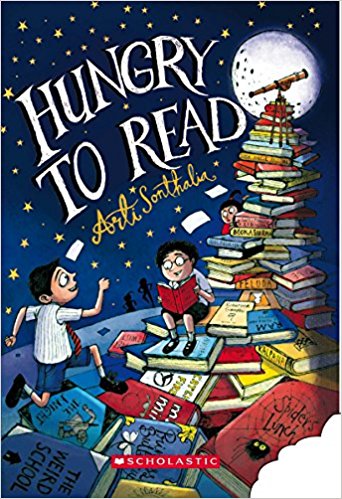
On Sunday 26 November 2017, I moderated the ‘SCHOLASTIC INDIA SESSION’, a conversation on young adult fiction with Shantanu Duttagupta, Scholastic India and Arti Sonthalia at the Times of India LitFest, Delhi (#TLFDelhi). The conversation began with Arti Sonthalia introducing her fabulous chapter book, Hungry to Read. The story revolves around a reading competition in Grade 3 with the aim of inculcating the love of reading amongst the students. The prize of a night stay in school to use the telescope to watch the night sky is what every student dreams of! The delicious way in which Arti makes it more than a dull story about a competition. Read it!
Using Hungry to Read as a springboard, the conversation expanded to reading levels, tools for measuring reading such as lexile and numbers at the back of books, reading for young adults, reading as a lifelong skill particularly in this information age where content is the oil of twenty-first century!
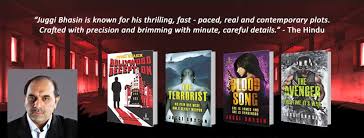
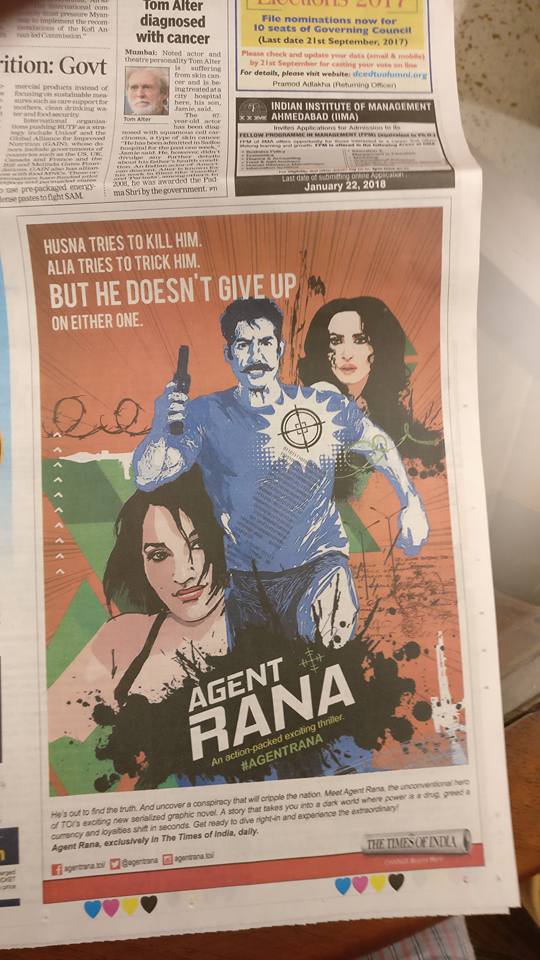
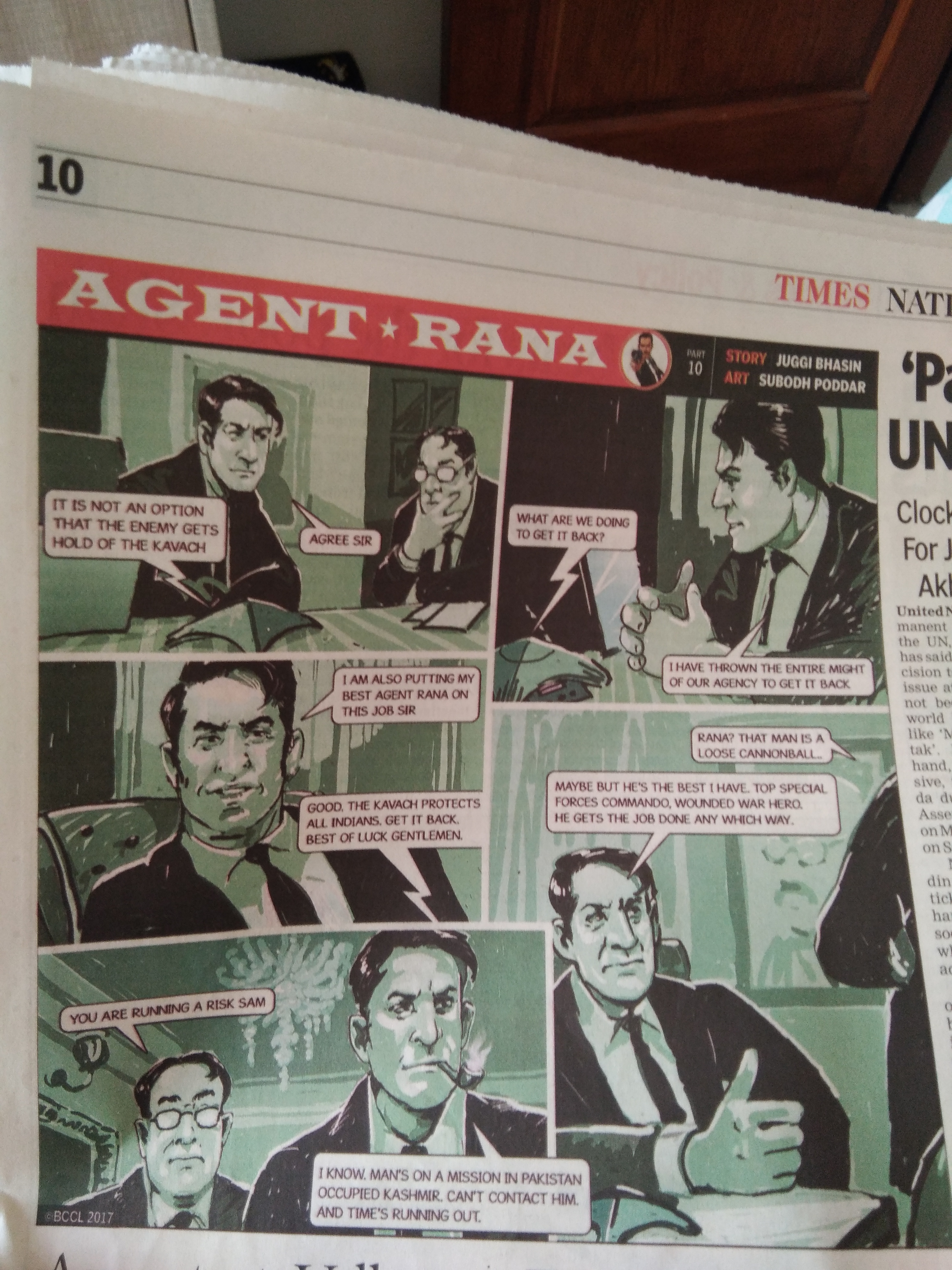
Juggi Bhasin is a successful writer who ” living out fulfilling a lifelong ambition: to become a writer”. Earlier this month he began serialising a graphic novel in the popular national daily, Times of India. Recognising this as a new and innovative experiement in creative storytelling I requested Juggi Bhasin to contribute a blog post on what it means to experiment in form, is there any difference to his storytelling etc. Here is his lovely note. Read on.
Late at night when I climb into bed, I set the alarm to wake me up, sharp at seven, next morning. It is that time of the day when I get up to sip some green tea, chew a couple of almonds and review in The Times of India, my graphic novel and daily feature, ‘Agent Rana’.

It’s a good time for me to review not just the novel but my entire journey through various art forms to reach that one common goal. And that goal is undoubtedly the production and dissemination of creative content that gives pleasure to my readers and me.
Every writer in a sense has had a long journey whether in years or in the mind. My journey began as a TV journalist and in my mind’s eye I can still see myself as the only Indian TV journalist that went to North Korea to meet old man Kim, the father of the present infamous dictator running that unfortunate country. Or that morning of Dec 6th, 1992, when I stood at the Babri Masjid with my TV crew and watched and recorded the structure being razed to the ground. I wanted to write a book about those earth shaking experiences but I did not have the words or the syntax or even the drive then to express my thoughts and emotions. The only weapon I had then at my command was what is popularly called in journalese —a ‘good copy’ ability. Many journalists write good copy but it does not make them into great writers. I had a good eye though, an active imagination and a great visual sense.
In the years after the events of Babri Masjid, I worked on stage, in serials and a couple of films and developed my visual imagination and sharpened my emotional outreach. The words to match my visuals also came to me and became a part of my development. By 2012, I felt I was ready to strike out as a writer. The passion in me to write something was overbearing and I felt I had developed a syntax which in a sense was a very different life form from ‘good copy.’
It resulted in my first book The Terrorist which was a national bestseller. The unusual element in The Terrorist was not only its theme but its usage of highly, evocative, visual imagery almost as if the reader was looking at breathtaking visuals from an Akira Kurosawa war film. The combination of intense passion and a visualised style of writing became the key notes of my writing. Many found it unusual, far removed from the traditional ‘bookish’ qualities, whatever they might be, that they felt a book should have. But it were my real life dramatic experiences of news reporting in Kashmir, insurgency hit areas and forbidden lands helped me to sculpt an intense, visually enriching writing style. My visualised writing style compels me to open a window in the reader’s mind. It is the gateway to explore the imagination; which is a desired goal for any author. My successive three novels after the The Terrorist incorporate this style which now has become an article of faith for me.
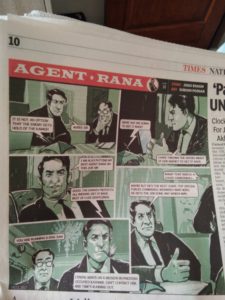
TOI, 18 Sept 2017
So when I was asked to write a graphic novel for the Times of India, a commission no one has ever done before in this country, it struck me that it would flow all so naturally for me. I had to produce text that was economic in its choice of words and length. It would have to write a text which supported powerful visuals but was also evocative and stirring. This is what Agent Rana accomplishes day after day in the Times of India.
This brings me to my thesis that all art forms are interconnected to create a single, living organism that pulsates with life and passion. The end goal is to explore the human condition. I, believe, that there is no such thing as a purist style of writing. All creative output is the result of myriad experiences, both stylistic and cerebral. In December, this year, my fifth book, Fear is the Key which has a female protagonist, will be released by Penguin Random House. It is perhaps my most challenging work to date. It is a psychological thriller and tells the story of a man conflicted in his mind.
So, that then is the challenge for me. How do you show the conflicts of the mind as evocative imagery? Writing for different genres is like a seven course meal; each course releasing different flavours at the tip of your tongue. But it all leads to that simple but profound thought at the end of it. ‘I really enjoyed myself. It was a great meal.’
Different roads, one destination. There is really no contradiction in that!