This interview is facilitated by EUPL and funded by the European Union.
Please explain what the European and International Booksellers Federation is about? Also, please explain the “and beyond” that is in the introduction on the EIBF website.
EIBF represents national booksellers’ associations in the European Union and at an international level. Through its member associations, EIBF speaks on behalf of more than 25.000 individual booksellers of all kinds, including independent bookshops, chains, family businesses. EIBF membership covers a wide geographic area from the Faroe Island to Latvia, and from Germany to New Zealand. Our members are the national booksellers trade associations mentioned in the sentence above. Examples of members include: The Booksellers Association of the UK and Ireland, Börsenverein in Germany, Swedish Booksellers Association,
Ceylon Importers and Exporters Booksellers Association – Full list: https://europeanbooksellers.eu/booksellers-associations
What are the services that EIBF offers?
We represent our members and their interests on a global platform, before the European institutions and other international organisations. Our mission is to further the interests of the bookselling industry, by ensuring that the voices of booksellers are heard in every relevant debate.
We do this by meeting with decision makers from European and international institutions, explaining the specificities of the bookselling industry at different stages.
Additionally, we strengthen the link between booksellers’ associations worldwide, to enable knowledge exchange, innovation and growth, especially through our RISE Bookselling programme. The links are strengthened by initiatives such as organising a conference for members in Frankfurt (https://europeanbooksellers.eu/press/eibf-75th-frankfurt-book-fair), 4 international calls/year where members can informally exchange about the situation in their respective countries (https://europeanbooksellers.eu/press/eibf-international-call-highlights-challenges-and-initiatives-global-bookselling), etc.
Does it explore strategic partnerships with countries outside the EU?
Yes. EIBF is a membership-based organisation, open to booksellers’ associations and independent booksellers from all over the world. Our non-EU members include: Norway, German-speaking Switzerland, the UK, Canada, USA, Australia, New Zealand and more recently Sri Lanka. We also have booksellers from the Faroe Island, Guatemala and Kyrgyzstan who are members of our association on an individual basis. Part of our team also visited the Guadalajara International Book Fair for the first time in order to develop further our relationships with Latin American Booksellers.
4. What are the major trends in European bookselling? Are these different from the rest of the world?
Fascinatingly, during the covid pandemic, there was a massive boost to book sales. Post-pandemic, what is your view on the co-existence of strategies for retail stores in the physical and digital world? What should be the focus? Can they be separated or must they align or be in a symbiotic relationship with each other? What is your opinion?
Today’s bookselling business can no longer be summed up as a solely off-line activity. The COVID-19 pandemic heralded an immense interest in shopping online with local businesses, including independent bookshops. To stay up to date and cater for their customers’ constantly changing needs, modern bookselling has had to become a hybrid profession: booksellers now need to have one eye on the physical, brick-and-mortar shop, and the other on the digital shop window.
This new aspect of the trade inevitably brings new challenges – e.g., the need for technical skills and legal expertise on how to conduct e-commerce – which are not always solved intuitively. Lots of small independent bookshops needed help to take the plunge into the online – help which was in many cases provided by their trade association or other bookseller collectives in the shape of a common e-commerce platform. The creation of these platforms has shown that what may seem impossible when on one’s own, is perfectly feasible together.
There is a continued interest in shopping online with independent bookshops, even after the end of the COVID-19 pandemic. This shows that e-commerce is not only for those large market players and big tech companies anymore: there is a specific place and role to play for independent, local bookshops
Do the existing fixed book rates in some European countries such as France and Germany result in interesting bookselling scenarios for EIBF?
I don’t understand the question. EIBF is a trade organisation that represents the interests of all its members. Some of our members operate in a fixed book price market and some don’t. Our work is to help and support them, as well as provide them with advice when necessary. Fix/free book price are a national policy matter.
How did you get into bookselling?
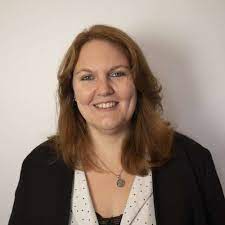
I hold a degree in European journalism and a master in media and business. My first internship after graduating was with the Federation of European Publishers (FEP), the other organisations implementing the European Union Prize for Literature. After 5 months with them, I started a second internship with the European and International Booksellers Federation (EIBF), and then was hired there as a full-time employee to oversee the European Affairs and Communications. I took over as Director in April 2019, when the former Director left the organisation. Both times – when I was first hired as a full-time employee and when I took over as a Director – the EIBF board required that I spent some time working in a bookshop, in order to have first-hand experience on the ground. I fully agreed with their request. As I represent the interests of booksellers on a daily basis, it was important to me to fully comprehend what booksellers’ reality is like. So, all in all, things just naturally came one after the other and, since I’ve always been an avid reader and a bookshop lover, I never cease to be amazed by booksellers’ resilience and creativity, which are what make my daily work so enjoyable.
8. Does an author see a boost in their sales in Europe after winning the EUPL prize?
Answering that question would require to look at sales data for the specific book of a specific author in a given country, which we don’t have and is not the objective of our Prize. The aim of the Prize is to promote the circulation of literature within Europe and encourage greater interest in non-national literary works through translation. Does an author see a boost in their book translation after winning the EUPL Prize? Yes, definitely! You just need to take a look at the different authors’ profiles on the EUPL website where we list their respective translation deals.
9. Has the EUPL Consortium been able to analyse the direct and indirect impacts of winning the EUPL Prize?
Please note that EUPL is organised by a Consortium that comprises two different organisations: the Federation of European Publishers (FEP) and the European and International Booksellers Federation (EIBF). We are therefore not the only ones in charge of doing the analysis/assessment work.
All in all, direct and indirect impacts are difficult to quantify, since we cover 41 countries, over a cycle of three years, since 2009. That represents more than 150 authors and a huge amount of information to keep track of. However, there are some qualitative trends that we have been able to identify over the years. As mentioned in my answer to the previous question, a direct impact of winning the EUPL is the increased number of translations for a given book. One of our authors with the highest record is North Macedonian author Goce Smilevski whose book Sigmund Freud’s Sister was translated into more than 25 different languages.
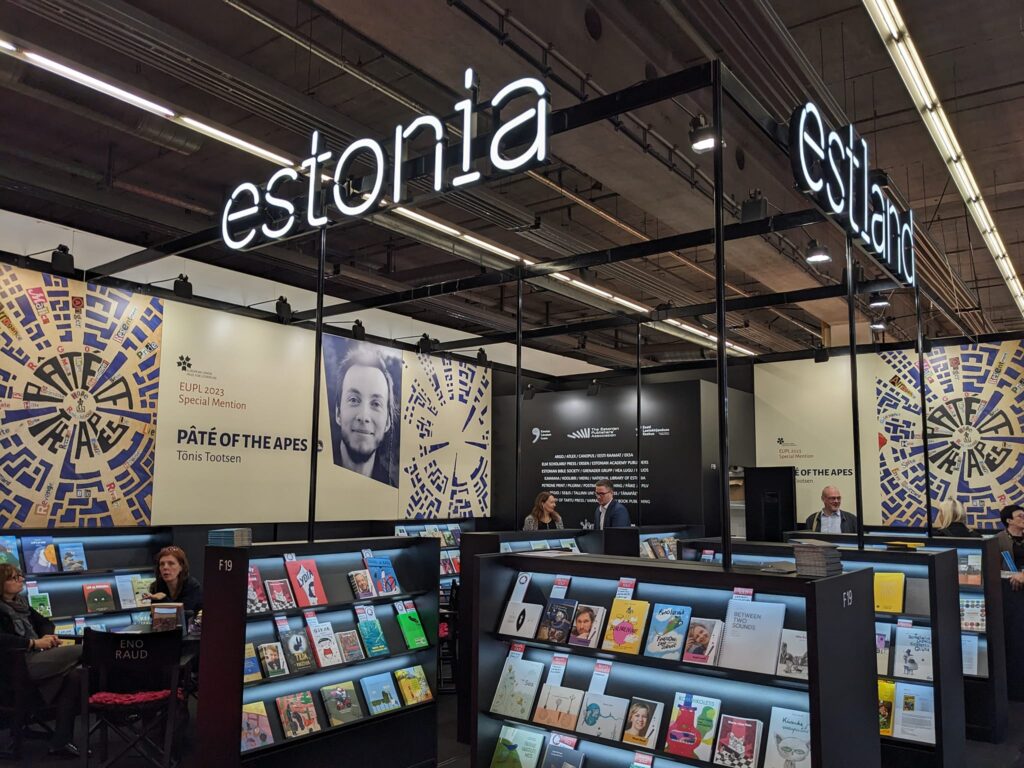
It has also become clear over time that smaller countries and/or countries that do not have a plethora of literary Prizes do see a great added-value in the EUPL, especially in its potential to convey national literature across borders. EUPL 2023 special mention for Estonia, Tõnis Tootsen, was featured quite prominently on the Estonian stand at this year’s Frankfurt Book Fair for instance (see below).
Among the indirect impacts we’ve noticed and that authors themselves have mentioned, are the opportunities to expand one’s own network; be it by connecting with other authors or other professionals from the book sector. Through EUPL, winners and nominated authors get the chance to take part in book fairs, festivals and other type of events. Those events are the opportunity for them to meet with fellow EUPL authors from the same or previous editions, as well as to exchange with publishers or translators.
10. What are the promotional strategies (offline and online) that the EUPL Consortium employs for the EUPL Prize winners?
Please note that EUPL is organised by a Consortium that comprises two different organisations: the Federation of European Publishers (FEP) and the European and International Booksellers Federation (EIBF). We are therefore not the only ones in charge of the promotional strategy.
Offline (in person events): Each author nominated for a given EUPL edition, benefits in that same year of a bookshop event, organised in their home country by the EUPL consortium. The idea being to spotlight their book, their Prize nomination and give them the opportunity to exchange with their readers at home. We also have long-lasting partnerships with the main book fairs in Europe, including the Frankfurt Book Fair, where we organise events to promote EUPL authors.
Offline/Online (the anthology): Every year, we produce an anthology that compiles 5-page excerpts of all the nominated books of that year. Each excerpt is available is original language and in English translation. All anthologies can be found here. They are downloadable in E-Pub format and accessible E-pub format since the 2018 anthology. Paper copies of the anthology are distributed at the bookshop events and at most major book fairs, especially at the right agents’ centre, in order to spark interest for translation.
Online (EUPL social media channels, website and newsletter): EUPL is present on Facebook, Twitter and Instagram. These channels are dedicated to sharing news about the Prize itself, but also the latest news of our authors past and present, including new books, new translations, other Prizes they won, etc. The aim is to keep promoting them, even years after they were nominated for the Prize and to give them more visibility through our channels. The same goes for our newsletter that features information about the current edition, as well as news about authors who were nominated in previous years. As for our website, it spotlights the latest news about the Prize, including the events we organise and where EUPL authors are present. Additionally, each EUPL author benefits from a profile page on our website that introduces their winning book, translation deals for that book, and a short biography.
Online (partnership): In the same way that we are answering this interview, we also work in partnership with different journalists, bloggers, reviewers, etc. to promote the Prize at local, national, European and international level. For three years now we’ve had a partnership with Trafika Europe Radio, an online radio that puts the spotlight on European authors and recorded podcasts with our authors. We’ve also been working for the same amount of time with French blogger and literary reviewed Tara Lennart from Bookalicious who’s showcasing the Prize and our authors towards a French-speaking audience.
Disclaimer: This paper was written under the European Union Policy & Outreach Partnerships Initiative with the view to promote European Union Prize for Literature awardees. The publication was funded by the European Union. Its contents are the sole responsibility of the authors and do not necessarily reflect the views of the European Union.
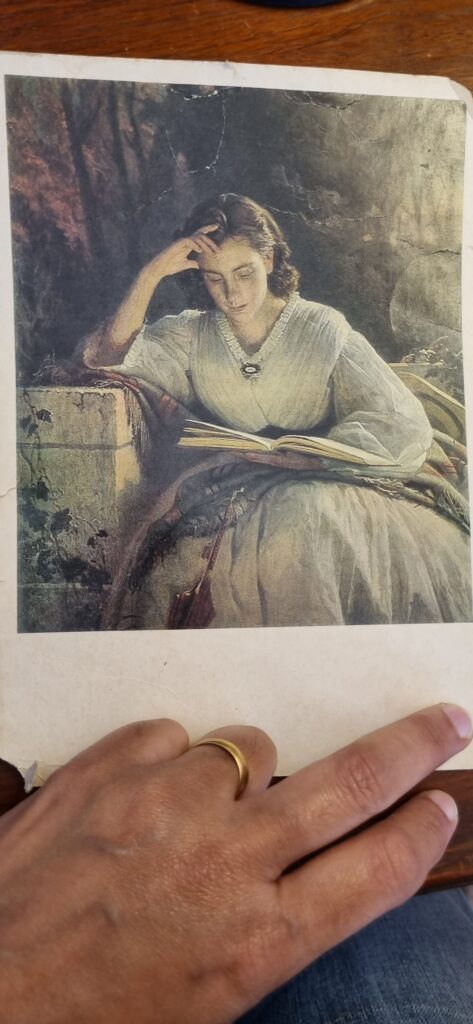
Ivan Kramskoi, 1837 – 1887 Reading a Book, Portrait of Sophia Kramskaya, the Artist’s Wife, 1860s. The Tretyakov Gallery, Moscow (The picture is from a collection of postcards that I bought when a collection of art work from the Hermitage museum had been brought to New Delhi in the 1980s.)
I find it very challenging to compile “The Best of” lists. This year alone I have interviewed/recorded podcasts with over 80 authors. This is apart from my usual reading. So, here is a list of books that have stayed with me. It is eclectic. I am sure that tomorrow at this time, this list would be slightly different; perhaps, even longer!
Hilary Mantel A Memoir of My Former Self Paul Murray The Bee Sting Paul Lynch Prophet Song Martin McInnes In Ascension Laline Paul POD Arati Kumar-Rao Marginlands Jupinderjit Singh Who Killed Moosewala? Cory Doctrow & Rebecca Gilpin Chokepoint Capitalism: how big tech and big content captured creative labour markets, and how we’ll win them back Aleksandar Hemon The World and All That It Holds Shrikant Verma, (Transl. Rahul Soni) Magadh Nalin Mehta India’s Techade: Digital Revolution and Change in the World’s Largest Democracy Pradeep Sebastian The Book Beautiful Marit Kapla (transl, Peter Graves) Osebol Cat Bohannon Eve Ajai P. Mangattu (transl. Catherine Thankamma) Susanna’s Granthapura G N Devy, Tony Joseph & Ravi Korisettar The Indians: Histories of a Civilization Angela Saini Patriarchs : How Men Came to Rule Zai Whitaker Termite Fry Shabnam Minwalla Zen Sonora Jha The Laughter Daniel Mason North Woods Nikesh Murali Tales of Horror Marcella Hazan The Essentials of Classic Italian Cooking Claire Keegan So Late in the Day Salman Rushdie Victory City David Davidar (Ed.) The Greatest Indian Stories Ever Told Nguigo Wa Thiongo The Language of Languages Deepti Kapoor Age of Vice Vincent Doumeizel (Transl. Charlotte Coombe) The Seaweed Revolution: How Seaweed Has Shaped Our Past and Can Save Our Future Tan Twan Eng The House of Doors Yiyun Li Wednesday’s Child Lydia Sandgren (Transl by Agnes Broomé) Collected Works: A Novel Kashmir Hill Your Face Belongs to Us Brian Merchant Blood in the Machine: The origins of the rebellion against big tech Naomi Alderman The Future Sara Rai Raw Umber Westland’s Eka has republished Premchand’s stories and novels. These are the original text in Hindustani, without any tinkering to the language. A treasure!
This interview is facilitated by EUPL and funded by the European Union.
I am posting snippets of my correspondence with Hari as it would give readers an insight into how she crafts her writing.
It has taken me a while to respond as I kept having to return to them over and over again. You write from a point of being deeply immersed in Cypriot history. But it is much more than that. It is almost as if writing The Outpost was essential to address some internal questions that you had. Or perhaps conversations and experiences that you had had and needed to get them out into the open. While doing so, get a sense of the shape and form these long suppressed memories, conversations heard, whispers in families etc. It is almost as if it borders on your fundamental duty and responsibility to leave some kind of documentation of those years.
After reading your words, I realised how little I knew about the history of Cyprus. So, I spent a while reading about your country on the Internet. And every time I gathered some information, I went back to your text from the start. It was only after I had learned a fair bit or at least understood the broad markers of modern history, that I finally began to understand the contours of The Outpost. Till then, it was bewildering. I could not understand the perspectives or where was one to begin reading. Was it at the very beginning or could I start from the middle and then return to the beginning of the document.
Dear Jaya,
I thank you warmly for going into so much trouble to learn enough about the historical context and background of Cyprus in order to make sense of The Outpost! My mind is full of thoughts, an almost unavoidable consequence of studying your interesting questions!
****
Born in Cyprus, in 1964, Hari Spanou graduated from the Pancyprian Gymnasium and studied Medicine in Thessaloniki. She works as a physician in Nicosia. From early on her vivid imagination was coupled with writing — she published poems, articles and short stories in literary magazines and newspapers in Cyprus and Greece – she lives in her mind equally as in “reality”. She contemplates that laborious observation, exploring, even imagination is common both in Medicine and Literature; an attempt to comprehend the human condition. She published her first book of fiction Session I – The Dwelling – The Stranger in 2015. It was shortlisted for the Shorts stories and Novella State award. This was followed by a novella Territorial Conditions in 2018 and a novel The Outpost in 2022. The Outpost was chosen by the Cyprus PEN to represent the country at the EUPL in 2023, where it won a special mention. Her novel is currently being translated into Serbian by the Treći Trg.
****
Q1. How do you choose your topics to write upon?
I think that the topics choose me, in the sense that I don’t have an outline of a story and start to write. Whenever I tried to do that, and I have tried it three or four times, once I start to write, the story takes its own course, which is totally different from what I had planned or sketched on a big cardboard using different coloured pens. What seems to happen is I start off with something which persistently nags my mind: a scene or a move or a person, which or whom I cannot see clearly. And then, it’s as if writing creates some motion, like the movement of a semitransparent curtain, gradually the forms become more visible, I can imagine a waiter moving towards a young lady sitting outside in a café watching the pigeons feed off a plate left on a nearby table. Thus, the story starts to unfold and then I can try to fit in a dialogue about something that interests me. Sometimes it doesn’t fit at all, like a piece of a puzzle which looks right but isn’t right. I have learned that forcing a piece to fit is not wise. For example, trying to force a fictional character to do what I have in mind, doesn’t always work, sometimes it does but not always. That “resistance” forces me to move in another direction, perhaps bring in another character or make an earthquake happen. Of course, this semi dark cave, that is my mind or any writer’s mind contains some known ideas and many more potential seeds and some deeper cavities which seem completely off bounds. It’s like a game of hide and seek with one’s self. Until now, every time I start off to write a story it becomes an adventure.
Q2. Do you write to be read or do you write to read what you wish to read?
Actually, I think neither of these two suppositions describes the motive behind my writing. Writing is like an attempt to learn or to approach a particular “unknown” dark box and find out what is hidden in it or what you can invent to hide in it. It feels like a quest or a journey. I publish what I write if I can imagine someone else becoming interested in this journal of the journey.
Q3. How do you write about a war that is in the past when our present times are engulfed in continual conflicts? How do you hear yourself think?
Let me start with the second part of your question because I think it addresses a very core issue, and by this, I mean the poetics of writing. The analogy that comes to mind is childish, in the literary sense: I imagine the writer like a toddler who has acquired some skills – has formed a “self” but at the same time is overwhelmed by all kinds of stimuli; he perceives impulses from the self (mind and body), the outside world and the world of dreams – the writer like the toddler tries to “weave” all these, to make some sense, to overcome the chaos and create a structure. I presume this is the way that I hear myself think. Consequently, having all this in mind, I would address the first part of your question: this complex dialogue that takes place inside my writer’s mind, between the past and the present gives birth to a “structure”, a “story”.
Q4. How do you speak to individuals who are living in this “post-modernist world”, each one living in his/her own bubble? How do you create that bridge of communication with the younger generation? Has technology impacted the creation of modern literature?
I find myself having different attitudes, which are most probably affected by various factors. Breaking one’s bubble seems to me to be an innate human need. And by that, I mean interact with the environment: people, sentiments, animals, trees, the sky, the universe, ideas, Art. Break free. At the same time, I realize the human need to isolate to search and concentrate on oneself, heal from the trauma of being exposed in the world or focus on a particular matter. What bothers me is doing nothing or being in a state of inertia or being uninterested in anything. I wonder, sometimes, when I fail to communicate with younger people even on a basic level, what goes on in their mind. Sometimes I try to shock or amaze them by showing the unknown, the beauty or the complexity of the world outside. What we, elders, mostly fail to do though, is dare to remove their headphones and their phones for a few days; it seems as if we are, in a way, convinced that it is a deprivation of something vital, like food and water, or shelter or freedom. And that says something about us, the generation, which created the technology which our children and youngsters use.
Creating bridges presupposes that the both sides want to meet, in some way or another. I mean historically bridges were built to be able to move easily from one side of a river or a mountain to another, or because the left bank people were curious to find out, what they saw or imagined would be on the right bank of a river or a mountain.
If we have reached a point in human history at which we have managed to kill the need for human connection, the motive to learn, to create, or the move towards Freedom, which drives towards Rebellion against the Force which enslaves us, then I think what we consider Human history has ended. Whatever follows, will be something else. And I’m not getting signs that it will be better…
Your question about the creation of Modern Literature is interesting but I’m afraid I don’t have anything original to say because I have not read or thought enough on the topic.
Q5. What is the importance of literature? The conversations in The Outpost regarding conflict resolution and separation vs occupation and much else indicate the sensitivity that one needs to employ while using words. Has the English translation been able to accommodate the vocabulary and the sentiments that you wanted to convey in the original language, Greek? What is the significance of creating Art?
Literature is (alongside Philosophy), I have come to think, one of the best means to learn what humanity thinks, what it imagines and what questions it poses to its self. I think manages to do that more inclusively than Science can.
The question about the words one employs to convey meanings is extremely important. I suppose we can agree that every language is not the same, not in the sense that there are richer and poorer languages but because at each historical phase, language carries the burden of the particular role of the people who use it. This becomes more evident in the language Government agencies and newspapers and the media use in different areas of the world. But it also permeates other forms of language like Literature. I think that the English translation of certain passages could be improved, but it was done for the use by the EUPL jury, so there was not any communication between writer and translator.
Hm, the significance of Art! I think that the best way to find the answer to this question is walk through a museum or a prehistoric site and study the artifacts which humans have created at the dawn of civilization.
Q6. In India, there are writers who may know more than one language, but will choose to write in English. Mostly because they think it gives them access to a larger market of readers. You speak English fluently, at least in the interviews that I have heard, so why do you choose to write only in Greek?
This particular question has generated multiple thoughts in my mind on various different levels, political and historical not excluded. I feel that I have a long way to go, but let me be candid and share my thoughts as they are at present. Besides sharing a colonial past, India and Cyprus are in many ways completely different; India is vast and rich in resources, a subcontinent, Cyprus is a miniature semi-occupied island one can barely find on the map. However, it’s an ongoing enigma to me that English, besides being today’s lingua Franca, is still in practice an “official” language in India, its everyday use is extensive and so many newspapers and books are printed in English. This makes sense because of the myriad of languages and dialects present in India and the political issues that can stem from this.
My English I good but I have never thought of writing prose in English; to be exact, not up until recently!
The first reason, I guess, is ideological. In Cyprus there is a long and complicated history which originates in the 19th century’s beginning of British colonization – the Greek population’s identity was systemically attacked and disputed, the same happened with its language. The last 63 years of stormy Independence have complicated things even more; language level included. The Greek language and its use in Literature remains a form of resistance to various systemic attempts of corroding our identity… I can understand that this can seem hilarious for foreigners.
The second reason, I guess will make much more sense.
Literature in Greek is Λογοτεχνία from [Λόγος] = speech, discourse, saying, reason and [Τέχνη]= Art, so it is The Art of Writing. I consider Language a fundamental component of Literature. I think that language is not just a means of communication; it is a force which intrinsically carries meanings, memory and history. These factors, I consider crucial in Literature. The word “sea” is “θάλασσα” in Greek, but θάλασσα (thalassa) feels, sounds, smells, tastes different than sea; it’s salty water, I know.
I have been reading translated literature since I was an adolescent. It’s essentially important to me to be able to read Icelandic, Czech, Romanian or Arabic literature. I realize that, on some level, this is a contradiction to what I previously wrote.
Sometimes I feel naïve; an outsider; or ridiculous – yeah, before the EUPL experience, I never thought of markets of readers. Literature crossing boundaries is important.
Q7. Why write in the stream of consciousness style of a man who has been executed? What is it that you hope to achieve by this kind of storytelling?
Every conscious person who has experienced his death, violent or “peaceful” knows what happened to him. Those who remain ignorant are we, who are still living. Literature and Art in general naturally dwells and grows on the ground of existential exploration. There are two scenes in the Outpost where two dead people have a voice and tell their story. One of them has been executed, the other died of a heart attack. I suppose I’m not the only human, who thinks about death and dying. So, I think that what I was trying to achieve, is in fact, to shed some light to something which is evident but eludes us. That there is a “missing” part which we attribute to “the missing person” which is “missing” from us, and that is knowledge.
Q8. As a physician, without breaking patient confidentiality, have you been privy to conversations, sharing of memories, anecdotes about missing loved ones or even of the invasion of Cyprus by Turkey and executions in 1974? The Outpost at times sounds like an amalgamation of voices, woven together to tell a story, in as linear a manner as is possible.
The answer is yes, both as a person and as a physician living on the island for many years, one cannot avoid becoming “exposed” to whispered stories about victims suffering violent deaths and missing persons. Imagine the sotto voce fragments and the odd silence of the thousands of survivors as a sort of background noise… This subterranean issue of the 1510 missing persons, young men, soldiers and civilians, young women, middle-aged people, children, babies, elderlies surrounds and affects practically every extended family. Of course, everyone deals with this in a different way. Since 2006, nearly every Sunday one or more funeral takes place in a church – 743 missing persons have been identified.
Your perception of The Outpost, as an amalgamation of voices, is astonishingly precise… .
Q9. Who are the writers you admire?
Oh, if you had asked me this question 30 years ago, I would have answered with more ease: I would say out loud: Milan Kundera, Amos Oz, Maro Douka and Günter Grass and definitely poets like George Seferis and Ezra Pound. At this point in my life, some of the classics have surfaced, but also, particular dissimilar books and not writers are most dear to my heart.
Short list:
Homer’s Iiad
Platos’ Phaedros (Φαίδρος)
Giorgos Seferis’ Poems and Essays
Odysseus Elytis’ Poems and Essays
Albert Camus’ L’homme révolté and L’etranger
Doris Lessing’s The Golden Notebook and The Good Terrorist
David Grossmann’s To the End of the Land
Amos Oz’ A Tale of Love and Darkness and Judas
Dan DeLillo’s The Silence and The Names
Paul Auster’s Travels in the Scriptorium and Man in the dark
Maurice Attia’s Trilogy
Kamel Daoud’s Meursault contre etiquette
Olga Tokarczuk’s The Books of Jacob
Q10. Do you have any Cypriot author/book/literary website recommendations for readers?
Disclaimer: This paper was written under the European Union Policy & Outreach Partnerships Initiative with the view to promote European Union Prize for Literature awardees. The publication was funded by the European Union. Its contents are the sole responsibility of the authors and do not necessarily reflect the views of the European Union.
This interview is facilitated by EUPL and funded by the European Union.
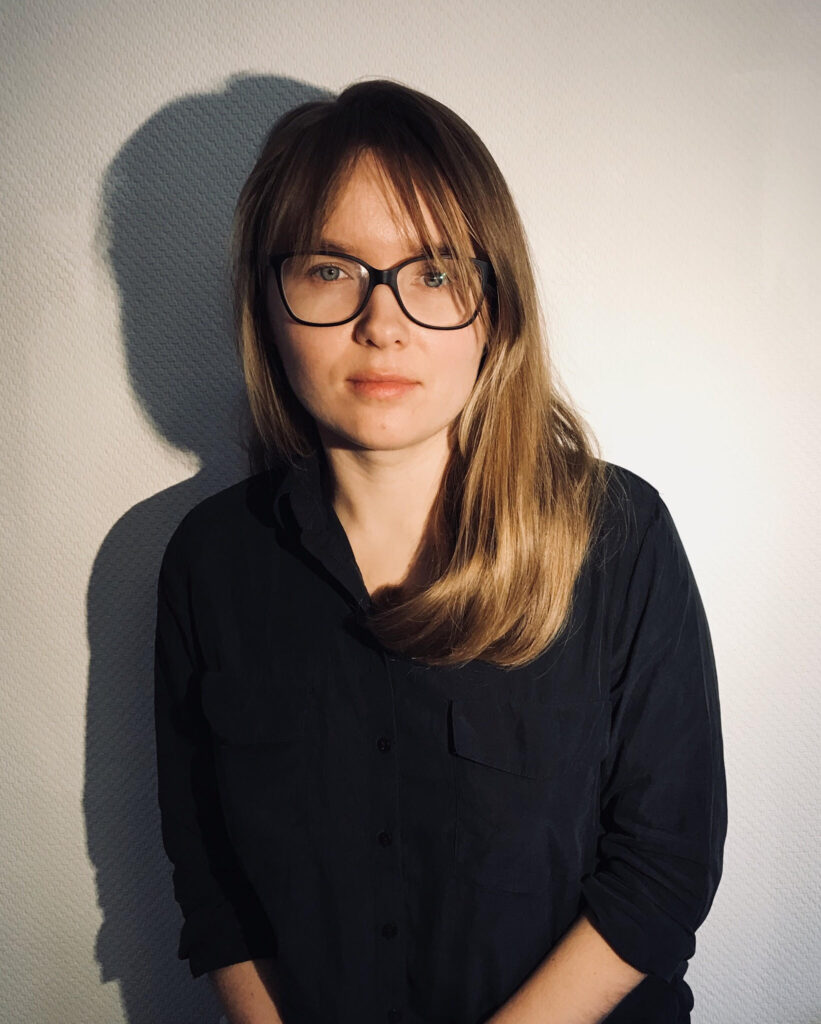
I am posting snippets of my correspondence with Eugenia.
Dear Eugenia,
Your writing is extraordinarily powerful. I have only been sent snippets but it is enough to gauge your writing prowess.
I grew up in an India when political ties between the Soviet Union and India were strong. As a result, we received a lot of books in translation, inevitably published by Raduga publishers or Peoples Publishing House (PPH). One of the books that I have from my childhood is a beautiful edition of Ukrainian folktales. So I am very pleased to be able to interview you, even if it is at a time of very sad circumstances for your country. Conflict at the best of times is nasty but such relentless use of firepower and other military measures to intimidate Ukraine are terrifying. I sincerely hope that you and your young daughter and extended clan are safe and truly pray and hope that peace returns soon.
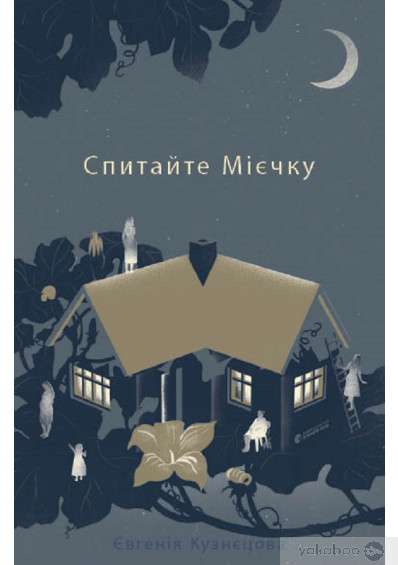
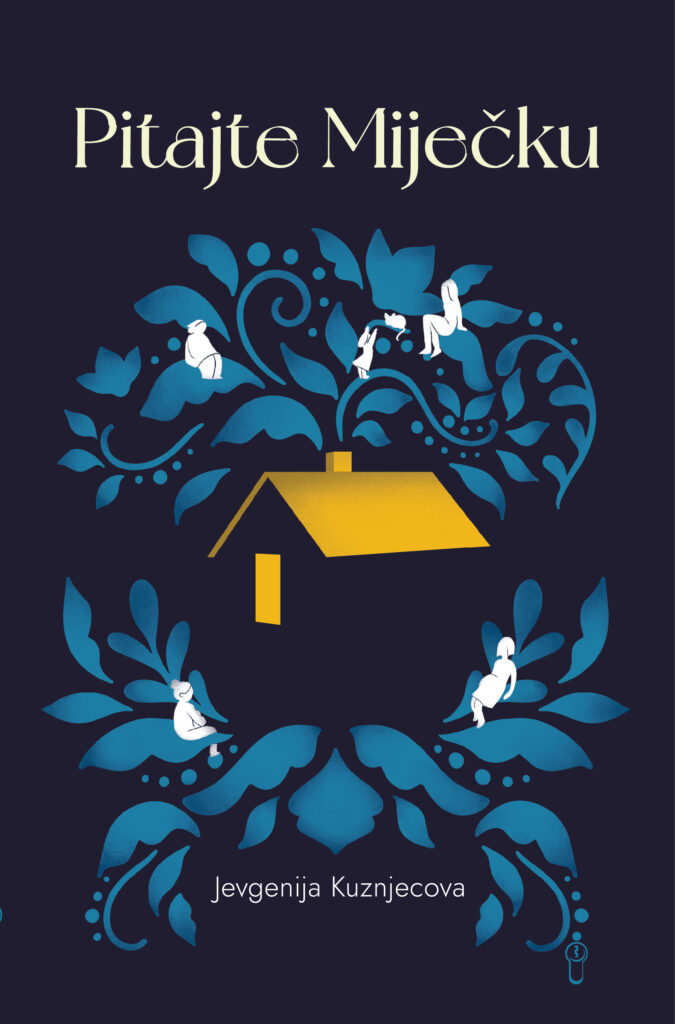
Since I have only snippets of your books to read and alas, not the book My Micheka which is discussed widely, I have based my questions on limited access to your creations. Nevertheless, I found your writing to be strong, clear, and sharp. Your reliance on memory for details as evident in the stories is quite extraordinary. Sometimes reading short stories by one author can begin to wane especially if the differences do not stand out. But in the few examples that I read, your preoccupied with domestic drama and the various permutations and combinations it results in human relationships is quite something.
Dear Jaya,
Thank you for your kind words and deep questions.
Eugenia.
****
Eugenia Kuznetsova is a Ukrainian author, translator, and researcher. She was born and spent her childhood in the village of Khomutyntsi in central Ukraine. After graduating Kyiv National University, she received her PhD in literary analysis in Spain. Now, Eugenia works in media research, focusing on conflict-sensitive reporting and countering disinformation, and translates fiction and non-fiction. Eugenia has published two bestselling novels in Ukraine and a non-fiction book on soviet linguistic policies.
Q1. How and why did you opt to write fiction?
I’ve always seen myself as a writer. It has never been a decision or a turning point when I decided to write. Writing is my way of living; it is my way to understand reality.
Q2. “Literature and fiction can explain to us better about certain places and certain people or countries than, for example, integration courses. The world is becoming smaller and smaller. If people learned new languages and read writers of different countries for fun, then it would be good. Most important about translated literature is that we are all much, much similar than we thought. At the human level we share similarities.” In 2022, at the Frankfurt Book Fair, you made these perceptive comments. Do you think now, in this world that is constantly in conflict mode, there is a crying need to create more Art and literature?
I am sure art and literature has potential to enhance understanding between different people and different cultures. Yet, there are things that cannot be “fixed” by art. As a person who is closely watching the tragedy of war and extreme cruelty of the unjust invasion of Russia in Ukraine, I want justice in the first place. Justice may be brought only by power, unfortunately.
Q3. Has your writing style been modified in any manner, especially after the beginning of the conflict between Russia and Ukraine in Feb 2022? Has your determination to include more political content in your fiction strengthened after the Ukraine-Russian conflict?
Politics is a part of daily life. The war has obviously changed the lives of the people I know and therefore it has changed somehow my writing. But I do not work according to an agenda – I just write about people under different circumstances. For now, I can’t afford the privilege to write as if there is no war. But I am seriously considering writing a text with no war in it even in the background just to give my Ukrainian readers leisure time without the war. I am not sure I will be able to do this, but I’ll try.
Q4. Countering disinformation and conflict sensitivity reporting are key focus areas of your profession. How challenging is it to keep your work aside and return to writing fiction? Or do you incorporate elements of it in your fiction?
I work as an analyst for different organisations, but still try prioritizing writing, since I think that’s what I do best. At the same time if I have an idea, it is very hard to put it aside – I must write it down. Otherwise, I feel bad: unwritten things keep bothering me until I write them. Interestingly, sometimes I don’t like what I wrote and easily discard the texts, but I have to write them first to discard afterwards.
Q5. How does your professional expertise as a linguist and as someone who is interested in media speech analysis find writing sentences and their rhythms? Do you convey the cultural particularities or do you focus on rhythm? Does this change from language to language? Or do you adopt the same methodology while writing in Ukrainian or English?
Unfortunately, I am not able to write fiction in any language other than Ukrainian, my first language. I feel the rhythm of Ukrainian, I know how to do wordplay and how to make my characters talk easily. I know how to build flowing dialogues. My Ukrainian writing is easy to read. Usually, I say to my readers that I do not guarantee anything to them but one thing: my texts are well written. I write op-eds or articles in English, but fiction is something else. I don’t even try writing in another language than my first one.
Q6. The samples of your writing that I have read are full of colour and after reading them I am left with the feeling of being enveloped in bright colours and the descriptions of the landscape are such. Yet, your interviews that I heard on the internet are bleak and understandably very worried about Ukraine. How do you manage to keep these two selves apart? Is there no internal turmoil? Or is that you seek some form of peace and hope while writing?
I am an introverted person, and, as I said before, writing is my way of existence. So, I suppose I am just not a great speaker. Also, when interviewed by foreign media I feel the need to talk more about the war in Ukraine, as we need all the international support we can get. For us, as a nation, it’s not a “political armed conflict” as some media put it – it is an existential question.
Q7. The impression that I get from your writing is that you are preoccupied with domestic scenes, interpersonal and intergenerational relationships, and sketching minute characters. Almost as if each individual that you create offers an insight from their moment of time and based upon their experiences. But it also helps clarify for the reader (and perhaps for the author too) some sense of our own time and circumstances. Why do you prefer to write about the family?
I think writing about family is writing about universal human experience. It is something we all share – difficult relations with the loved ones. It’s a universal human language.
Q8. Being in conflict and being an observer could not be easy, irrespective of where you may be based in the world. How do you maintain your perspective?
Modern technology like social media gives us the possibility to live wherever you want. I am sure lots of Ukrainian refugees, despite having fled to various countries, still “live” in Ukraine, are preoccupied by Ukrainian issues. I spend quite a lot of time in Ukraine and have never been able to integrate in any other country, even though I love traveling and enjoy new experiences.
Q9. You are bilingual. Do you read and create new versions of your texts in translation? Or are they the same?
Even though I speak Russian quite well, I can’t say I am bilingual – I never write fiction in Russian and don’t speak it daily. I do translate books written by other authors into Ukrainian, but never translate my own texts into other languages. I speak quite a few languages, like Spanish or German, but writing fiction is much more than being able to express yourself.
Q11. Do you have any Ukrainian author/book/literary website recommendations for readers?
I could recommend a funny book on Ukrainian history A cool history of Ukraine: from dinosaurs till now. It is written for kids, but any adult would enjoy it and understand better the region. If you are a more serious history reader, check out The Russo-Ukrainian War: The Return of History by Serhiy Plokhiy, Harvard University professor, who explains why Russia invaded Ukraine. Another project I would recommend checking out is Ukraïner: it is a team of young people who organize expeditions across Ukraine and prepare amazing videos about various regions of my country. Unfortunately, in the last two years they had to film dramatic events as well. Explore Ukraine and hopefully someday anyone would feel safe to come to visit my country.
Disclaimer: This paper was written under the European Union Policy & Outreach Partnerships Initiative with the view to promote European Union Prize for Literature awardees. The publication was funded by the European Union. Its contents are the sole responsibility of the authors and do not necessarily reflect the views of the European Union.
This interview is facilitated by EUPL and funded by the European Union.
I am posting snippets of my correspondence with Georgi as it would give readers an insight into how powerful his writing is.
Thank you for writing the books that you have written. It has not been an easy task reading your writing. I made many false starts. Extraordinarily, I would read the words on the page and none of it would make sense. Then I began reading around it and kept trying at different parts of the day to read your work, hoping I would begin to understand it. Finally, the breakthrough happened. I do not know what it was or was it that simply I had to zone in as a reader into the mind space that you were demanding as a writer. It has been so hard. More so, because you are writing about conflict. Despite your sentences being short and crisp. Descriptions being precise. It is incredibly hard to read the texts at first. It is obvious from the little that I have read of your work in translation that your contribution to contemporary European literature is extremely crucial. It is almost as if it is a sobering reminder that the horrors of conflict wrought upon societies are cyclical, history tends to repeat itself. And with that, the impact on mankind, local societies, triggering migrations, and the spin-off effect upon other communities and nations is a situation that is constantly in flux. Your writing does make the reader pause and reflect. Is any of this conflict worth this suffering and distress? Nevertheless, thank you for what you have written so far. I sincerely wish that there were more of your interviews and conversations available in English on the Internet. I barely found any information except for a quote or two.
Let’s hope we can rectify it.
***
Thank you very much for your frank words about my book and for your interest. Your questions were very meaningful and it was a pleasure to answer them. I am sending them to you as an attachment. I understand that you had a hard time with my books and thank you for being patient and reading them, when I wrote them it was also very hard for me, I have painfully experienced every one of them. I have visited each of the places I write about and talked to people who have experienced or been affected by the conflicts. I heard stories so shocking that some of them I can’t even repeat to my closest person, these stories changed me forever and will stay with me like a wound that will never heal. Yes, there is little information about me in English, but keep in mind that it is almost impossible for a writer from a small country like Bulgaria to be noticed outside his country, that’s why Georgi Gospodinov’s success is spectacular and I am very happy for him.
Warm greetings from cold, winter Bulgaria!
Georgi
***
Georgi Bardarov is a Bulgarian scientist and writer. He is an Associate Professor of Ethno-Religious Conflicts and Demography, a Vice-Dean of the Geology & Geography Department in University of Sofia. He founded and co-hosts the most successful course for the art of public speaking and oratory skills in Bulgaria. A member of the board of the Bulgarian Petanque Federation. He is part of the creative team of the publishing and production company Musagena, which aims to find talented contemporary writers and artists. In 2015, Georgi Bardarov won the first intellectual reality TV show for writers called The Manuscript which awarded him with the publication of his debut novel – I am still counting the days. The book is based on a true story about the love between a Bosnian Muslim and Christian Serb amidst the siege of Sarajevo during the Bosnian war.
Georgi Bardarov is the winner of the Pen Club award for his debut novel. The book has also been nominated for novel of the year in Bulgaria. In 2020, his second novel Absolvo Te was published. The novel, inspired by two true stories, explores the abyss between two nations with common origins but have been waging a daily fratricidal war for decades. Georgi Bаrdarov is the winner of the European Prize for Literature for 2021 and the biggest literary prize in Bulgaria – the National Vazova Award for 2022.
Q1 What is the focus area of your work as an academic of Ethno-Religious Conflicts and Demography?
As a specialist in ethno-religious conflict, my main concern is to expose the folly of military conflict. I think there is no cause that is above human life, every war is hidden under the mask of some cause, national, religious, etc., but in fact every war is just a business, a very profitable business for some, while others die thinking they are doing it for the cause. The main thing I want to convey to my students is that all humans are essentially the same and every division, ethnic, religious, even racial, is made for the sole purpose of being manipulated and used. Regarding Demography, I want to break the clichés about the demographic situation in the world because demography follows its logical and natural course and there should be no fear of demographic processes.
Q2 It has been extremely hard, under today’s circumstances of the ongoing conflicts around the world, to read your latest novel Absolve Te (I absolve thee). As far as I have been able to gather, it is based on two true stories – one about World War II and the Holocaust, and the other about the Arab-Israeli conflict. The main characters are a Palestinian, a Jewish man and a Nazi officer. Each of them must forgive and look past each other’s sins. How do you find the mental bandwidth to write about war while there are so many ongoing conflicts around the world? Do you test samples of your work with a trusted circle of readers before publishing the manuscript?
This is a cause for me, well beyond books and novels. But after two novels about wars, I feel infinitely exhausted and don’t want to write about war anymore. I am often asked in Europe if I will write a book about the war now in Ukraine? I answer no, everything I had to say about wars I have said everything in my two books, nothing new to add, everything is painfully repetitive, the protagonists change, the territory of the conflict changes, but the violence is essentially the same and it doesn’t matter when or where the war is! Yes, there are some very close people I discuss my manuscripts with, and I have a wonderful editor, Hristo Karastoyanov.
Q3 How do you find your entry point in writing these narratives about the war? How do you fix a text in time so as to be able to write it?
First there has to be a true story that has touched me emotionally and I want to tell it to people. Second I do a lot of serious research with books, archival documents, people’s stories and third I absolutely go to the places I write about, do fieldwork so I can feel the energy of the place and then convey it authentically in the novel!
Q4 In some senses, your expertise as an ethno-religious conflict comes to the fore while writing these books. How much of this is historical fiction and how much of it is based on reality and empirical evidence? What is the purpose of writing conflict-based fiction? Does it give you the space to ask questions as well?
All my books are based on true stories, there is of course a lot of fiction, it’s hard to judge which is more, maybe 50/50. And my goal is for people to start asking themselves questions and not accept the easy answers and stay vigilant against manipulation.
Q5 What triggered your interest in conflict studies? What have you discovered over the years about mankind, conflict, and survival? Or am I missing something critical altogether?
I have a favorite thought, “Only the wisest and the stupidest never change.” Unfortunately, humanity is not one of the first. All the mistakes we’ve made as a human race we repeat them again, and again, and again.
Q6 You are a part of the creative team at Musagena when your mss was submitted for consideration. There is an imprint in your name on the website. Why did you feel the need to self-publish (if you can call it that) your debut novel? Is the topic too sensitive and controversial?
Yes, I am part of Musagenа. Our idea to create this publishing house was to be able to promote my books outside Bulgaria, because the traditional Bulgarian publishers work almost exclusively for the small Bulgarian market. Otherwise the subjects of my books are popular, albeit sensitive, both in Bulgaria and elsewhere in Europe.
Q7 What has been the response to your books? Do readers understand or are they as bewildered as the children in your stories are about what they are shown? Are readers receptive to books that are ostensibly set in the past but in reality, are about geographies that are currently in the news?
At the same time, my books are very well received, but readers are also shocked when they read them, because our idea is that such atrocities cannot happen today, that they have been left in the past. That is why I present war in all its ugliness and cruelty, so that people can feel that there is nothing more terrible than war, I believe that a war cannot be presented lightly or even “heroized”.
Q8 Is the experience of writing in any way cathartic for you? How do your academic pursuits influence your fictional writing and vice versa?
Yes, I experience my own personal catharsis when I write my novels and develop my characters, I experience it with them. I wrote Absolvo Te because there are things I can’t forgive myself for in my own life, and with the catharsis of my three main characters, I experienced my own personal one. My academic career helps me do a lot of serious research for my stories; I do it more as a scholar than as a writer.
Q9 Who are the writers you admire?
Of course, except Georgi Gospodinov, who is already world famous, I like very much Ivo Ivanov, who lives in the USA and writes very strong stories about the strength of the human spirit, Radko Penev, who is a naval officer, but his books are charged with a lot of humanism and beauty, the incredible poet Petya Dubarova and my editor Hristo Karastoyanov, who is also a wonderful writer.
Disclaimer: This paper was written under the European Union Policy & Outreach Partnerships Initiative with the view to promote European Union Prize for Literature awardees. The publication was funded by the European Union. Its contents are the sole responsibility of the authors and do not necessarily reflect the views of the European Union.
(C) EU This interview is facilitated by EUPL and funded by the European Union.
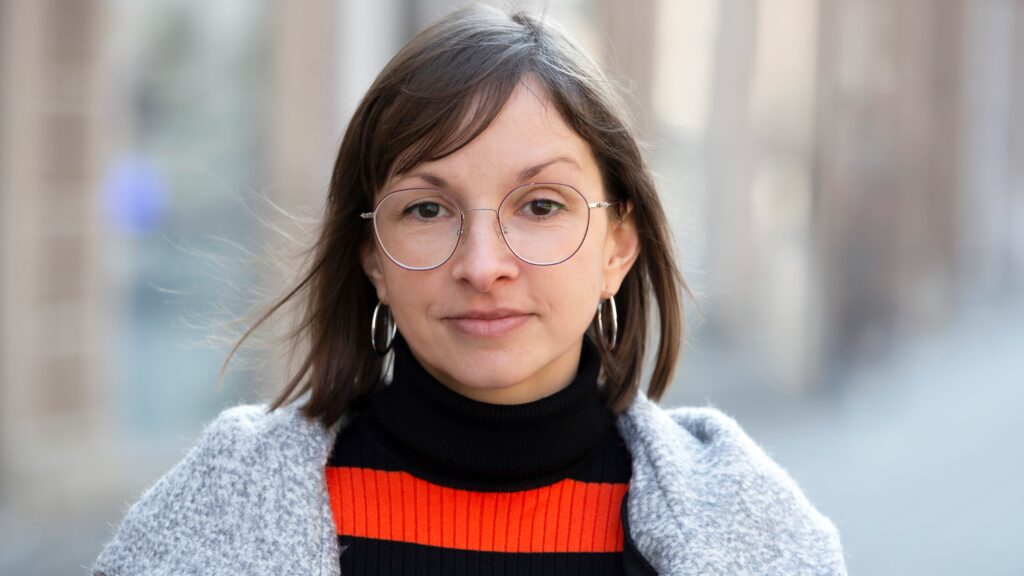
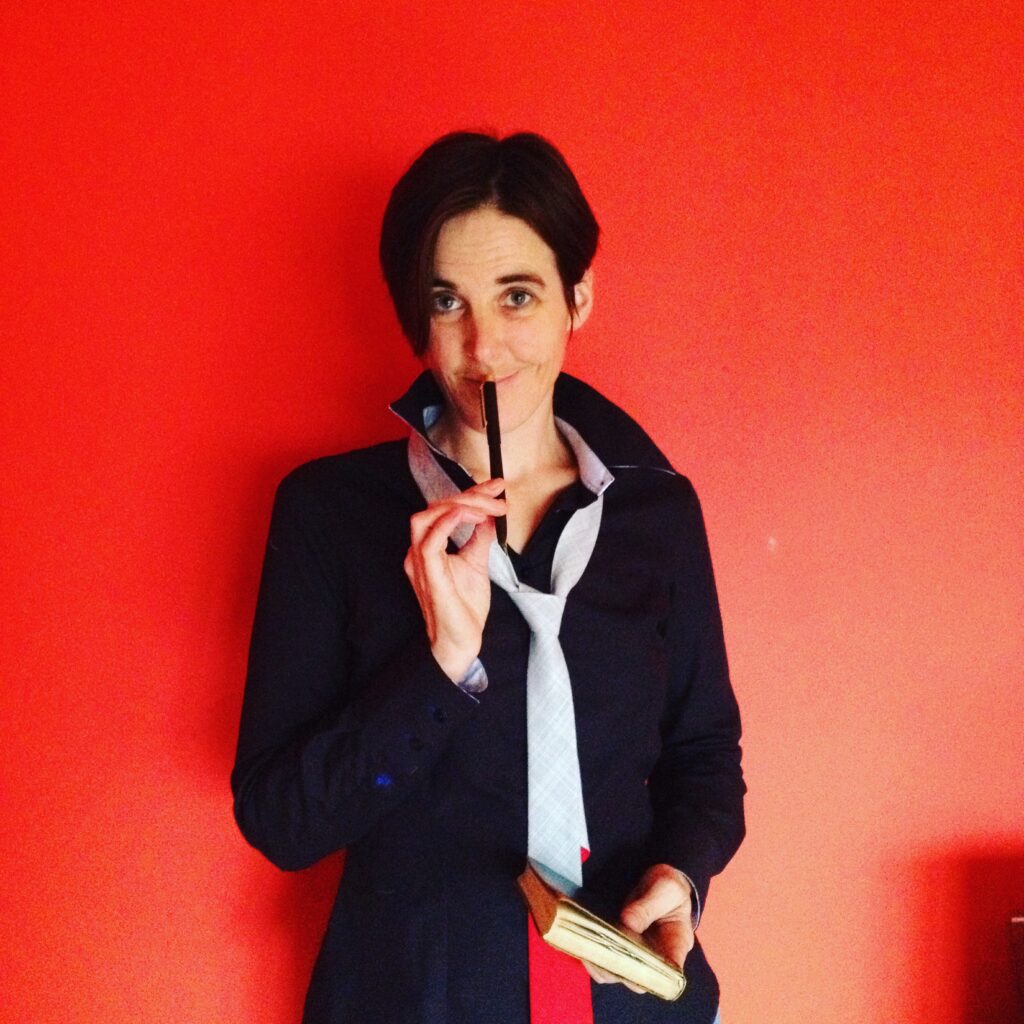
I am posting snippets of my correspondence with Anja Mugerli as it would give readers an insight into how she intermingles folkloric elements in to contemporary fiction.
Dear Anja,
Thank you for sharing the two PDFs of your stories in English translation. I have been pondering over the stories for a while now. Your stories operate at so many levels. They require the stories to be read over and over again and there is always something new to discover. I am not sure if you intended it, but at one level it is a straightforward short story. At another level, particularly if read again, it has a “folklory” air to it. I am not sure how to spell it out any clearer. Then, your fascination with the body without being voyeuristic or sleazy but in a calm, matter-of-fact tone, is lovely. It is almost as if a confident female gaze is over the body. and owns it. It is a very empowering feeling while reading your fiction. Thank you.
Dear Jaya,
Thank you for your very interesting questions. I’ll be happy to answer.
Anja
****
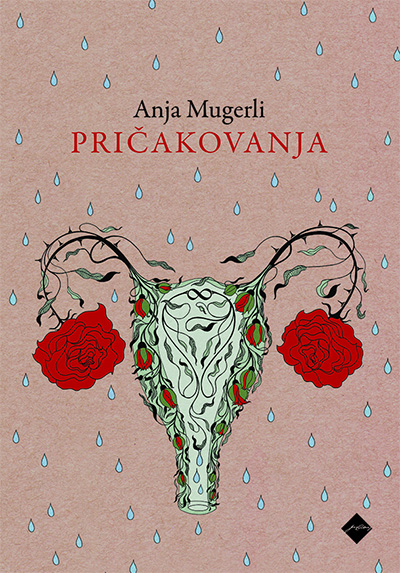
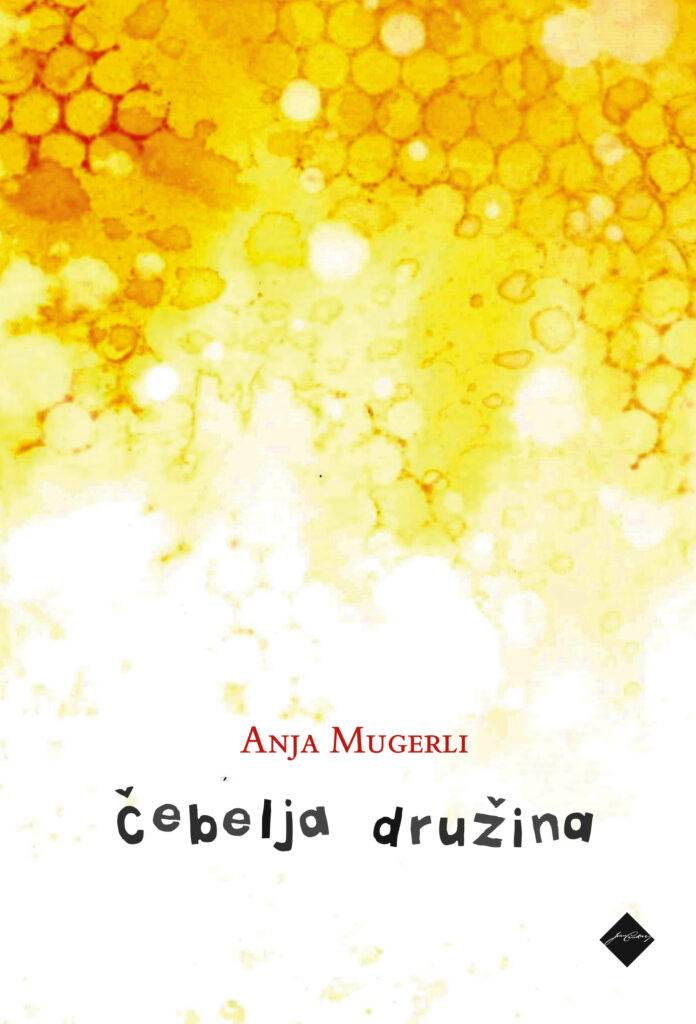
Anja Mugerli, born in 1984, is a Slovene writer. Her debut, the short prose collection Zelenifotelj (Green Armchair), was published in 2015 and in 2017, her first novel, entitled Spovin, was nominated for the Novel of the Year Award in Slovenia. In 2021, her short prose collection Čebelja družina (Bee Family) won European Union prize for literature. She graduated with a degree in slovenian studies and has a master’s in performance studies and creative writing. She lives and works in Nova Gorica, on the border of Slovenia and Italy. In 2023, was published her second novel, entitled Pričakovanja (Expectations), by Cankarjeva založba.
Q1 How and why did you start writing fiction?
I grew up surrounded by books. I was a very shy and quiet child and sometimes it was hard for me to make friends. I guess what was missing in my real life I found it in books and when I grew up, I realized that I can express myself in writing. After I finished my studies, I decided I want to start writing seriously and I started sending my short stories to Slovenian literary magazines. More I wrote better my writing became and in 2014 I send my best stories to some editors because I wanted to publish a book. A year later my first book, a collection of short stories Zeleni fotelj (Green Armchair), was published. The book was very well received in Slovenia and since then I wrote three more books, two novels and another collection of short stories Bee Family, that received the European Union Prize for Literature. It was translated in Croatian, Macedonian, Hungarian, Italian and Bulgarian. Other translations will follow.
Q2. You are a polyglot. English, Spanish, Italian, and Slovene are the languages spoken by you. How does this familiarity with languages and thus, with different cultures impact your writing?
Slovene is of course my mother tongue. From other languages the closest to me is Italian because I live in a city on the border with Italy and I was in contact with this language form early childhood. English and Spanish I learned in school. Understanding different languages means that I can also read books in English, Italian and Spanish. Reading a book in original language is a different experience than reading it in translation. I often read the same book first in original language and then in Slovenian translation. An advantage of understanding different languages is also that I can read a book before it’s even translated in Slovenian. All this affects my writing. When I write a book about specific theme, I read other books that deal with this topic. In this way I compare different views and I try to look at the theme from other angles. This definitely broadens my horizon. Sometimes I use different books as references. In my novel Pričakovanja (Expectations) for example, I related to the female authors like Rachel Cusk and Sheila Heti who in their novels write about motherhood and womanhood.
Q3. What is it about cultural mappings that interests you?
In my book Bee Family, I explored different old customs and rituals specific from old Slovenian culture. Because I wanted a specific, darker atmosphere in the book, I chose the customs and rituals that deal with a little more obscure topics, for example burials. I knew about some customs, about others I found out during my research. There are a lot of old customs that are not used any more but they are still part of our culture’s heritage. I think it’s important to remember them and their role in past culture, and since many people don’t read ethnological articles, I think it’s a good thing to write about it in fiction. I like literature from which I learn something new, in which it’s not only about the story.
Q4. Would you self-translate your books, say from Slovene into English or even Italian? If yes, then what are the safeguards you would put in place, so as not to tinker with the text too much? Or would you merely translate the Slovene text as it has been written into another language?
In the past I actually translated a few of my texts from Slovenian to Italian. They were dramatic texts for a competition held in Duino in Italy. Two times I received the second prize, so I guess the translations were not bad. Today I wouldn’t do it anymore. I love writing in Slovenian. I can think, explain, interpret best in my own language.
Q5. You seem to be fascinated by the body. Why?
I think in western culture everyone is fascinated by the body – with this I mean of course female body. Since we are little girls, we hear and see everywhere how should a female body look like and also how it shouldn’t. This applies to films, tv-series, commercials and nowadays social networks, but it doesn’t stop there. Girls and women are confronted with comments on their bodies also in their social circles, from their classmates, coworkers and family members. The people who think they are allowed to comment on your body are often men (but not always!) and therefore also this myth of “perfect” body was made by men. I’m interested in women’s experience of their own bodies. How does it feel to be constantly aware of your own body? Because I think that women are constantly aware of their own body: how does it look, does it fit the society “standards”, what you think is wrong with it? Can your body get pregnant and can you have children? This is another thing that is very important in our society. Are you still a woman if you can’t have children? Or if you don’t want to have children? In my writing I try to turn the focus from “how should” to “how does it feel”.
In my novel Pričakovanja (Expectations) I write about a couple who can’t have children. The protagonist Jana is confronted with her own expectations and longings and with expectations of society. She is married, she finally has a steady job, she and her husband just bought a new apartment, the next step is a child. It seems that everyone around Jana expects that she will get pregnant. If she can’t get pregnant naturally, the medicine will help, it’s as easy as that. But during procedures of artificial insemination Jana feels more and more alienated from her body. She is reduced to her uterus, ovaries and cells and she gradually starts to lose contact with herself. The fact that the procedures of artificial insemination don’t succeed doesn’t help. Jana begins to think about motherhood. What does it mean to be a mother, is this really the only way she can live a full life, is it such a tragedy if she will never have children, what are the advantages of not having a child? She also realizes that it’s sometimes very difficult to separate your own expectations from expectations of others.
Q6. What is it about folk tales that intrigues and you wish to experiment with in your literary fiction? What are the technicalities that charm you, apart from folklore being a fine example of storytelling that has withstood the test of time. Can these be used and adapted with sophistication in modern stories?
In my book Bee Family, I explored old customs and rituals that are specific to Slovenian culture but can also be related to Slavic folklore. I never wanted to write about the past, instead I wanted to place these customs and rituals in today’s time (only one story happens in the past, during Second World War). I personally see old customs as a link to our ancestors and their way of life. I like the magic and secrecy of it, but I’m aware that nowadays society is very different, the values changed. Because of this, in my stories I tried to rethink old customs and rituals in a way that their main role changed. For example, in the first story of the book, the dance with the chair takes another role in the protagonist’s life in comparison to the old woman’s. If the dance with the chair in old woman’s life was important because during it, she found her future husband, the protagonist uses this old custom differently. In this way she breaks the tradition but on the other hand it’s because of this custom that she takes her life in her own hands. These customs and rituals often help my protagonists but not always in the way the reader may expect. My translator into Croatian said to me that these unexpected turns were exactly what fascinated her about the book. I see tradition as an important part of our culture, but I also think that we should rethink some old customs, see if they still make sense in the life we live today. Some cultures for example still blindly follow some customs that are hurting people and animals and nature.
Q7. How would you define femininity? Why is it that I get a sense from the few stories of yours that I have read, it is a concept that you wish to tussle with?
I think about this question a lot and I also try to integrate it into my writing, so I guess your sense is correct. What does it mean to be a woman? I often think about my mother who passed away four years ago. She was the first female role model to me. She was a very kind woman who always put her family first. She would do anything for us, her children. Some would say that this is a very natural thing, maternal instinct, but I personally know many women who don’t feel this way about their children or who even won’t have a child because of it. Are they less women because of it? I don’t think so. In her caring for others my mother completely forgot about herself. I see femininity as an ambiguity, always keeping balance between your own needs and wishes and expectations of family, friends, society. Some women, especially older generations, couldn’t handle this balance and they lived like my mother, they never put themselves first. It still happens today. I know many young mothers who deal with sense of guilt whenever they choose to put themselves before their child. I don’t have children, but I think you can’t expect to raise a child, who is sure of himself and who loves himself, if you as a mother don’t feel this way about yourself. It’s always about projection.
Q8. Your authorial comments in the stories are astute and you etch characters brilliantly. They are memorable. How do you observe people in real life?
As I mentioned before, I was that child that didn’t join the play or quarrels with other children. Instead, I’ve rather observed the behaviour of others, not only my peer but also adults. I’m an introvert and as you may know introverted people prefer solitude and conversations one-on-one than big gatherings. But because our society (with “our” I mean Western) is more extrovert oriented, introverts are sometimes forced to act in extroverted way, for example if they want to get a job. Some years ago, I read a beautiful book about introverts, Quiet by Susan Cain, and the author during her research found out that introverts often imitate the behaviours of extroverted people. They do this so they can survive in hyperactive western society. I found myself in this description and more I think about it more I’m sure I did/do the same think. I observe people, but I don’t stop with their behaviour, I also focus on their moods, fillings, reactions etc. I use all of this in my writing and in creating of my protagonists.
Q9. Women writing about families tend to get mired in a lot of domestic detailing, which in its own way needs to be articulated and made visible. Yet, in your fiction, you take it one step further and probe the grey spaces between relationships and explore the “what if”, without underlining it. Are these conscious acts in your craftsmanship?
In connection to my previous answer, I would say that in my writing there isn’t a lot of action. Although I observe different people and use the material in my writing, I simply can’t write from the focalization of an extroverted protagonist, because I don’t know how it feels to be extroverted. Instead, I focus on the things that interest me the most: the inner life of my protagonist, their psychology, their relationships and how they are being shaped in these relationships.
Q10. Do you have any Slovenian author/book/literary website recommendations for readers?
I would recommend writers Lojze Kovačič and Ana Schnabl (their books are also in English), and Slovenian poetry which in my opinion is very good. My favourite Slovenian poets are Miljana Cunta, Veronika Dintinjana, Maja Vidmar, Barbara Korun. I would also recommend they visit websites Airbeletrina and Vrabec Anarhist. Together with my two colleagues I edit literary newspaper November and your readers are very warmly invited to check our Facebook page and Instagram.
Disclaimer: This paper was written under the European Union Policy & Outreach Partnerships Initiative with the view to promote European Union Prize for Literature awardees. The publication was funded by the European Union. Its contents are the sole responsibility of the authors and do not necessarily reflect the views of the European Union.
(C) EU This interview is facilitated by EUPL and funded by the European Union.
I am posting snippets of my correspondence with Gaea as it would give readers an insight into how mind blowing her writing is.
Dear Gaea,
I like how you quote Joseph Conrad’s Heart of Darkness. One of my all-time favourite books.
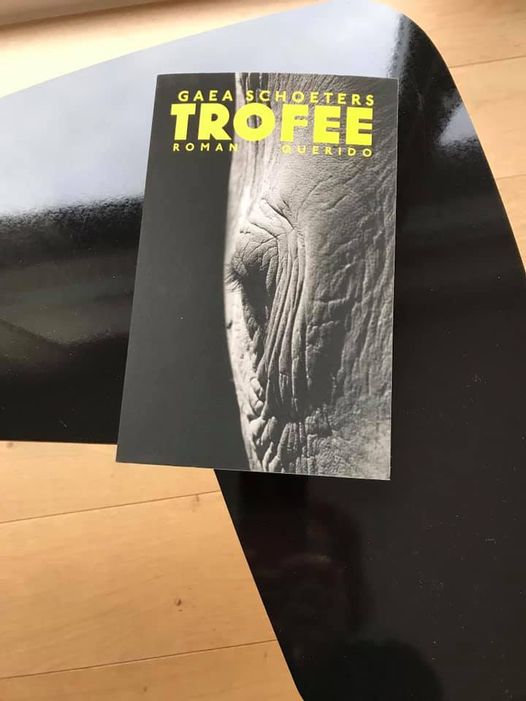
Yet, I made many false starts with The Trophy. It is a very discomforting novel. The rhino charge is very real and it brought back memories for me. I was once in the Kaziranga Sanctuary, Assam with my father. The sanctuary was closed because of the monsoon, but we had been given access by the forest department. As a result, the place was devoid of tourists. It was quiet and lovely and my dad, who is an avid photographer, asked for the jeep to halt at one point, so as to take some pictures. As soon as the engine went silent, out came from the thick, long grass, a rhino. It was a new mum wanting to protect her calf which she thought was under threat. Everyone was startled. The driver tried starting the engine and it refused to. For a few seconds there was pin drop silence in the car as well as complete panic and then just as the large animal came out of the grass in a rush, the driver started the car and sped away. A very real “What if?” scenario. Unforgettable.
But it is more than about the rhinos, isn’t it? You explore so many ideas such as living museums, collectors, attributing a value to a thing (notional or real), etc. If I had read your book in print, it would have been thoroughly dog eared and underlined. It is hard to do so on a pdf. Thank you for sharing it. I hope one day you can bring it to India.
If The Trophy is anything to go by, I would definitely like to read your first book, Girls, Muslims and Motorcycles. Is it available in English? I read the brief on your website. In fact, years ago, I read All the roads are open: an Afghan journey, 1939-1940 by Annemarie Schwarzenbach, a writer whom you seem to have referenced as well.
Dear Jaya,
do not worry. Actually, from a writer’s perspective, I can only be overjoyed that my book elicited such strong feelings in you that provoked such a direct response. And even more so that you feel such a direct connection that it invites a correspondence which does not need further formal introduction – it seems the book was enough of an introduction. Or, if you look at it that way, a rather direct (and harsh) piece of reading that I dropped onto your reading table without warning.
So again. Do not worry.
I find your questions very interesting and want to answer them decently. (I’d prefer to answer them in depth rather then quickly, since you’ve clearly put some thought into them as well – and especially because the book has affected you so.)
Oh, and concerning your question about Girls, Moslims & Motorbikes – unfortunately it has not been translated yet, so I’m afraid I can’t help you there… but Schwarzenbach (& Maillart) were indeed a big inspiration; we followed their tracks and had their books with us while travelling.
Warm greetings!
Gaea
***
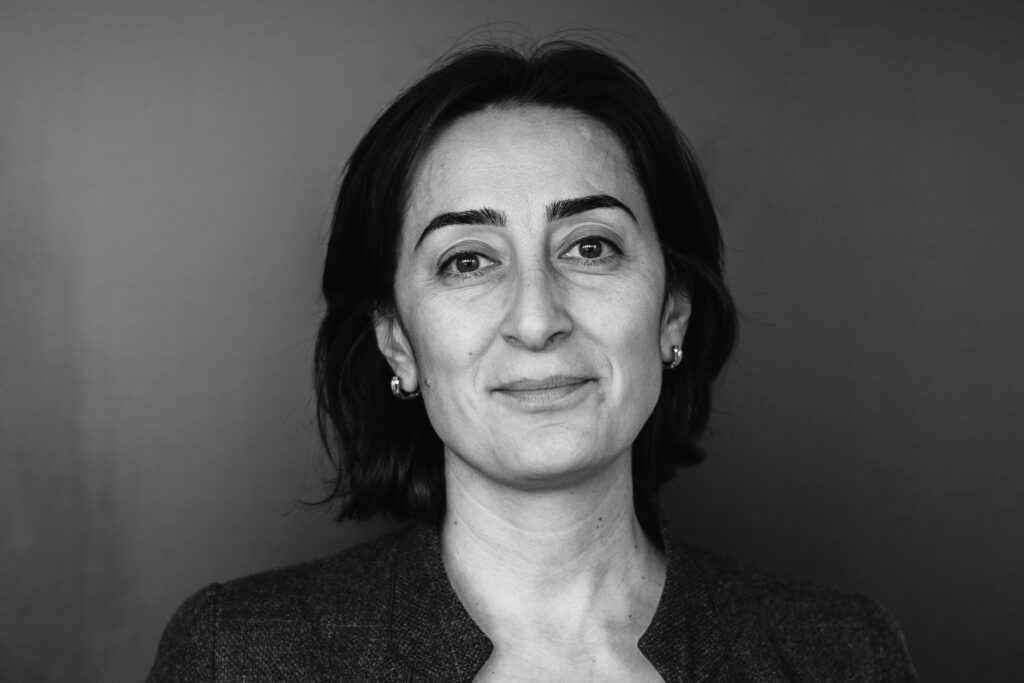
Gaea Schoeters (1976) is a writer, screenwriter, librettist and journalist. She made her debut with the travel book Girls, Muslims and Motorcycles about a seven-month motorcycle trip through Iran, Central Asia and the Arabian Peninsula. This was followed the novels Diggers (Manteau), The art of falling (De Bezige Bij) and Untitled #1 (Querido) and the interview-collection Het Einde (Polis). Her latest novel, Trofee, was shortlisted for various prizes and won the Sabam Prize for literature. With illustrator Gerda Dendooven she made Nothing (De Eenhoorn), a philosophical picture book for children young and old. With composer Annelies Van Parys she wrote several award-winning operas and music theatre pieces; their work is performed at venues such as Biennale Venice, Staatsoper Unter den Linden, Folkoperan Stockholm, Opera Ballet Vlaanderen, Deutsche Oper, Operadagen Rotterdam and Theater aan Zee. And in collaboration with Johanna Pas she translated Kae Tempest. All her work lies at the intersection of formal experimentation and social engagement. She is a much sought-after columnist and essayist for various newspapers and magazines, and the curator of the Dead Ladies Show, a café chantant that spotlights forgotten women.
Q1. Your portfolio resume says that you are a journalist, an author, a librettist, and a screenwriter. Why do you choose to make Art, with a capital “A”? Are all forms of art commercially viable for the artist? How do you balance making art, communicating ideas, and making a living?
I don’t think making art is a choice. I’m afraid I have to write — telling stories is who I am and what I do. All choices I have made in my life have always led me back to this point. It is my way of trying to understand life and the world we live in, and trying to influence it by sharing my ideas or insights with others. Art is to me, more than anything else, a form of communication. A way to raise questions and hope that readers reflect on them, or to confront them with their own feelings and prejudices. Literature is a spotlight that I can point at things, forcing people to look at them from a certain angle and making it impossible to look away. And contrary to other forms of writing, like opinions, art does not have to provide answers — always much less interesting than questions.
(The idea of becoming a writer shaped itself in my mind when I, still very young, saw the film Henry & June in the cinema: a biopic about Henry Miller and Anais Nin in Paris in the thirties. It presented ‘the author’ as someone who spent his or her life discussing the world, literature and philosophy sitting in bars all night long surrounded by beautiful women. To me, that felt like an attractive future, but my parents saw things differently, so I studied interpreting. After university, I enlisted for a journalism master and there one of my teachers told me I should write fiction, so I did an extra year of scriptwriting. But looking back at it now, I have actually never not written: literature was always there and thinking about the world and sharing these ideas through language is indeed what I do. However, the idyllic bar idea is in reality much less romantic — writing is hard work, especially if you want to live of it.)
Making a living of literature is, especially in a small language area like Belgium, nearly impossible. That I am able to live of my writing, is because I combine so many different things. I once calculated that one day of scriptwriting equals to one week of writing for the newspaper, one month of working for opera or theatre and one year of novel writing. So for a long time, I financed my novels with writing soap for television. Also, I (luckily) like to be on stage, so I do a lot of performances and created my own programme, the Dead Ladies Show, a café chantant where we honor important women from the past. All these things make it possible to live of my writing, in a very broad sense. And these collaborations are, very often, also artistically enriching.
Q2. Your website states that you prefer to work at the intersection of “formal experimentation and social engagement”. How?
For me every book needs a story, a theme and form. The one cannot exist without the other, and they have to be very closely linked. What sets literature apart from other forms of writing, is that it is not only crucial what it conveys, but also how. Explore the possibilities of telling narratives in non-classical ways is half of the fun. (We are obsessed with classical structures, driven forward by conflict and causality. This also shapes our (western) world view. But is this really the only way of thinking and of telling stories? Can different narratives create different ways of thinking, different ways of solving problems? Does art reflect the brain, or train it – or both?) I have, for example, tried to find out if it is possible to base the structure of a story on the structure of a musical piece ( a classical piano trio), by connecting characters to instruments and themes to musical themes and using the score as a building plan for the novel. It does work! It reads differently, less linear and with more repetition and variation, but I found it fascinating.
On the other hand, I am aware of the fact that I, as an artist, am at the same time part of the world / social reality that I live in, and, being an observer, also a privileged outsider. I don’t know if art can chance the world, but I am convinced that it can chance the lives of individual people. (If a book can touch one person to such an extent that it really impacts his or her life, it was worth writing.)
Also, I believe literature has the power to create empathy with ‘the other’. Maybe that is why I have a fondness for unpleasant characters or characters who are very different from myself; I feel a deep need to explore the mind of people with whom I’d probably get into a fight very quickly in real life. And to try and find out why they think what they think and do what they do. For me, fiction is a place where we can push ethic questions to the extreme to map their consequences, safely juxtapose different mindsets and try to find common ground which can be the beginning of a dialogue and of understanding — and therefor of change. (In the case of Trophy, a shared love of nature was the point of connection with the world of hunting and the character of Hunter.)
Q3. What prompted you to write The Trophy? Why do you use “Hunter” as a noun? Whereas in the context of the story, he is quite literally the hunter in pursuit of his game, his prize. It is a name, true. But, in the context of this story, it is unnerving. This is a very testosterone driven novel. How did you get into that mind space so as to write this story that is so white, male, masculine, and with a deep sense of colonialism*? Did it involve a lot of background research? ( * It is a brand of colonialism that is linked with those in the years gone by. Yet, this story is set in our contemporary world. It is unnerving.)
I know it is unnerving. I am sorry. I wanted it to be. I wanted to lure the reader into following Hunter’s thoughts and perspective, to be able to confront him or her brutally with the consequences of this white male gaze from within. I am aware it is a harsh read. But I think it is far more effective to make people feel this than to tell them from a safe third person perspective.
If anyone had told me five years ago that I would write a novel about trophy hunting in Africa I wouldn’t have believed it; I am the kind of person who catches mosquitos alive and carries them out to the balcony. I had no connection at all with hunting or trophies. But while scrolling on Facebook, I bumped into a small advertisement for a trophy hunt on a rare kind of ibex in Pakistan, announcing that a protection programme would be set up with the money from the hunting licences. This (hunting rare species as environmental protection) sounded so paradoxical that it stuck to me and I started to do some research on trophy hunting. Shortly after, I stumbled upon a photo by David Chancellor — an image of a large game hunter (a man who looked very much like my accountant) in his trophy room, walls lined with stuffed giraffes, lions, etc. I wanted to know who he was and why he did this, shamelessly. And then I read an article about the ‘relocalisation’ / ‘reintegration’ of a local group of San, using precisely the same words we use for reintegrating wolves and bears in nature. That shocked me — language gives away what we think: if we talk about people with the words we normally use for animals, that means we look at them in that way. In one split-second, the story formed in my mind.
I did two years of research on hunting, fauna, flora, guns, … emerging deeply also in discussions between environmentalists and hunters. I wanted to get every detail right. But above all, I wanted to get into Hunter’s mind. For that, I returned to an old genre (searching for the correct form was crucial) of old colonial ‘hunting literature’ where professional hunters describe their hunts in a very macho way, but (even though their vocabulary is very colonial) with a lot of respect for the local people they work with. This helped me understand Hunter’s way of thinking. And although we no longer live in colonial times, I am afraid many things are not so different nowadays. As Jeans puts it at a certain point: Hunter has never been to Africa. The place he visits is a colonial fata morgana, a white gaze fantasy with no relation to reality. He has no idea of the continent and no interest in it; he sees it merely as a theme park that exists for his pleasure. His hunting ground. (Or as he says himself: he doesn’t like Africa, but as he likes its wildlife, he tolerates the continent.) That is a crude summary of the common utilitarian Western view on the continent: even in these post-colonial times, the exploitation of the continent continues in a different form. (And not only by the West; a whole new Great Game is played out there.) Companies go on taking from the African countries the resources and riches they need, disturbing nature, climate and society, but refuse to take responsibility for the effects caused by this ongoing pillage.
Q4. Your seething rage is evident through sentences like this: Idiotic whites with their idiotic rules; Ethics, as Hunter has learned, has the same colour all over the world: that of the dollar; How one animal hunts another is none of our business, as humans. How did you remain calm, if at all, while writing this book? What has been the reception to this book?
As a writer I try to keep my personal anger out of a book — at least on the first level. I think it is more powerful to introduce the reader to all perspectives and let him/her walk to his own downfall. But of course, the whole book is an accusation of how ‘the West’ deals with the world, and my indignation about that was the trigger to write it.
Hunter, like most Westerners, sees himself as a morally superior to the local people, but isn’t aware of the fact that his moral ideas may not or cannot function in a world which is completely different. The West tends to want to impose its moral concepts on the rest of the world, without taking into account the local preconditions. Is ‘our’ system the only system, and is it really so superior? Does it work everywhere, in every context? (And how unaffected is this context? Jeans is a pragmatist, because he has no other option in a world disturbed by the effects of colonialism. And how free are the members of the local tribe in their choices, as the conditions of their existence have also been altered or determined by it?) Or could it be that other moral systems and ethical rules are equally valuable, or maybe even better, than the Western one, within certain contexts? It is this clash of thinking systems and their consequences that I wanted to explore.
Balancing my own feelings about things while writing is not easy. I always try to project my opinions into my characters, rather than letting them seep through in author’s comments — this way you make it part of the conflict inside the story. My anger is spread over Van Heeren’s cynicism, Jeans’ pragmatism, Dawid’s retained rage etc. But in order to make the story work, I also had to get inside Hunter’s head, and while I was there, I had to understand and even ‘love’ him, at least as much as he loves himself. I spent two years living with him, every day — that wasn’t always easy.
Many readers have told me that the book affected them deeply. That it stuck with them for days after reading. That they were shocked by how far they had followed Hunter’s logic and how close to him and his thinking they had come. I take that as a compliment. Also, many hunters have told me that for the first time, they felt understood. That, too, is a compliment. I wasn’t looking for black and white judgement, that is too easy. I wanted to describe things in all their complexity, and leave the conclusions to the reader.
Q5. So, like it or not, trophy hunting is the only form of rhino conservation that works, and the only chance the species has for survival. The six-figure sum he has paid to be allowed to shoot that single male is not only financing a breeding programme, but also giving the rest of the herd a fair chance of being protected. But that’s something these ‘conservationists’ don’t seem to be able to understand. This is a paradox. Is this really true in the field of conservation? Why is it not talked about more?
It is certainly true from Hunter’s point of view, and that is what counts for the story. In the real world it is more complex and debatable — I spent days reading well-researched discussions between ecologists, biologists and hunters about this theme. However, it is alas unquestionably true that within the capitalist logic and in a post-colonial Africa which is largely affected by (historically induced) corrupt or reigned by corrupt regimes, wildlife is only worth protecting when economical value is attached to it. Otherwise, it is more interesting to be bribed by poachers, or simply not a priority in poverty-struck countries to invest in wildlife protection – which is very understandable. Add to that the pressure on wildlife and ecosystems caused by overpopulation, poverty leading to small poaching and bushmeat being sold on the black market, etc. and you get an idea of why things are so complicated. (The discussion even goes to the point where wildlife parks and animal protection are called ‘ecocolonialism’ or ‘green colonialism’, which I also understand — if the pillage of natural richesses continues, it is a bold thing to impose Western green ethics (which we hardly apply closer to home) on a continent which Western companies continue to plunder.)
That it is not talked about, is probably because it is not our field of interest. The West only shouts scandal when an individual ‘cute’ animal is threatened, like when the American dentist shot Cecil the lion. There’s a certain hypocrisy to that, if one thinks of the ecological drama that is unfolding in the amazon forest or in the oceans due to climate change.
(I had a quick look at the situation in India and think that in spite of the strong hunting tradition in colonial times trophy hunting is now forbidden there, but I would have to check properly.)
Q6. Your writing mimics the pace and content of the story. Is it intentional?
I never start a novel without a clear idea of the theme and the form; for me these things are intertwined and the one cannot work without the other. Sometimes it takes years to find a form for an idea, or an idea that fits a certain form. This time I was lucky: during my research I found out that there is a (merely Anglo-Saxon) genre called colonial hunting literature. Very male and macho, adventure story like, fast and plot-driven, but also (in spite of the vocabulary which we now find unacceptable) very often full of rich anthropological observations and deep respect for the knowledge of the local people these professional hunters collaborated with. Think of writers like J.A. Hunter, or, on the more literary end of the spectrum, Hemingway. I believe that applying certain old forms or genres in new contexts is part of the dialogue of contemporary writers with the canon, which enables us to maintain an ongoing conversation with the literature and the literary tradition of the past. Using a colonial genre in a novel which is in fact a critique of this colonial past was the kind of irony that fitted my story perfectly — as Hunter is also driven to his destiny by precisely this old-fashioned view on the African continent. On the other hand, I wanted to make a link with Joseph Conrad’s Heart of Darkness — but instead of the downfall of one white man driven to madness, I wanted to show the collapse of the alleged Western moral superiority in this collision of cultures.
Also, as the story is so extreme, I had to find a way to lure the reader into reading it fully once he’d started. So, I set it up like a trap: the increasing tension and increasing speed pull the reader deeper and deeper into the story, unable to let go, just like Hunter is pulled deeper into his hunt. I also wanted to create an increasing claustrophobic feeling, a darkness that wraps around the reader without him noticing it, but then suddenly surrounds him fully. I wanted it to be a trip-like experience, like a nightmare. And when Hunter’s world and logic starts to fall apart, I wanted the language to reflect that. I can only hope that it does.
Q7. How do you work with your translator? If you are proficient in English and Flemish, do you read and comment on the translation drafts? Do you edit them? Or do you accept the translation as it is from the original language to the destination language?
I tend to work closely together with my translators, even if I don’t speak or read their language. I’m trained as a translator myself and I still love to do it from time to time because it forces you to a very close and analytical reading of another writer’s work, which is very interesting for me as an author too. I occasionally translate poetry and plays, so I am very well aware of how valuable and how difficult translators’ work is. I never edit them, as I can never be as precise as a native speaker, but I try to be available to answer their questions. Sometimes things are just unclear, or you cannot directly transfer them into a different language without loss — then it is nice if you can search for a good solution together. Also, I think translators should be valued more, and their name should be on the cover of the book — in a foreign language you are only as good as your translator, and in the best case, they even make your book better.
Q8. Is climate-fiction and eco-fiction an essential contribution of writers to literary canons? How effective are they in raising social awareness?
We should all write about what moves, worries or amazes us, and I think climate is right now such an essential part of our times that it comes up automatically. Literature always reflects the time segment it is written in, and climatological change is so omnipresent that it will sneak into all books soon, even very unpolitical love stories. If this can help raising awareness I don’t know; very often people who read fiction are already on the more informed and aware side of the spectrum. (One cannot deny that (having access to) literature is very often still a privilege.) But were it can certainly change things, is in youth literature and in schools. I really believe in the formative power (also as a builder of empathy) of literature and art education.
Secondly, I think it can help us to look at ecological issues in a more open way, as fiction escapes the political / ideological frame in which most discussions take place. The public debate sticks to the capitalist viewpoint and very rarely thinks outside that box. Dystopic and utopic literature and scifi can easily escape this and think beyond this frame or question it. In a way Trophy, as a thought-experiment, also operates in this ‘free zone’.
Is it planetary fiction? Not consciously, but it can be read as such. As (eco)philosopher Val Plumwood put it: trouble began when people stopped considering themselves part of the food chain and put themselves above nature instead of seeing themselves as part of it, both hunter and prey. (Plumwood, just like Hunter, got a rude wake-up call when being nearly eaten by a crocodile.) In this way, Hunters vision on hunting (even though he, like many hunters, is much closer and in a more natural relation to nature and his food than most modern people) differs from the perspective of the local hunters, who see themselves as part of the ecosystem, instead of a species superior to it. The borders fade when Hunters feeling of mastery and superiority begins to fall apart when he is confronted with the brutality of wild nature, and realises his survival depends on coexistence and respect instead of human dominance, as his gun cannot protect him against this force. This change of perspective has moral and practical consequences, both good and bad – if these concepts make sense in this context at all. That is, if you want, a metaphor you could apply on our relationship with the planet.
Q9. Why do I get the impression that you are writing this text almost as if you can see every scene clearly in your mind’s eye and then are writing out the details. Did you see a lot of films and documentaries before writing The Trophy? Or is it your screenwriter skills that come to the fore?
To be honest: the story appeared in my mind as a film first. But time has taught me that film is an expensive and very slow medium when it comes to financing, and very often stories and ideas are trimmed by producers’ wishes and financial realities. So I decided to write the novel first; we can always turn it into a film later (and there is quite some interest for that). But while writing, I saw the characters and the scenes before my eyes, like in a movie; if I got stuck, all I had to do, was watch and write down what I saw. (Also, I’m not sure it would be a film I’d be able watch in the cinema. It has a tension and a harshness, even a cruelty, that I can bear on paper, but would find very difficult to watch on a screen. And writing it down had one other big advantage: I could really chose to stick to Hunter’s perspective and tell everything through his eyes. Such a viewpoint is much more difficult in film, but it was somehow crucial to how I wanted to tell this story. — because it’s precisely that choice that turns this story into a critique on white gaze.
Q10. Do you have any Flemish author/book/literary website recommendations for readers?
That’s a difficult question, I’ll try to aim a bit for books which – I think – are translated. Luckily, we have very good illustrators, whose works doesn’t need translation, like Peter Van den Ende’s wordless book De zwerveling or the fantastic Gerda Dendooven with whom I made a wonderful philosophical book, Nothing. The poet Paul Van Ostaijen is something special, and so is Louis Paul Boon — a bit of a national monument. And I’m a keen reader of Harry Mulish, but he was Dutch. As far as contemporary writers are concerned, I really like the absurdistic work of my colleague Annelies Verbeke, who writes great theatre texts and short stories. And I’m very fond of the work of Jacqueline Harpman, maybe Belgium’s best writer ever, who originally published in French. Doeschka Meijsing is interesting too, but she’s also Dutch. It’s also not a coincidence that I named more female writers than male colleagues; all too often the opposite is the case. That brings me to an interesting website: the female writers’ collective Fixdit has made really cool podcasts about female Flemish and Dutch writers, unfortunately only in Dutch. But we’re also aiming to set up an international network of female writers, and for that it would be great to include women writers from allover the world!
Disclaimer: This paper was written under the European Union Policy & Outreach Partnerships Initiative with the view to promote European Union Prize for Literature awardees. The publication was funded by the European Union. Its contents are the sole responsibility of the authors and do not necessarily reflect the views of the European Union.
This interview is facilitated by EUPL and funded by the European Union.
I am posting snippets of my correspondence with Lusine as it would give readers an insight into how well-crafted her pieces are.
Dear Lusine,
I read your articles. It has taken a while to assimilate your incredibly powerful writings. On the face of it, these are simple articles and observations, but if I try to read it slowly or even try and emulate your writing style, it is challenging. It is almost as if you have thought through every word used, every sentence written, and the arrangement. It happens in any piece of writing but in yours it is almost as if to give the reader some sense of the feeling of dislocation that you have probably experienced. Almost as if to create a shared empathy without any sentimentality seeping in, but merely to understand the situation.
It has been a few days since I read your articles but I could not bring myself to compose the questions immediately. When I finally did, I found myself in the midst of an unusual task. I transcribed each question at least three times even if it were being copied without any changes. I am still unable to understand this act of mine except to say that it is your writing that moved me tremendously. I wanted to strike the right tenor while formulating the queries.
Dear Jaya,
Thank you! It took me a while to answer your questions, as you definitely did your “homework” very well and each question invited a long conversation. Anyway, I tried to be short, but feel free to ask more questions if anything is not clear.
Lusine Kharatyan is a Yerevan-based writer and cultural anthropologist. Born and raised in Soviet and post-Soviet Armenia, she lived and studied in different parts of the world, including Egypt and the USA. Her writing is significantly influenced by her anthropological research, fieldwork, and travels. Kharatyan’s first novel ծուռ գիրք (The Oblique Book), was published in 2017. Her second book, collection of short stories Անմոռուկի փակուղի (Dead End Forget-me-not) was published with a monetary prize from the First Yerevan Book Fest, and shortlisted for the 2021 European Union Prize for Literature. In 2019, Kharatyan was awarded a grant from the Ministry of Education, Science, Culture and Sport of Armenia for writing her second novel, Սիրիավեպ (A Syrian Affair), which was nominated from Armenia for the same prize in 2023. Lusine’s short fiction has been published in English and Georgian, including her own translations of #America_place from 9/11 to 11/9 and #America_place Pregnant published at Asymptote site for world literature in translation.
Kharatyan holds a master’s degree in Public Policy from the University of Minnesota (2004), a Diploma in Demography from Cairo Demographic Center (2000), and a Diploma of higher education in History/Socio-cultural Anthropology from Yerevan State University (1999). Since 2018, Kharatyan is a member of the Committee of Experts of the European Charter for Regional or Minority Languages. She is a member of PEN Center Armenia and the Chair of its Women Writer’s Committee since 2021.
Q1. You are bi-lingual. Do you translate and change the text when writing or translating from Armenian into English?
I would not say I am bi-lingual. Well, sometimes it feels like I live in three languages, also visually, as all three use different letters- Armenian, English and Russian, but my language is Armenian. While I probably understand Russian deeper and better than English, with almost all possible nuances and in all possible contexts (not only because I was exposed to it since childhood and also studied it as a second language at school, but also because Russian was the language of the literature I read during my formative years) I am not sure that I can write in that language, as I haven’t practiced writing in Russian since the 1990s. Also, I do not feel comfortable speaking and/or writing in Russian to native Russian speakers, as there is always some feeling of ‘inferiority’ or rather impediment/disability involved in using the language of the colonizer while speaking to the colonizer. I do not feel that I am able to express my thoughts at an equal level, hence I prefer communicating in English with native Russian speakers, so as we are at equal terms. With English, I do not have a similar feeling, as I do not share a similar history with native English speakers, who are probably “The Colonizers” for Bharat (…if I get it right one of the reasons to change India’s name into Bharat was to get rid of the remnants of that colonial past). So, our relationship with a language is always very context-specific and has all the burden/weight of both collective and personal experience/memory and power dynamics involved. I remember, for example, when I was first reading Platonov’s The Foundation Pit, of course in the original language, I kept thinking whether it would be possible to translate his unprecedented style and language with all the nuances, and particularly the bureaucratic and/or power’s language used in very unexpected contexts and places into Armenian. I was not sure that Armenian had the same capacity and richness, given that it was not the language of the conventional “power” or authority. However, after several attempts at translating some passages I was surprised how well it was possible to not only find appropriate words and phrases, but also to convey the very tone and style. This encouraged me to translate my own texts. When translating, you always have to make difficult choices, sometimes maybe to give up on style or tone, or preciseness, sometimes to invent words. And as I am not a native English speaker, I am not always sure whether my translation really delivers what the Armenian text is saying. I am usually trying to stick to the original as much as possible, but sometimes I feel that it is at the expense of the style or the language quality, and at times it feels like writing a new text. Interestingly, it is much easier to do so in English, as it seems more democratic or tolerant towards non-native speakers, given that it is the most spoken/widely used language in the world. Or maybe it is because I do not have the same level of proficiency in English to notice all the nuanced mistakes that I make. However, until now I have not dared to translate texts, which are very context-specific, which are entrenched in the context, since I am not sure that I can translate the context without too many footnotes, so that it would make sense and still have the same depth and layers, and at the same time would keep the lightness of the language and style.
Q2. Is being sensitive to cultural sensibilities an important consideration to your writing? Or is it that the art of communicating in a nuanced manner is appreciated more?
Being sensitive to cultural sensibilities is in general a very important aspect of me. I believe anthropology is first of all a way of life, and not a profession. This way of life also implies not only being sensitive to different cultures, but generally respecting and accepting them as they are, without imposing your own. At the same time, you can’t stop doing autofiction, since ethnography, or participant observation is always switched on in you, and you keep walking through your life having that internal camera or a reading glass looking at everything around you, including yourself, from somewhere above. You are a participant and an observer at the same time. Sometimes you wish you could actually be more participant than an observer, to feel more or deeper, and that this “observer” part of you would keep the feelings on hold, but then you fictionalize and it somehow helps with not only reflecting but also feeling and finding others who share your feelings and who are eager to borrow your lenses. It is some kind of an effortless stream of conscience that flows into literature. This is where you also try to communicate in a nuanced manner, but then you find yourself stuck in orientalism and you either try to also “orientalize” the protagonist or the author, so as to be at equal terms, or to rewrite the text. By default, I always have these lenses in whatever I do. This allows multi-perceptivity and makes the text to look and read like an effortless flow; which is at the same time richer, multi-layered and more nuanced. However, sometimes I intentionally try to put these lenses aside, so as the text is not perceived as “censored” or “politically correct”, but has all the roughness and some touch of supposed “sincerity” or expected “honesty.” Yet, it does not always work, as this type of honesty means dishonesty to myself, because that is not the way I see the world, that is not who I am, and I prefer my text being vulnerable, more nuanced and sensitive to cultural sensibilities.
Q3. How challenging is it for a cultural anthropologist to write fiction?
Well, as mentioned, anthropology is a way of life for me. On the one hand that way of life greatly helps to find themes and topics, times and places, issues and protagonists, human stories, dramas and comic situations for writing. But it also brings some challenges․ One of the main challenges is probably the ability of putting the researcher aside and finding a different frame and language to tell the story. Sometimes it works, sometimes it doesn’t. And the same happens the other way around, when the writer in me gets stronger than the researcher.
Q4. Is it possible to define terms such as identity, ethnicity, home, & community? In the few examples of your writing that I read, I got the sense that you were exploring these terms without casting them in stone. To my mind, these are fluid as in “ever evolving” concepts, but what do they mean to you?
I have a friend who kept saying that every time she was asked to present herself, the very first thing she would tell was that she was Armenian. This is how strong she felt about her Armenian identity. But then I asked her once, whether she would do the same when presenting herself to an Armenian in Armenia, or was that when she would present herself to foreigners or someone from the diaspora whom she met abroad. She was surprised by my question, and after a bit of thinking answered, that this was probably when she would present herself to foreigners or diasporans abroad. Then she thought more and said that in Armenia it always depended on the situation and the people she presented herself to. In some cases, she would say that she was a teacher, in other cases she would first refer to the district of Yerevan where she grew up, yet in some circumstances she would speak of her workplace or where her parents came from. And she went on and on, until she ended up counting around 10 different identities, as we agreed to call those “ways of presenting herself.” Thus, depending on the situation and context, one of our identities can become more active than the others.
While the researcher in me understands and knows that there are people/societies/cultures where the identity/ethnicity/belonging is still perceived as something homogeneous, rigid, solid and cast in stone, I do believe that this kind of understanding is self-deceiving, as a person living in our post-Hiroshima, post-Gagarin, post-man-on-the-moon, post-cold-war, post-modern, post-industrial, post-post-post, patchy and fragmented world of AI and digital reality cannot pretend or afford to have this clear-cut homogeneous identity. We should simply accept our fragmented, fluid, ever-evolving and spongy identities and try to live with them in peace, without a multiple personality disorder. And most of my writing is as fragmented and patchy in terms of style, themes, plots and genre as our identities are.
Q5. What is it that you seek in women’s writing? As a woman writer, what is it that you wish to convey or gender distinctions are immaterial?
Gender identity is one of the most active and vibrant identities we have, and I always look for that perspective in women’s writing. I want to see the world also through those lenses, as we have been deprived of this opportunity for ages. When writing, I do not put a special effort to convey things from a woman’s perspective, but since being a woman is an important part of me, it is unavoidable and is reflected in my writing. There is this stereotypical thinking in the Armenian literary circles that the literature crafted by women is “weak” and “shallow”, that only men can write “strong” literature. Many from the generation of women writers before mine tried to “conceal” their gender identity by writing texts which would be as much like the texts of their male counterparts as possible, so those texts would be perceived as “strong” pieces of literature. Some were even proud when critics wrote and spoke that they “have a male pen”, or that “their writing is so strong that it is not possible to understand that the writer is a woman.” Fortunately, that is changing and we now see more women writing very sophisticated, rich, deep literature without mimicking “male” texts.
Q6. What is the OH project mapping memories from Armenia and Turkey about?
This was a very important and defining project for me. Actually, my first novel, ծուռ գիրք, was inspired by it. I do not know how aware are your readers of Armenian-Turkish relations, so for those who do not know much, probably some background information is necessary. At the beginning of the last century Armenians used to mostly live in their ancestral homes on the territory of two empires, Ottoman and Russian. We, Armenians, call the part of historical/ancient Armenia, which is now on the territory of current-day Turkey, Western Armenia, and the part that constitutes the current-day Republic of Armenia and some other territories are called Eastern Armenia. Thus, what would be Armenians’ homeland was divided between Russian and Ottoman Empires at the time of World War I. With the rise of national-liberation movements in the 19th century, and particularly on the territory of the Ottoman Empire, Armenians living there also started demanding more rights and freedoms. To these demands Ottoman authorities responded with several Armenian massacres in the late 19th– early 20th century. When the WW I broke, the new Ottoman Government of Yung Turks decided to get rid of the “Armenian Issue” through organizing the first Genocide of the century, where over a million Armenians were marched to death, burned in their homes or churches, slaughtered and massacred. Most surviving Armenians spread all over the world, forming diaspora communities. Some of the survivors found refuge on the territory of the current-day Republic of Armenia, then- the Russian Empire. Today, a century after the events, Turkey still denies the Genocide, while for the Armenians this is a defining trauma, a master narrative which greatly influences our identity. So, the project you ask about was trying to plant some seeds for Armenian-Turkish reconciliation through oral history and adult education. The idea behind was that through collecting oral histories about a particular location on the territory of nowadays Turkey where Armenians used to live before the Genocide from both sides of the border, i.e. at the place itself and among the Genocide survivors originally from that place who now live in Armenia, we can create the history of the place as it is remembered, narrated and imagined today. One of the outcomes was the book “Moush Sweet Moush: Mapping Memories from Armenia and Turkey”, where in the introduction we state the following: “Even though we have included a brief factsheet on the history of Moush focusing on the area’s cultural significance for Armenians and some statistics from the beginning of the 20th century, we do not intent to present the local history of Moush as a set of facts, a definite truth about the place or events that happened in that place. In a sense Moush is a discourse in this book. We are not simply presenting its history. We are presenting the place as it is remembered, imagined and narrated in Turkey and in Armenia. We do not want to define, describe or locate Moush politically, administratively or historically. We do map Moush, but not as politicians or official historiographers do. We map it through people’s narratives and our group experience. While current political maps with their defined borders interfere with this discourse, we believe that they do not dominate mental maps of people.”
Q7. How instrumental was the covid pandemic in opening up memories and thus, presumably, impacting your writing?
There is probably no person in the world that was not impacted by the Covid pandemic. For me, as much as it opened a door for memories, it also helped with reflection, as due to the isolation you have more time for thinking and reflection, which nowadays is a luxury. At some point I started posting daily photos on my Facebook early in the morning. Over time, these early coffee/tea “good mornings” became very popular among my Facebook friends and beyond. They became a kind of “safe space” for “sharing and caring,” and were collected in an album Isolator #1. Eventually, I was invited to organize a photo exhibition in one of the galleries in Yerevan. The poster of the exhibition was the last photo from the album, where you see an upside down coffee cup (with small coronas/crowns on the cup) looking for a coffee fortune reader, thus ending the entire period with a question mark. And the answer was quick to come: we opened the exhibition on the evening of September 26, 2020, and woke up to the war next morning on September 27, 2020, learning that Azerbaijan had attacked Artsakh/Nagorno Karabakh. The Covid isolation ended in the 44-day-war. This isolation and the process of me posting on Facebook was also reflected in a short piece of writing, The Summer of Chomalag, written before the war. However, as every story in our Netflix-era world goes on for several seasons, I could not stop there. As the war started, I have received requests from friends and acquaintances to continue with my morning photo-posts as they helped to wake up with a hope for a brighter future. So, I started a second season with a new album, Shelter #1, and my Facebook story-telling experiment triggered by Covid evolved through dialogue and took me to really unexpected places.
Q8. How do you define “maps”? These can be physical as well as mental, rt?
To me the definition is very simple- we are our maps. All these different identities we spoke about earlier are as much mapped in our minds and very bodies, as they are on the body of the earth. Sometimes I even visualize people moving in space and time taking their maps with them and making those maps bigger. Those are endlessly elastic. However, as much as they widen and enlarge, they can also get narrower and smaller, up to a size of a dot. A more inclusive identity means a bigger map. The narrower gets your map due to war, limited right to movement because of inequality, social injustice or simply being born in a part of the world that does not allow you much movement, your inability to see the world bigger due to illiteracy or lack of access to different carriers of information, or due to the narratives you grew up with, the grimmer and slimmer gets your world. In one of my short pieces, #America_place from 9/11 to 11/9, the protagonist first time in her life sees a map drown differently than what she is used to, an America-centered map. And it is only then that she realizes that the way she sees the world very much depends on where she is physically located. It is very bodily and also mental experience at the same time. Also, our mental maps consist not only of places and names of geographical locations, but of people and our connections. I have never met you, but you are already on my map, and when I think of India now, I already think of a bit different India, India that has Jaya in it.
Q9. What is it about making lists that appeals to you as a writer and as a custodian of cultural memories?
Lists are how you define your map, a deliberate choice of including some things and excluding/dropping other things.
Q10. Do you have any Armenian authors / literary website recommendations for readers?
I’d suggest starting from last years’ Asymptote’s Fall Issue that features Armenian writers in translation. Then they can explore more.
Disclaimer: This paper was written under the European Union Policy & Outreach Partnerships Initiative with the view to promote European Union Prize for Literature awardees. The publication was funded by the European Union. Its contents are the sole responsibility of the authors and do not necessarily reflect the views of the European Union.
(C) EU This interview is facilitated by EUPL and funded by the European Union.
I am posting snippets of my correspondence with Marit Kapla,
I was absolutely stunned by Marit Kapla’s Osebol. It is an incredible piece of work! In my mind, it is in the same league as the Belarusian Nobel Laureate, Svetlana Alexievich. I am not surprised that the Warwick Prize for Women in Translation 2022 was split between Geetanjali Shree/Daisy Rockwell and Marit Kapla/Peter Graves. Both the winners have written very strong books, but it is fascinating to note that the jury put a non-fiction and fiction text at par. In Osebol, the intensity with which Kapla interviewed the villagers and then took care in designing every page is an extraordinary literary feat. Without really constructing the manner in which a reader must access the information, the author manages to persuade the reader to read the text in an accessible manner. Stories of the ordinary folk and yet with the initial blandness of the narrative, the prose poetry form, gives way to a rhythm that is not exactly like a drum beat, but forces the reader to engage with the text. And from within this engagement emerge the distinctive voices and most importantly the cherished memories which go back and forth in time, developing an incredible time capsule in these 800+ pages of text.
I had a whole bunch of questions swirling in my head as I read Osebol. Some of which I posed to Marit Kapla. And she graciously answered saying that that my reading of Osebol made her very happy and she was honoured to be part of my blog.
Marit Kapla is a Swedish author and journalist. She was born in 1970 and grew up in the small village of Osebol in the mid-western parts of Sweden. She served as Artistic Director of Göteborg Film Festival 2007–2014 and as Founder and Program Director of the festival’s digital streaming platform Draken Film 2014–2015. During 2016–2020 she was one of two editors-in-chief of cultural journal Ord&Bild. She is a member of the board of PEN Sweden. In April 2019, she debuted with the book Osebol; a lyrical account based upon interviews with almost all the residents of her home village. Osebol has been so far translated into English, Norwegian, Dutch and Spanish. Kapla won the 2019 August Prize for best fictional book, the Publicistklubben Prize Guldpennan 2019, the Studieförbundet Vuxenskolans författarpris 2019, Borås Tidning’s Debutant Prize 2020, Göran Palm-stipendiet 2021 as well as the Warwick Prize for Women in Translation 2022 and was on the shortlist for the British Academy Book Prize for Global Cultural Understanding 2022. Marit Kapla’s latest book, Kärlek på svenska (Love in Swedish) was published in the fall of 2022. It is based on interviews with people all over Sweden about love and it’s written in the same lyrical style as Osebol. The interviews were made by documentary filmmaker Staffan Julén for his film with the same title. The book Kärlek på svenska was shortlisted for the European Union Prize for Literature 2023 (EUPL).
Photo of the author: Ola Kjelbye.
Q1. Your debut book Osebol: Voices from a Swedish Village has been described as a paen. Do you agree? Did you set out to write it in such a manner?
If I understand it correctly, the word ‘paean’ can mean several different things. It can be a poem that expresses triumph, thanksgiving, admiration, happiness and/or praise and perhaps other things as well. Perhaps you could read ‘Osebol’ as a paean but I did not really have in mind to write something that would express anything in particular. The writing process was more like an exploration. I did not know what the book would be like when I started to work on it.
Q2 Why and how did you embark upon this project?
I wanted to be an author when I was a child but at age 18, I decided to go for journalist instead, because that profession seemed to provide more of a stable income. At age 45 I left my job at the Gothenburg International Film Festival after ten years, and I decided I would give writing a chance after all. When I had decided to finally try to write a book, I decided very quickly that it had to be about my home village Osebol.
There are probably many reasons why I felt that Osebol had to be the subject of my first book. One reason was that I had noticed that the public debate about the city vs. the countryside had become sharper and more intense during the last decades. It isn’t productive to create antagonism between the city and the countryside like that, rather they are both dependent on each other. But it is important to discuss what the countryside has lost and is still losing with expanding industrialization and globalization, and what future possibilities rural areas might have.
I also understood that Osebol had become an exotic place for many people. Most children in Sweden today grow up in a city or a town, not in a village. Whenever I had read a news story in the paper about the countryside, it seemed to be presented with much prejudice. It didn’t reflect the rich and interesting everyday life I knew from Osebol. That made me really angry. And since I had been living in Gothenburg since 1998 and my family had finally left Osebol in 2007 when my father became ill, I realised that even I had become one of these urban people who have no idea what goes on in a village. All these things made me want to write a book about Osebol.
Q3 What is the age range of the interviewees?
I decided to not interview children under 18, but there is still a girl of 16 in the book. She sat at the table when I interviewed her parents and she gave some great comments that I was able to bring into the text. The oldest person was 92 at the time when I interviewed her.
Q4 Do you have a standard questionnaire or did you have to tweak it for different age groups and genders? Or none of the former options, but you merely had in-depth conversations?
I had no prepared questions. It was in that sense very different from interviewing somebody for a news story as a journalist. I met everyone in the house where they live and I started out asking questions about the house we were sitting in. Then I tried to listen carefully to ask the right follow-up question. That is something a journalist does too. Basically, I wanted to listen to whatever they wanted to tell me from their life experience and inner thoughts.
Q 5 You do not separate the responses. They merge into one another. The only indication is the changing name at the bottom of the page. What is the principle of organising the interviews?
It was very important for me that the reader should not mix up who is saying what. The village is one but the individuals in the village are many. It was crucial to me to capture both the many voices and everyone’s single and unique voice. I finally decided to present them in a manner as if the reader walks with me from house to house.
Q6 It is said that your signature style of writing is marrying prose poetry with investigative journalism. Why and how did this evolve?
My biggest source of inspiration is the Belarusian writer, Svetlana Alexievich. I wanted to write the book as she would have written it. What I like in particular about her stunning work is how everyone speaks seemingly directly to the reader, as she has eliminated everything else from the text except the bare words from the person speaking. I also like how interviewing a lot of people about the same thing, in my case a village, gives a fascinating multi-perspective-view of the subject. In the end I ended up moving from her prose into poetry. The idea came from a fellow writer who heard me read from one of the interviews that I had published in a cultural journal. He thought it sounded like poetry and suggested that I would also make the layout like poetry. I immediately felt that this was the proper way to present the interviews from Osebol. All along the interview process I had been noticing the poetic qualities in what people told me and wondered how I could give these qualities justice in the text.
Q7 As a trained investigative journalist, how do you manage interviews, especially the gendered responses? Does it require different sets of skills to talk to men and women?
I think every interviewer meets other people in his or her particular way. One aspect in this is that you cannot change who you are. For instance, I cannot change the fact that I am a white woman of now 53. That means something in how other people see me and maybe also in how I by habit act in the world. I need then to think about the things I can influence, in order to prevent these fixed factors to become an obstacle in the interview. I mean, if I find it easier to interview one gender than the other, maybe I should try to change something in my interview technique. Basically, I need to listen carefully to what everyone says, to try to ask similar follow-up questions to everyone and in general to not take anything for granted. I am not saying that I always succeed. Interviewing is a constant adventure in the present, and that is what is so endlessly fascinating about it.
Q8 How important is rhythm to your writing?
Rhythm is very important to me, both in life and writing. I don’t really know how to verbalize it more than that but maybe that is exactly because rhythm is a non-verbal thing. Rhythm is also important in film editing. I sometimes think that I have ‘cut’ Osebol, like you would edit a movie.
Q9 How crucial is memory to storytelling and fact checking while recording oral history testimonies as you have done in Osebol?
When people tell me things in an interview that are not possible to fact check, for instance a story about something that happened in the past that involves only the person in question, my general attitude is to trust them. But of course, I do check things when I write, like names, years, spellings etc. If anything should be wrongly remembered, the person has the possibility to change it before printing. Of course, I cannot guarantee that when someone tells a good story there isn’t an exaggeration here and there. Since the interview situation is clearly stated in my afterword in the ‘Osebol’ book, I think the readers won’t mind that they are also being told the good story. I think the reader is willing to accept that this is oral tradition, with everything that comes along with that, like possible slight exaggerations for dramatic effect.
Q10 How critical is the preservation of local culture?
I think knowledge about local history and culture is very important. It is much easier to dismiss a place or a region if you know nothing about it. History and culture also serve as a source of pride for the people living in a region.
Q 11 Are the Swedish and English layouts of the book similar or is there variation?
They are similar. The main difference is that the English version contains a map to make it easier for non-Swedish readers to understand where on the map the places mentioned in the book are situated.
Q12 In translation, words change. It is not always possible to find one word equivalent of the source language in the destination language. So, what do you do about such challenges?
I trust my translators of course but I am also happy to answer any question they might have. I enjoyed very much working with the translator into English, Peter Graves. Sometimes I would suggest a different English word than he had chosen. My aim was always to try to capture as many meanings as possible that might lie in the original Swedish word. It was up to Peter then to accept it or reject it or give a third suggestion, depending on what would work in English. I am extraordinary pleased with the way ‘Osebol’ finally is translated into English.
Q13 As a debut author, how did you persuade your editors to this extraordinary page layout?
I was fortunate enough to work with the brothers Anders and Jonas Teglund of Teg Publishing. They grew up in the town Luleå in north of Sweden and they had a unique understanding for what my interviews were about. They gave me all the creative freedom I needed, even when it turned out that the book would stretch over more than 800 pages. Anders said all along the process: ‘It would be fun if the book about Osebol would be really long. That would be a great rural statement!’
Q 14 Do you have any Swedish author/book/literary website recommendations for readers?
Apart from the Belarusian writer Svetlana Alexievich, my biggest inspiration when writing Osebol was the Swedish author Selma Lagerlöf. They are both winners of the Nobel Prize in Literature; Alexievich in 2015 and Lagerlöf as the first woman getting the award in 1909. Selma Lagerlöf’s novels and short stories express a lot of insights in the human nature in combination with imagination and emotion. She is a true master. The translator of Osebol, Peter Graves, also translated Selma Lagerlöf from Swedish into English. I warmly recommend his translations, for instance The Phantom Carriage, A Manor House Tale and The Emperor of Portugallia.
Disclaimer: This paper was written under the European Union Policy & Outreach Partnerships Initiative with the view to promote European Union Prize for Literature awardees. The publication was funded by the European Union. Its contents are the sole responsibility of the authors and do not necessarily reflect the views of the European Union.
A few weeks ago, I happened to email Thomas Abraham, MD, Hachette India, with a bunch of questions about the status of Indian publishing and trends. My head was buzzing with a few questions. As always, Thomas Abraham replied. We discussed the replies over email and here is the final version.
1. What has changed in the last year? How have reading appetites grown? Has the pandemic had an impact?
— The pandemic had a severe impact in 2020 with the lockdown and book sales being stopped.
Subsequently in the years following, sales have grown for most publishers and in spades. Certainly, one or two trends have caught fire here, but I wouldn’t go as far as to say that reading itself has grown. There is a big difference between the books market growing and reading habit growing. I still believe we’re a far cry from the latter in terms of what it should be (or so I think…. what it was in the 50s-70s, but there are reasons for that). But it all depends on how you choose to map it. The market has been buoyed up by a particular trend (I’m not knocking it but clearly indicating it as aberrant) and certain sorts of generic product has exploded. All of this is fantastic and is a part of much needed growth (in terms of capitalization of the market) but whether leisure reading has grown is I believe another deeper question. And the true measure of that would be if all (or at least a lot of leisure) categories grew—that would then demonstrate an appetite for all round reading. To give you an example of what I’m talking about—if the children’s segment has grown by 30% on the back of generic product like ABC or 123 books that can’t really be equated with children reading more; any more than Harry Potter spiking growth rates can be taken as children returning to reading as a habit (if other all round sales don’t also grow). Sure, it is hoped that these spikes are first steps towards what lies ahead in terms of the reading habit growing, but right now happy as I am with sales results, I believe it’s too early to start celebrating the return of reading.
2. Is print still dominating at 90% or will it ease soon?
–yes, it’s about that much, as a rough ballpark… maybe slightly more even. Other formats have spurts but have not been able to dislodge print. Certainly digital (ebooks) have not caught on enough to be anything more than a 5% to 7% contributor. Audio is the new kid back in town (I say back because the format had one big spike in 2005-08 with CDs) and let’s see how that pans out with the current digital formats and streaming platforms.
3. Did ebooks have the resounding success during the lockdown as many claim it did? Where does the popularity of ebooks rest now?
— I personally don’t think so and would be happy to see any concrete data that contradicts my impression which is based on our own sales data (and we’re the No 1 ebook publisher in the world) and a few other publishers who’ve shared the same experience. Certainly, the months of lockdown saw eBook sales doubling because print book sales were not allowed. But in terms of market impact, that doubling over 2-4 months meant nothing if it didn’t change the existing modes of reading subsequently. And that it was a temporary blip was reflected in subsequent sales contribution of eBooks which went up slightly to the 7% -9% level in 2020 (where print fell by over 20% due to 3-4 months of zero sales) and then subsequently settled back to the 5%-7% level it was earlier.
4. Based on this claim, is it fair to assume that digital is making inroads in the print publishing industry?
–To me no, at least not in the past few years if you mean in terms of either sales or even replacing the basic reading vehicles for fiction, and narrative nonfiction. The jury is out on the potential of audiobooks, and yes it seems that this could see more robust uptick than ebooks. But certainly, digital has impacted print publishing in many segments like reference or visual publishing or travel guides where it’s virtually replaced the print models there. So, it’s inevitable that with the growth of technology and current rate of advancement in AI etc the digital side will have some impact (coupled with other trends like paper scarcity and paper prices), but I don’t think even the medium term will see that big transformational changeover just yet.
5.With the increasing adoption of UPI, don’t you think it is possible that in the near future, the publishing industry will have to view new ways of accessing customers? Digital payments mean cash payments before the transaction is completed. There is no need to wait 3 to 4 months for consignments to be either paid for or returned in a damaged condition.
–Unfortunately, no, that would be a seamless model if eBooks were like 60% of your business. As long as the current models of distribution and retail remain (remember international publishers themselves can’t retail by law) that pace will improve but not change fully. UPI finally is just another transactional mode—we’ve had cards and bank transfers for decades, so any enabling change would have happened by now. What you’re talking of can flow if one is selling direct to end customers with little or no via-media channels. That also probably will happen but is some time away.
6. Post-pandemic restrictions easing, do you think there will be changes in the traditional business models of publishing? (Have publishing models have experienced a shift with the pandemic? Are publishers reviewing their lists differently? Are backlists taking priority? What is it that publishers seek in their frontlists? Has the very concept of a planning a new book changed?)
— Yes and no. Certainly there were many learnings in 2020, and the importance of fiscal responsibility was evident—whether in the nature of book acquisitions or the management of the cash cycle.
The fact that traditional backlist sales went up so much was a great consolation to those with strong backlists. But the frontlists falling off by so much as an average should concern everyone. And we’re not talking of a 5% fall off. We’re talking of the monitored market seeing over 90% of frontlist sell less than 1000 copies across the industry. And that’s a trend that began before COVID.
Frontlist will remain key because one can’t stop investing in frontlist if you want a backlist in the future. And herein lies the rub. There is definitely a new market reality that clearly tells one that many old assumptions are wrong, and we’ve seen that demonstrated not just with the failure of ‘big ticket’ books but with publishing companies going down or unable to continue without a distress bail-out sale.
But the bounce back the overall market has seen has buoyed up most publishers and the recent brick-and-mortar rebound is a welcome sign. The worry is that the fundamental frameworks of trade distribution and retail are still fairly archaic and we know that old bad habits die hard (irresponsible returns, purchasing discounts instead of books, and delayed payments). So, will the sales forecast be twigged to make the book P&L work rather than assessing known benchmarks and market reality? Will the rash expansions of rushing into high priced malls to open loads of new stores be thought out more carefully? Yes, publishing and bookselling are both hunch and passion based businesses and the business is about swings and roundabouts. But equally can one forget that barely over a decade ago there were about 5-7 national chains where there’s one today and a couple of regional multi-outlet stores.
7. Many other sectors that depend on publishing, such as film/tv/audio and digital platforms, see publishers/authors as content creators or as storytellers. Do you think this will impact the manner in which publishers commission stories or sign up authors?
— I think yes. Of late post the OTT explosion, we’ve seen a rise in page-to-screen Rights sales industrywide and audiobooks seem to be the next ticket-to-ride right now. While publishing is and will remain book based, it is still an all-round content industry. Of late, we’ve seen a movement towards carving out rights piecemeal by agents or authors. This mirrors the early attempts when eBooks began to try and separate those rights. So, at Hachette India we’re clear that’s a deal breaker. I see no reason why a Publisher should be viewed as just a print vehicle. There are self-publishing platforms for that sort of solution. So either it’s the whole publishing Rights agreement (with all subsidiary rights) or none.
8. Will publishers be a little more careful regarding their ROI on an author?
— I hope so. It’s my belief that in India we’ve pursued the loss leader for too long and for no reason other than turnover (or sometimes hypothetical award potential) rather than the quality of the book or by looking at the segment. A sustainable business is measured by profit and that top-down movement of a clear path to profit must be visible (I believe) in a 3-year cycle. Remember the adage ‘turnover is vanity and profit sanity’. For too long have indiscriminate advances, illogical trade discounts and the slowest cash cycle in the world been a characteristic of Indian trade publishing. The pandemic did show us it could be otherwise; and we’re seeing of late that even the tech and start-up companies are having to establish a clear road map to profit with pressure from promoters.
9. Hachette India has a fabulous backbone of domestic authors, such as the amazing Roopa Pai and Rana Safvi but you tend to place your bets more on new and contemporary voices. Some of the best stories I have read are from your new authors. Why invest in new voices when others shy away from it?
— Thank you… yes we’ve got some great talent including Roopa and Rana. We do have a good mix of established big brand and the new voice. Don’t forget we also publish Sachin Tendulkar, Viswanathan Anand, Subroto Bagchi, and most recently Indra Nooyi on the non fiction side. Plus there’s Anuradha Roy and Manjula Padmanabhan who are huge names on the literary side. But yes we’re proud of the fact that our list actively scouts for new talent. That was one of our stated publishing objectives when we began local publishing as a full programme a decade or so ago –across both Adult and Children’s programmes; and it remains in place today. Of course one wants the mega sellers… and we’re grateful we have JK Rowling, John Grisham, Nicholas Sparks, Stieg Larsson etc. And its great planning their next release. But equally there is as much if not more of a rush in creating something from scratch that was not big before. We’ve done that with a few across both our imported and local lists –Keigo Higashino, The Last lecture, A Man called Ove, Govinda, The Art of Thinking clearly, Roopa Pai all of which were built locally and weren’t bestsellers earlier or elsewhere that flowed down here.
Though today all our local publishing divisions are both list-and division profitable (and these are two distinct things), we won’t forget that our journey was a rough one for the first few years and we had to reboot midway. We began with a big focus on commercial publishing and gave that up because it just didn’t work when looked at as a sustainable list—for us. There were aberrant sellers yes, but commercial list building in India is fundamentally a low-priced game and that’s not a segment we can operate in at all. From FSC sustainable paper, to overheads we were not meant for the sub-Rs 250 price categories. We changed tack but retaining our aim to look for new voices and publish in genres like sff, historical fiction, crime, humour. The reason we continue to invest in it is because in its own way that has paid dividends, and we publish successfully within our framework because we’re really P&L driven.
10. How challenging is it to introduce new authors/storytellers — domestic and international– into the book market? What does it take to make their book sales happen? Do authors have other opportunities to earn a living based on their books? For instance, appearances, speaker circuit etc? Or are publishers not concerned with those spin offs?
— It is very difficult in a market that is not primarily a reader’s market like the UK or Australia. And as mentioned earlier, if you look at the average frontlist numbers today they are far from reassuring. What breaks out is bigger than ever before, but the average has slumped far lower, and that’s a matter of concern (going back to the point about growing reading as a habit). There’s a lot more publishing happening, and both shelf-space and shelf-lives therefore have dropped considerably. A new book today has roughly 4-5 months to work; or the odds are that by then it’s done. Publicity and marketing can provide a tail wind on release but finally it is word-of-mouth that makes a book a bestseller.
11. What are the major trends in publishing that you see in vogue today? Are translations really as big as they are made out to be or are they a miniscule proportion of the 4% of trade literature? Do you think these will change in the near future as the boundaries between other storytelling formats and traditional publishing elide?
— The Booktok storm is the biggest trend of 2022 and we’re also a major beneficiary of that alongside other publishers. So even without Tiktok here, the Booktok picks from the west make their way here through other social platforms and the romance genre has seen the biggest uptick with some truly staggering numbers.
Translations have always been a staple of lists here from the 90s—they were a fair percentage in terms of title count when I was at OUP in the late 90s, at Penguin 15 years ago and it’s been the same in the subsequent periods too. So its not quite the new phenomenon it’s made out to be. There has been a steady tickover from the epics, mythology, and literary staples like Tagore, Premchand and Manto, and the odd buzzy book that stands out. In sales terms a few years ago Ghachar Ghochar emerged as a one-off big seller. We’ve had some amazing translations that made award shortlists and wins from Walls of Delhi, The Man Who Learnt to Fly But Could Not Land. Watch out this year for Sin, The Boar Hunt,
The Helicopters are Down The Chariot of Wisdom, The Starved, Kallo, Maran Swasta Hot Aahe and Menstrual Coupe to name a few.
But last year saw a big surge of excitement from Tomb of Sand and that has single handedly cornered over 40% of the monitored (translations) market. The translations share of Nielsen’s monitored trade market was in the 4 cr ballpark of which roughly 1.82 cr was Tomb of Sand alone. Yes, there’s a lot more buzz than ever before (it was also remarkable that every title of the JCB shortlist last year was a work in translation) but again in sales terms the average hasn’t really moved the needle that much. This is not to say that the potential isn’t there. It’s still a relatively unexplored area, and that is definitely going to go up—statistically by title count first. But the patterns of sales remain the same as for English (aberrant seller break out, midlist numbers being flat).