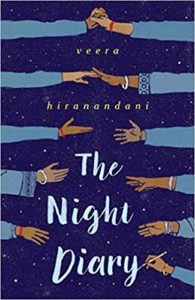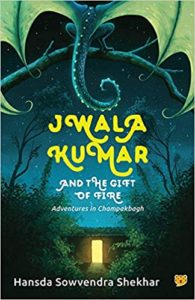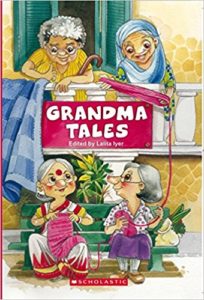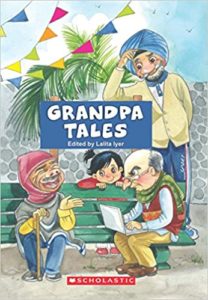
Book Post 29: 3-9 March 2019
At the beginning of the week I post some of the books I have received recently. In today’s Book Post 29 included are some of the titles I have received in the past few weeks.
11 March 2019
At the beginning of the week I post some of the books I have received recently. In today’s Book Post 29 included are some of the titles I have received in the past few weeks.
11 March 2019


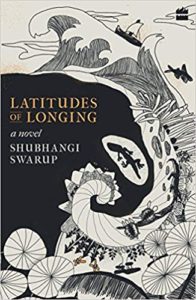
Former journalist Shubhangi Swarup’s debut novel Latitudes of Longing is a plot spread across a few decades, loosely held together by some characters particularly the scientist Girijia Narain Mathur. The novel is a tramp through different climatic belts and geological formations while firmly remaining within the latitudes that define the subcontinent. It is also a walk through time and political upheavals in India and Burma. While the reader is a mute spectator to the events, it is fairly obvious that a man’s lifespan is just a blip if the forces of Nature are to be considered. The book is divided into four sections with each section focused on a different part of the subcontinent; beginning with the Andaman Islands, then Burma, Nepal and finally, Ladakh. There are a handful of characters but it is Giriraj Narain Mathur who remains a steady presence throughout, even after death. This is a novel which is a mix of fact, fiction and generous dash of magic realism so there are plenty of ghosts, or colonial ghosts as the author loves to refer to them. ( She first researched the colonial ghosts of Andaman islands in 2011.)
On Monday, 22 October 2018, I was in conversation with Shubhangi Swarup at The Bookshop, Jorbagh, New Delhi. Shubhangi Swarup is soft spoken but when it comes to describing the Panagea or the geological formations of the subcontinent she begins to speak animatedly. It excites her knowing that man is just a tiny being in this vast cosmos, geological formations are a testament to how long earth has been around. Or for that matter the landmass called India we take for granted is still in the process of formation with the tectonic plates constantly hitting each other to push the Himalayas higher and higher. Years of being a journalist and an activist have ensured that her first novel has innumerable incidents with plenty of backstories. At the beginning of the evening when being called upon to read an extract from her book, “I am not a performer!” but soon caved in and read a short piece about the drug smuggler in Thamel, Nepal.
Latitudes of Longing has been seven years in the making. While writing the book she also filed several articles and inevitably did stories that would help her travel in the areas she wished to research further for her book. There are portions in the book that seem heavily inspired by folklore. Whether it is the shapeshifting turtle or the appearance of Yeti or even the creation myth that Giriraj churns out to explain to his daughter Devi how she was conceived:
‘Where did you find me, Papa?’ she will ask, mildly annoyed by his grip. ‘Why did you bring me home?’
Girija Prasad will weave a story from the embers of twilight to pacify her. ‘It was a beach just like this, an evening just like this, when your mother and I came across an empty bottle, half-buried in the sand. We opened it to find a note inside: Please put all the ingredients of your dreams in this bottle and shake vigorously. And so we did. Using a prism, I trapped sunlight in the bottle. I closed it with a cork and shook it vigorously for hours. Then your mother opened it. She took a deep breath and exhaled into the bottle. That was your first breath.’ For the ingredients, Girija Prasad will concoct a fantastical list to arrest her wandering imagination: golden sands from the dunes of Rajasthan and white sands from Havelock Island; shreds from the swiftlet’s nest and petals of a fuschia pink rose; a piece of bark from the oldest padauk tree on the islands; ash blessed by the riverbank baba; a crocodile’s tooth, an elephant’s eyelash; and drops of the monsoon mingled with Himalayan snow.
Shubhangi Swarup’s reliance on folklore and local storytellers who could tell her neverending stories comes through stupendously in the story. Once she met an 8yo shepherd who was legendary in his village for the stories he told, mostly to entertain himself. He is like an intellectual jukebox. According to Shubhangi “You give him the elements you want to hear in a story and he immediately sets off. At some point he has to be told ‘enough’ and he switches off leaving the tale hanging in the air for the next time.” There are moments of pure beauty in the language used that seem to come from some place else, of having withstood time and developed a life of their own and found a place in this story. Whether it is that of the shape-shifting turtle or the Yeti that comes visiting and many other instances.
In her obsessiveness with faultlines and geological formations Shubhangi manages to weave a story across various geographies. In fact many of the episodes in her novel can be directly linked to a story she wrote as a journalist. For this she had a very valid explanation as in that she required to do the research but did not always have the necessary resources to undertake the trip. Being a journalist travelling on a story helped her tremendously. It is no wonder that Latitudes of Longing was on the JCB Prize 2018 shortlist. After this impressive debut many readers will await Shubhangi’s second offering but it will probably be some time in the making as she said “She has nothing on the cards for now. It has been seven years to write this book.”
Till she does opt to write, we will wait.
To buy on Amazon India
26 October 2018
![]()
SUPER LEAD TITLE
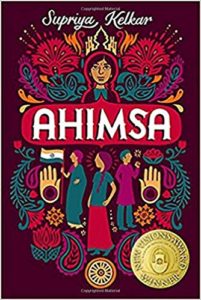
Scholastic India is proud to announce that it has acquired the publishing rights for one of the most awaited books of the year, Ahimsa.
In 1942, after Mahatma Gandhi asks one member of each family to join the non-violent freedom movement, 10-year-old Anjali is devastated to think that her father will risk his life for the country. But he’s not the one joining. Anjali’s mother is. 10-year-old Anjali’s mother has joined India’s freedom struggle. Anjali gets unwillingly involved in the turmoil. She has to give up her biases against the Dalit community, or the so-called untouchables, and sacrifice her
foreign-made clothes for khadi.
As the family gets more and more involved in the cause, Anjali must give up her privileges and confront her prejudices to ensure her little contribution to the movement is complete.
This is a poignant debut about overcoming one’s internal struggles and giving up one’s biases. It is essentially about female empowerment.
Inspired by her great-grandmother’s experience working with Gandhi, Supriya Kelkar brings to life the stories of the unsung heroes of India’s War of Independence.
Shantanu Duttagupta, Head of Publishing, Scholastic India, says, “Ahimsa is a book every Indian should read, whether you are a parent, child, educator or book lover. It leaves a mark.”
Supriya Kelkar doesn’t shy away from the reality that progress can sometimes be slow and one must persist even when all hope seems gone. She draws inspiration from her own family history. Kelkar says, “I’m so thrilled Ahimsa is heading to India, and cannot wait to share this book with all the wonderful readers there!”
About the author
Born and raised in the Midwest, Supriya Kelkar learned Hindi as a child by watching three Bollywood films a week. Now she works in the film industry as a Bollywood screenwriter. She has credits on one Hollywood film and several Hindi films. Ahimsa, inspired by her great-grandmother’s role in the Indian freedom movement, is her debut middle grade novel.
“A poignant look at India’s independence through the eyes of a ten-year-old, Ahimsa is a well-crafted tale of resistance.”
— Rajkumar Hirani, director of the films Sanju, 3 Idiots, PK and Lage Raho Munna Bhai
A BOOK EVERY INDIAN MUST READ
By
SUPRIYA KELKAR
Releasing on August 6
9789352755349
₹395; HB; 308 PP
For further information, please contact – Debosmita Sarkar ( dsarkar@scholastic.co.in )
About Scholastic India
Established in 1997, Scholastic India runs a dynamic publishing programme that aims to bring out innovative titles from the best of Indian authors and illustrators. Scholastic works closely with teachers, parents and students to encourage reading and promote the highest quality of reading and educational material in English.
12 July 2018
And then there it is, our new, terrible silent routine. And to top it off, I have no birds and the world feels like a different kind of dark than it felt before. Mom isn’t perfect, but I miss her. I miss her picky neatness, I miss her bothering me about taking my nose out of a book and making a friend for once, I miss her getting on my case about my hair. I miss telling her about what I’m reading, what I’m thinking, asking her about work, listening to her carry on about Aunt Joan and whatever drama she’s gotten into. I miss her. There is a sadness I can’t shake, that’s not just from breakfast. There are no birds by the feeder. There aren’t pigeons cluttering the sidewalk as I go to school. I know, now, that last night’s dream was the last flight I’ll take.
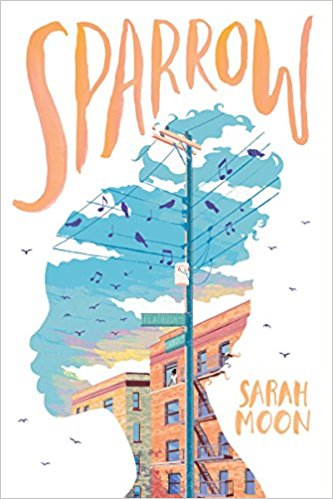
Sarah Moon‘s debut novel for young adults Sparrow is about a teenager of the same name who has a nervous breakdown. Sparrow is fourteen. She was whisked away to hospital from school after being discovered on the roof. Sparrow maintains she was bird watching as she has always been fascinated them fly. Sparrow lives with her mother, who is a single parent. Sparrow is named after the bird by her mother because she was “so small and brown, almost breakable, but so strong. Tiny but mighty…”. Few weeks later Sparrow is released in her mother’s care with the stipulation she takes her prescribed medication and visits a therapist regularly. So it is fixed that Sparrow attends regular sessions with Dr. Katz which are protected by doctor-patient confidentiality and even Sparrow’s mother cannot sit in upon the hour-long meetings. At first Sparrow refuses to speak to Dr. Katz but after weeks of therapy Sparrow begins to come around. It is probably listening to Dr. Katz playlist which begins to break the barriers for Sparrow. So much so she orders the very same songs/bands she heard during therapy for her listening pleasure at home. All through months of treatment and close questioning by her mother Sparrow is adamant that she was not trying to kill herself but just wanted to be with the birds. Probable reason for her being found alone on the roof ledge was she was devastated upon hearing of the tragic death of her favourite librarian, Mrs Wexler, in a traffic accident. Mrs. Wexler had been warm and welcoming to the shy and reserved Sparrow, encouraging the little girl to sit in the library any time she felt like it, read, participate in the book club etc. Mrs. Wexler offered the fragile little Sparrow a refuge from a world which constantly overwhelmed her.
Sparrow begins from the moment Sparrow is released from the hospital. She is portrayed as a very lonely girl who slowly opens out under Dr Katz’s patient guidance. By the end of the novel Sparrow finds the smallest steps like conversing with other girls of her age still a daunting task but at least she is doing it! It suddenly dawns upon her during the finale when she is running away from her responsibility that the feeling of being ready will never come. She has to muster courage. “I am not going to be ready. I’m going to have to do this without being ready.” The ultimate epiphany is that the very same music that helped her in therapy is where she finally gets what she has been craving for — to fly away, for her limbs to go light. In fact Sarah Moon created her playlist for Sparrow on Spotify. In it are listed all the pieces of music referenced in the story.
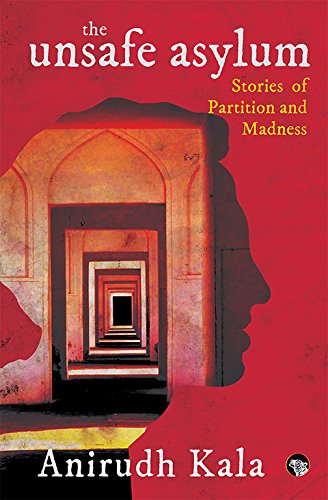
Depression comes in many shades. With the recent suicides of two prominent people Kate Spade and Anthony Bourdain within a week of each other has suddenly put the spotlight on mental health. These issues were always there and always discussed but the magnitude of this problem is unthinkable. To quote Dr Anirudh Kala, Clinical Director, Mind Plus:
Partition and Madness)In Longreads essay “Surviving Depression” by Danielle Tcholakian written after the deaths of the Bourdain and Spade one of the sanest pieces of advice shared for those who battle depression every day as well as those around them is:
…the biggest lesson I’ve learned in wrestling with this illness for nearly 20 years. You can’t get out of it alone. It is also, confusingly, true that no one can save you — you’re always the one who has to do the work, who has to slog through the muddy darkness — but the eminently human kindnesses of friends and family along the way are what make the slog even remotely possible. And the truth is, you don’t have to do much of anything most of the time. Just be there. . . . Depression is a beast that swallows you whole and forces you to live inside it until you fight your way out — always with help, always with the others safely outside the beast who can pull you back.
Writing about a teenager whose mental health is being questioned by everyone around her even though the teenager herself is under the impression that her reality makes perfect sense is probably not easy. Yet Sarah Moon’s undeniable wizardry is evident in her sensitive storytelling. Sparrow can be challenging even for an experienced author
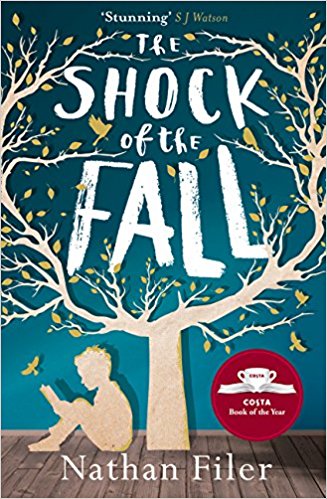
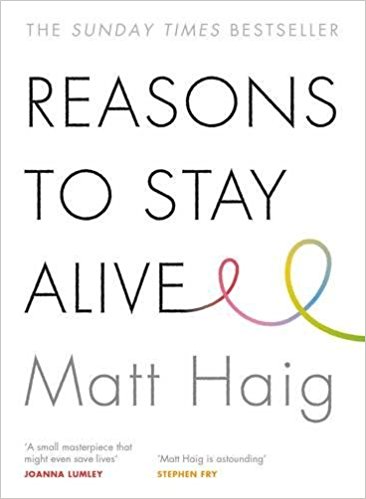
to create as it is a potential minefield if not handled well. It can fall apart easily. After Nathan Filer’s The Shock of Fall this is another great young adult novel to add to a school reading list. Perhaps to be read in conjunction with Matt Haig’s Reasons to Stay Alive which is not a young adult novel, nevertheless an excellent memoir about coming-to-terms with depression and easily accessible to readers of all ages.
Do read Sparrow. It is not always easy to read for it can be a challenge to read but it is time well spent.
Sarah Moon Sparrow Arthur A. Levine Books, An imprint of Scholastic Inc., New York, 2017. Hb. pp. 270
21 June 2018
Instead of muddling up so many things in your head, why can’t you simply be with me? Here. In the moment.
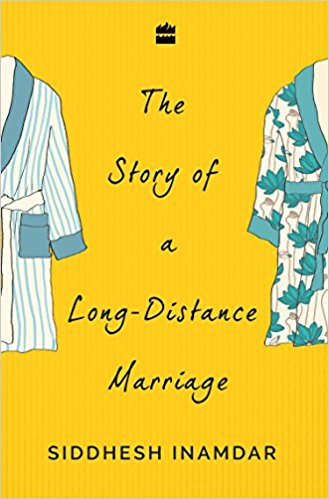
Siddhesh Inamdar’s debut novel The Story of a Long-Distance Marriage is about a young couple, Rohan and Ira. They have been married for a while but have known each other since they were students. Now they are feeling the strain of living apart from each other as Ira is studying in New York and Rohan continues to work in Delhi.
The Story of a Long-Distance Marriage is light fiction where the anxiety felt by the lonely husband about his marriage is compassionately presented. The wife’s point of view is equally sharply sketched even though the reader inhabits Rohan’s mind more than that of Ira. Despite being physically absent from Delhi for large parts of the story it is Ira’s character that comes across far more strongly than Rohan.
It is a simple, often to-be-found tale among young Indian middle class couples and yet there is something rather lovely in the way The Story of a Long-Distance Marriage casts its magic spell. It will be a joy to read what Siddhesh Inamdar spins out next.
Siddhesh Inamdar The Story of a Long-Distance Marriage HarperCollins Publishers, Noida, India, 2018. Pb. pp. 180 Rs 199
19 June 2018
Award-winning young adult writer Meg Rosoff is a brilliant writer. No wonder she has been awarded the Astrid Lindgren Memorial Award ( ALMA) this year or what is fondly referred to as the Nobel Prize for Children’s Literature, given its whoppingly delicious prize money of £430,000. It is given to an author for their body of work. ( http://www.theguardian.com/books/2016/apr/05/meg-rosoff-wins-astrid-lindgren-memorial-award-how-i-live-now ) What is particularly satisfying is that such a passionately ferocious storyteller is conferred the award for her work in young adult literature within weeks of the publication of her first adult trade novel, Jonathan Unleashed.
Jonathan Unleashed is about Jonathan Trefoil, in his twenties, living in New York, working in an advertising firm that he does not particularly relish but the saving grace in his life are the two dogs he is babysitting. Dante and Sissy belong to Jonathan’s brother who has had to relocate to Dubai for a job. Thrown into this mix are his girlfriend who does not particularly care for the menagerie, a vet and old school friend/colleague. His girlfriend persuades him to get married online since her magazine will sponsor it. He has a breakdown with the pressures of work and a love-life that is nerve-wracking — Jonathan has a better sleep at night cuddled up in bed with Sissy, the cocker spaniel, than his girlfriend! It is a
romance novel with the rawness and honesty of young adult writing and at a quick pace that is never dull to read. Meg Rosoff gets the various emotions of dogs ever so well. Not surprising given her love for the four-legged beasts. The relationship between humans and dogs is superbly executed and can only be written by one who has lived and observed dogs closely. Jonathan Unleashed is hilarious and impossible to put down.
Read it.
Meg Rosoff Jonathan Unleashed Bloomsbury, London, 2016. Pb. pp.280 Rs 499
18 April 2016