The story’s premise of a sixteen-year-old navigating her teen years as well as coming to terms with her mother’s marriage is hard enough but it gets tougher when she has to live two lives, almost as if in parallel dimensions— online and reality. The Secret Life of Debbie G ( HarperCollins India) is Vibha Batra’s first graphic novel. It has been illustrated by Kalayani Ganapathy. It is an interesting concept where the teenage conversations are portrayed well. But the execution leaves a lot to be desired. On the cover of the book is the hashtag— #agraphicnovel. It is jarring since no graphic novel should ever have to announce it’s format to readers. Pity this one had to. Then the story itself is spread out in image frames, long text and speech bubbles laid out across pages. It is a hybrid version of young adult literature, caught between conversation-propelled plot and that of graphics. Instead it comes across as a heavily illustrated storybook that is hard to sink into. The confusion about the format plays havoc with the dialogue too. It allows for an expansiveness that a tightly knit graphic novel would not have the luxury to even consider as each frame, its text, its framing, its colouring would have to be considered umpteen times before finalising the layout. The text and illustrations complement each other in a traditional graphic novel to create a cohesive narrative. This is sadly lacking in The Secret Life of Debbie G.. I sincerely hope that the next graphic novel Vibha Batra creates — and in my heart I know she will— it will be a tauter story; and I certainly look forward to it. This particular story can be considered as a bridging text in Vibha Batra’s repertoire or a fine example of the evolution of a writer with immense potential!
The Longest Kiss: The Life and Times of Devika Rani by Kishwar Desai ( Context, Westland Books), is a biography of the famous Bollywood actress, Devika Rani. It is a biography that Kishwar Desai has put together after poring over thousands and thousands of the actress’s personal correspondence. It creates an image of woman who was a strong individual, had an identity of her own, knew her mind and was very sure what she wanted out of the film industry. She was then the only, and perhaps even now, actress/filmmaker/producer and owner of a film studio – Bombay Talkies. She was known internationally in the 1930s, a feat that is hard for many to achieve even today, nearly a century later!
The Longest Kiss is informative and an absorbing read even if one is unfamiliar with the Bollywood landscape of the 1930s to 1940s. Bombay Talkies produced some of the better-known films of its time. It helped launch careers of many actors such as Ashok Kumar and Dilip Kumar. Kishwar Desai captures the tumultousness of setting up a new business, in what was then uncharted waters, but the manner in which Devika Rani supported her first husband and business partner, Himansu Rai is astonishing. There are glimpses of the tough life she had and the balancing act she had to do often especially with Himansu’s failing mental health and irascible temper. Apparently in private he would take it out on Devika Rani, at times leaving her unconscious and yet she persisted in supporting him and working hard to preserve their business. Often she was also the leading lady in the films they produced together. Having said that she ensured that Bombay Talkies ran smoothly, the women actresses hired found it to be a safe haven and a respite from their domestic drudgery, the employees found it to be professionally run and the presence of the German cinematographers were more a blessing than an interference. So much so when the British arrived at the height of World War II to whisk the Germans away to detention camps, Bombay Talkies continued to work smoothly as the Indians had been trained well by the Germans and Devika Rani ensured that there was no break in the production schedules. Of course, Kishwar Desai details a great deal of the financial ups and downs the firm faced and how deftly Devika Rani steered it through. The actress even survived successfully a revolt within her firm and the board and continued to make films that were a critical and a commercial success. It was later that she was introduced by Bharati Sarabhai to the former Russian aristocrat and painter Svetsolav Roerich. They got along famously well and the rest as they say is history. This too is documented fairly well documented by Kishwar Desai except that it forms a very slim portion of the book. Devika Rani died a wealthy woman, a far cry from the days with Himansu when she had to starve herself or hide the fact that she did not have sufficient clothes to wear.
This is a fascinating book that was fifteen years in the making and will forever be referred to by cinema buffs, researchers and historians curious about India’s past, and of course feminists who would be keen to review how a young woman, newly returned from Britain, left her mark on the film industry in this astonishing manner. All this despite the trials and tribuulations she faced at home, Himansu was known to beat her but she hid it from public, he had reduced her to penury and she had pawned her jewels to help him maintain his illusion of a successful man. There are so many wrongs in this and yet so many women readers will recognise the eternal truth of being caught in this bind of being themselves while being “supportive” of their male partners. There is this particular sentiment that wafts through the book that is difficult to pin down. It is a feeling that develops within the reader curious as to why Devika Rani despite all odds chose to stay with an abusive partner like Himansu even if the rationale of sharing a business interest is offered. Of course, the love that Svetsolav and she had for each other was a blessing. Even so, this steadfast loyalty to Himansu is inexplicable.
Kishwar Desai writes ( p.430):
It was ironic that all these years, she had longed to be looked after. In all her relationships, she had wanted a mentor,a father figure to replace the one she had lost so early — but the men in her life would always lean on her, instead. Somewhere, then, did she always feel unfulfilled? Perhaps it was the loneliness. . . .
I had to take a break from this increasingly bewildering feeling about Devika Rani as to why she stuck it out with Himansu and I was not convinced by the argument that it was loneliness. While on a break, I picked up Arshia Sattar’s lucidly written collection of essays about Maryada, or ‘boundary’ and ‘propriety of conduct’. It is a complicated concept especially since the one version that has held supreme is the idea of ‘maryada purshottama’ or the ‘ideal man’ as the defining virtue of Rama in the Ramayana. But in her essays, Arshia Sattar sets out to explore how the Hindu epics are driven by four ‘operators’ — dharma, karma, vidhi ( fate) and daiva (intervention by the gods). How these especially the various kinds of dharma are fulfilled by individuals by the choices they make. In Maryada ( HarperCollins India) Arshia Sattar tries to delineate the various ways in which these can be achieved or even recognise how others apart from Rama practise this concept. In her concluding remarks in the essay on “Ayodhya’s Wives” where she tries to understand Rama’s arguments about love, she writes:
Rama indicates that Dashratha, too, has acted out of love for Kaikeyi, as Rama is about do now for his wife Sita. Acts of love have to be the most subjective, individual choices that anyone can make, for surely no two people love alike. And yet, Rama feels compelled to transform these acts of will, acts located deep within the sweetest and most expansive spaces of the human heart, into choices that lie within the framework of dharma such as the one that controls him and his father, both as kings and as husbands.
Acting within the constraints of dharma, taking on the roles and walking the paths that have been circumscribed for an individual who is a man, a king, a husband, a son, a brother, minimizes the potential these personal choices have for subversion. …Free will has been eliminated from the discourse of right and wrong, and once again, dharma has been instrumental as the basis not only of action, but also of choice.
It may be a bit far-fetched to think that Devika Rani was at some level following the ideals of the faith she had been brought up in and was whether self-consciously or otherwise fulfilling her dharma. Who knows? And we shall certainly never know. But it is this very fundamental concept of choices that a woman makes that is at the core of the third wave of feminism. Perhaps this angle could have been explored further if Kishwar Desai had chosen to exploit her strength as a novelist to create a thinly veiled fictionalised biography based on facts as David Lodge had done in his novel Author, Author that is about American novelist Henry James. For now I have reservations about The Longest Kiss kind of a biography that oscillates between sharing documentary evidence, especially of the financial aspects of running Bombay Talkies, and ever so often delving into the fiction when imagining the romance between Devika Rani and her husbands, does not quite come together seamlessly. The non-fiction narrative is absorbing to read even if it is based on facts that are never footnoted in the text. So why disrupt the flow of reading with romantic episodes that do not sit well in the text? It does not make any sense even if Devika Rani was a romantic at heart.
Having said that Kishwar Desai’s biography of the actress will be considered as a seminal piece of work even if my Eureka moment of attempting to understand who Devika Rani was by reading some of Arshia Sattar’s brilliant essays. But isn’t that what reading is all about? It raises questions reading a book and that may or may not get answered by reading another one?
I read Avni Doshi’s Girl In White Cotton and so should you. Read it for the exquisite craftsmanship of the sentences. The choice of words. The literary creativity. But there are many more conversations to be had on the side of how readers engage with such literary fiction? How does the writer create empathy for the characters or is that not essential? Does the focus on the beauteous sentences accentuate some of the shortcomings in the story itself? Or is literary craftsmanship about expressing oneself so brilliantly that the pain is felt by the reader too but at the cost of a growing indifference towards some of the characters? Many questions swirl in one’s head upon reading this sharp novel. It will linger for a long time too. No wonder it was shortlisted for The Booker Prize 2020. Good choice.
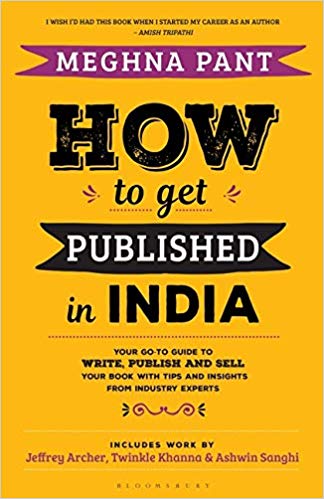
I recently contributed to How to Get Published in Indiaedited by Meghna Pant. The first half is a detailed handbook by Meghna Pant on how to get published but the second half includes essays by Jeffrey Archer, Twinkle Khanna, Ashwin Sanghi, Namita Gokhale, Arunava Sinha, Ravi Subramanian et al.
Here is the essay I wrote:
****
AS LONG as I can recall I have wanted to be a publisher. My first ‘publication’ was a short story in a newspaper when I was a child. Over the years I published book reviews and articles on the publishing industry, such as on the Nai Sarak book market in the heart of old Delhi. These articles were print editions. Back then, owning a computer at home was still a rarity.
In the 1990s, I guest-edited special issues of The Book Review on children’s and young adult literature at a time when this genre was not even considered a category worth taking note of. Putting together an issue meant using the landline phone preferably during office hours to call publishers/reviewers, or posting letters by snail mail to publishers within India and abroad, hoping some books would arrive in due course. For instance, the first Harry Potter novel came to me via a friend in Chicago who wrote, “Read this. It’s a book about a wizard that is selling very well.” The next couple of volumes were impossible to get, for at least a few months in India. By the fifth volume, Bloomsbury UK sent me a review copy before the release date, for it was not yet available in India. For the seventh volume a simultaneous release had been organised worldwide. I got my copy the same day from Penguin India, as it was released by Bloomsbury in London (at the time Bloomsbury was still being represented by Penguin India). Publication of this series transformed how the children’s literature market was viewed worldwide.
To add variety to these special issues of The Book Review I commissioned stories, translations from Indian regional languages (mostly short stories for children), solicited poems, and received lovely ones such as an original poem by Ruskin Bond. All contributions were written in longhand and sent by snail mail, which I would then transfer on to my mother’s 486 computer using Word Perfect software. These articles were printed on a dot matrix printer, backups were made on floppies, and then sent for production. Soon rumours began of a bunch of bright Stanford students who were launching Google. No one was clear what it meant. Meanwhile, the Indian government launched dial-up Internet (mostly unreliable connectivity); nevertheless, we subscribed, although there were few people to send emails to!
The Daryaganj Sunday Bazaar where second-hand books were sold was the place to get treasures and international editions. This was unlike today, where there’s instant gratification via online retail platforms, such as Amazon and Flipkart, fulfilled usually by local offices of multi-national publishing firms. Before 2000, and the digital boom, most of these did not exist as independent firms in India. Apart from Oxford University Press, some publishers had a presence in India via partnerships: TATA McGraw Hill, HarperCollins with Rupa, and Penguin India with Anand Bazaar Patrika.
From the 1980s, independent presses began to be established like Kali for Women, Tulika and KATHA. 1990s onwards, especially in the noughts, many more appeared— Leftword Books, Three Essays, TARA Books, A&A Trust, Karadi Tales, Navayana, Duckbill Books, Yoda Press, Women Unlimited, Zubaan etc. All this while, publishing houses established by families at the time of Independence or a little before, like Rajpal & Sons, Rajkamal Prakashan, Vani Prakashan etc continued to do their good work in Hindi publishing. Government organisations like the National Book Trust (NBT) and the Sahitya Akademi were doing sterling work in making literature available from other regional languages, while encouraging children’s literature. The NBT organised the bi-annual world book fair (WBF) in Delhi every January. The prominent visibility in the international English language markets of regional language writers, such as Tamil writers Perumal Murugan and Salma (published by Kalachuvadu), so evident today, was a rare phenomenon back then.
In 2000, I wrote the first book market report of India for Publisher’s Association UK. Since little data existed then, estimating values and size was challenging. So, I created the report based on innumerable conversations with industry veterans and some confidential documents. For years thereafter data from the report was being quoted, as little information on this growing market existed. (Now, of course, with Nielsen Book Scan mapping Indian publishing regularly, we know exact figures, such as: the industry is worth approximately $6 billion.) I was also relatively ‘new’ to publishing having recently joined feminist publisher Urvashi Butalia’s Zubaan. It was an exciting time to be in publishing. Email had arrived. Internet connectivity had sped up processes of communication and production. It was possible to reach out to readers and new markets with regular e-newsletters. Yet, print formats still ruled.
By now multinational publishing houses such as Penguin Random House India, Scholastic India, Pan Macmillan, HarperCollins India, Hachette India, Simon & Schuster India had opened offices in India. These included academic firms like Wiley, Taylor & Francis, Springer, and Pearson too. E-books took a little longer to arrive but they did. Increasingly digital bundles of journal subscriptions began to be sold to institutions by academic publishers, with digital formats favoured over print editions.
Today, easy access to the Internet has exploded the ways of publishing. The Indian publishing industry is thriving with self-publishing estimated to be approximately 35% of all business. Genres such as translations, women’s writing and children’s literature, that were barely considered earlier, are now strong focus areas for publishers. Regional languages are vibrant markets and cross-pollination of translations is actively encouraged. Literary festivals and book launches are thriving. Literary agents have become staple features of the landscape. Book fairs in schools are regular features of school calendars. Titles released worldwide are simultaneously available in India. Online opportunities have made books available in 2 and 3-tier towns of India, which lack physical bookstores. These conveniences are helping bolster readership and fostering a core book market. Now the World Book Fair is held annually and has morphed into a trade fair, frequented by international delegations, with many constructive business transactions happening on the sidelines. In February 2018 the International Publishers Association Congress was held in India after a gap of 25 years! No wonder India is considered the third largest English language book market of the world! With many regional language markets, India consists of diverse markets within a market. It is set to grow. This hasn’t gone unnoticed. In 2017, Livres Canada Books commissioned me to write a report on the Indian book market and the opportunities available for Canadian publishers. This is despite the fact that countries like Canada, whose literature consists mostly of books from France and New York, are typically least interested in other markets.
As an independent publishing consultant I often write on literature and the business of publishing on my blog … an opportunity that was unthinkable before the Internet boom. At the time of writing the visitor counter on my blog had crossed 5.5 million. The future of publishing is exciting particularly with neural computing transforming the translation landscape and making literature from different cultures rapidly available. Artificial Intelligence (AI) is being experimented with to create short stories. Technological advancements such as print-on-demand are reducing warehousing costs, augmented reality is adding a magical element to traditional forms of storytelling, smartphones with processing chips of 8GB RAM and storage capacities of 256GB seamlessly synchronised with emails and online cloud storage are adding to the heady mix of publishing. Content consumption is happening on electronic devices AND print. E-readers like Kindle are a new form of mechanised process, which are democratizing the publishing process in a manner seen first with Gutenberg and hand presses, and later with the Industrial Revolution and its steam operated printing presses.
The future of publishing is crazily unpredictable and incredibly exciting!
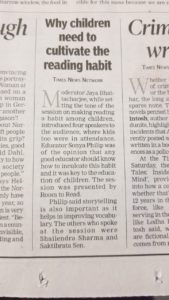
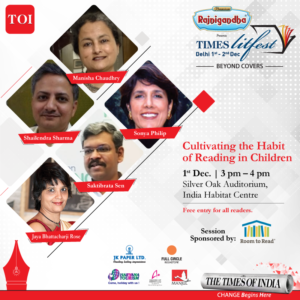
The Times LitFest Delhi ( 1-2 Dec 2018) was organised at the India Habitat Centre, New Delhi. I moderated two sessions with the both panel discussions focussed on reading. The first panel was on how do cultivate the love of reading amongst children.
TOI, 2 Dec 2018
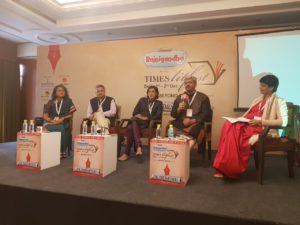
My co-panelists were Saktibrata Sen, Programme Director, Room to Read India Trust; Manisha Chaudhry, co-founder Manan Books; Sonya Philips, Founder, Learning Matters Foundation and is a reading specialist and Shailendra Sharma, Principal Advisor (Hon) to the Director Education, Government of NCT Delhi, India. The freewheeling conversation was on ways to promote reading. Every panelist spoke about their strengths and initiatives. From being a part of the government as is Mr Sharma and realising that it is critical to have a reading corner in every class and every section. So much so that the Delhi government has now allocated a handsome budget of Rs 10,000 / section to buy books.
L-R: Manisha Chaudhry, Shailendra Sharma, Sonya Philips, Saktibrata Sen and Jaya Bhattacharji Rose
Fact is that even today few families can afford to buy newspapers, magazines, let alone books. So the first time many children particularly in the government primary schools hold a book is their school textbook. Few have any role models in the adults and older children in their immediate environment and as Principal Advisor to the government, Mr Sharma’s job is to introduce the love of reading. Both Mr Sharma and Mr Sen were of the view that reading is a lifeskill that is critical and needs to be learned beyond just being able to identify your name in whatever written script the individual is familiar with. Mr Sen, representing Room to Read, is involved in setting up partnerships with the governments to set up libraries. In India the Room to Read India Trust is working with 11 state governments. Ms Philips stressed on how till Grade 2 a child learns “how to read” but after that the emphasis is on “learning to read”. Ms Chaudhury with her many years of experience in publishing, looking at multilingual publishing and the critical need for children to have books in their own languages rather than only in English is what spurs her on to create new material every single day. She has recently launched two new magazines in Hindi called Mithvan and Chahak, the latter is meant for the early grade reader.
Everyone was of the agreement that it is important to create the joy of reading and align it as closely as possible to the child’s lived experience rather than alienate him/her from using complicated language in the written word. This was illustrated beautifully by an anecdote Mr Sharma shared about the complicated language used in a Hindi textbook to describe food which was a far cry from what is commonly used at home on a daily basis. Manisha Chaudhry spoke of her earlier initiatives to publish in tribal languages.
Alas we ran short of time otherwise it was promising to become a wonderful conversation on how to cultivate the joy of reading in children.
Join Sonya Philip, Manisha Chaudhury, Shailendra Sharma and Jaya Bhattacharji Rose in conversation with Saktibrata Sen – brought to you by Room to Read in the session, 'Cultivating the Habit of Reading in Children' at #TLFDelhi
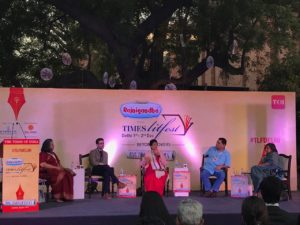
The second panel discussion was on “What is India reading?”. The panelists consisted of commissioning editors of four prominent publishing houses — Himanjali Sankar, Simon & Schuster India; Ranjana Sengupta, Penguin Random House India; Parth Mehrotra, Juggernaut and Udayan Mitra, HarperCollins India. Once again a freewheeling, adda-like, conversation about trying to figure out what India reads. The role of a commissioning editor has changed quite a lot in recent years. Traditionally commissioning editors were responsible for forming reading tastes but as Udayan Mitra pointed out that at times now the editor has to commission based on events and trends too. It is a kind of commissioning that did not exist earlier.
Today readers are accessing books through multiple platforms and in various formats — ebooks and audio books. It becomes increasingly difficult to ascertain how and what anyone is reading, let along a sub-continent like India where so many languages abound and there is rich regional literature too. Measuring reading tastes as Juggernaut is doing with their app and also because they are able to control their production pipeline while platform is something few are able to do even now. Most editors and publishing houses rely on print products that once released into the market are impossible to track. Some may be sold through brick-and-mortar stores, others through online spaces and yet other copies get sold as remaindered copies and secondhand books.
Listen to the conversation. So much was said. Many important bases within the Indian publishing landscape were touched upon. So much to think about.
What is India Reading? watch the conversation live at #TLFDelhi with Udayan Mitra, Himanjali Sankar, Ranjana Sengupta and Parth Mehrotra talking to Jaya Bhattacharji Rose.
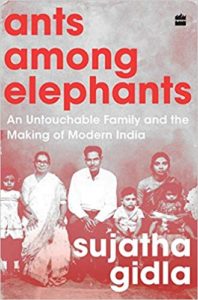
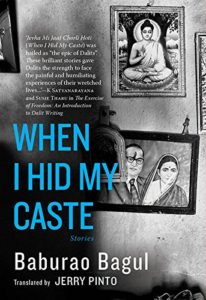
Sujatha Gidla’s memoir Ants Among Elephants and Baburao Bagul’s When I Hid My Caste are some of the recent publications of Dalit literature published. Interestingly the writers come from different parts of India and different religions but because they share the same “caste” of being a Dalit, their experiences of life and anguish at the shocking social injustice they have witnessed is similar.
Sujatha Gidla’s memoir was launched in USA in 2017 to great critical acclaim for being an unusual piece of writing documenting the horrors of Indian society even in contemporary India. Although Sujatha Gidla has been living in New York for many years and yet the searing pain at the injustices faced at being an “untouchable” or a Dalit in India are unforgettable. Her memoir about her family who despite being Christians faced social ostracism. Once she left for America she was eager to know more about her origins and began to record the testimonies of her family particularly her uncle Satyam. There is an extremely powerful moment in the book when she quotes her uncle, Satyam, remembering an incident soon after Indian Independence was achieved. ‘A short, chubby dark boy …had a strange question for Satyam, one that Satyam had no answer to: “Do you think this independence is for people like you and me?” It is a question that remains to be answered many decades after Independence was achieved. ( Read an extract published in the Literary Hub)
When I Hid My Caste by Baburao Bagul (translated by Jerry Pinto) is a collection of short stories that were previously published in the Marathi literary magazine Navyug. The editor of Navyug Shirish Pai “confesses in her introduction to the Marathi edition of the book that she used to experience joy mixed with fear in anticipation of a Bagul story. The joy came from knowing it would be a good piece of fiction; the fear came from not knowing what the content would be.” This collection of very powerful and unnerving short stories are disturbing to read in English that one cannot help but wonder how powerful must they be in Marathi where possibly even the dialects used are evident. Four stories stand out — “Prisoner of Darkness”, “Streetwalker”, “Revolt” and “When I Hid My Caste” —- that hopefully will be anthologised in other volumes focused on Indian literature.
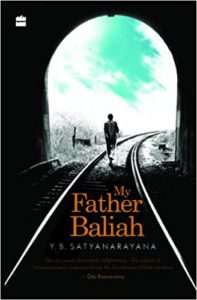
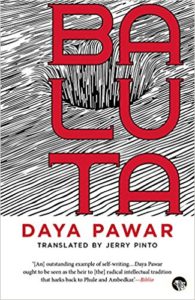
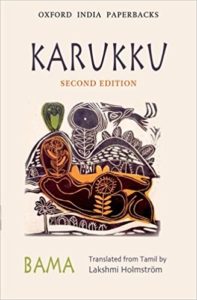
Sujatha Gidla’s memoir attracted worldwide acclaim quickly becoming of those “must read” books featuring on many reading lists. Undoubtedly it raises some very sharp issues that continue to plague Indian society where casteism unfortunately still prevails yet Ant Among Elephants is not half as gracefully written as some other notable Dalit memoirs. For instance Y. B. Satyanarayana’s My Father Baliah, Bama’s Karukku or even Daya Pawar’s Baluta. But of the books discussed so far the recently released When I Hid My Caste stands out for the grittiness of storytelling evident even in the English translation where interestingly the sub-castes of Dalits are mentioned. There are graphic details of the violence and the horror that the Dalits continue to experience. It is hard to distinguish reality from fiction for many of the stories included in the volume seem to resonate the news published regularly in the media about regular atrocities against Dalits.
These are books that are valuable additions to the landscape of Dalit literature that is fortunately becoming richer and richer with every passing year as newer translations or original writings in English are being made available for a larger audience.
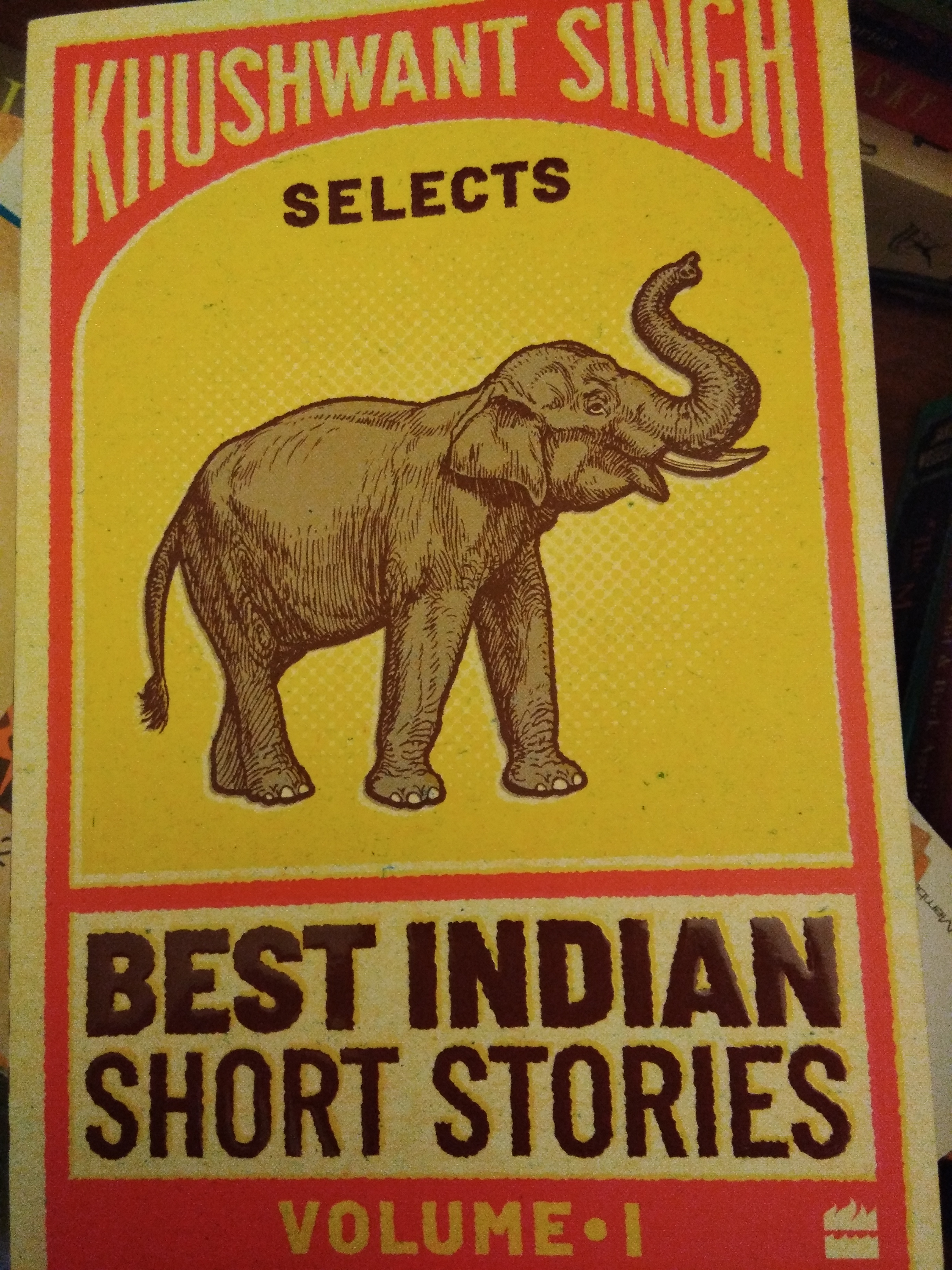
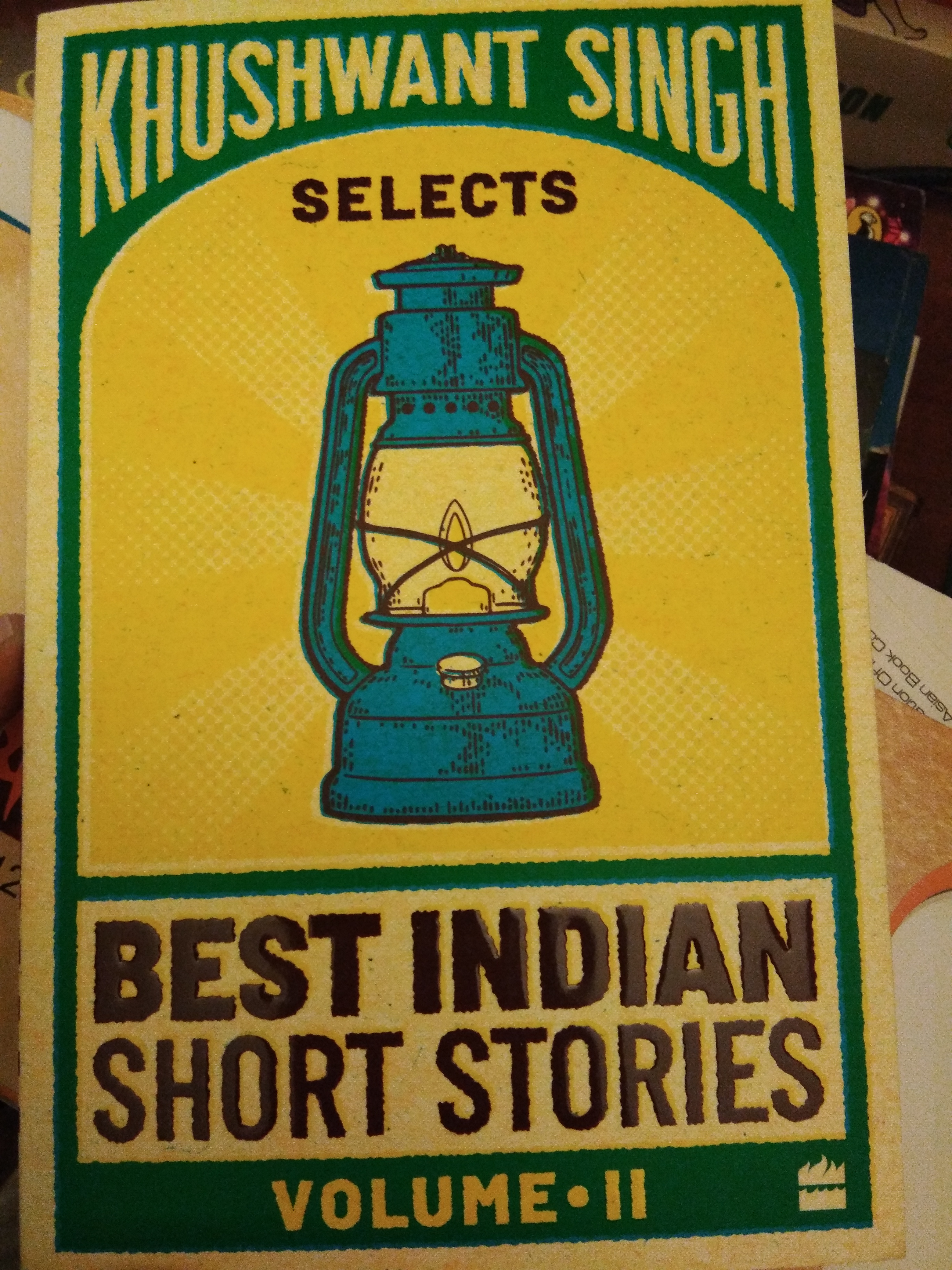
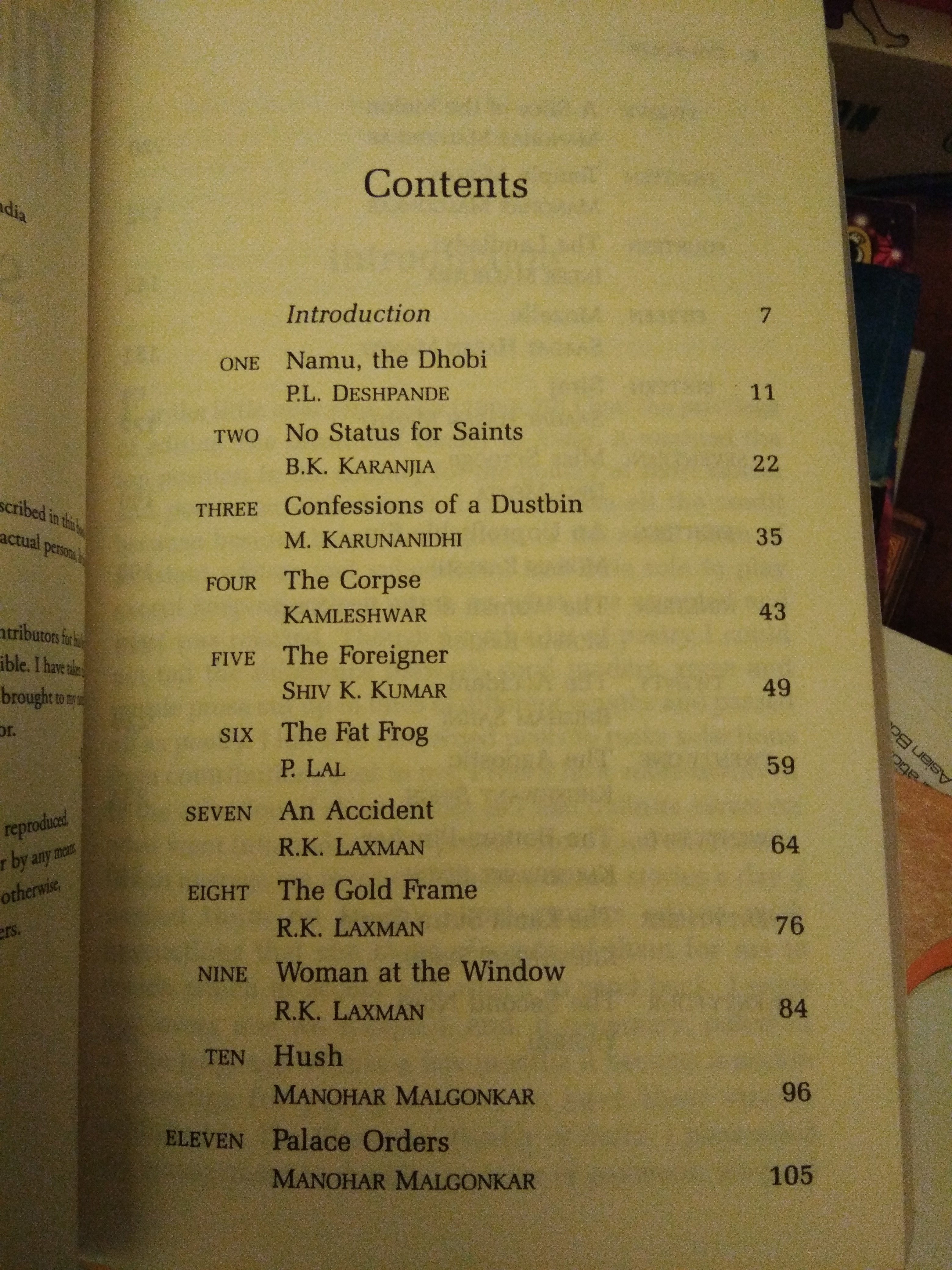
20 March is recognised as the International Storytelling Day. It is also the day that the grand old man of storytelling, Khushwant Singh passed away four years to this day on 20 March 2014. This year HarperCollins India rejacketed his classic collection of short stories for the Indian market — Vol 1 & Vol 2.
Here are the book covers and pages of contents from both volumes.
My review-article of David Walliams’s The World’s Worst Children 2 was published in The Hindu Literary Review on 3 September 2017 titled “The boy who never did his homework“. I am c&p the text here as well:
David Walliams’s The World’s Worst Children 2is a fabulous collection of short stories about 10 obnoxious little brats. There is Cruel Clarissa, Harry who never ever did his homework, Competitive Colin, Trish the Troll, Spoiled Brad, Gruesome Griselda and others. The scrumptious book has been “illustratred in glorious colour” by Tony Ross. (The very Tony Ross, who, statistics show, is the most borrowed illustrator from U.K. libraries. In 2016, his books were borrowed more than 1 million times.) Walliams and Ross have been collaborating on books for children and young adults for quite a few years now.
Walliams is often considered to be the modern Roald Dahl. Incidentally, Walliams’s first book for children was illustrated by Quentin Blake, who is known for his illustrations of Roald Dahl’s books. Along with Ross, Walliams insists there be a picture on every page. The two books of the TheWorld’s Worst Children is sumptuously produced, with embossed lettering on the cover, gilt foil worked in to the design, and four-colour illustrations with a fascinating play of fonts throughout the text. Every page has the illustration carefully
placed in such a manner that it perfectly complements the text.
Climb a mountain
It works beautifully for young readers as well as for readers who require assisted learning. “It’s about hooking them in and not making reading seem like a chore,” Walliams says. “I think reading is important because not only do you miss out on great literature if you don’t do it, but also you miss out on finding out about new ideas and the opportunity to use your own imagination.”
Walliams is otherwise famous as a stand-up comedian. His comic talent has found its way into writing. His stories are often about children of the kind we encounter everyday — ordinary, privileged, gentle, horrendous. Without being patronising, but with humour, he writes about the world as the child sees it — a stark place, in black and white.
Even his caricatures make one chuckle with delight for they hold up a mirror to the child’s world, serving the dual purpose of telling a story while delivering a message. He compares the process of writing his manuscripts to that of climbing up a mountain. He perseveres despite the effort because, “I really like the simplicity of children’s literature. It’s a challenge because often you’ve got quite complex ideas you’ve got to put into very simple terms.”
Spoilt brats
This is apparent in his novels. For instance, in Billionaire Boy, a rich spoilt kid is also very lonely for he lacks a friend; Midnight Gang is about patients in a children’s hospital whose parents never visit them and who are left at the mercy of a harsh and unsympathetic matron; Mr Stink narrates the unlikely friendship between a lonely girl Chloe and the local stinky tramp Mr Stink, the only person who’s ever been nice to her. Gangsta Granny and Grandpa’s Great Escape are about grandparents and help create concern among children for the ailments and idiosyncrasies of old age. Controversy tails successful writers: some years ago, Anthony Horowitz had accused Walliams of creating “dumbed down books” for children.
But the criticism does not seem to be fair. Walliams’s stories are empathetic towards children: he has the knack of capturing the authoritarian and at times unreasonable voice of the adult. Hope exists in the form of a good soul lurking nearby, usually an adult who too has been marginalised by society.
To know what happens to the world’s worst children, read the book. A treat awaits!
David Walliams The World’s Worst Children 2 HarperCollins Children’s Books, London, 2017. Pb. pp. 300

 The
The