In 1993 Taslima Nasreen wrote Lajja ( “Shame”) in Bengali. It was her response to the anti-Hindu riots that had broken out in Bangladesh after the demolition of the Babri Masjid, Ayodhya, India on 6 December 1992. The novel was published in Bengali and within six months sold over 50,000 copies. It brought the author “fame” that till then had been unheard of in the subcontinent. Prior to this, the only other author to have had fatwas issued against them was Salman Rushdie, an author of South Asian origin but residing in UK at the time. Lajja became one of the first books in translation to be talked about by many readers internationally and this was at a time even before the Internet. ( Dial-up modems, with limited email access, were introduced in India in 1996!) Lajja became a bestseller rapidly. The English edition for the subcontinent was published by Penguin India. Subsequently a new translation was commissioned by Penguin India in 2014-15. The translator of the later edition was Anchita Ghatak. The book was banned in Bangladesh and fatwas were issued against the author. Taslima Nasreen fled to Europe and later laid roots in India. At first she chose to live in Calcutta/ Kolkatta and is now based in Delhi. Years later, Taslima Nasreen still needs security cover wherever she travels.
Lajja was explosive when it was first published as it was a Muslim author, upset by the communal riots in her land, who was writing sympathetically about a Hindu family. The story details the progressive radicalisaion of Suranjan who firmly believes in a nationalist Hindu outlook. So much so it is a belief he continues to nurture even after he, along with his family, flee Bangladesh to become refugees in India. In India he becomes a member of a Hindu nationalist party. Pirated editions of Lajja were sold in India. It became an international bestseller and was translated into many languages. Taslima Nasreen, a doctor by training, has become an established writer with more forty publications. She defines herself as “a secular humanist, a human rights activist, and a prolific and bestselling author, who has faced multiple fatwas calling for her death”.
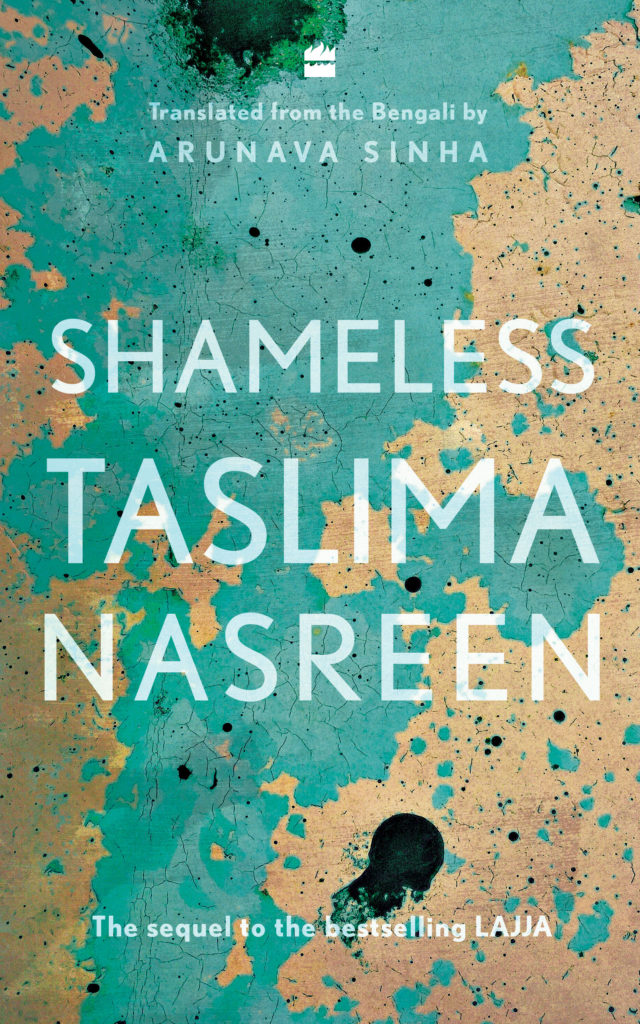
More than twenty-five years later, Taslima Nasreen is back with a sequel to Lajja. It is called Shameless. Arunava Sinha, the translator, told me “the original title was Besharam but eventually the Bengali book was published, also in 2020, with a very tame title, e kul o kul. The book was written more than ten years though.” Nevertheless Shameless is a unique experiment in writing a novel. It has shades of Pirandello’s “Six Characters in Search of An Author” with Suranjan as the protagonist but in conversation with Taslima Nasreen. The opening pages of the novel have Suranjan, the character, visit Taslima Nasreen, the author, and bring her up-to-date with the events in his life. It then develops into a fascinating narrative where a novel is obviously being drafted but it has so many overlaps with reality. With the author-turned-character (or is it character-turned-author?) providing pithy comments and at times intervening in the story by persuading the characters to act in one way or the other. It is a work of art. Shameless is a sequel to Lajja but seems more that that — Taslima Nasreen seems to have sort of trickled into the space between reality and fiction to put herself under the lens. But the conversation is more than that. It is a conversation between writer and character, commentary on the turbulent times. Taslima Nasreen’s was an emotional response to the increased communalisation in the subcontinent after the fall of the Babri Masjid. It was not necessarily literary writing. But in the intervening years Taslima Nasreen has evolved as a writer. With Shameless she has given herself space to speak frankly without hopefully attracting any more bounties for her head. Also the writing is very close to her memoir (Dwikhondito, 2003, translated into English as Split: In Two, 2018 — translated by Maharghya Chakraborty). Interestingly in recent years her voice as an author comes through very strongly in the English translations despite her experimentation with a gamut of translators. A testament to her strong writing. There are sufficient examples in the novel that indicate her belief in being a secular humanist stem from having experienced or witnessed firsthand many incidents in the name of religion. Much of this she distills into her writing of Shameless, exemplifying how much of the personal informs the political.
Arunava Sinha’s translation is superb. He is a renowned translator who has made available many Bengali writers in English but with Shameless his professional expertise as a translator par excellence is established. He channels Taslima Nasreen’s authorial voice beautifully. His past experience of working with Bengali authors has helped him tremendously to hone his expertise in being utterly respectful to the desire of the author to be heard in the original language and carry it forth impeccably into the destination language, enabling the readers in English to appreciate the text for what it is. It works brilliantly in a translation like Shameless where the author herself has a lot to say, much of it tricky.
The time lapse between the publication of Lajja (1993) and Shameless (2020) marks a significant period of socio-political history in the subcontinent as well. With Shameless Taslima Nasreen seals her place as a relevant author who creates political art, a need of the times when plainspeak is not necessarily always welcome.
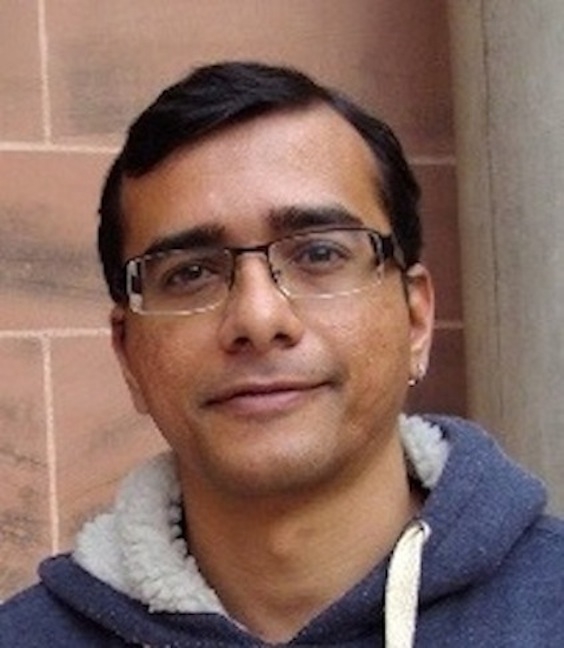
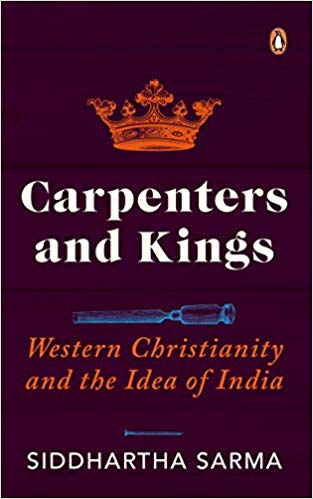
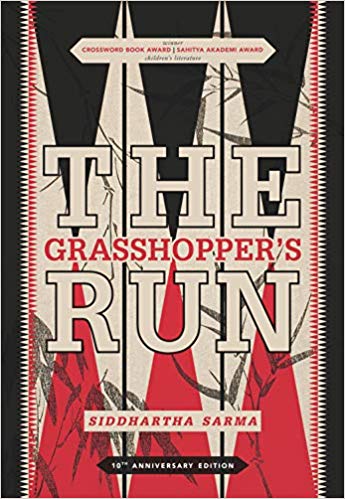
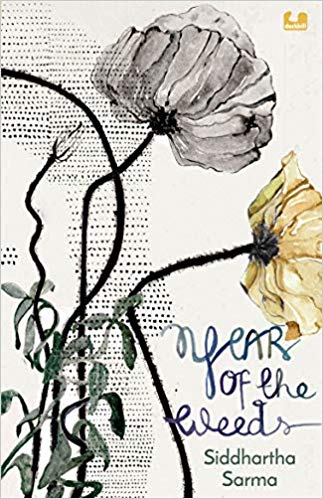
Siddhartha Sarma is a journalist, writer and historian. He has covered insurgency, crime and law in the Northeast and other parts of the country and written for newspapers and magazines as an investigative journalist. His debut novel, The Grasshopper’s Run (Scholastic India, 2009), received the Sahitya Akademi Award for children’s literature in English in 2011 and the Crossword Book Award in 2010. His second novel, Year of the Weeds (Duckbill, 2018) is based on the land rights agitation in the Niyamgiri Hills of Odisha. His latest published work, Carpenters and Kings (Penguin Random House India, 2019) is a history of Western Christianity in India.
Why and how did you get into writing? Where do you find your stories? How long does it take from inception to completion?
A.: When I was seven, my school
was bringing out a commemorative magazine to celebrate an anniversary. I was
told anybody could contribute anything they liked for it, so I wrote an
approximately 400-word story based on real events. A bit of a tragedy. They
printed the story with no edits on the first page, with my name on it. But what
I remember now and in the intervening years is not the feeling of seeing my
name in print, or of reading my story in printed form, but the joy of writing
it, the process of slowly putting things together in my head and of banging it
out, over several hours, on my father’s old typewriter, literally sitting on
his desk because I was too short to type from the chair. The fear of making a
typo (which is such a frustrating experience on a typewriter, unlike on a
computer where a typing error is merely an inconvenience). I have found no
greater joy in life than in the process of writing a story, of entering or
discovering a world, and of narrating it for myself and for any reader I might
find. That is how I began writing, and what I still try to do.
I began my career in journalism as a
reporter. It is a much-repeated saying in the newsroom that a good reporter
never runs out of story ideas. I have never had a problem thinking up story
ideas. The problem is deciding which are worth taking up. One does not have
this luxury of choice as a reporter, but a writer has to be very selective
about which idea she will devote her time and energies to. If my time as a
journalist has helped me as a writer in any manner, it is in two: I can be
objective in deciding which stories to write and which to shelve, temporarily
or permanently. And second: I can be objective in editing my own work. One of
the criteria I have for deciding on a story is whether I have the competence to
write it. There are many genres that I have a bit of an interest in, but I know
I might not be able to execute a story in them very well. Such as fantasy or
science fiction.
The complete arc from story idea to research to writing and editing and the final draft depends on the length of the work, its complexity, scope of research and treatment. My first novel, The Grasshopper’s Run, took me a year and half to research and seven months to write. My newest non-fiction book, Carpenters and Kings: Western Christianity and the Idea of India took up nine years of research and eight months of writing. So it varies. But I do seem to spend more time thinking about a story than in actually writing it.
2. Is it only the long form of a novel that appeals to you? Would you ever consider other structures such as short stories or a series arc?
A.: My first work published in a book was a short story, in a humour anthology by Scholastic. Some other commissioned short stories have also been published. But, yes, I find the novel’s longer form more suitable for the kind of stories I have to tell. I have not yet thought of a series of books, although I can’t rule it out in the future. A standalone novel, however, suits the way I want to tell a story for one major reason. While working on a story, I spend a lot of time building the narrative arcs of individual characters. I go back in time, and also forward, into their futures. I create their backgrounds and populate it with other characters and circumstances. Most of these never get written in the final novel, but they do exist. So for me writing a novel is like baking a whole cake and cutting out just a slice of it for publishing. Or creating a tapestry and (again) cutting a slice of it. A short story might give me a much smaller, possibly unsatisfactory slice, while a series might need tough decisions about how many slices to make, or from which part of the cake or tapestry. So far, novels have worked for me.
3. How much research do you delve into before you begin writing a book? How do you organise your notes? What is your writing routine?
A.: Researching for a book is among the
most interesting parts of the writing process for me. Over time, I think I have
become a bit more organized in my methodology. The Grasshopper’s Run caused me a lot of anxiety during the
research process because I was not accounting for the volume of material I
would end up having. For instance, I asked my sources for visual material to
base my description of events and topography on, from the China-Burma-India
theatre of World War II. I asked for un-curated photographs. I received some
1,800 photos, and most were directly relevant to my research. I had to sift
through about 6,000 pages of correspondence and records from that theatre. For Carpenters and Kings, I examined 46
medieval and ancient manuscripts and translated seven of them from Latin
because the previous translations were themselves dated. So gathering material
is not a problem, particularly in these times. The more difficult part is
knowing when to stop researching, or learning to leave out the peripheral or
marginally relevant. Otherwise every book becomes a doctoral thesis.
I begin with a basic idea about the
plot, in case of non-fiction the general outline of my argument. The notes I
take from my research are based on their direct relation to this bare plot or
argument. The most directly connected bits of evidence or material gets the
highest weightage. Additionally, for fiction, any bit of non-fictional material
which can help flesh out a character’s story arc or background (that part of
the background which will get written rather than get left on the cutting room
floor) also gets priority.
I have no particular routine. My best time is late in the night, but the slow cooking that happens before the physical act of writing can happen at any other time during the day.
4. How did you decide to write historical fiction set in Nagaland during the Japanese invasion in WWII? And why write it for young adults?
A.: I wanted to base my first novel in the Northeast, as a mark of respect for my homeland. I thought a coming-of-age story during a conflict might work, because I had been asked to write a young adult novel by Sayoni Basu, then editor of Scholastic India. I did not want to base the story during any of the region’s numerous insurgencies, although I have covered them, because the political aspects of those insurgencies were too complex for a novel of the size I had in mind. That left the 1962 war and WWII. The actual fighting in 1962 took place in rather remote places where the human interest aspect did not play out much. WWII was, for my purposes, more suitable.
5. Did winning the 2011 Sahitya Akademi Bal Puraskar and the 2010 Crossword Award for Best Children’s Book for your debut novel The Grasshopper’s Run apart from pleasantly surprising you also put undue pressure on you to excel with your next book?
A.: ‘Pleasant surprise’ is very
appropriate. I was surprised and gratified that readers and people who know a
lot about children’s and YA literature liked the novel. It was very
encouraging, and I met some noted writers afterwards and received valuable
advice on writing from them. It was a very pleasant experience.
There has been no pressure. I have always been fortunate in the publishers and editors I have worked with. I just try to work on each story on its own merits, and don’t think much about expectations. The only expectation I have from myself is to write, at each stage, a better story than I have written before. If that happens, I am content. Ultimately, I have to write stories that I would like to read, and re-read.
6. Your second young adult novel, Year of the Weeds, is written nearly a decade later. The plot of the novel is reminiscent of the Niyamgiri movement of the Dongria Kondh Adivasis in Odisha who fought mining company Vedanta’s attempts to exploit their land and emerged victorious. How do you achieve this fine balance between journalistic writing and creating fiction for young adult readers?
A.: Year
of the Weeds is indeed based on the Niyamgiri movement and was inspired by
it, although the novel ended up containing elements from other similar peoples’
movements, while the workings of the government and companies is based on what
I have seen across the country as a reporter. I follow peoples’ movements and
Niyamgiri was inspirational and unexpected, so I wanted to commemorate it, even
though I suspect it was just a provisional victory. While writing it, I was
conscious that my treatment had to be that of a YA novel. However, I have also
tried to include in it ideas and insights I have had as a journalist covering
different aspects of India, such as how most Indians in the hinterland live,
how the government interacts and often exploits or victimizes them, and what
the true face of development is in these parts of the country. So, while it
remained a YA novel throughout, with the frame of reference being mostly that
of the two YA protagonists Korok and Anchita, I also tried to make sure these
insights and ideas were properly written into the plot.
Around the time that I began researching for The Grasshopper’s Run, I realised I could not continue as a reporter and simultaneously as a writer of fiction and non-fiction. I was increasingly not content with the limitations (as I saw it) of a reporter, at least in terms of autonomy. I wanted to tell stories which could not be accommodated within my work as a reporter. So I shifted to the desk and have worked as an editor ever since, while writing books. I chose writing at the expense of reporting. I have not regretted it.
7. You have an enthusiastic passion for the Crusades and yet your first narrative nonfiction was Carpenters and Kings: Western Christianity and the Idea of India. Why?
A.: I have studied the Crusades, and my
thesis for an M Litt degree was on strategy during the Later Crusades. I find
the Crusades very significant in understanding world history in general and
European history in particular, because those conflicts sit at the centre of a
wide range of connected events, including the Renaissance, the Reformation and
the Age of Exploration.
There is a number of good, accessible and recent works on the Crusades by scholars from the West, so I did not intend to write a work of my own, which would not have made any significant contribution to the subject. However, something interesting happened during my research for the thesis, which was a study of three proposals for crusades by scholars in the late thirteenth and early fourteenth centuries. One of these scholars, a Dominican monk, wanted to launch a crusade from India. My supervisor suggested that I could refer to a secondary source on what these Europeans were doing in India in the period before the Age of Exploration. We discovered that there was no work which explained the political history of Western Christianity in India in the pre-colonial period. In December 2017, I realized I had enough material for a book which dealt with this subject, so I wrote Carpenters and Kings. And yes, I did include a brief history of the Crusades in it, and one of the chapters is about the Dominican who wanted a crusade from India, because all these are connected events. What was the Dominican doing in India? Also, much later, what was Vasco da Gama doing here? The answer to both questions is the Crusades.
8. You write young adult literature, travelogues and non-fiction. This is a diverse range of genres. How did this happen?
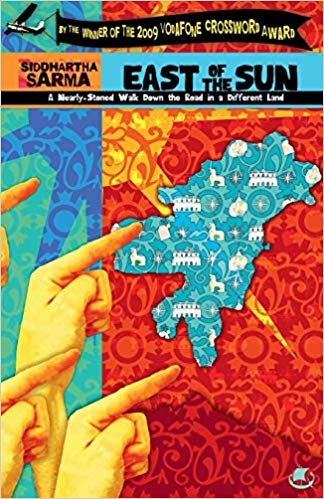
A.: Each book happened in a specific context and for unique reasons. The Grasshopper’s Run was meant to be a YA novel. While researching it, I travelled in the Northeast and Myanmar, and afterwards wrote a series of emails describing my travels, which I sent to friends. These were read by a publisher, who asked me to expand them into a travelogue, from which East of the Sun (Tranquebar, 2010) happened. Meanwhile, I wrote two books for the popular 103 series by Scholastic, one on great travellers I admire and the other on historical mysteries. And then I wrote Year of the Weeds followed by Carpenters and Kings. I guess one reason why this is an eclectic mix is I follow a story to its natural place and write it accordingly. So we have a situation where, although history is what I am academically suited to writing about, Year of the Weeds is contemporary political fiction. I am comfortable with chasing a story wherever and to whichever genre it leads. I think the only concern for a writer should be whether the story is told well or not. Having said that, I am still learning, so if I discover that I should stick to specific genres, I shall do that.
9. Do the methodologies of research and writing for young adult literature and narrative nonfiction vary?
A.: It is possible that some researchers
might have different research methodologies depending on what genre they are
planning to write in. I do not have different methodologies. I choose a
subject, start reading about it, examine primary and secondary sources, select
those sources which are suitable for the story I have in mind, and then sift
through the material I obtain.
There are certainly differences in writing YA fiction and narrative nonfiction for general readers, including tone, scope, complexity of ideas, presentation of this complexity. In some ways, like channelling all the research into suitable concepts, narrative nonfiction is more challenging. In several other ways, like writing in a manner which holds the reader’s attention, and creating believable characters and plots, YA literature has its own set of challenges. Both are very rewarding genres to write in.
10. What are the kinds of books you like to read? Any favourites?
A.: I have followed several genres over the years, although now because of demands on my time I have to limit myself to those genres which I have consistently read. Of these, apart from literary fiction, I seem to have read crime and espionage fiction fairly consistently. Fantasy, which I was reading a lot of till some years ago, seems to have dropped off. I do not know if this is a temporary phase.
11. Who are the writers you admire and may have influenced you?
A.: These are among the writers I have liked almost consistently. In literary fiction: Peter Carey, JM Coetzee, Saul Bellow, John Updike, Ernest Hemingway, Graham Greene, Nelson Algren, John Steinbeck. In crime: Dashiell Hammett, Chester Himes, Henning Mankell, Elmore Leonard, PD James, Janwillem van de Wetering. In espionage: John le Carre, John Buchan, Len Deighton.
12. What next?
A.: Perhaps a dark story. One of the problems with India after 2014 has been we have been affected by the doings of the ideology and the people in power on a daily, personal level. On a daily, personal level, one finds it increasingly difficult to feel joy in most things, or to happily coast along choosing stories to read or tell at a leisurely, whimsical pace. I would have liked to write a story I was working on in 2013, but that will have to wait for some time. At the moment, we need stories that deal with or are related to the situation we have in India, or which go some way towards explaining things. We can’t ignore that. So, perhaps something dark, something angry.
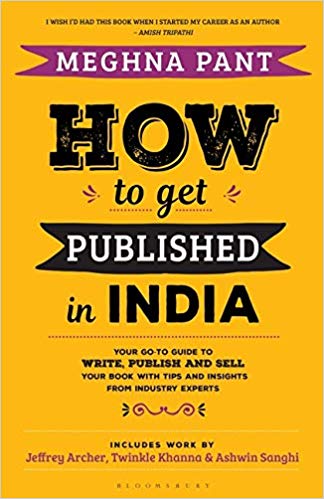
I recently contributed to How to Get Published in Indiaedited by Meghna Pant. The first half is a detailed handbook by Meghna Pant on how to get published but the second half includes essays by Jeffrey Archer, Twinkle Khanna, Ashwin Sanghi, Namita Gokhale, Arunava Sinha, Ravi Subramanian et al.
Here is the essay I wrote:
****
AS LONG as I can recall I have wanted to be a publisher. My first ‘publication’ was a short story in a newspaper when I was a child. Over the years I published book reviews and articles on the publishing industry, such as on the Nai Sarak book market in the heart of old Delhi. These articles were print editions. Back then, owning a computer at home was still a rarity.
In the 1990s, I guest-edited special issues of The Book Review on children’s and young adult literature at a time when this genre was not even considered a category worth taking note of. Putting together an issue meant using the landline phone preferably during office hours to call publishers/reviewers, or posting letters by snail mail to publishers within India and abroad, hoping some books would arrive in due course. For instance, the first Harry Potter novel came to me via a friend in Chicago who wrote, “Read this. It’s a book about a wizard that is selling very well.” The next couple of volumes were impossible to get, for at least a few months in India. By the fifth volume, Bloomsbury UK sent me a review copy before the release date, for it was not yet available in India. For the seventh volume a simultaneous release had been organised worldwide. I got my copy the same day from Penguin India, as it was released by Bloomsbury in London (at the time Bloomsbury was still being represented by Penguin India). Publication of this series transformed how the children’s literature market was viewed worldwide.
To add variety to these special issues of The Book Review I commissioned stories, translations from Indian regional languages (mostly short stories for children), solicited poems, and received lovely ones such as an original poem by Ruskin Bond. All contributions were written in longhand and sent by snail mail, which I would then transfer on to my mother’s 486 computer using Word Perfect software. These articles were printed on a dot matrix printer, backups were made on floppies, and then sent for production. Soon rumours began of a bunch of bright Stanford students who were launching Google. No one was clear what it meant. Meanwhile, the Indian government launched dial-up Internet (mostly unreliable connectivity); nevertheless, we subscribed, although there were few people to send emails to!
The Daryaganj Sunday Bazaar where second-hand books were sold was the place to get treasures and international editions. This was unlike today, where there’s instant gratification via online retail platforms, such as Amazon and Flipkart, fulfilled usually by local offices of multi-national publishing firms. Before 2000, and the digital boom, most of these did not exist as independent firms in India. Apart from Oxford University Press, some publishers had a presence in India via partnerships: TATA McGraw Hill, HarperCollins with Rupa, and Penguin India with Anand Bazaar Patrika.
From the 1980s, independent presses began to be established like Kali for Women, Tulika and KATHA. 1990s onwards, especially in the noughts, many more appeared— Leftword Books, Three Essays, TARA Books, A&A Trust, Karadi Tales, Navayana, Duckbill Books, Yoda Press, Women Unlimited, Zubaan etc. All this while, publishing houses established by families at the time of Independence or a little before, like Rajpal & Sons, Rajkamal Prakashan, Vani Prakashan etc continued to do their good work in Hindi publishing. Government organisations like the National Book Trust (NBT) and the Sahitya Akademi were doing sterling work in making literature available from other regional languages, while encouraging children’s literature. The NBT organised the bi-annual world book fair (WBF) in Delhi every January. The prominent visibility in the international English language markets of regional language writers, such as Tamil writers Perumal Murugan and Salma (published by Kalachuvadu), so evident today, was a rare phenomenon back then.
In 2000, I wrote the first book market report of India for Publisher’s Association UK. Since little data existed then, estimating values and size was challenging. So, I created the report based on innumerable conversations with industry veterans and some confidential documents. For years thereafter data from the report was being quoted, as little information on this growing market existed. (Now, of course, with Nielsen Book Scan mapping Indian publishing regularly, we know exact figures, such as: the industry is worth approximately $6 billion.) I was also relatively ‘new’ to publishing having recently joined feminist publisher Urvashi Butalia’s Zubaan. It was an exciting time to be in publishing. Email had arrived. Internet connectivity had sped up processes of communication and production. It was possible to reach out to readers and new markets with regular e-newsletters. Yet, print formats still ruled.
By now multinational publishing houses such as Penguin Random House India, Scholastic India, Pan Macmillan, HarperCollins India, Hachette India, Simon & Schuster India had opened offices in India. These included academic firms like Wiley, Taylor & Francis, Springer, and Pearson too. E-books took a little longer to arrive but they did. Increasingly digital bundles of journal subscriptions began to be sold to institutions by academic publishers, with digital formats favoured over print editions.
Today, easy access to the Internet has exploded the ways of publishing. The Indian publishing industry is thriving with self-publishing estimated to be approximately 35% of all business. Genres such as translations, women’s writing and children’s literature, that were barely considered earlier, are now strong focus areas for publishers. Regional languages are vibrant markets and cross-pollination of translations is actively encouraged. Literary festivals and book launches are thriving. Literary agents have become staple features of the landscape. Book fairs in schools are regular features of school calendars. Titles released worldwide are simultaneously available in India. Online opportunities have made books available in 2 and 3-tier towns of India, which lack physical bookstores. These conveniences are helping bolster readership and fostering a core book market. Now the World Book Fair is held annually and has morphed into a trade fair, frequented by international delegations, with many constructive business transactions happening on the sidelines. In February 2018 the International Publishers Association Congress was held in India after a gap of 25 years! No wonder India is considered the third largest English language book market of the world! With many regional language markets, India consists of diverse markets within a market. It is set to grow. This hasn’t gone unnoticed. In 2017, Livres Canada Books commissioned me to write a report on the Indian book market and the opportunities available for Canadian publishers. This is despite the fact that countries like Canada, whose literature consists mostly of books from France and New York, are typically least interested in other markets.
As an independent publishing consultant I often write on literature and the business of publishing on my blog … an opportunity that was unthinkable before the Internet boom. At the time of writing the visitor counter on my blog had crossed 5.5 million. The future of publishing is exciting particularly with neural computing transforming the translation landscape and making literature from different cultures rapidly available. Artificial Intelligence (AI) is being experimented with to create short stories. Technological advancements such as print-on-demand are reducing warehousing costs, augmented reality is adding a magical element to traditional forms of storytelling, smartphones with processing chips of 8GB RAM and storage capacities of 256GB seamlessly synchronised with emails and online cloud storage are adding to the heady mix of publishing. Content consumption is happening on electronic devices AND print. E-readers like Kindle are a new form of mechanised process, which are democratizing the publishing process in a manner seen first with Gutenberg and hand presses, and later with the Industrial Revolution and its steam operated printing presses.
The future of publishing is crazily unpredictable and incredibly exciting!
In May a two-month exhibition opened at National Museum, New Delhi. It had been curated by Naman P. Ahuja and Jeremy David Hill. The introduction to the catalogue is by Neil MacGregor, Former Director, British Museum. The premise of the exhibition to give a narrative of the history of India with the world in nine stories. It was intended to be told through a careful selection of significant objects that would represent this incredible relationship through the ages. The curation of the exhibition took more than three years. The idea of using objects to tell the history is a methodology made popular by Neil MacGregor when he curated an exhibition called “A History of the World in 100 Objects“.
For some these narratives of distilling world cultures and stories into objects is a convenient way of mapping centuries of history. It also provides a new generation a visual experience of the past while providing crucial landmarks by mapping significant objects. But objects represent partly tell the story. Try doing the exercise for contemporary settings and see how many qualifiers you come up with. It is a challenging process. More so in an age where identity politics are becoming more and more critical and who is responsible for the discourse.
By attempting to tell world history narratives through a series of disparate objects presumes a bedrock of information and knowledge that is sadly lacking among many. Or curate such an exhibition but then provide sufficient modes of engagement that supplement the main narrative. Provide audio towers. Interactive kiosks. Computer screens for browsing through the online exhibition. Use augmented reality to recreate scenarios and settings of these objects. Even The Print‘s report on the exhibition had some constructive feedback.
The Braille touch was a fantastic idea but badly implemented. Why were the legends for instance of the palm placed in the next room rather than next to the cubicle displaying the original? It’s a genuflection. Sure it’s meant for the visually impaired but some individuals can actually have a sense of light. Lecdems happened but were not sufficiently well publicized. I heard about the exhibition because of Twitter and the publisher who mentioned the book online.
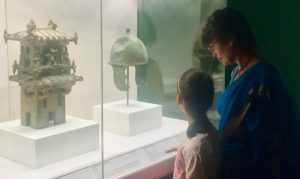
The catalogue mentions that the exhibition was for educational purpose. It definitely is educational more like a school exhibition helping plot markers by building appropriate mental furniture in a school going kids mind! I have an eight year old daughter who is brought up on a fare of books and documentaries and frank conversations. Our parenting styles are clear. Let the child come to us and our communication channels be open rather than her be misinformed. So we sit with her and watch documentaries. Explain things. So the moment she saw the bust of Hadrian she squealed with delight. She had recognised Hadrian. For much else if I had not been with my daughter giving a running commentary on the objects helping her connect dots with her many experiences, snatches from bookish references, stories told, films watched, conversations had, the child would have been terribly confused and bored! Instead she ran round and round the exhibition trying to click pictures.
Saving grace was watching the child run around enthusiastically. If that is the impact then the exhibition I would say it’s a success for it caught the imagination of the future generation. That is what matters!!!
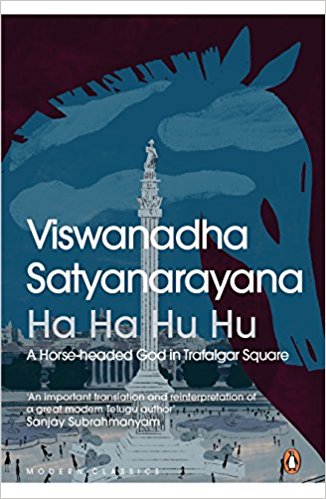
Velcheru Narayana Rao has translated from Telugu the two novellas by twentieth century writer Viswanadha Satyanarayana — the magic realist short story Ha Ha Hu Hu: A Horse headed God in Trafalgar Square and the satirical Vishnu Sharma Learns English. These have recently been published by Penguin India.
With the permission of the publishers the translator’s note is reproduced below. It is a fascinating account on the choices writers like Viswanadha Satyanarayana make while writing fiction. These choices are not restricted to the form itself but also to the choice of language and expression and how to assert their identity through the written word. The translator’s note is fascinating to read as it sheds light on how the destination language of English misses out these deliberate linguistic choices made in the original Telugu text along with the liberties the translator himself took.
*****
Satyanarayana dictated his novels to scribes. He rarely wrote himself. He often dictated very short sentences, with a staccato effect, interspersed by long Sanskrit compounds. However, in these novellas the style is simple with no high- flown Sanskrit. The first novella, Ha Ha Hu Hu: A Horse- Headed God in Trafalgar Square, reads well, with every sentence carefully constructed, though there are occasional lapses in syntax and in marking paragraphs, which could be due to irresponsible printing. However, by 1960, when he was writing Vishnu Sharma Learns English, Satyanarayana had grown somewhat carefree. He began writing novels by the dozen, often dictating several novels the same day to scribes who worked in shifts. He dictated sentences as he pleased, never looking back to read what his scribe had written. The manuscripts were sent to press as they were. No one edited his work, and apparently no one proofread it either. One can find paragraphs that run to pages on end, because the scribe was not told to begin a new paragraph. The punctuation is inconsistent and spelling arbitrary. We do not have adequate information about the scribes themselves and their writing habits; and we have no way of checking if the spelling is the author’s or the scribe’s.
I call these novels oral novels, which have to be read with a different poetics in mind than those we apply to written novels. I tried to develop for my translation strategies that reflect the specific nature of the original novels. However, a certain degree of written quality inevitably enters my translation—for the very reason that I am writing and not dictating.
During the first decades of the twentieth century, the question of the dialect in which literature was to be written was hotly debated. Telugu literature until that time was mostly in verse. Classical metres were largely syllabic and they allowed only a fixed set of syllabic clusters to be used in a verse. Variations in the canonical shape of morphemes were not allowed in these metres. It was due largely to the continued use of these metres that the spelling of words and patterns of syntax in literary use remained fairly homogeneous through a period of about nine hundred years—quite a phenomenon in the history of any language. Furthermore, Sanskrit, which ceased to be a spoken language but continued to be used as a vibrant literary language for about a thousand years more, gave the Telugu literary dialect a source of sustenance and inspiration to remain uniform and distinct from its various spoken dialects. However, the emergence of the printing press in the nineteenth century generated an increased need for prose.
Paravastu Cinnaya Suri (1809–1862), a Telugu scholar in the employment of the East India Company, wrote a grammar of Telugu modelled after the prescriptive style of the venerated Sanskrit grammars, efficiently encompassing the literary Telugu that had been in use for writing verses for about a thousand years. He thought his grammar could be followed for writing prose for discursive purposes, ignoring hundreds of years of the practice of using a different variety of prose in commentaries and common business transactions. The administrators of the East India Company, in charge of public education, most of whom were trained in England in classical languages, prescribed Suri’s grammar in schools. However, the variations in syntax and in the spelling of words between what was acceptable in writing according to Suri’s grammar and the way educated people wrote in their daily use was so great that they almost looked like two different languages. Young men and women were told that the words and sentences as they had habitually written them were ungrammatical, and they had to learn a whole new set of rules to learn how to write.
Modern scholar Gidugu Ramamurti (1863–1940), spearheaded a movement to change the way of writing Telugu. He called the language that followed Suri’s grammar grāndhika-bhāsha, book-language, and argued in favour of adopting for writing vyāvahārika bhāsha, language used by educated people in their daily life.
His argument made a lot of sense: It was clearly artificial to try to write prose for modern use following the rules that were prescribed for writing verses in the past. However, when Ramamurti rejected Suri’s grammar as outdated, it sounded like a call for rejection of grammar as such, like telling people they can write the way they speak—without any regulations. The Telugu literary community was divided into two camps: the ‘traditionalists’ insisted that Suri’s grammar should be respected, and the ‘modernists’ argued that such restrictions fettered the freedom of writing. The arguments were fierce and the battles were endless. It was unfortunate that the debate lacked conceptual clarity. Gidugu Ramamurti, with all his great scholarship, failed to state that he was calling for a new set of regulations and conventions for a new written language, and not for a state of chaos where people wrote as they spoke. His argument in favour of a language used by educated people in their daily use (sishUa vyāvahārika), left room for a lot of misunderstanding. In the confusion that followed, it was not realized that nowhere in the world do people write as they speak and that all languages develop written forms that change in time, but still remain distinctly different from speech.
Satyanarayana took the side of the traditionalists, primarily because most of his writing was poetry. But oddly, he continued to support the traditionalists even when he wrote novels on themes of contemporary life. However, as he began to dictate his novels, his style inevitably showed the influence of spoken forms. In the end, the style in which his later novels appeared came out in an incongruous mix of styles, old and new, with words written in a variety of spellings, neither following the old grammars nor following the contemporary spoken forms. His syntax, however, was brilliantly conversational and his sentences powerfully expressive. His desire to follow an outdated grammar failed to suppress his creative energy. In the end, what Satyanarayana achieved was an arresting atmosphere created by an entirely new language that could only be named after him. His prose style became the hallmark of his novels.
Dictating the novels caused other problems as well. As Satyanarayana dictated, he tended to digress frequently from the context of the narrative. Often the digressions were so far removed that whatever he was thinking at the moment found place in the novel, either as a part of the conversation between characters or as a long commentary by the author on the situation at hand. His novels acquired a charm of their own because of these digressions and are loved by his admirers.
While translating Ha Ha Hu Hu where such digressions were few, I followed the original fairly closely. But in translating Vishnu Sharma Learns English, I decided to take some liberties. To translate the printed text as it is might be of interest to critics who might wish to study the author’s mind at work in dictation, but it would tax a non-Telugu reader, and for that matter, even a Telugu reader. Apart from the digressions, which impede the narrative, incidents with local and contemporary references would require endless footnotes. I abridged the novella, eliminated digressions and paraphrased some sentences rather than translate every word. I am aware that in the process my translation might change an oral novel into a written novel. But I hope the oral nature of the novel is still apparent. I made sure that the changes I made are minimal and do not affect the integrity of the story. I maintained the basic style of the narrative and meticulously preserved the dream.
Viswanadha Satyanarayana Ha Ha Hu Hu: A Horse headed God in Trafalgar Square ( translated by Velcheru Narayana Rao) Penguin India, Delhi, 2018. Pb. pp. Rs 399
I wrote a long essay on India’s women writers from the early 20th century to today for Bookwitty. Here is an extract from the essay:
India has a tradition of fine women writers, and some of the earliest established names among them were also pioneers in fields beyond literature. Roekya Sakhawat Hossein (1880-1932) was a leading Bengali feminist in at the turn of the 20th century. Her sci-fi utopian novella, Sultana’s Dream (1905), was decades before her time and is a delight to read even now. Cornelia Sorabji (1866-1954) was both the first woman to read law at Oxford, and the first Indian national to study at a British university. During her career as the first female lawyer in India, she advocated for women in purdah and children. She wrote a dozen books including her memoirs, India Calling (1934). Sarojini Naidu (1879-1949) known as the “Nightingale of India,” was not only a poet, but also the first female governor of an Indian state, and the first woman president of the Indian National Congress. Her debut collection of poetry, The Golden Threshold, was published in 1905.
Sarojini Naidu with Mahatma Gandhi
at the 1942 All India Congress Committee Session
Despite our strong tradition of women writers in the early 20th century, to my mind it was the 1974 publication of the “Towards Equality” Status of Women in India Report that marked a watershed moment for women’s movements, and in turn, women’s literature. Though Indira Gandhi, the first woman prime minister, had been in power for years, it was the Report that gave more women a voice and an opportunity to express themselves.
Another literary turning point came in 1984, when Indira Gandhi was assassinated and thousands of Sikhs were massacred in retaliation. For the older generations, this violence brought back memories of the 1947 Partition of India; young writers and social activists including Urvashi Butalia began recording their stories. Butalia eventually wrote a seminal book, Other Side of Silence (2000), based on these oral histories as well as her own family’s story of moving to India from Lahore, now in Pakistan. Around the same time Ritu Menon and Kamla Bhasin’s groundbreaking Borders and Boundaries (1998) was published, documenting women’s experiences of Partition, about which until then it seemed a collective amnesia had existed.
1984’s violence and revisiting of the past coincided with a maturation of the Indian publishing industry. In that year, Urvashi Butalia and Ritu Menon set up the first independent women’s publishing firm in India (and indeed, in all of Asia), Kali for Women. They looked at a range of literature from fiction to non-fiction, including reportage and oral histories. Kali for Women, and its founders’ subsequent projects, Zubaan Books and Women Unlimited, have published many women writers in original English and in translation, such as the brilliant short story and spec-fic writer Manjula Padmanabhan (Three Virgins, 2013) food and nature writer-cum-illustrator and delightful storyteller, Bulbul Sharma (Eating Women, Telling Tales, 2009), environmentalist Vandana Shiva (Staying Alive, 1998), and numerous other writers, historians and freedom fighters.
Vandana Shiva at the 2009 Save the World Awards
Along with independent publishers, little magazines were on the rise, while multinational publishers like HarperCollins and Penguin also began establishing offices in India. Meanwhile, a growing recognition that the work of women writers had sales potential meant more opportunities for them to be published. In 1992, Oxford University Press (OUP) India published an unprecedented memoir by a Tamil Dalit Catholic nun, Bama, who had left the order and returned home. Karukku proved to be a bestseller, and has remained in print. At this time OUP India also published the seminal volumes on Women Writing in India: Volume 1: 600 B.C. to the Early Twentieth Century(1991) and Volume 2: The Twentieth Century(1993), a collection of hundreds of texts representing the rich variety of regions and languages in India.
Indian women’s writing hit a new high when Arundhati Roy won the Booker Prize for her 1997 debut novel, The God of Small Things, exploring forbidden love in Kerala.(Roy’s second novel, 2017’s The Ministry of Utmost Happiness, addresses some of the most devastating events in India’s modern history. It has enjoyed a global release with enviable media hype, further demonstrating the remarkable progress in how women’s writing is received by critics and the public).
Arundhati Roy in 2012
Soon, an increasing body of women writers representative of groups that have been marginalised on the basis of sexuality, language, caste, and religion began to be published. These included Urmila Pawar(The Weave of My Life, 2009), and Tamil Muslim poet Salma whose memoir The Hour Past Midnight (2009) was made into a documentary (Salma) and screened at the Sundance festival. Once housemaid Baby Haldar’s memoir, published in English 2006 as A Life Less Ordinary, became an international bestseller, many more memoirs and biographies began to be published—including those of novelist and entrepreneur Prabha Khaitan, academic and activist Vina Mazumdar, actress and singer Kana Devi, trans activist A. Revathy, and activist and actress Shaukat Kaifi.
Such robust publishing by and for women has ensured that the contemporary generation of writers is far more confident of their voices, experimenting with form as they explore a range of issues.
In particular, these writers are exploring and interrogating the concept of the strong woman. Most of these stories depict an ordinary woman negotiating her daily space, thus defining herself and by extension living her feminism, whether she chooses to acknowledge it or not. Just a few of the modern writers who are contributing to this conversation in English are: Namita Gokhale (Things to Leave Behind, 2016), (Chitra Bannerjee Divakurni (Palace of Illusions, 2008), Balli Kaur Jaswal (Erotic Stories for Punjabi Widows, 2017), Scaachi Koul (The One Day We’ll All Be Dead and None of This Will Matter, 2017), and Ratika Kapur (The Private Life of Mrs Sharma, 2015).
Adding to this conversation, there are many relevant writers now becoming available in translation, including Malika Amar Shaikh (I Want to Destroy Myself, 2016—more on this memoir below), and Nabaneeta Dev Sen (Sheet Sahasik Hemantolok: Defying Winter, 2013).
Nabaneeta Dev Sen in 2013
A number of women writers are addressing family and domestic issues with humor, notably Manju Kapur with Home (2006), her Jane Austen-like novel about family dynamics; Andaleeb Wajid with My Brother’s Wedding (2013), a gorgeous novel about the shenanigans of organising a Muslim wedding; celebrity Twinkle Khanna with Mrs Funnybones (2015), based on her delightful newspaper column; and Veena Venugopal with a powerful collection about The Mother-in-Law: The Other Woman in your Marriage (2014).
Meanwhile, other authors have been exploring the theme of the strong woman in harrowing—though by no means unusual—circumstances. Samhita Arni retells the Mahabharata war saga from a woman’s point of view in Sita’s Ramayana (2011). K R Meera’s multi-layered novel Hangwoman (published in English in 2014) is about a woman executioner who inherited the job from her father. Meena Kandaswamy’s autobiographical novel When I Hit You: Or, A Portrait of the Writer as a Young Wife (2017) reveals devastating and isolating violence in a marriage. In the same vein, Malika Amar Shaikh’s aforementioned I Want to Destroy Myself: A Memoir explores the horror of living with a man who in his public life spoke out for the rights of the oppressed, but showed none of this humanity at home.
Building on the tradition of more than a century, today there is a long list of women writers in the Indian sub-continent who are feisty, nuanced in their writing and yet universal in many of the issues they share. They are fully engaged with themes such as independence, domesticity, domestic violence, professional commitments, motherhood, parenting, sexual harassment, politics, and identity. This is undoubtedly a vibrant space of publishing, and this article has just about explored tip of the proverbial iceberg.
For more recommendations, please explore the Related Books carousel below. And as always, please join the conversation: use the comments section to add any further books to the list.
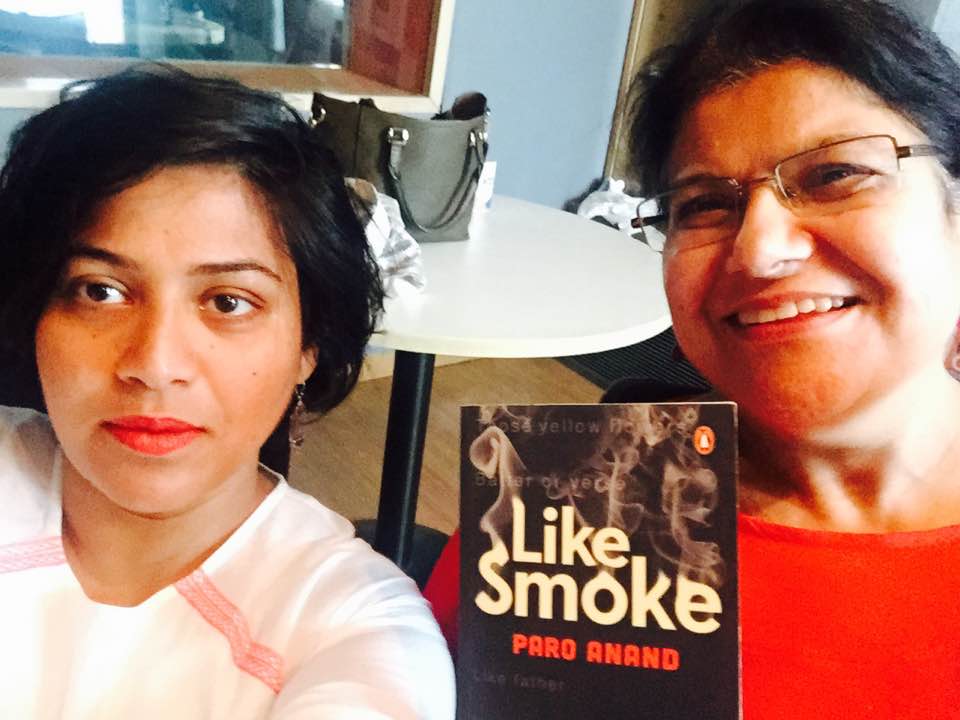
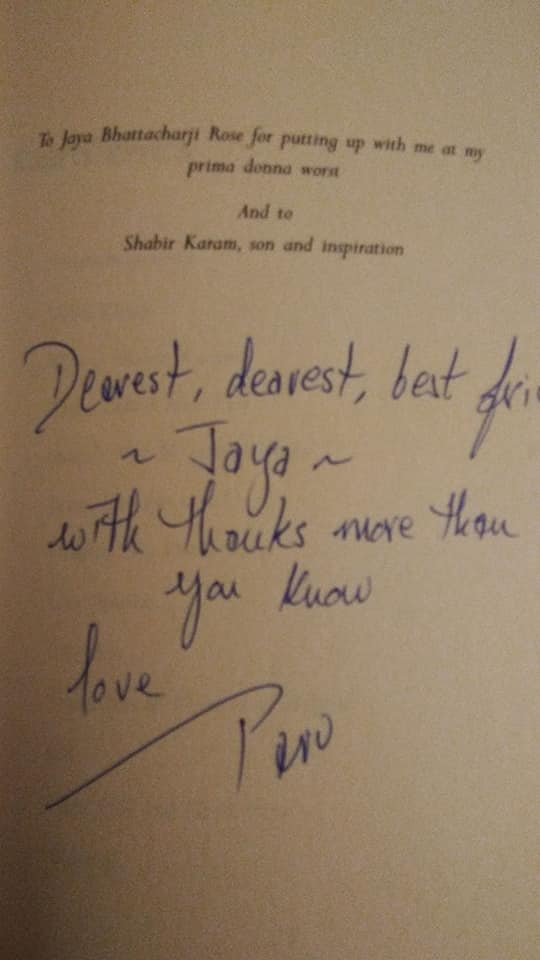
Award-winning writer Paro Anand was interviewed by RJ Chris, Radio 94.3 FM, Delhi ( 5 July 2017). Paro Anand has been recently conferred the Sahitya Akademi award for her collection of short stories for young adults — Wild Child . In its new avatar, a revised edition, it is called Like Smoke, published by Penguin India.
Here are the audio files from the interview. These files are courtesy Delhi One FM. Here these in sequence the files are arranged.
In the last segment Paro Anand refers to her latest book, a graphic novel called 2, published by Scholastic India. It is an Indo-Swedish collaboration. In terms of book production too it is unique since it is a book with two authors, two illustrators and two book covers.
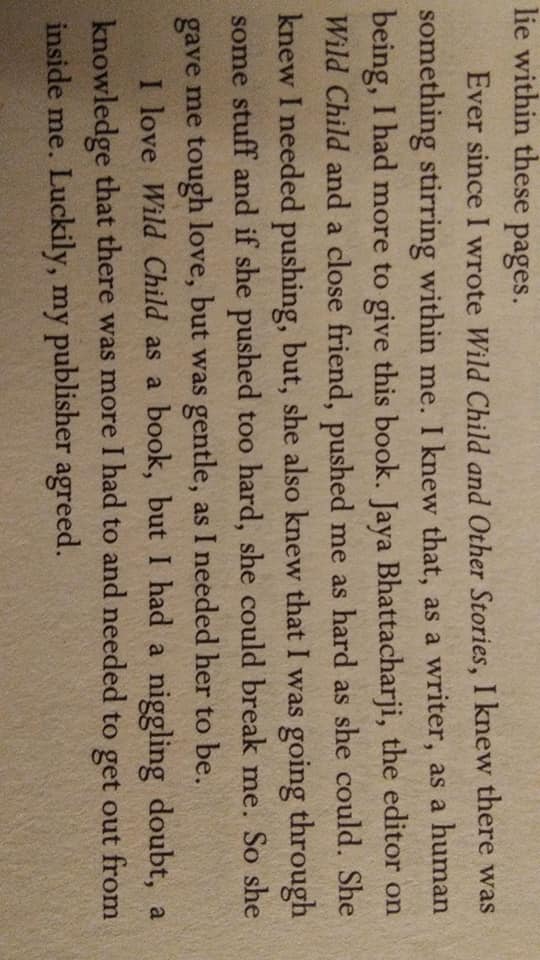
In 2010 well-known children’s writer Paro Anand and I began working on a collection of stories. I had commissioned the manuscript as a publishing consultant for Puffin India. It was a slow creative process which was hugely rewarding for the calibre of stories Paro Anand wrote. We worked at it patiently ignoring schedules focused on quality. Wild Child and Other Stories was published in December 2011. It sold in vast numbers. It was so popular that in 2015 Penguin India revised the edition. Paro Anand added a few more stories to the volume. It was rejacketed and relaunched with a new title — Like Smoke. The book in its various avatars has been in circulation for six years and continues to sell well.
Interestingly earlier this month Paro Anand wrote an article in The Indian Express ( 2 June 2017) on how at least two of her books, No Guns at My Son’s Funeral and Like Smoke , are being banned by schools in India.
She writes:
In recent months, these two books have been taken off reading lists. In one school, teachers decided that they were “inappropriate”; in another, parents apparently objected to their children being made to read such “improper” children’s books. The school authorities have withdrawn them.
This, after years of being taught to class nine and ten students. I am now being invited to talk in schools on the condition that I don’t bring up these titles under any circumstances. I am told that I should stick to some of my “safe” ones.
Is this happening out of fear? Is it the worry that, in these black and white times, a mob will find out about these books and come at the school, guns blazing? Is it a “better safe than sorry” thing? The “suppose something happens” factor? In a way, I can understand this — after all, young children are involved.
But, on the other hand, aren’t we robbing our young of open debate and critical thinking? Of late, we have been repeatedly giving in to a handful of people with easily hurt sentiments. But is our children’s curriculum to be decided by the mob? By khap panchayats? Are young people to stay forever within the safety of the lakshman rekha drawn by Cinderella? When the mob infantilises even adults with violent censorship — think Ramjas College — it’s no surprise that children’s literature is in the firing line, too. The only surprise is that it didn’t happen earlier.
Acknowledgements page of “Like Smoke” by Paro Anand
Being awarded the prestigious Sahitya Akademi Puraskar 2017 for Wild Child and Other Stories and her contribution to children’s literature is a validation of Paro Anand’s decades of work in this field. Here is an example of the fan mail she receives for the book. This letter came in a couple of weeks ago.
Hi.I don’t know if you remember me. I wanted to thank you. I was in class 8th when I first met you and i still am in awe of you to this day. It was a beautiful memory that I long to revisit. You were in my school for an author meet. …It was you, who made me realise that life is worth when you live for others. It was you who inspired me to become who I am. It’s been nearly 5 years. You autographed on my copy of wild child that you’d hope to get my autograph one day and trust me that was day I aimed to be the best so as in to prove my mettle and I gave my best to be the school’s literary president. I owe that badge to you, mam. The day you signed that book was such a proud moment for me. I went to my class with a big grin and all my peers were jealous. My parents were very proud of me. Not that I’ve never won anything before, but that day I won respect. I was more than a role model to my sibling, more than just an achiever to my parents. Your words filled my heart with optimism and hope. I’ve had quite a few lows in my life. But somehow your words flashed back this one time and I’ve been strong ever since. I really want to thank you. It is these little things that actually affect a person’s life and I, from that very day tried to be a person like you. You’ve helped me in a way I never thought of. Your words have always been heart wrenching yet so inspiring. Thank you, I’ll never forget how you appreciated my innocence back then and answered all my questions tirelessly. Thank you for that beautiful afternoon. Wild child will forever be my book and you shall always be a tender, loving yet fearless inspiration to me. Thank you for being a part of my childhood. This isn’t Shabir Karam… Haha this is ….. I’ll have my kids(if I ever do that is), tell them about fats or bela’s troubles or about pepper. Thank you, I guess it is never too late.
Yours gratuitously,
XYZ
As her commissioning editor for the book my joy at Paro Anand winning this award is indescribable. I am truly delighted our constructive energies and hard work resulted in her being recognised in this manner.
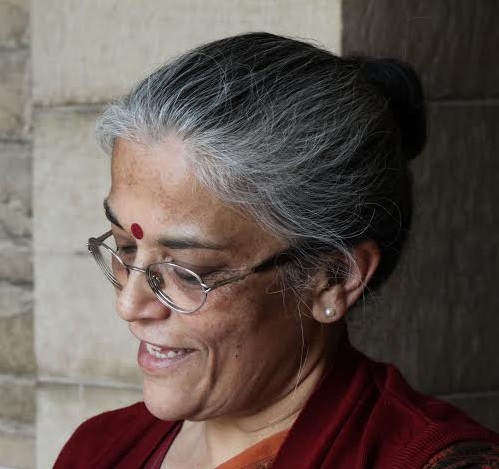
(Dr Shobhana Bhattacharji retired as professor of English Literature from Delhi University a few years ago. Her doctorate is in Lord Byron’s drama. She is fluent in English and Hindi. She reviewed Krishna Baldev Vaid’s novels when they were first published by Penguin India in the 1990s. Now the books have been rejacketed and reissued. Here is her review with a short introductory note.)
The translations of Krishna BaldevVaid‘s two autobiographical novels were so different to each other that I read the Hindi versions to see whether the difference was in the originals. Till then, I had not read the original of a translated work I had to review on the principle that a translation is meant for a target audience and I tried to read it like an ideal target reader. Reading these novels in Hindi, however, taught me how much a translator, even if the translator is the author himself, can alter a novel. The Hindi title of Steps in Darkness is Uska Bachpan. The title of the second novel in Hindi, written 25 years later, was Guzra Hua Zamaana, which was also a famous Madhubala/Lata film song from the sad love story Shirin Farhad, filmed in 1956. It is Shirin’s final goodbye to her beloved Farhad as her ‘doli’ (bridal conveyance) leaves for her husband’s home. She begs Farhad not to accuse her of infidelity; her marriage to another man was not of her making. Vaid‘s novel is a searing farewell to his beloved pre-Partition India.
I met Krishna BaldevVaid for the first time soon after the review was published two decades ago — August 1996. He told me he had liked it very much. All these years later, I am still honoured and delighted that he did.
Dr. Shobhana Bhattacharji ( June 2017)
These two novels, written a quarter of a century apart, centre around Beero, who lives in a small town in undivided Punjab. In the first novel, confused by the adult world, and suffocated by the poverty of his home, Beero is young enough to enjoy snuggling in his grandmother’s lap. His parents are embarrassed to beg the shopkeeper for goods they cannot pay for, so they send Beero, whose dignity is lacerated by this as it is by his torn shorts and having to fetch his father from the gambling den. He escapes into his dreams. The filth and stink of their slum assail the reader but Beero entertains himself with a hornets’ nest in the drain. He dreams of tying some hornets together by their legs and making a kite for himself. None of his dreams is fulfilled. There is no money to buy or make kites. His happiness in his grandmother’s stinking lap is free, but is taken away because his mother hates it.
His friends unwittingly remind him of his unhappiness. Aslam, for instance, has a happy home and a beautiful married sister, Hafeeza, whom Beero gets a crush on. Beero’s mother hates “Muslas” and warns her son against them, but Beero eats at Aslam’s home and becomes “half a Muslim,” as he says in the second novel in which he also recites the kalma. Beero’s own home is riven with misery. The parents have terrible fights over money, the father’s drinking, gambling, and friendship with a sardar, called “Miser” by Beero’s mother who suspects her husband–rightly, as it turns out in the second book–of sleeping with the Miser’s beautiful wife. The mother spits venom and turns everything into tense misery. Her rages dominate Beero’s life but not his understanding. There is a searing passage where a bored Beero, who wants to hear about kings and princesses, listens to what he considers his mother’s complicated repetitious story of her early married life:
O, it was hell. Your Granny used to starve me for days on end. She used to lock me up in the lumber-room; I wonder I didn’t die of fear. No one ever cared for me. Neglected, I used to cry all by myself all the twenty-four hours. Your father was even then addicted to loafing. He never came home from school. Your Granny is to blame for spoiling him. She was always reproachful toward me because I had no sense. What sense could I have at that age?. . . Girls of my age were still playing hide-and-seek in the lanes while I had to wash mounds of clothes. In winter my tiny hands were always numb. I had fever every night; my bones used to ache; and all I had to sleep in was a worn-out blanket. Oh, the long dark frightful winter nights I spent shivering and crying, silently, for at the slightest sound your Granny would get up and start cursing the day she married her son to me. . . .Very often just as I lay down late at night after a day’s drudgery I would be commanded to press your Granny’s legs. While doing that if I happened to doze off I was kicked and beaten. (49-50).
Stories weave a complex pattern through the novel. There is, for instance, the richly ironic echo of the Ramayan in Beero’s mother’s name, Janaki. Beero’s love for fairy stories is soon replaced with fantasies of a fight-free home. Once he actually makes a fantasy come true. Anticipating a storm if his mother comes out of the kitchen and sees a hated neighbour talking to Devi, Beero’s sister, he efficiently lies to both parties of the potential war and gets the neighbour out of the house. Beero has two aims: to comprehend the world and to make it a less anxious place. When the domestic violence gets out of hand, he tries to die, but even that escape is not permitted. We leave him looking into a mirror which he has broken.
The wonder of Steps in Darkness lies in its graceful intermingling of the child’s confusion with solid details of the place, its people and their relationships. Its power is in its language. When one responds in two languages to a book, one wonders how much of Tolstoy and others one has missed. Some translation, of course, is better than none, and some translations are better than others. In this one, for instance, the curses, especially the vivid “progeny of swine” or “progeny of a dog,” require less than a second to translate back into the original and with it come stomach-knotting memories of school in Punjab where either curse would result in furious battles. Because of such violent consequences, “kutte ka bachcha” means much more–at least, it did forty years ago–as an insult than “son of a bitch,” and one is grateful that the author did not use “son of a bitch” in his translation. There are few glitches. For instance, “loaves” for “chapatis” doesn’t work. “Loaves” would probably remind most middle-class readers of Britannia bread. For readers unfamiliar with chapatis, to speak of two or three loaves per person, even among the well off, would be unbelievable.
On the whole, however, the translation has a cultural flavour that the second book does not. Its English is smoother, less defamiliarized, but sometimes, as in “soul” of a singer’s voice (27), one is uncertain what the original might have been. (It is “soz”.) Occasionally, the translation illuminates both versions, e.g. “gorilla” for “pehlwan.” Of course, not every reader will respond in two or, as these books require, three languages, but one misses the immediacy of Steps in Darkness.
There is a lot of mysteriousness in the novel. Why do Devi and her father weep at the end of the novel? What is Naresh’s relationship with his “mother”? Why is Aslam withdrawn after his sister leaves for Lahore? Some of the incomprehensibility is consistent with the child’s steps in darkness, but there should have been some way of making the reader know more than Beero.
The wonderful preface of Guzara Hua Zamana has been dropped in The Broken Mirror. In it, the character Beero talks of how the writer created an incomplete Beero in the first novel and then tried to flesh him out in later stories. Twenty-five years later, Beero tells him that he cannot escape another novel about Beero and that if the novelist is going to drag his feet over it, Beero himself will write it. At this point, he says, he fainted and when he recovered, the novel had been written.
In this first person narrative, Beero tries to piece together the images split by the shattered mirror of the end of the previous story but gives up the attempt because, as he says in passing, the partial stories he had written were lost in the Partition riots. The Broken Mirror is composed of his different worlds–Lanes, Bazaar, Lahore, and Borderlands. The English version does not have Beero’s caustic critique of the first novel. Other minor details that have been dropped also take away from a richness that Guzara Hua Zamana has. For instance, Allah Ditta’s incompetence is wonderfully conveyed in the casual comment that he must have murdered some Iranian doctor, stolen his degree, and set up practice here. No one believes this, of course, but the remark has a vigorous and delighted inventiveness which is characteristic of much Punjabi speech (and Bombay filmi dialogue).
Still, The Broken Mirror resolves much of the mysteriousness of Steps in Darkness. Although the publication details in this edition wrongly suggest that it was written nineteen years after Steps in Darkness, the style bears out that it is more than a sequel. The hesitation of the earlier novel which may have been the child’s as well as the author’s, and which resulted in withholding information from the reader, is replaced with a crisp narration of details. The powerful story of Beero’s adolescence and the unlooked for political freedom which incarcerates them in fear and Bakka’s barn does not need stylistic fancy footwork to impress the reader.
The most powerful aspect of The Broken Mirror is the building up of events towards Partition. Initially, the idea of separation remains in the background. Muslim, Sikh and Hindu friends hang out together. Then Aslam notices that the two Sikhs in their group have begun to talk strangely and advises Beero to be circumspect before them. Language and humour are the first casualties of this growing monster of hatred. Occasionally people mention the possibility of Pakistan. Then, with a mere change of tense, they talk of “when the riot occurs,” and Hindus begin to send their belongings to the “other” side. Finally, Pakistan is a reality. Communal positions harden, bewildering Beero even more than the adult world did in Steps inDarkness. In a magnificent few pages, Krishna Baldev Vaid narrates the activity of a Peace Committee meeting which has been called by the marginalized of the town: a Congress man, Keshav, In-Other-Words, and an aging prostitute who says she is like Gandhi because she does not discriminate against any community in her work. The unpredictable swings from hostility to brotherhood and back again are terrifying because they defy rationality, and because we have seen them again in the run-up to and aftermath of the breaking of the Babri Masjid. Then come the engulfing madness and killings of 1947.
Hiding in Bakka’s barn, Beero’s mind is a spate of words. Narrative breaks down just as everything else has. He struggles to understand events and himself. All he knows is that he lacks Keshav’s courage to die for a cause, and that he cannot kill anyone or blame any one side for being the prime mover of the violence. Eventually, in tearless bewilderment and with heads down, they go to the makeshift refugee camp in the school. There, beside an abandoned, bloodied baby girl, Beero finally cries.
With a book that achieves the nearly impossible business of hiding its craftsmanship, there is little one can do except break the unwritten code for reviewers and tell the story. But no retelling can capture the delicacy, intricacy, and strength of this extremely moving novel.
Krishna Baldev Vaid Steps in Darkness (trans. from Hindi by the author); The Broken Mirror (trans. from Hindi by Charles Sparrows in collaboration with the author) New Delhi: Penguin India, rpt 2017, 1995 (first publd. New York, 1962); New Delhi: Penguin, rpt 2017, 1994 (first publd. In Hindi, 1981)
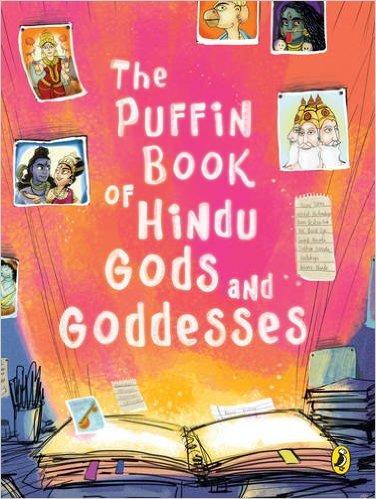
The Puffin Book of Hindu Gods and Goddesses is a nifty introduction to the prominent gods of the Hindu pantheon. It is a peppy reference to the gods and goddesses one encounters often in Hindu mythology. These are the ones such as Vishwakarma, Brahma, Shiva, Vishnu, Saraswati, Parvati, Lakshmi, Ganeshea, Hanuman, Durga and Kali whom one hears of often. There is a neat catalogue with short descriptions of the prominent gods and their avatars such as Shakti/Sati ( Durga, Kali and Meenakshi); Vishnu ( Matsaya, Kurma, Varaha, Narasimha, Vamana, Rama, Krishna, Balrama, Kalki, Jagannatha ); Shiva ( Rudra, Bhairava, Nataraja, Lingam) and Ardhanareshwari ( Shiva + Shakti). In the opening pages describing the Vedic gods the authors — Neelima P. Aryan and Ameya Nagarajan — have tried drawing parallels between the gods of Hindu and Greek mythology. For instance, Akash with Zeus — both are considered to be the father of gods. Each description is accompanied by a full-page illustration created in bright colours by Priyankar Gupta that are charming but have done little to break out of the mould created by Anant Pai decades ago.
The Puffin Book of Hindu Gods and Goddesses is the kind of book which will forever be in demand. It is a beautifully produced four-colour book printed on good art paper allowing for rich reading experience in print. A good production will also ensure that despite being flipped through often the book will withstand any rough use. Creating a reasonably priced book as an in-house department product by the Puffin team will definitely ensure a steady stream of revenue for the firm — a classic formula used often by other firms as well. It is also a fine example of sharp commissioning that straddles the hyper-local and diaspora markets.
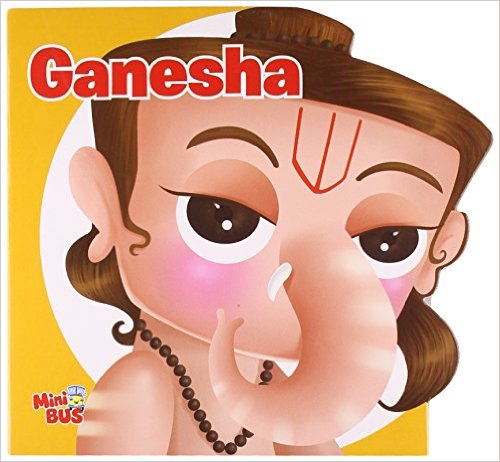
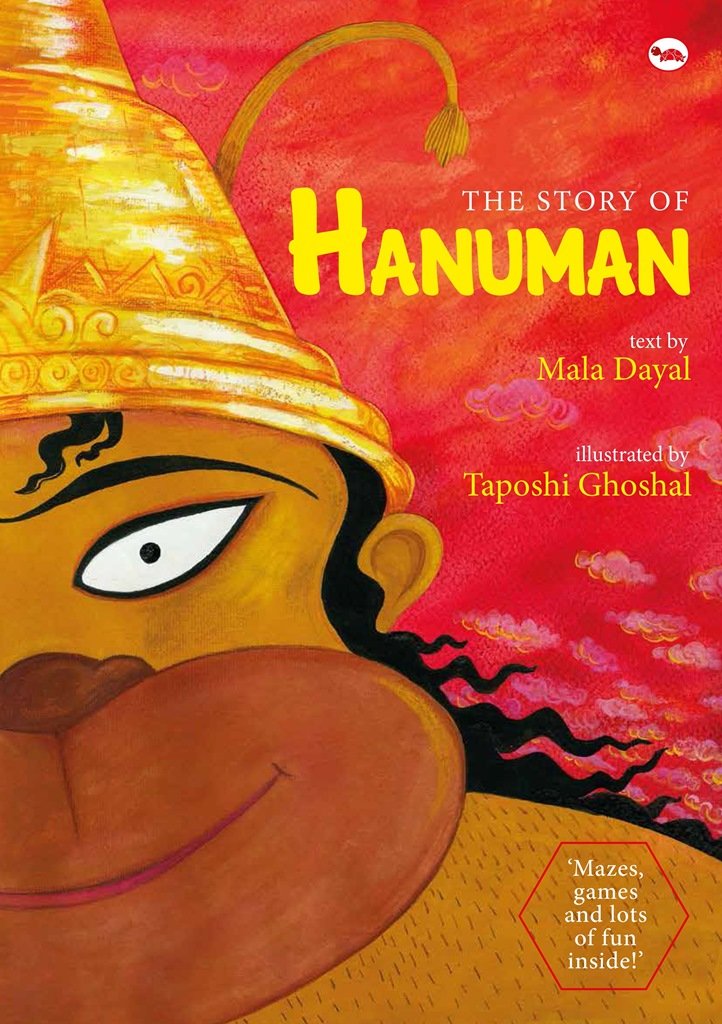
Having said that there are a few more examples of illustrated books on the Hindu gods and goddesses that have proven to be extremely popular — Bhakti Mathur, Pixar’s Sanjay Patel‘s series, a wonderful series of cut out board books for children by Om Books editorial team and splendid books on Hanuman and Krishna by
Mala Dayal and on Shiva by Subhadra Sen Gupta published by Red Turtle.
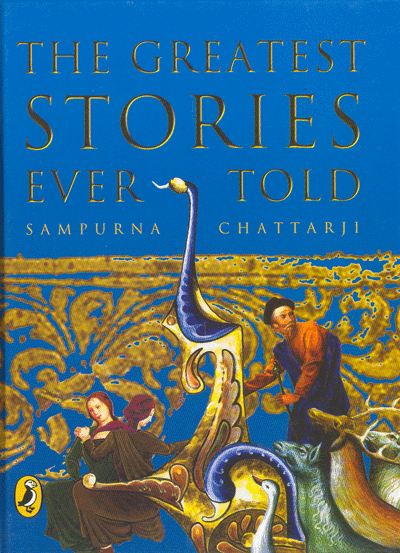
Now for some enterprising publishing firm to create books on gods and goddesses of other religions as well. Puffin India, Juggernaut and Om Books have opened the innings with collection of stories from the Quran and the Bible with their retellings. Goodword books creates phenomenal Islamic books for children. In the past Penguin India had also published a beautiful anthology of greatest stories ever told from various faiths edited by Sampurna Chattarji ( 2004). Maybe it is time to revive some of the backlist publications once more.