One ancient language transformed our world. This is its story.
Star. Stjarna. Stare. Thousands of miles apart, people look up at the night sky and use the same word to describe what they see.
Listen to these English, Icelandic and Iranic words and you can hear echoes of one of the most extraordinary journeys in humanity’s past. All three of these languages – and hundreds more – share a single ancient ancestor.
Five millennia ago, in a mysterious Big Bang of its own, this proto tongue exploded, forming new worlds as it spread east and west. Today, nearly half of humanity speaks an Indo-European language. How did this happen?
In Proto, acclaimed journalist Laura Spinney sets off to find out. With her we travel the length of the steppe, navigating the Caucasus, the Silk Roads and the Hindu Kush. We follow in the footsteps of nomads and monks, Amazon warriors and lion kings – the ancient peoples who spread these tongues far and wide. In the present, Spinney meets the linguists, archaeologists and geneticists racing to recover this lost world. What they have discovered has vital lessons for our modern age, as people and their languages are on the move again.
Proto is a revelatory portrait of world history in its own words.
Laura Spinney is a science journalist and writer. She is the author of the celebrated Pale Rider: The Spanish Flu of 1918 and How it Changed the World. Her writing on science has appeared in National Geographic, Nature, The Guardian and The Atlantic, among others. Born in the UK, she lives in Paris.
‘Laura Bates explains how they built the future – and forgot to put women in it’ CAITLINMORAN
‘Fascinating and essential… I urge you to read every syllable’ JO BRAND
‘All men must read this book if they have any interest in a truly just, fair and equal society’ ROBIN INCE
AI is here, bringing a seismic shift in the way our society operates. Might this mean a future reimagined on equitable terms for women and marginalised groups everywhere?
Not unless we fight for it. At present, power remains largely in the hands of a few rich, white men. New AI-driven technologies, with misogyny baked into their design, are putting women in danger, their rights and safety sacrificed at the altar of profitability and reckless speed.
In The New Age of Sexism, Sunday Times bestselling author and campaigner Laura Bates takes us deep into the heart of this rapidly evolving world. She explores the metaverse, confronts deepfake pornography, travels to cyber brothels, tests chatbots, and hears from schools in the grip of online sexual abuse, showing how our lives – from education to work, sex to entertainment – are being infiltrated by easily accessible technologies that are changing the way we live and love. What she finds is a wild west where existing forms of discrimination, inequality and harassment are being coded into the future we will all have little choice about living in – unless we seize this moment to demand change.
Gripping, courageous and eye-opening, The New Age of Sexism exposes a phenomenon we can’t afford to ignore any longer. Our future is on the line. We need to act now, before it is too late. ‘Urgent reading for anyone who is interested in the intersection of tech and gender equality, and indeed anyone who wants to be a part of building a better future, free from misogyny’ EMMA-LOUISE BOYNTON
‘A brilliantly researched, incredibly illuminating and frequently chilling account of the next chapter in tech’s ongoing assault on our core values. A chapter that is already unfolding around us all’ JAMES O’BRIEN
Laura Bates studied English at Cambridge University and went on to be a freelance journalist. She has written for TheGuardian, The Independent, The New Statesman, Red Magazine and Grazia among others. She is also contributor at Women Under Siege, a New-York based organisation working to combat the use of sexual violence as a tool of war in conflict zones worldwide. She is the founder of the Everyday Sexism Project.
There is a sudden deluge of books being released to coincide with the
ongoing Frankfurt Book Fair, the mecca of publishing and of course, as a run-up
to Christmas/ gifts. Some of the big name releases that have happened in recent
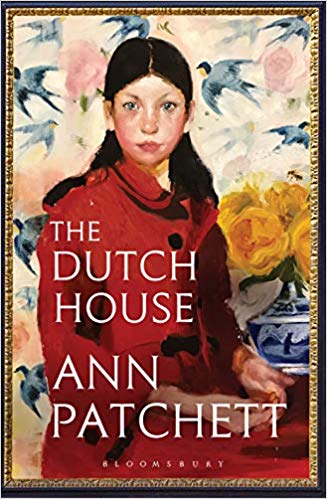
weeks have been Ann Patchett’s incredibly stunning The Dutch House and
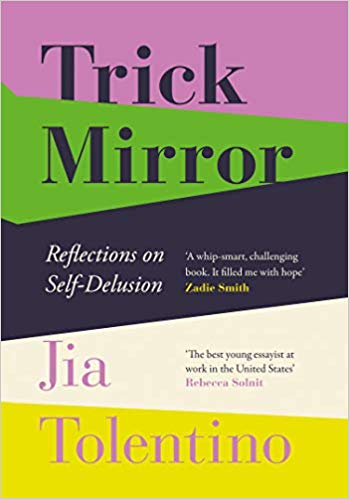
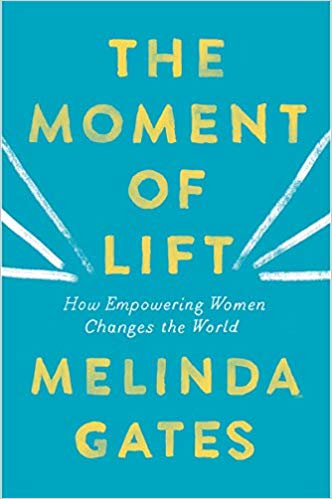
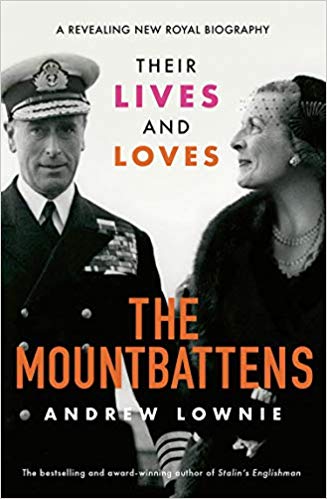
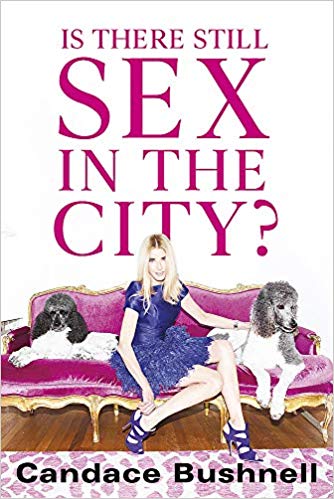
Jio Talentino’s absorbing collection of essays called Trick Mirror. There have been other books too like Melinda Gates The Moment of Lift, Candace Bushnell’s Is there still sex in the city? Or the
absorbing but light biography of The
Mountbattens: Their Lives and Loves by Andrew Lownie.
Ann Patchett’s The Dutch House is such
a beautiful book that it is impossible to describe. I read it weeks ago but
could not bring myself to spoil the heartbreakingly fabulous experience of
reading it. It is historical fiction for it is set at the time of the second
world war in Philadelphia. It is about two siblings –Danny and Maeve– whose
father, Cyril Conroy, a landlord, made it supremely rich through sheer hard
work and wise investments. As a result he was able to haul his family out of
impoverished circumstances to buy a magnificent house with its contents built
by Dutch immigrants – the VanHoebeek. It is an unsettling experience for their
mother who soon abandons their family to mysteriously vanish from their lives. It
is said she left for India. Meanwhile Cyril Conroy marries again. This time a
woman with two daughters. The stepmother in true fairy story style banishes the
children from the home once Cyril dies unexpectedly. Maeve and Danny learn to
fend for themselves. Slowly putting their lives back together. Years later they
reflect upon their childhood. As Ann Patchett points out in an interview with The
Guardian that we are embarrassed by grief, and The Dutch House is multi-layered because of the varieties of grief
it addresses. Every time leaving a large gaping hole even in the reader’s heart
but a sense of yearning to read more. It is a stunning novel which will haunt
one for a long time to come. It is bound to find a place on the longlist of
next year’s Women’s Prize.
New Yorker staff writer Jio Talentino’s Trick
Mirror is a collection of her essays published previously. It is a
combination of reportage and memoir. It is not easy to read at one sitting for
its very thought provoking ideas on feminism, sexual assault, universities,
wedding festivities etc. It is such a wide range of subjects that she tackles, always
with an incisive feminist outlook, that it becomes immaterial after a point
that many of her observations are based on very local and personal experiences.
This is the beauty of essay writing that if the ideas discussed in the essay
resonate with readers beyond a specific geographic landscape – beyond Trump,
UVA in Charlottesville etc– and cut through borders of all kinds to have the
desired impact of evaluating and challenging one’s thoughts, then it is
extremely powerful writing. There are two excellent reviews of Talentino’s book
— “Songs
of my Self-Care” by Jacqueline Rose in the New York Review of Books ( 10
October 2019) and “Trick
Mirror by Jia Tolentino review – on self-delusion” by Lidija Haas ( 2
August 2019).
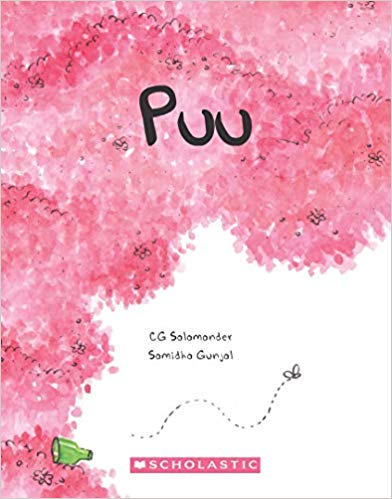
Billionaire Melinda Gates’s The Moment of Lift is a curious little book. The Gates couple are known for their philanthropy and have been in the public eye for years. They are very guarded about their private life which is fair. For instance, when their children were enrolled in school it was using their mother’s surname rather than their father’s more famous last name. This strong desire to withhold their personal space from the public eye in the memoir is also fair except that it makes the tenor of the book very bland. There are glimpses of the tussle Melinda Gates may have had with herself in making what are seemingly “simple” decisions such as venturing into the promotion of contraceptives for women. Given her very Catholic upbringing where her mother attends mass five times a week, this could not have been an easy focus area for Melinda to pick for her philanthropy. There are many instances in the book that while it is obvious Melinda Gates has the privilege to access information easily, she remains a reserved individual who does not allow any glimpses than are absolutely necessary into her private space. Justifiably a fair choice except that in a memoir that functions more than just an account of her life but is more like a publicity statement for her magnificent work in women’s healthcare. These barriers to her privacy as well as to the information that she is being shown that can cause complications creating a very insipid book for its statistically rich in data but bland in context. Her ambiguity about expressing herself strongly about her Catholic upbringing with the reality she sees in the poverty stricken parts of the world. Or for that matter her problematic narrative of India which seems very focussed on it being a casteist Hindu society with absolutely no mention whatsoever about the syncretic cultural fabric of this democracy. Even the heavy sprinkling of anecdotes cannot relieve the boredom, this despite the celebrity buzz with even President Barack Obama releasing videos supporting the book. Having said that there is one incident that Melinda Gates refers to in her book of a little girl child of a scavenger’s community in Kanpur. The child was bold enough to ask the Gates Foundation delegates for a teacher. This is a perfect match to a beautiful wordless picture book calledPuu published by Scholastic India.
The other big ticket release recently has been the unauthorised biography of
the Mountbattens – Lord Mountbatten, the last Viceroy of British India who
oversaw the independence of India and Pakistan—one of the many prestigious positions
of authority he held. He was also Prince Philip’s cousin and instrumental in
insisting that the British Royal family taken on the name “House of Windsor”. The Mountbattens is written by Andrew
Lownie and based on extensive research, interviews with family members as well
as those who knew the Mountbattens well. Lownie even acknowledges Queen
Elizabeth II for granting access to her archives as part of his research. So
for the first time there are accounts of Lord Mountbatten’s career, his
mistakes and successes as well as of bisexuality (denied by the family). The “detailed”
account of Lady Mountbatten as the poor little rich girl, who was the richest
heiress of her generation when she married Lord Mountbatten is equally focused
on her promiscuity as it is with all other details of her life. There are
photographs, an extensive bibliography, footnotes and a detailed index. The
book has plenty of anecdotes that make for a rollicking good read except that
it all falls apart towards the end when Lownie acknowledges that the
Mountbatten’s myth is managed by exercising control at the archives in
Broadlands or closed under Ministerial Directive at the Hartley Library. All
said and done it is a book that makes for an interesting read and will probably
be optioned for a film or a TV miniseries very soon for its got all the razzmatazz
that will go down well with a global audience of a period drama.
In a similar vein is the memoir that Candace Bushnell has written after
crossing sixty — Is there still sex in
the city? It is a light and superficial read about a woman worrying about
money and life even though she and her girlfriends can afford to own homes at the
Hamptons, New York. Privileged women can offer quite a bit through their
memoirs as they are privileged not just in financial security but have easy
access to information, data, statistics — which increasingly have a price
barrier to them. Thus offering a broader perspective on issues that preoccupy women
as they become older. Issues like marital relationships, separations, losing
dear friends, how to come to terms with old age, healthcare, having the energy
to be with family and friends, increasing loneliness, managing busyness of life
etc. Of course there will be vast degrees of differences between those in
different points of the socio-economic scale but certain learnings are the
same. Oh well! It is an opportunity lost with Candace Bushnell’s memoir.
The Booker Prize is to be announced on Monday, 14 October 2019. This time it consists of very well established writers and previous Booker winners like Margaret Atwood and Salman Rushdie. The other writers shortlisted include Elif Shafak, Chigozie Obioma, Lucy Ellmann and Bernardine Evaristo. Every single title shortlisted is unique and that is exactly the purpose of a shortlist — to highlight the variety of writing, experimentation in literary forms and the author’s ability to tell a fresh new story.
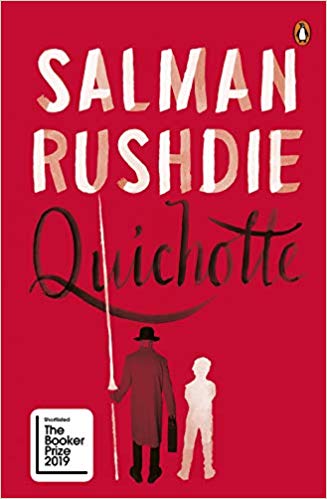
Quichotte by Salman Rushdie is a modern enactment of Cervantes Don Quixote and involves a salesman of Indian origin, Ismail, who travels across America on a quest — in search of his beloved, a TV show host. It is at one level a bizarre retelling of the popular story with big dollops of magic realism also thrown in. But most importantly it is the commentary offered on the global rise of despots, notion of dual identities, migrations, what it means to be a refugee in modern times, status of women, patriarchal ways of functionining, sexual harassment etc. It is like a broad sweep of events set in three nations — USA, UK and India. At the same time it is a commentary that is very relevant to the socio-political turmoil evident globally. These are also the three countries that Rushdie has lived in and migrated to. So Quichotte in many ways is a triumphant storytelling but it is also a sharp commentary on contemporary events that are taking a horrific turn. In many ways this is a sad reminder for someone like Rushdie, a Midnight’s Child, born soon after India gained independence from the British in 1947 and wrote about it in his Booker winner and Booker of Bookers The Midnight’s Children. He has witnessed modern history for more than seven decades and to see history more or less come full circle with the rise of fascism and blatant acts of genocide, construction of concentration camps in the name of detention centres for migrants is a more than unpleasant. It requires a storyteller of his stature who has himself lived under the very real threat of death while the fatwa issued against him for writing The Satanic Verses existed, to write confidently and offer his commentary on modern times. If the garb of magic realism, a quest and relying upon many literary references that at times allow Rushdie to offer his thoughts while making Quichotte seem disjointed, well, ce’st le vie — it is a reflection of our reality and needs to be articulated. Read this extract from the novel. Also listen to this fascinating podcast on the Intelligence Squared website where Salman Rushdie spoke to BBC journalist Razia Iqbal in front of a live audience in London on 29 August 2019.
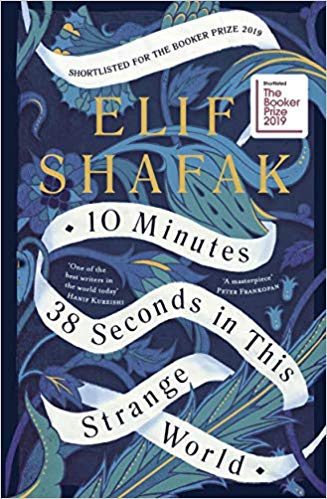
Elif Shafak’s 10 Minutes 38 Seconds is a reference to the time the brain waves continue to be sent after a person has been declared clinically dead. This is the duration during which the novel’s protagonist, a prostitute called Tequila Leila, who has been killed and whose body has been placed in a sil, reflects upon her life and her friendships. It is a stunning book for its immediate preoccupation with refugees as epitomised by the small circle of friends of the narrator. It is also a story that touches upon gender issues, patriarchy, censorship, rise of fascist despots, freedom of expression, marginalised groups, sexual freedom etc. While it is a novel that raises many issues, it is unlike Quichotte, restricted to Turkey and its immediate vicinity. In an interview to the Indian Express, Shafak said, “The novel is one of our last democratic spaces“.
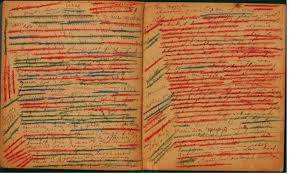
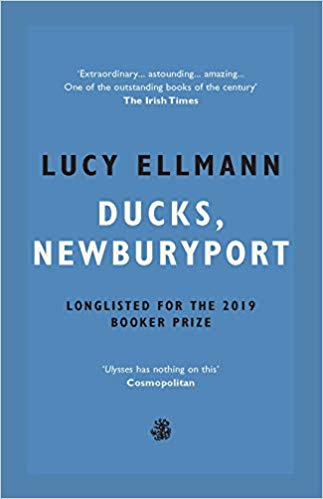
Lucy Ellmann’s Ducks, Newburyport is described as a one-sentence, 1000-page novel, which seems daunting to read, but it is the interior monologue of a woman. A narrator who merges her thoughts as most women do while contending with their daily mental load of managing responsibilities and offering commentaries upon the world around them. She flits between her immediate preoccupations with general reflections upon global politics, especially Trump. While reading the novel there are moments that one punches a fist in the air to say, “Yes! Ellmann got this right about women and their reflections.” Then there are other moments where one wishes that like James Joyce’s Ulysses manuscript written in colour-coded crayons, Lucy Ellmann too had figured a way of colour coding her novel by making the perceptive observations of a woman being highlighted for at times the meanderings into political landscapes and beyond can be a tad tedious. Lucy Ellmann’s writing style in this novel has often been compared to James Joyce by critics for whom the author had a fantastic reply in an interview she gave to The Washington Post:
Thrilled. But again, to me the connection seems remote. Many reviews have mentioned that my father was a Joyce scholar. Actually, my sister’s one too. But . . . I’m not! My father [ Richard Ellmann] did talk a lot about Joyce when I was growing up, when my mother didn’t put her foot down. But mostly, I tuned it out. I regret that now — especially when people come to me with their Joyce questions!Still, I think it’s weird for reviewers to bring up what my father did for a living. How often is the parentage of male novelists in their 60s mentioned?
James Joyce’s colour coded manuscript of Ulysses
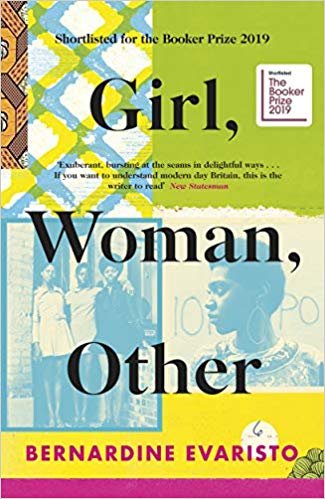
Bernardine Evaristo’s Girl, Woman, Other is a “novel” about 12 black women characters, most of them British. As an example of literary experimentation in terms of form, using blank verse as prose, to tell loosely interconnected, intergenerational, stories is fascinating. There is a rhythm that is mesmerising and lends sections of this novel to performance poetry. These are voices that suddenly make apparent the distinctions that exist amongst individuals in that “broad” spectrum of “black British women”. There are many instances in the book that make the women across generations offer their opinions about living in a patriarchal society, the position of women and the challenges it offers on a regular basis. Many of these questions are often raised and discussed even by feminists and many other ordinary women who do not necessarily wish to be labelled as feminists. The fact remains these are issues linking women across the world. Yet while the author’s heart is in the right place of creating this landscape, too much energy seems to have been invested in crafting the form rather than ensuring that the women’s conversations are at par with the magnificent form. At times, their observations sound too thin or as the Guardian review puts it aptly, “naive”. This mismatch in quality of craftsmanship and getting the tenor right of the women character’s preoccupations was not to be expected in such a talented writer. Evaristo is widely tipped to be one of the favourite of bookies and critics, like John Self in The Irish Times, in tomorrow’s announcement of the Booker Prize.
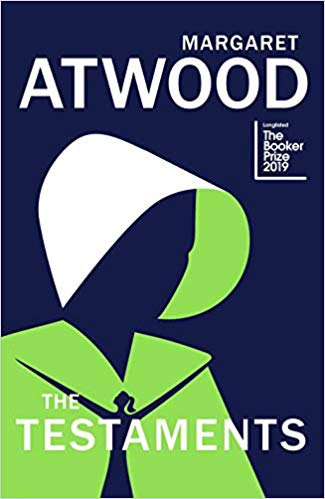
The only other writer on this year’s shortlist, apart from Rushdie, to have won the Booker Prize is Margaret Atwood with The Testaments. It is a sequel to her iconic book The Handmaid’s Tale which went through an immense revival achieving almost cult-like status in the wake of the #MeToo movement. It led to a TV adaptation where Atwood had a cameo role too. The red and white dress rapidly became a symbol of resistance in many a young woman’s mind. Atwood wrote The Testaments while the buzz around The Handmaid’s Tale was rife. It is undoubtedly a smoooooooooooth read and is justifiably so the “dazzling follow-up” to The Handmaid’s Tale as affirmed by Anne Enright in her review in The Guardian. Nothing less is to be expected from Margaret Atwood, the High Priestess of modern sisterhood, as she so marvellously creates this story even with its painful moments. It is a story that can be read as a standalone or in quick succession after The Handmaid’s Tale but the skill of Atwood’s storytelling comes to the fore in this novel. It is also probably easier to read, stronger in the punches it delivers and richer for its details, given that it is very much a product of modern times where many debates regarding women, their rights and freedoms within a patriarchal social structure are being questioned. The audience is now receptive to such tales. Hence it is no surprise that bookies are tipping this to be the favourite to win tomorrow’s Booker Prize.
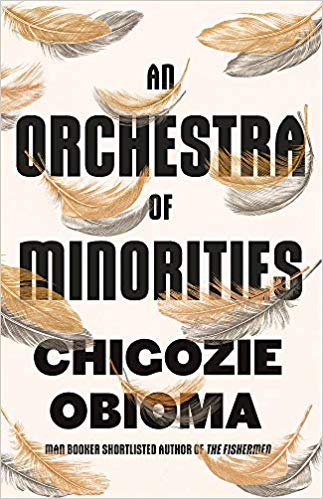
Chigozie Obioma’s An Orchestra of Minorities is a retelling of Homer’s Odyssey in the form of Igbo storytelling. It is a kind of storytelling associated mostly with male storytellers. It merges many well known traditions of storytelling and is mostly anecdotal, relying a lot on folklore elements. It is a form that was used by Chinua Achebe in Things Fall Apart too. Obioma has been referred to in a New York Times article as the “heir to Chinua Achebe”. Nonso, a chicken farmer, is the protagonist in An Orchestra of Minorities who travels out of Nigeria and gets involved in many adventures including becoming the victim of a scam. It can get a little convoluted as presumably this Igbo art form is mostly meant for oral performances and not meant to be read as the printed word, a form that exerts its own set of rules and demands upon the reader — most noticeably being that of making limited allowances for digressions and purple prose. This constant tussle between the two forms of storytelling — Igbo and the English literary tradition of the novel— makes for a challenging read with only flashes of brilliance. Perhaps Obioma who has been most fortunate in having both his novels shortlisted for the Booker Prize will win this prestigious literary accolade with his third novel and not succumb to being “three times bridesmaid never bride”.
Literary shortlists serve many purposes. Most noticeably of showcasing the variety of literature available in that particular year of the prize announcement. These shortlists are increasingly becoming relevant to the socio-political events that seem to influence writing and reading patterns too. Within this context, the 2019 Booker shortlist is a formidable gathering of experienced writers. Everyone, even the most seasoned of writers, likes a win and the value of this prize is £50,000. Irrespective of how the bookies are placing the writers for tomorrow’s win, it will in all likelihood be a close call between Rushdie and Shafak. If Evaristo wins, it will only be because of the jury taking into consideration hyper-local factors of being a black woman writer in UK particularly during the Brexit phase. It would be perfect if Rushdie wins this prize once more, making it a hat trick for him at the Booker. He deserves to win for his literary fiction such as The Midnight’s Children and now Quichotte have not only documented critical moments in modern history but these novels are timely and relevant for the wisdom they impart. The characters in Quichotte are migrants like Rushdie and many others, “the broken people …are the best mirrors of our times, shining shards that reflect the truth“. Quichotte offers much more than just looking at a narrow canvas of one topic or one region but broadens the horizons to highlight many of the issues gripping the world are not bound to a nation state but are spread like a rash globally. What is even more horrific is that Rushdie has in his lifetime of three score years and ten witnessed crimes against humanity that one thought were rid off but seem to have returned with despicable vengeance. Quichotte is a triumph of literary craftsmanship as Rushdie is writing about these moments in history that he has witnessed while maintaining a firm grip on imbibing and merging many forms of literary traditions and storytelling to formulate a new one. There are far too innumerable to list in this round up. Suffice to say that if any novel in the shortlist deserves to win, it is Quichotte.
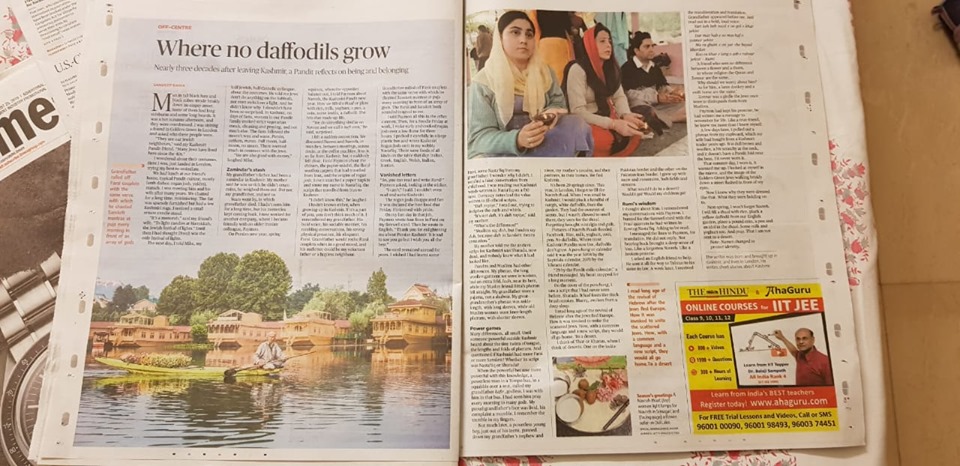
On 24/25 August 2019, Sandeep Raina’s “Where No Daffodils Grow” was published in the Hindu Literary Supplement. Here is the link. Given the space restrictions in print, the article had to be edited. Reproduced below with the kind permission of the author is the unedited version.
Sandeep Raina was born and brought up in Baramulla, Kashmir. He studied engineering in Srinagar, and when in 1990 militancy gripped the Kashmir valley, he finished his education and left for Delhi. He lived in Delhi for 10 years and then in Istanbul for 3 years before moving to Surrey, England where he has been living for the past 15+ years with his wife and 3 children. Sandeep’s wife is a doctor in Surrey, their daughter studies medicine at the University of London, and their twin sons are studying engineering at the Cambridge University.
Sandeep has worked as a senior engineering executive in mobile telecoms for the past 28 years and travels globally for his work. As a mobile telecoms evangelist, he has been invited to speak at many conferences across Europe and the USA, and has published numerous professional articles. Currently, he works for a French-American telecommunications software company in London.
Sandeep has written a novel based on Kashmir, which took him over 11 years to write. The reason to write a novel was that it worked as a slow cathartic process to counter the traumatic and violent experiences of the early-90s Kashmir, and the harsh life of being a migrant/refugee in Delhi. As part of his life and travels outside Kashmir, he has acquired different perspectives of the Kashmir conflict. Through his writing about the Kashmiri people, of all communities, caught in the long-drawn, brutal conflict, he aims to present a better understanding of their predicament.
Sandeep has also published short stories about Kashmir, which reflect the exchanges with people caught in conflicts like Kashmir. They not only highlight the broken relationships, the loss of trust, the rising communal politics of Kashmir and India, but also offer introspection and a hope for the communities that have been disadvantaged because of the strife.
His stories have been published in several magazines and papers, including, The Hindu, The Guardian, The Telegraph, and The Times of India/The Economic Times.
****
Men in tall black hats and flowing black
robes strode briskly down an empty street. Some of them had long side burns and
some had long beards. It was a summer
afternoon, hot, and they were quite overdressed. I was visiting a friend in
Golders Green in London and asked him what was going on, who were those people,
why the costumes?
“Nothing, they are our Jewish neighbours back
from a synagogue,” said the Kashmiri Pandit friend. “Many Jews live here since
the 40s.”
Why were they dressed in such a pronounced
manner? I wondered. Here was I, trying my best to assimilate, just landed in
London. It didn’t make sense.
We had lunch at our friend’s home, typical
Pandit cuisine, mostly lamb dishes: rogan
josh, yakhni and matsch. I had
met him and his wife after many years. We chatted for long on the table,
reminiscing. The flat was sparsely furnished but had a few Kashmiri rugs. I noticed
a small ornate candle stand in the window and asked what it was.
“It is a menorah,” said my friend’s wife. “To light candles in the Jewish
festival of lights, Hanukkah.”
Until then I had thought Diwali was the
only festival of lights.
“Everybody
in this apartment building is a Jew, most of them old,” said my friend. “And
they are very nice people.”
The next day, I told Mike, my colleague in
office, about the Jews in costume. Mike was a small young man, who once had
said that being Jewish, Catholic and French was the worst one could be in
England, and he was all of them. One of his parents was French and Catholic,
the other English and Jewish.
“There are other interesting things that we
do, such as not doing anything on Sabbath,” he laughed. “Not even switching on a
light.”
“Why?” I said.
He didn’t want to explain or didn’t know.
I shouldn’t have been so surprised. In
Kashmir, on days of fasts, women in our Kashmiri Pandit family cooked strict vegetarian
meals, cleaning and praying, and not doing much else. And the fasts followed
the moon’s wax and wane. Punim, aetham, mavas. On full moon, mid
moon, and no moon. There seemed to be much in common with the Jews.
“We
are also really good with money,” laughed Mike.
My grandfather’s father had been a zamindar,
a landowner, in Kashmir. My mother said that he was so rich that he didn’t
count coins, he weighed them out of hand balances. But, my grandfather was not
rich, nor us. My mental comparisons with the Jews ended at this thought.
Years went by. In which my grandfather
died. I hadn’t seen him for a long time, but his memories kept on coming back
to me in many different ways. By now we had moved into a new house, and I worked
for a different company, in a different town in England, where I became
friendly with an older Iranian colleague, Paymon.
It was the Persian new year, on spring
equinox, when the day equals night, and the opposites balance out, when I told
Paymon about Navreh, the Kashmiri Pandit new year. How on the eve, we filled a thaal, a deep plate with rice, milk, yogurt,
a pen, a coin, some lentils, a daffodil. Bits that made life.
“We do something similar on Navroz, and we
call it haft seen,” he said, surprised.
I felt a sudden connection build. We discussed
Navroz and Navreh in snatches between meetings, across our office desks, on the
coffee machine. Iran is so far from Kashmir, but it suddenly felt close. I told
Paymon about the chinars, the papier-mâché, and the floral woollen carpets that had travelled from Iran, and
the origins of rogan josh. Things began to tumble out. I even snatched a paper
napkin and wrote my name in Nastaliq, the script that had travelled from Iran to Kashmir.
“I didn’t know this,” he laughed.
I didn’t know either, when growing up in
Kashmir. If it’s a part of you, you don’t think much of it. I remembered my grandfather.
I remembered his bold loud voice, his very sociable manner, his rambling
conversations, his strong physical presence, his eloquent Farsi.
Grandfather used to recite Farsi couplets
when he was in a good mood, when he had an audience, which could be my reluctant
father or a hapless neighbour who had chanced to step by. Grandfather rolled
off the Farsi couplets with the same verve as chanting mantras in Sanskrit,
when he did his puja every morning, with
lots of flower petals and incense sticks, in front of an array of gods. I was
small, the Farsi and the Sanskrit both sounded magical to me, inspiring awe.
I told Paymon all this in the office
canteen, and he listened to me with an older man’s patience.
My euphoria was unabated. For a Foodie
Friday in the office, I woke up early and cooked rogan josh in the morning over
low flame for three hours. My wife
wasn’t happy that I hadn’t let her cook. I packed the rogan josh carefully in a
large plastic box, with a sticker on top and wrote- Kashmiri Rogan Josh in my wobbly Nastaliq, and sped to office, just
in time for lunch. My colleagues had already begun eating, and there were foods
of all kinds on the large canteen table. Italian, Greek, English, Brazilian,
Welsh, Indian, Iranian. The rogan josh was late. Then Paymon saw me.
“So, you can read and write Farsi?” said Paymon,
looking at the sticker, asking me to put some rogan josh on his plate.
“I can’t,” I said. I couldn’t even read and
write Kashmiri.
Rogan josh disappeared fast, everyone ate
it. It was declared the best cooked food on that Friday. I brimmed with pride.
When I left that job, on my last day, Paymon
wrote four lines in Farsi on my farewell card. Under those he wrote in English:
Thank you for enlightening me about
Persian Kashmir. It has been great talking with you. It is sad to see you go
but I wish you all the best.”
I think Paymon said something about those
Farsi words in the card, but in my farewell hurry, I didn’t hear too well.
The card remained unread for years. Later,
I wished I had learnt some Farsi, some Nastaliq from my grandfather. I
wonder why I didn’t. My question took me back to a faint conversation from my
childhood. I was reading out two Kashmiri words written in Nastaliq on a
ten rupee note. In those days, currency notes in India had the value written in
15 official languages, each in its own script.
“Dah
ropiye,” I read out, trying to decipher the curls,
whirls, and dots.
“It’s not dah ropiye, its duh ropiye,”
said my mother.
“What’s the difference?”
“Muslims say dah, but Pandits say duh,
because dah in Sanskrit means cremation. And
Muslims bury their dead.”
My mother also told me that the ancient script
for Kashmiri was Sharada, now dead, and nobody knew what it had looked like.
Pandits and Muslims had other differences
too. I was aware of some. My pheran, the
long woollen garment that I wore in winters, had an extra fold, ladh, near its hem, while Bitta, my Muslim
friend’s pheran fell straight. My grandfather wore a pajama, not a shalwar. My
great grandmother’s pheran was ankle-length, with long sleeves, while old Muslim
women wore knee length pherans, and shorter sleeves.
Many differences, all small. Until someone
powerful outside Kashmir, heard about the tiny twists of tongue, the lengths
and folds of pherans. And questioned if Kashmiri had more Farsi or more Sanskrit?
Whether its script was Nastaliq or Sharada? When the powerful became more powerful with this
knowledge, a powerless man in a tempo bus, after a squabble over a seat, called
my grandfather a kafir, godless. Hurled
the word like a weapon. I was with my grandfather in that bus. I had seen him
pray to God every morning, in fact, many gods. My proud grandfather’s face was livid,
his complaint to the bus driver a mere mumble. I remember my own inertness, the
tremble in my fingers.
Not much later, a powerless young boy, just
out of teens, gunned down my grandfather’s nephew and niece, my mother’s
cousins, with their partners, inside their home. We fled Kashmir.
It’s been 29 springs since that happened. This
year, in London, I forgot to fill up the Navreh thaal. Or look up the new panchang, the Hindu calendar book, which
my mother posts from India every spring. On Navreh eve, when I was small in
Kashmir, I would run out to pluck a handful of nargis, white daffodils, that grew in our garden. They had the
sweetest of scents, but I wasn’t allowed to sniff; they were meant for God. And
on Navreh morning, when the April air pinched my winter-chapped cheeks, I would
wear a new kurta-pajama. Forgetting the thaal has brought sweet nostalgia and tremendous
guilt.
Pictures of Navreh thaals flooded Facebook,
on cue. Rice, milk, yogurt, coin, pen. No daffodils. Where most Kashmiri Pandits
now live, daffodils don’t grow. A panchang said the year is 5094 by the Saptrishi
calendar, 2075 by the Vikrami calendar.
“29 by the Pandit exile calendar,” a friend
messaged. My heart stopped for a long moment.
On the cover of a panchang, I saw a script
that I had never seen before. Sharada. It had fonts like thick brush strokes or
like engravings on stone. Blurry, awoken from a deep sleep.
I had read a book long ago about the
revival of Hebrew after the Jews had fled from European towns. How Hebrew was
invoked to string the scattered Jews. How they would all go home, with a common
language and a new script to a land they could call their own. In a desert.
I think of Thar or Kharan, when I think of
deserts. One on the India-Pakistan border and the other on the Pakistan-Iran
border. I grew up with snow and mountains, I grew up with lush fields, streams
and lakes. What would I do in a desert? What if someone powerful traced my
roots to the Aryan Iranians? And sent me to Kharan in Balochistan. Would I go?
Would my children go? Would my children’s children go?
I am sure the Jews had said this too.
I thought about Iran. I remembered my
conversations about Navroz and Navreh with Paymon. I hunted for the farewell card
from my last job and found it in a stack of birthday cards that our children
had given me over the years. Among dozens of messages written in English was
the quatrain written by Paymon in Farsi, in flowing Nastaliq. Asking to be
read.
I messaged a photo of the lines to Paymon,
asking him if he could translate it for me. Paymon did not reply, I don’t know
why. I had thought Paymon would be a friend for life. Friendship’s a promise. I
thought of who else could help me: Grandfather. But he was not around anymore to
fill me with the awe and magic of his Farsi. Not hearing back from Paymon, not able
to read his message brought a deep sense of loss. Like a forgotten Navreh. Like
a broken promise.
I asked an English friend to help me. He
sent a photo of the Farsi message, all the way to Tehran to his sister-in-law.
A week later, I received the transliteration and the translation in my inbox.
Grandfather appeared before me. And read out in a bold, loud voice:
Yari
keh beh nazd e oo gol o khar yekist
Dar
maz hab e oo mos haf o zonnar yekist
Ma ra
gham e on yar che bayad khordan
Koo
ra khar e lang o asb e rahvar yekist
(Rumi)
“A friend who sees no difference between a flower
and a thorn,
In whose religion, the Quran and Zonnar are
the same,
Why should we worry about him?
As for him, a lame donkey and a swift horse
are the same.”
Zonnar used to be a girdle which Jews wore to
distinguish them from Muslims, long back in time.
Paymon had not forgotten, he had kept his
promise, he had written me a message to remember for life. Like a true friend,
he knew me more than I knew myself.
A few days later, I pulled out a pheran from
my clothes cupboard, which my wife had bought from a Kashmiri trader many years
ago. It is dull brown and woollen, a bit scratchy at the neck, and it does not have
a Pandit fold near the hem. I had never worn it.
That summer day, I wore it. It warmed me up.
I looked at myself in the mirror, and the image of the Golders Green Jews
walking briskly down a street flashed in front of my eyes. Now I knew why they were
dressed like that.
What they were holding on to.
Next spring, I won’t forget Navreh. I will fill
up a thaal with rice, pluck a yellow daffodil from our English garden, place a
pound coin, a pen and an idol of a god in the thaal. Some milk and yogurt too. And
pray. That I’m not sent to a desert.
Religion, more or less, arises out of divine wreckage. And science, too — religion’s estranged half sibling — addresses itself to such animal dissatisfactions. In The Human Condition, writing in the wake of the Soviet launch of the first space satellite, Hannah Arendt reflected on the resulting sense of euphoria about escaping what one newspaper report called “men’s imprisonment to the earth.” This same yearning for escape, she wrote, manifested itself in the attempt to create superior humans from laboratory manipulations of germ plasm, to extend natural life spans far beyond their current limits. “This future man,” she wrote, “whom the scientists tell us they will produce in no more than a hundred years, seems to be possessed by a rebellion against human existence as it has been given, a free gift from nowhere ( secularly speaking), which he wishes to exchange, as it were, for something he has made himself.”
A rebellion against human existence as it has been given: this is as good a way as any of attempting to encapsulate what follows, to characterize what motivates the people I came to know in the writing of this book. These people, by and large, identify with a movement known as transhumanism, a movement predicated on the conviction that we can and should use technology to control the future evolution of our species. It is their belief that we can and should use technology to augment our bodies and our minds; that we can and should eradicate aging as a cause of our death; that we can and should use technology to augment our bodies and our minds; that we can and should merge with machines, remaking ourselves, finally, in the image of our own higher ideals. They wish to exchange the gift, these people, for something better, something man-made. ( p.2)
….
In philosophy of mind, the notion that the brain is essentially a system for the processing of information, and that in this it therefore resembles a computer, is known as computationalism. As an idea, it predates the digital era. In his 1655 work De Corpore, for instance, Thomas Hobbes wrote, “By reasoning, I understand computation. And to compute is to collect the sum of many things added together at the same time, or to know the remainder when one thing has been taken from another. To reason therefore is the same as to add or subtract.”
And there has always been a kind of feedback loop between the idea of the mind as a machine, and the idea of machines with minds. “I believe by the end of the century,” wrote Alan Turing in 1950, “one will be able to speak of machines thinking without expecting to be contradicted.”
As machines have grown in sophistication, and as artificial intelligence has come to occupy the imaginations of increasing numbers of computer scientists, the idea that the functions of the human mind might be stimulated by computer algorithms has gained more and more momentum. In 2013, the EU invested over a billion euros of public funding in a venture called the Human Brain Project. The project, based in Switzerland and directed by the neuroscientist Henry Markram was set up to create a working model of a human brain and, within ten years, to simulate it on a supercomputer using artificial neural networks.
( p.55-56)
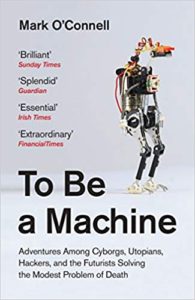
Wellcome Book Prize 2018 winner Mark O’Connell’s To Be a Machine: Adventures Among Cyborgs, Utopians, Hackers, and the Futurists Solving the Modest Problem of Deathis an incredible account of the journalist’s investigation into what is transhumanism and who are these people actively engaged in this movement, in their search for the Holy Grail of longevity with the help of technology. It is an astonishing book for the amount of research involved, the innumerable meetings, the conferences attended, ideas shared, all of which are pretty amazing given that money is being poured into researching this niche area of how the human life span can be increased. It it is the underlying, very human, deep fear of death that is propelling this research forward with entrepreneurs like Peter Thiel also involved in funding these activities. There are famous centres like the centre maintained by the Alcor Life Extension Foundation which is experimenting with cryogenics in keeping humans “alive”.
In this interview with The Irish Times, Mark O’Connell says “Transhumanism really is for me the displacement of yearnings and anxieties that have traditionally been the preserve of religion. But, overwhelmingly, that’s a sore point for transhumanists. They see themselves as the heirs to enlightenment. In their kind of hyper-rationalist thinking, any notion of spiritualism or mysticism is a complete anathema.”
In another interview with The Verge he says “When you talk to transhumanists, in one way or another, they all aspire to knowing everything and to being gods basically. And I just sort of thought, this is actually something I can’t relate to at all. The idea of being that all-powerful and omnipresent, it’s almost indistinguishable from not existing and I can’t quite justify that.
They’d say, you’ve got Stockholm syndrome of the human body. But that kind of idea is very unappealing to me. I can’t see why that would be your idea of your ultimate human value. I was always trying to come to grips with these ideas and come to grips with what it meant for these people to be post-human, and just wind up getting more confused about what it meant to be a human at all in the first place. I can identify with wanting to not die, but I can’t with wanting to live indefinitely.”
It is a surreal world that the transhumanists believe in, with almost an evangelical fervour for defeating mortality. The reason Mark O’Connell embarked upon this quest of his was because he had become a father for the first time and suddenly questions of mortality and death became very real. ( On a related note. Here is a superb article in The Paris Review of Mothers as Makers of Death by Claudia Dey, 14 August 2018.) But he is very clear, even after one a half years of research for this book, that he will never be a cyborg or a transhumanist. A fact he reiterates in the book as well as in an interview to The Millions. His deep dive in to the subject makes him an expert in the field so he recommended five books to understand transhumanism for The Guardian too (10 May 2018).
Whether you agree or not with the transhumanists, To Be a Machine must be read to understand how man is pushing the known boundaries of knowledge using technology to try and find an answer to the eternal question “How to overcome mortality?”. It is like reading science fiction except that all that is written in the book is very real — very real people, very real experiments in very real facilities. For now it may seem like a fanciful playground of a bunch of well-funded individuals ( mostly male) who may or may not find their Holy Grail, but a possible offshoot of this innovative research may have other more practical applications. Who knows?! Only time will tell.
To buy the book published by Granta on Amazon India:
Since the Nazis came, we haven’t belonged in any place, only with refugees like ourselves. And we do what we can. I make soup and bake cakes. Your mother plays bridge and counts the miles of Konrad’s car. And Konrad — he likes to help people and to feel that they love him. It’s not wonderful, but it’s better than Finchley, and it’s a lot better than Theresienstadt.
Judith Kerr A Small Person Far Away
The Out of the Hitler Time trilogy by award-winning children’s writer Judith Kerr are novels that recount her escape from Berlin, days before Hitler came to power, their move to Switzerland, Paris and finally London.
She began writing these books — When Hitler Stole PinkRabbit , Bombs on Aunt Dainty, and A Small Person Far Away — for her children to give them some idea of her childhood and the challenges of living in war zones. Her children had been born and brought up in peaceful times and were monolingual, absolutely different to their mother’s experience. While writing the books she realised it was impossible to put herself as the central character and write about Nazi Germany and World War II, so she created the character of Anna. It is a literary device often used — consciously or unconsciously– by writers, particularly women, when trying to describe particularly traumatic events. They prefer to use the third person narrative voice. Reading the three volumes in quick succession is an interesting experiment. Although she wrote these once her kids were in their adolescence, its remarkable to see how the tenor of her writing is influenced by her memory. The first volume, When Hitler Stole PinkRabbit , is about her as a nine-year-old escaping Nazi Germany and it has a gentle pace to it with an almost childlike wonderment to it. The second volume, Bombs on Aunt Dainty, is set in war-time London, where she witnessed the bombing and her beloved elder brother was taken away from Cambridge University and interned at a camp as he was still not a naturalised British citizen. The tone of this book is of a bewildered teenager who has plenty of her own opinions to share, though not always readily shared. It also marks her transition from a child to a responsible young woman who joins the workforce. The final book, A Small Person Far Away , is about the newly married Judith Kerr visiting her sick mother in Berlin and revisiting the places she grew up in. Since it was still soon after the war, links and memories to Nazi Germany are still fresh as evident in the drapes of the decrepit hotel she was staying in. It was a hotel, probably once upon a time a lively household, managed by an elderly woman who had presumably fallen on hard times. Despite having lived in the room for more than a week while visiting her ailing mother, Judith Kerr had not realised that the design woven in the drapes was of tiny swastikas — a chilling reminiscent of Nazi Germany which to her relief she discovered only on the day of her departure home. A Small Person Far Away is the most mature in tone with a greater control of her prose as by this time she had become a professional writer too.
Like her successful writer father and her screen writer husband, Judith Kerr, too went on to become a successful writer when the picture book she wrote for her daughter sold favourably — The Tiger Who Came to Tea. Years later it continues to sell. In fact, now at the age of ninety-four she is still writing. Her latest publication is a picture book about her eleven-year-old cat Katinka’sTail ( to be published by HarperCollins) .In fact she describes her writing day in a recent issue of The Guardian “Judith Kerr: ‘I’m still surprised at the success of The Tiger Who Came to Tea’” ( 25 November 2017).
I would be very sad and lonely if I didn’t work. I finished this book a few weeks after the last one was published, which is unlike me, and I’m already thinking about the next one. There is a new urgency to my working. Maybe it is like the disease, honey fungus, that trees get when they have an incredible display one year and look better than they ever have before. And then it kills them. Perhaps you get something like that at the age of 94, because, after all, I can’t rely on going on and on.
Pulitzer-prize winning biographer David J. Garrow spent nearly nine years researching and writing Rising Star: The Making of Barack Obama. Garrow interviewed more than a 1000 people for the biography of Obama. It is a voluminous 1400 pages with nearly 300 pages of footnotes and bibliography.
Rising Star is true to its name as in excrutiating detail it documents minutely facts about Obama’s life , mostly before he became president of USA. It is a biography that is probably going to be referred to for many years to come for the extensive research put in but the veracity of its authencity will forever be questioned, as pointed out by the Guardian and the New York Times book reviews. Both the articles criticise Garrow for relying far too much on Obama’s ex-girlfriend Sheila Miyoshi Jager for information.
Richard Holmes in an article published in the NYRB, “A Quest for the Real Coleridge”( 18 Dec 2014, ) explained the two principles that govern the methodology for the biographies he writes. According to him these are –the footsteps principle ( “the serious biographer must physically pursue his subject through the past. Mere archives were not enough. He must go to all the places where the subject had ever lived or worked, or traveled or dreamed. Not just the birthplace, or the blue-plaque place, but the temporary places, the passing places, the lost places, the dream places.”) and the two-sided notebook concept ( “It seemed to me that a serious research notebook must always have a form of “double accounting.” There should be a distinct, conscious divide between the objective and the subjective sides of the project. This meant keeping a double-entry record of all research as it progressed (or as frequently, digressed). Put schematically, there must be a right-hand side and a left-hand side to every notebook page spread.”). Richard Holmes adds, “He [the biographer] must examine them as intelligently as possible, looking for clues, for the visible and the invisible, for the history, the geography, and the atmosphere. He must feel how they once were; must imagine what impact they might once have had. He must be alert to “unknown modes of being.” He must step back, step down, step inside.”
Garrow won the 1987 Pulitzer Prize for Biography for Bearing the Cross: Martin Luther King, Jr., and the Southern Christian Leadership Conference(1986). But since the 1980s till today there has been a tectonic shift in how biographies are written. A good example is the beautifully written biography of Steve Jobs by Walter Isaacson. Unfortunately it seems Garrow with this particular biography of Obama has been unable to evolve from the stodgy 1980s style of writing biographies. In Rising Star Garrow fails to do precisely what Richard Holmes delineated — “step back, step down, step inside”. Hence itis easier to read the book in morsels rather than from beginning to end. Rising Star is outdated and dull for modern readers who prefer zippy, well-written narratives that are nuanced with analysis. Though in an interview in Longreads Garrow says it is the “self-creation” or living a life of
“re-invention” of an individual that fascinates him the most. Undoubetedly it is this mission that comes through clearly except making it very tedious to read.
The nine years spent by Garrow researching this book more or less coincide with the two terms Obama spent at the White House. The book itself was published within months of Obama demiting office indicating a slight haste to reach the market quickly. But given the wealth of information garnered Garrow would have done well if he had spent a little longer editing Rising Star and gaining an objective perspective on his subject. He probably would have had a timeless classic.
Despite it being a dreary read Rising Star will prove to be a seminal book in time to come. It will be the go-to biography of Obama for its meticulous documentation particularly the endnotes and extensive bibliography.
David J. Garrow Rising Star: The Making of Barack Obama William Collins, an imprint of Harper Collins Publishers, London, 2017. Pb. pp.1460 Rs 799
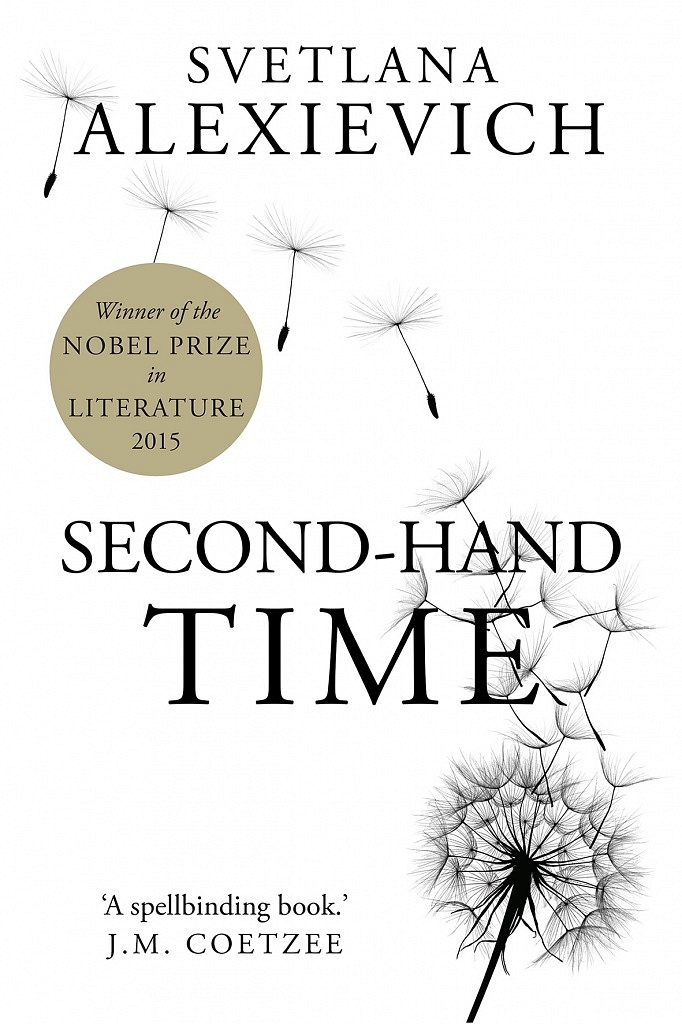
(My review of Nobel winner Svetlana Alexievich’s Second-Hand Time was published in Scroll on 23 July 2016 with the title” Imagine the tragedy of abandoning Communism without knowing how to live with capitalism”. Here is the link: http://scroll.in/article/812306/imagine-the-tragedy-of-abandoning-communism-without-knowing-how-to-live-with-capitalism. I am c&p the text below too. )
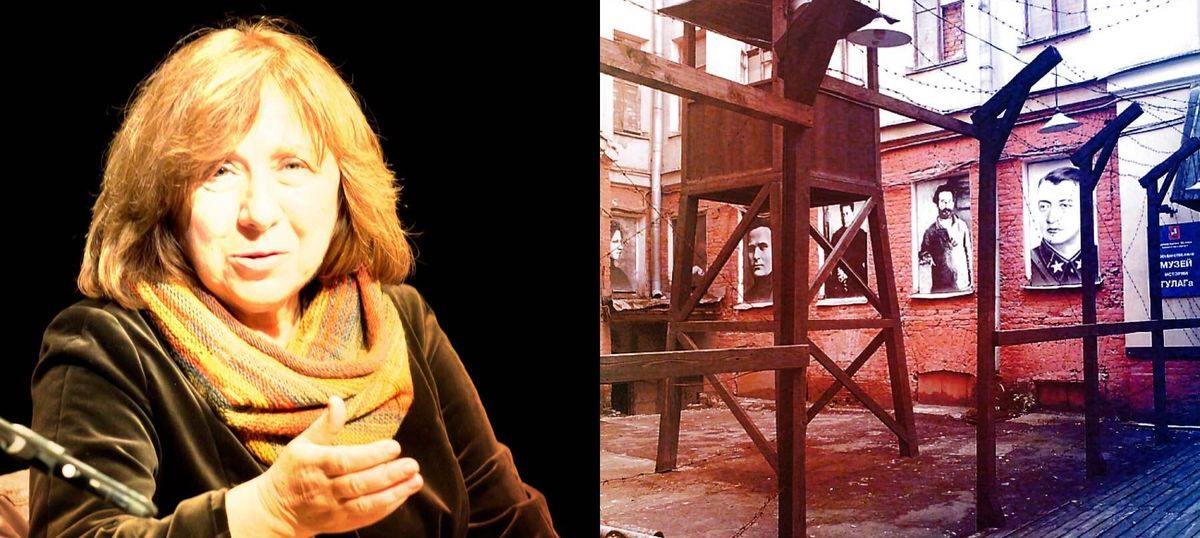
Nobel Prize winner (2015) Svetlana Alexievich’s Second-Hand Time: The Last of the Soviets explores what the aftermath of the fall of USSR meant for ordinary folks. Svetlana is a Belarusian journalist who was born in Ukraine, writes in Russian and lived in Paris for nearly 11 years before returning to Minsk to be with her daughter and granddaughter. According to the New York Times, “she had left to protest the regime of the Belarussian president Alexander Lukashenko, who has been in power since 1994 and curtailed press freedom. She said she planned to remain in Minsk and hoped the Nobel would give her some protection and freedom to speak her mind.” Based on interviews carried out between 1991 and 2012, the book was published in Russian in 2013, with the first English edition coming out in 2016.
By the little peopleconsists of a series of transcripts of interviews. Sometimes these are structured thoughts, sometimes ramblings and sometimes monologues. Rarely does Alexievich intrude with comments or even an introduction to the speaker. At most, a reference to the person or the memory being recorded will be acknowledged in the chapter heading, such as “On Romeo and Juliet…except their names were Margarita and Abulfaz”. No wonder Russian-American journalist Masha Gessen calls the 2015 Nobel Prize winner a “memory keeper”.
According to Bela Shayevich, the translator of Second-Hand Time, the book is “an update of 19th-century Russian literature for the 21st century.” People read Russian novels not for the happy endings, she added, but “because there is great catharsis in great pain and then something that is sublime.” Listing it as part of her Summer Reads 2016 in The Guardian, Marina Warner called it “a Greek tragic chorus of memories about the Soviet Union”.
The stories we hear add up to something close to a dystopia created by Communist indoctrination. Having subjected the former Soviet citizens to almost an artificial reality, the regime incapacitated them from understanding the transformation of their society after 1989, when Communism began to fade.
“My mother is not going to help raise my daughter…I won’t let her. If she had her way, my child would only watch Socialist cartoons because they’re ‘humane’. But when the cartoon is over, you have to go out on the street, into a completely different world.” As an ex-Army officer who had fought in Afghanistan told Alexievich, “It’s important to write it down while there are still people around who remember it…we’d work the night shift, unloading train cars, or as security guards. Laying asphalt. The people working alongside me were PhDs, doctors, surgeons. I even remember a pianist from the symphony. …socialism is alchemy.”
What also emerges tragically from these accounts is the fact that ordinary people did not even have the skills to survive in the post-Soviet landscape, after the disintegration of the USSR. They had been brought up to believe in dreams such as the motherland. This is a constant lament in the book – the inability of many people to understand basics, such as what is real money, how it operates, and the value of it. Many did not know how to earn a living in the new socio-economic system, and rapidly sank into poverty.
Distilled testimonies
In an interview to the Dalkey Archive Press when her book Voices from Chernobyl was published, Alexievich said she sees her work as witnessing. She repeated this in her interview to The Millions: “I’m interested in little people. The little, great people, is how I would put it, because suffering expands people. In my books these people tell their own, little histories, and big history is told along the way. We haven’t had time to comprehend what already has and is still happening to us, we just need to say it. To begin with, we must at least articulate what happened.”
In the opening chapter of Second-Hand Time, Alexievich writes of her intent to document the Communist collective memory, which recalls Pravda, Little Octoberists, parades, Solzhenitsyn, Komsomol, and allegiance to the motherland: “In writing, I’m piecing together the history of ‘domestic’, ‘interior’ socialism. As it existed in a person’s soul. I’ve always been drawn to this miniature expanse: one person, the individual. It’s where everything really happens…It never ceases to amaze me how interesting everyday life really is. There are endless number of human truths. History is concerned solely with the facts; emotions are outside of its realm of interest. In fact, it’s considered improper to admit feelings into history. But I look at the world as a writer and not a historian. I am fascinated by people.”
An insight into her fascinating methodology reveals a practice not uncommon amongst those who document oral histories. According to Alexievich, she “selects one out of five interviews, and that one makes it into the published book. For each person I record four tapes or more, making 100-150 printed pages, depending on the voice, timbre and the pace of the oral story, and then only about ten pages remain…”
So the seeming chaos of individual narratives has a strong underlying sense of structure, much like the ordered chaos of Darcy’s garden in Pride and Prejudice. These stream of consciousness testimonials are the common form of recording oral narratives, particularly of women survivors, of a traumatic experience. The form is a testament to the writer’s sensitivity as a listener, allowing the interviewee to speak openly and without fear. These are experiences that, Alexievich is quick to remind us, formed “a large part of our lives – more, even, than love. Thus, the Russian experience of suffering acquires particular value.”
“I grew up in a dissident family…in a dissident kitchen…My parents knew Andrei Sakharov, they distributed Samizdat. Along with them, I read Vassily Grossman, Yevgenia Ginzburg, Dovlatov, listened to Radio Liberty. In 1991, I was, of course, in front of the White House, in a human chain, prepared to sacrifice my life to prevent the return of Communism. Not a single one of my friends were Communists. For us, Communism was inextricably linked with the Terror, the Gulag. A cage. We thought it was dead. Gone forever. Twenty years have passed…I go into my son’s room, and what do I see but a copy of Marx’s Das Kapital on his desk, and Trotsky’s My Life on his bookshelf…I can’t believe my eyes! Is Marx making a comeback? Is this a nightmare? Am I awake or am I dreaming? My son studies at the university, he has a lot of friends, and I’ve started eavesdropping on their conversations. They drink tea in our kitchen and argue about The Communist Manifesto …Marxism is legal again, on trend, a brand. They wear T-shirts with pictures of Che Guevara and Lenin on them. [ Despairingly] Nothing has taken root. It was all for naught.”
The blurb on the dust jacket begins: “What if you could tell history through the countless voices of ordinary people who lived through it?” It is as if in one fell swoop the editors have negated the very existence of the discipline of subaltern history while using the very same idea. Maybe Alexievich’s preferred definition of “witness” would have been more appropriate.
Svetlana Alexievich Second-Hand Time: The Last of the Soviets (Translated by Bela Shayevich) Juggernaut Books, New Delhi, 2016. Hb. Pp. 570. Rs 699
A paragraph that could not be included in the published article for reasons of length is reproduced below:
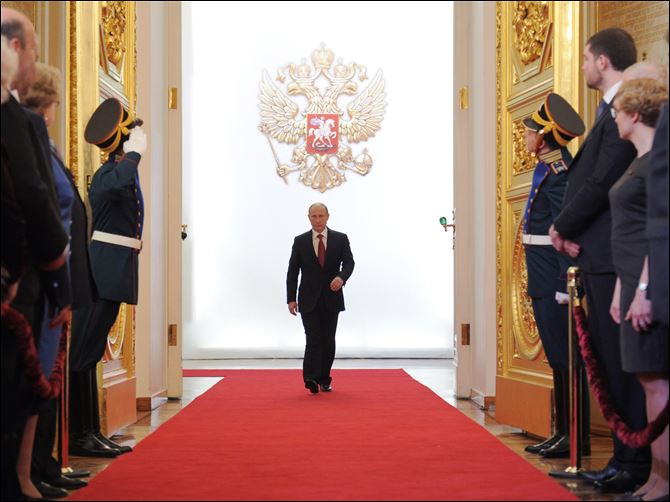
In the case of Soviet society, in seven decades, they went from the Romanov era, Bolshevik Revolution, Communism ( Stalin et al) and then post-1989 hurtled completely unprepared into a capitalist economy society soon to be dominated by Putin. As Simon Sebag Montefiore says in his magnificently detailed and stupendously rich history of The Romanovs: 1613-1918 says: “It is ironic that now, two centuries after the Romanovs finally agreed a law of succession, Russian presidents still effectively nominate their successors just as Peter the Great did.” ( pxx-xi). And yet Putin, the Russian president’s state symbol is the two-headed eagle that was of the Romanovs too. This direct linkage to the royal period of Russian history refuses to acknowledge the communist era except for the trifle detail of Putin having been an ex-KGB officer, the secret police of the Soviet Union.
Simon Sebag Montefiore The Romanovs: 1613-1918 Weidenfeld & Nicolson, London, 2016. Hb. Pp. 746. Rs 1299 ( Distributed by Hachette India)
( My review of Sarah Crossan’s award winning novel-in-verse One was published in Scroll today. Here is the url: http://scroll.in/article/811911/a-novel-about-conjoined-twins-in-verse-beats-facts-that-can-be-rather-terse . I am also c&p the text below. )
She’s not a piece of me She’s me entirely and without her there would be a gaping space in my chest, an expanding black hole that nothing else could fill.
Award-winning Sarah Crossan’s One is a free verse novel about Siamese twins Tippi and Grace. One has been awarded some of the most prestigious awards for young adult literature such as the CILIP Carnegie 2016, the Bookseller’s YA Book Prize 2016 and the Irish Children’s Book of the Year Award. Crossan has also won, along with Michael Rosen, the CLIPPA children’s poetry award. Writers consider the CILIP Carnegie, given by the Chartered Institute of Library and Information Professionals, “the one they want to win” since it is awarded by librarians.
One is about Tippi and Grace, named after Hollywood actresses Tippi Hedren and Grace Kelly. They live with their parents, their grandmother aka Gammie, and their younger sister Nicola nicknamed Dragon. Their father is unemployed and has turned into an alcoholic. Their mother works in a bank but is constantly working at home too. Yet the parents never compromise on their twin daughter’s medical care, regular health check-ups and psychiatric visits to Dr Murphy. The novel has been told from the point-of-view of Grace. It is set in a short span of eight months – August to March.
These twins are of the ischiopagus tripus variety – two heads, two hearts, two sets of lungs and kidneys. Four arms, a pair of fully functioning legs. The vestigial leg has been docked. Intestines begin apart and then merge. They are like any other sixteen-year-olds except for the tiny detail of them being conjoined at the hip.
For most of their life they have been home-schooled but the city no longer wants to fund this. So they have to join a private school, Homebeacon High. The twins dread being in public since they are constantly stared at or called monsters and freaks or cursed as devil’s spawn. Fortunately they are befriended by classmates Yasmeen and Jon, who protect them in a manner similar to their family.
We are tired of getting rides to school and back again every day so we take the train home with Jon and pretend we can’t hear all the words around us like little waspy stings.
“I bet celebrities don’t even have it this bad,” Jon says.
“I can’t imagine what it must be like for you.”
“It’s like that,” Tippi tells him and points at a woman across the aisle with a phone aimed at us like a sniper rifle.
The twins enjoy their short spell at school before they contract a flu which unfortunately develops into cardiomyopathy for Grace. It means that Tippi’s heart is functioning for the two of them. Complications arise, necessitating the urgent physical separation of the sisters.
It is expensive surgery, although the doctors have waived their fees. Sadly, there is no guarantee that the girls will survive the medical procedure. So far the girls have miraculously surpassed all medical expectations to live beyond the two-year life span predicted for them.
Just before the sudden dip in their health, their younger sister, who dreams of being a ballet dancer, is invited to a tour of Russia. Of course, the family is too poor to afford it. To make things worse, their mother loses her job.
Much against their will, the girls decide to allow themselves to be shadowed by a documentary filmmaker for a handsome fee of $50,000. They are not particularly keen to be in the limelight like the conjoined twins Violet and Daisy Hilton (born 1908), who were the wealthiest performers of their time.
If it were not for the twins being conjoined, One would be like any other YA novel telling a story about teenage angst, love, heartbreak, smoking on the sly, climbing trees etc. And this where the beauty of Sarah Crossan’s graceful craftsmanship lies. She is able to become one with Grace and experience the story, the emotional roller coasters, and focus upon the harsh reality of what it means to be Siamese twins.
This is the only one among her books that she spent more than a year researching. She began writing it after watching a BBC documentary about Minnesotan conjoined twins Abby and Brittany Hensel. As shewrote, “I was immediately captivated by the idea of their lives – fascinated by the ways in which these amazing women managed to live as two separate people in one body, and I made it my mission to find out everything I possibly could about conjoined twins. I knew there was the potential for a novel in there, but I was also petrified of writing about something that was entirely unknown to me.”
Crossan spoke to “Edward Kiely, leading separation surgeon for conjoined twins in Europe, to help answer some of my hypothetical medical questions, forcing me to tighten up certain parts of the plot to create a world that was completely real.”
“Although I was working on Apple and Rain at the time, and actually scrambling to get it to my publisher by deadline, I would go to the British Library every day and instead of focusing on Apple and Rain, would ask the librarians to help me find articles and books about the lives of conjoined twins through history and especially medical research about separation surgery. I had found a topic that I wanted to write about, but I wanted to tell it honestly and accurately, because the more the I read, the more I realised how misunderstood the lives of these people have been, and how ready people seem to be to say, ‘If it were me, I would want to be separated,’ without every fully considering the intimacy of such a relationship, not to mention the many joys it brings.
— Sarah Crossan in ‘The Guardian’
One deserves all the awards it has garnered, not only for the range of issues it touches upon – for instance what it means to be a conjoined twin with no option to move independently but to be tethered in body, mind and, possibly, spirit – making joint decisions and unable to live an independent life – but also for its unique form.
Normal is the Holy Grail and only those without it know its value.
There are also ethical issues at play. The documentary is ultimately made more for voyeuristic entertainment purposes than out of empathy for the twins’ predicament. The medical fraternity’s offer to separate the twins free of cost stems from a rare opportunity to understand this unusual biological phenomenon.
One is a seminal book for its refreshing experiment in form and content. Crossan has to be admired for the sensitivity with which she has written the story, without being crudely inquisitive or didactic. She has raised the bar many notches for YA literature.
SarahCrossanOne Bloomsbury, London, 2015. Hb. Pp. 432 Rs 499