
women Posts

Veena Venugopal, “The Mother-in-Law”

Veena Venugopal, “The Mother-in-Law”

( I read Veena Venugopal’s fabulous book, The Mother-in-Law, in one sitting. Instead of posting a review online, I immediately wrote her an email.  It was a mad flurry of emails one morning. What follows is an edited version of our conversation. )

The Mother-in-Law8 July 2014

Dear Veena,

I finally finished reading your book. Earlier I had only dipped into it. But last night I sat up till well after 1am reading it through.

Fantastic work! Thank you for making these vices public and not making them only the purview of the Saas-Bahu serials.

What stomach-churning experiences you have recounted. What is horrifying is that these are real. You do not intrude into the narrative too much but without having the personal, how can you possibly write something like this? Everyone has a mother-in-law story. I wonder why you only stuck to the arranged marriage route? Unfortunately the 12 stories you include in book only confirm the MIL image as being a dragon, a nasty one at that too. (Bollywood is going to have a gala time using your stories for their films. Think about it.)

I have always maintained that the worst perpetrators of crimes and violence towards women are other women. Also the most manipulative, shrewd, wily and preservers of patriarchal traditions are women. I am not making excuses for men at all but stating a point of view I have evolved. This is after spending years of working in the development sector, with feminist publishing houses, engaging with women’s NGOs, mapping the women’s movement visually etc.

I am absolutely stunned by the impressive work you have done. It must have drained you to be privy to so many conversations, gently teasing out these narratives is not easy. For the reader they read smoothly but did you actually write these essays in one fell swoop? Surely you went back and forth. I ask since traumatised women tend to gloss over a lot of details or create these fictional bridges at the heart of which lies the truth. So to create a clear story as you have done calls upon some sharp journalistic skills and a sensitivity that is commendable. The women you have profiled too are brave to come forth and share their stories.

Years ago the newspapers used to carry regular news stories about dowry deaths. At least it kept the conversations about domestic violence alive. People may or may not have been sensitised to it. It resulted in the Domestic Violence Act and much more. But now that DV has been “addressed”, it has been wiped off the news pages, thus silencing a crime that continues to exist. I suspect it is getting worse with the greed for material comforts.  I have a theory and I have not tested it as yet. The more our society gains in creature comforts and the middle class is able to show-off its wealth, the women are fast becoming the victims to this new form of imprisonment–birds in a gilded cage. The women are bejewelled, wearing only branded stuff, splurging money on retail therapy, always smiling and available for chit-chat, gossip; ultimately representative in direct proportion to their family’s prosperity. It makes me gasp at times. I flinch internally when women with smiles plastered on their faces tell me “Oh, I am happy all the time”, but scratch the surface and stories come tumbling out. I see how well-educated, professional women have been mocked at by their husbands for pursuing their dreams. …their husbands have thrown money at them and said, stop working for measly amounts. If it is money you want, I will give you more but forget this job. Made the wives quit. Mostly made the women cite the reason of the children and family’s health. It makes me wince since I feel helpless. I do not know what to do about it.

Your book The Mother-in-Law gives a peep into the complicated world these middle class women inhabit. There are constraints that they have to take into account. There is no point in putting the women down for appreciating a bit of material comfort, but at the cost of being shackled to a mind-numbing degrading life baffles me. I am so glad you have written this book. You have made public the daily struggles most women go through to achieve these balances. Thank you for writing this book.

….

What truly saddens me is that these stories never end. It is a vicious cycle.

With warm wishes,

JAYA


Dear Veena,

A short postscript to what I wrote earlier.

I like the fact you kept reiterating that a supportive husband is very essential. Also laying down the ground rules early on in the marriage. If this book of yours can become a handy manual for young women on the threshold of marriage, I would be truly happy. More than that, I suspect it is the women/brides who have to be mentally and physically very strong to prepare for an Indian marriage. I liked it when you said aggressive feminism is here to stay. Unfortunately many young women of today seem to take much of the freedom they relish as “for granted”. They are unable to see the struggles many before them went through to achieve this basic freedom and dignity. Also it is like a mirage. It is there and yet not. It is the daily negotiations that are important to keep that flicker of breathing space available. For that to happen women need to be able to see the injustice and most importantly have a language to articulate it, without going off the handle. If only the grooming and etiquette classes held regularly included a component or two of gender studies/workshops on how to recognise and address silences. Not necessarily make these spaces in the activist mode but in a genteel manner, infused with forceful ideas. Otherwise the women who have signed up for the classes will run a mile!

I may be speaking in a garbled fashion for now but I simply had to send these emails off to you asap.

With warm wishes,

JAYA

PS A supportive and understanding husband is a rarity!


Thank you so much Jaya, it is heartening and encouraging to receive a mail like this from you.

The book was hard to write and I must confess I struggled with the voice right through it. I started my research for the book with Rachna’s story, when she had met Gaurav for the first time. I thought it hilarious, this very Rajinder Nagar mother-in-law taking her under her wing, going on shopping sprees and movie dates. And I assumed all the stories would be like that– a caricature of all the stereotypes of mothers-in-law that one hears about. It shocked me how quickly the stories turned dark. And as the year progressed, I began to worry about Rachna. I remember Copote was annoyed waiting for a verdict on the murderers so he could finish his book. I truly hoped Rachna would dump Gaurav and get out from Auntyjis iron fist even though it would mean that i wouldn’t be able to use her story.

And then I met Deepa and Nikita and Keisha and the stories kept getting worse and worse. Some of them are active on Facebook. Keisha for example is one. And if you saw her profile or read her posts you wouldn’t believe that she lived that life. I was very, very disturbed after meeting Keisha. And eventually came Arti and I couldn’t sleep for a week. Her story is the worst. And the strangest thing was how easy it was to find these stories.

The interviews themselves were spread over a period of time. I would ask them the same question in various different ways. I would point out inconsistencies in their telling of an incident. It was hard to ascertain the authenticity of their stories. I am sure if I spoke to their mothers-in-law I would have got their side of the story, but no one would have been honest knowing fully well that I had a channel of communication to their MIL. (Most of the stories were love marriages in fact. Only Lalitha, Arti and Rachna’s were arranged.)

I agree with you about violence in families. It is during the research for the book that I began to start railing against the term “fabric of Indian society”. Arun Jaitley used it a lot in keeping marital rape outside of the new rape law. The fabric of Indian society is a soiled rag, sadly, and I see no reason why it should be preserved. It is appalling the kind of abuse people take. With Keisha especially I kept wondering why. It is, I suppose, easy to be an uninvested third party and see clearly that she should have got out long ago. But she felt a certain urge to not worry her aunt, her grandmother. And I suppose because of the fact that her aunt didn’t marry in order to look after Keisha, she feels that love is necessarily an unconditional sacrifice. I see her now, she is the first to “Like” any post about the book. She was desperate to get copies of it. I think for her participating in the book was her final retribution. She gets a great degree of joy from the fact that her story is out there.

… I think I should use the book to build a community of daughters-in-law – give them a place to vent. At the end of the day, that’s what most people want – a forum where they don’t have to pretend that everything is hunky dory in their family. I just worry that i don’t have the bandwidth to run that along with my job. Like you said, these stories never end, and if just talking about it makes people temper their future behaviour, then it should be worth squeezing some time out for…Let’s see.

The ideal husband is a rarity, I know, but I’m hoping there are more mothers out there raising some than there were in the past.

Warmly

Veena


Dear Veena,

Do you realise that your interest in putting together a forum for women is to step into a vacuum left by many women organisations drifting away from this focus? It has been now over a decade but fewer and fewer women NGOs maintain helplines. The time required to listen and counsel victims/women and their community is a mind-numbing and thankless task. Also it is not recognised as a crucial need. I guess more of a social service. So there is no funding available for these activities. Your idea is a good one …Just remember to think this through. Helping women or any individual should not be a lifetime crutch, but a brief sounding board to help them address their challenges and to face the world. Otherwise you will be an emotional wreck.

I am not surprised at Keisha “liking” Facebook posts abt the book. There are many women who are in a much messed-up space. Sometimes, and I do not know if this makes me a coward, I simply do not want to know. The horrifying stories one sees more than hears is very depressing. I used the word “sees” advisedly. Many times you see these women trotting about all dolled up, but observe carefully and you will see the chinks. Try telling me that a slim gym-going figure, well-groomed, well-dressed young mother, carrying a new born infant in her arms and doing the school run with the older kid has not been put through pressure to look respectable to the outside world. It worries me about the women and for their children. And these are the middle class and nouveau riche I am talking about. It is equally worse for women of other socio-economic strata. I am not generalising.

Women’s movements have really painted women into a corner. It is only a clutch of women who can speak with confidence about injustices they experience or perceive. Others now have this dual burden of being a professional and efficient at home. This is where I feel your book is showing the chinks. Look at the amount of stress these women are subjected to?

…..

With warm wishes,

Jaya


Veena Venugopal The Mother-in-Law: The Other Woman in Your Marriage. Penguin Books India, New Delhi, 2014. Pb. Pp. 264 Rs. 299.

Maria Aurora Couto “Filomena’s Journeys”

Maria Aurora Couto “Filomena’s Journeys”


Maria Couto book coverFilomena loved the house, and the company of her avo and sisters and the cook and maids. It was just that the strict discipline of indoor life, especially the indoor life expected of the women of her class, did not interest her very much. She would watch Avo and her elder sisters sitting upright for hours with their embroidery baskets, crochet needles and hairpins to produce fine  lace, but she was restless, she disliked the stillness. 

(p. 23 Filomena’s Journeys)

Filomena’s Journeys is about Maria Aurora Couto’s mother. It is a memoir that has been many years in the making. Filomena had a life that was not easy. She had been orphaned by the age of seven years old, married young, had seven children and had a fairly useless husband who ultimately abandoned the family. 

Putting together a woman’s life is never an easy task, especially within a family. It is like a patchwork quilt. Pieces of the woman’s life need to put together skillfully to create a narrative. There is a narrative that dominates family lore; plus many other experiences and stories that create an image of the person. Much of the life that she leads disappears into a silence, but to create a narrative requires immense patience, hard work and the author has to be prepared for an emotional roller coaster since it may involve unearthing stories that are disconcerting, apart from ruffling the feathers of some relatives. For instance while writing this book Maria Aurora Couto discovered that her father had practically handed over the family home to his brother in the selection of lots; her mother had somehow rustled up the required three thousand rupees to retain the property but it was too late — the deed was done. Surprisingly, whenever the author wishes to refer to herself in the book, it is always in the third person. Yet not an unheard of literary technique. It helps provide a distance and a perspective to the narrative being constructed. 

With Maria Aurora Couto, Goa, Aug 2013

In Filomena’s Journeys Maria Couto weaves together biographical details with the socio-political and cultural context of Goa admirably. The memoir is reads like a story, peppered with facts and analysis about Goa under Portuguese rule and post-Independence.There are details about the structure of Goan society and the transformations, details about cooking, village life etc that are fascinating. It makes an excellent companion to Goa: A Daughter’s Story published over a decade ago.

When Filomena’s Journeys was published I had a posed a few questions to Maria Couto via email. Here are extracts from the conversation:

Which point of the book did you begin the manuscript with?

Very difficult to write and I gave up when trying to write in the first person. After some months, tried the third person narrative and that worked better. It helped to divide the book into four sections each devoted to a period in time, Began with imagining Filomena’s childhood, tragic loss of parents, support from strong women in the family, grandmother and aunt, the bedrock of faith, tradition in an agricultural community.

How many revisions did it undergo?

Countless revisions

How did you achieve the balance between fact and telling a good story, for it to be accessible?

It was not a conscious effort. Rewriting must have smoothed the narrative.  

How many years in the making was it?

Three years.  But as my closest friends tell me, I have talked about their lives, their society for years….TRYING to understand through conversation over years—Goan society rather than just my parents. 

How has the family received it?

They are happy it has been so well received.

How did it, if at all, transform you as a writer and impact your relationship with your family?

We are very bonded, five sisters. So there has been discussion, argument and general acceptance of my narrative. Being the eldest, I have usually had my way!! 

Did you have to dig deep in archives for historical facts or is this reconstructed from family documents and memory?

Much time spent with Portuguese newspapers—1900-50 of the first five decades . Some gazetteers, conversations with 70- and 80-year-olds from the villages of my parents, along with memories shared by members of the family. 

Writing about women, especially ancestors, is never easy. They leave very little paper trails or even photo documentation. Much of the info of their lives is tucked into personal correspondence, cookbooks, and some photographs. Otherwise the impression that they leave in family lore. Many times reconstructing the real woman is tougher and at variance with what the subsequent generations recall. Did you also find it to be so?

No I did not because my mother’s life had such a strong impact on me—as the eldest, sharing and observing, it has been a questioning approach all my life. Trying to understand her modernity within a tradition which she respected and observed; within a faith that was so grounded in rigour at one level and yet so open to respect for all faith; her joy in life in the midst of unendurable experience—phenomenal. 

Maria Aurora Couto Filomena’s Journeys: A portrait of a marriage, a family & a culture Aleph Book Company, New Delhi, 2013. Hb. pp. 290 Rs. 495

4 March 2014

Landays

Landays

In my dream, I was the president. 

When I awoke, I was the world’s beggar. 

In Afghan culture, poetry is revered, particularly the high literary forms that derive from Persian or Arabic. But the poem above is a folk couplet – a landay – an oral and often anonymous scrap of song created by and for mostly illiterate people: the more than twenty million Pashtun women who span the border between Afghanistan and Pakistan. Traditionally, landays are sung aloud, often to the beat of a hand drum, which, along with other kinds of music, was banned by the Taliban from 1996 to 2001, and in some places, still is.

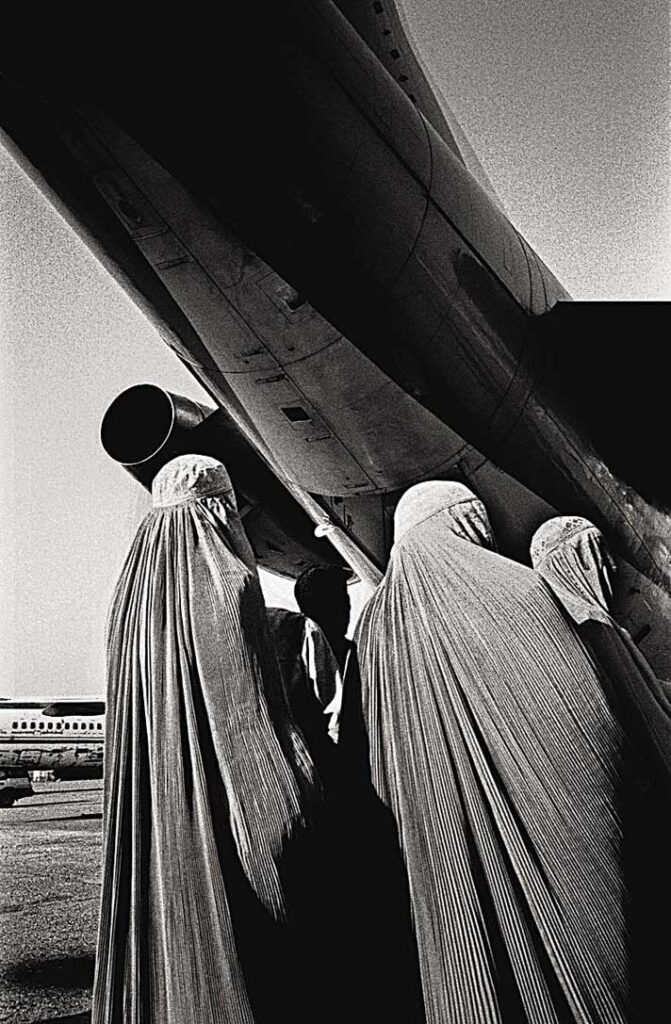
A landay is a kind of poetry that has few formal properties. Each has twenty-two syllables: nine in the first line, thirteen in the second. The poem ends with the sound “ma” or “na”. Sometimes they rhyme, but more often not. In Pashto, they lilt internally from word to word in a kind of two-line lullaby that belies the sharpness of their content, which is distinctive not only for its beauty, bawdiness, and wit, but also for the piercing ability to articulate a common truth about war, separation, homeland, grief, or love. Within these five main tropes, the couplets express a collective fury, a lament, an earthy joke, a love of home, a longing for the end of separation, a call to arms, all of which frustrate any facile image of a Pashtun woman as nothing but a mute ghost beneath a blue burqa.

Landays began among nomads and farmers. They were shared around a fire, sung after a day in the fields or at a wedding. More than three decades of war has diluted culture and displaced millons of people who can’t return safely to their villages. Conflict has also contributed to globalization. Now people share landays virtually via the internet, Facebook, text messages, and the radio. It’s not only the subject matter that makes them risque. Landays are mostly sung, ….women singers are viewed as prostitutes. Women get around this by singing in secret — in front of only close family …Usually in a village or a family one woman is more skilled at singing landays than others, yet men have no idea who she is. … . (p.195-6)

One leading theory of landays’ origin traces back to the Bronze Age arrival of Indo-Aryan caravans to Afghanistan, Pakistan, and India around 1700 BCE. These poems could have evolved out of a communication through call and response back and forth over a long caravan train. Many of the poems refer back to this nomadic way of life, as well as to the moon, flowers, nature. As ancient songs, they are thought to be related to the Vedas, the Hindu scriptures at least five thousand years old and comprised of couplets called slokas, not unlike landays, except that they are sixteen rather than twenty-two syllables long. (p.221)

The call and response nature of landays has morphed into teasing and sparring love poems between men and women; a kind of stichomythia that rivals that of ancient Greece. Although it’s possible that a woman might sing one part and a man another, they’re not really antiphonal. …

These opening paragraphs are extracts from the special issue of Poetry ( http://www.poetryfoundation.org/media/landays.html) put together by Eliza Griswold with the help of Ilya Kaminsky and the Harriet Monroe Poetry Institute, Catherine Halley and poetryfoundation.org, Jonathan Galassi and Farrar, Straus and Giroux, and the Pulitzer Centre. It is a slim volume that consists of many examples of landays, but is a wonderful account of Eliza Griswold’s attempts at gathering the landays, interacting with a women’s literary group on the radio in Afghanistan called Mirman Baheer and a generous amount of pictures taken by Seamus Murphy. As she notes in the introduction ” finding, collecting, recording, and translating these little poems word by word posed an extraordinary challenge. Gathering them led Seamus and me through the pages of out-of-print collections, and in secret into refugee camps, private homes, a horse farm, and several weddings. Since landays belong to the hidden world of Afghan women, many won’t share them in front of one another out of fear that they’d later be gossiped about. Some requested that their names be changed or that I not record how I came by the landays that they whispered to me. One husband hurried up to me after I’d had tea  with his wife and asked the subject of the landay that she’d given me. ‘Separation’, I told him. The poem was about sex.” (p.198-9)

Her description of the translation process is also fascinating. This is what she has to say on p.200-1

“Translating these poems was an intricate process. I collected most of them in person with two native Pashto speakers, both of whom were, of necessity, young women. Over gallons of green tea …we transcribed the poems in Pashto, which has the same characters and sounds as Arabic, so I could sound out words although I had no clue of their meaning. On the fly, we’d rough out an English version in the car or during lunch to gauge whether the landay merited the time it would take to render properly in English. Then, along with a translator, I translated the selected poems word by word into English. Working from that frequently nonsensical literal translation, I sat with a handful of native Pashto speakers — academics, writers, journalists, and ordinary women — and went over each poem to make certain the translations made sense. My versions rhyme more often than the originals do, because the English folk tradition of rhyme proved more effective way of carrying the lilt of the Pashto cover into English. The most useful note on translation came from Mustafa Salik, one of Afghanistan’s leading novelists: “Don’t worry so much about being faithful to the Pashto. Get them right in English so that people can enjoy them.”

If you can, buy this slim volume of Poetry. It is well worth every penny spent. A treasure. A document that will exist for a long time. I have to thank Dipika Mukherjee for having sent this edition to me from Chicago. I am so glad she did!

1 Oct 2013 

Poetry ( vol CCII, No 3, June 2013) Poetryfoundation.org

$3.75 USA $5.00 CAN £3.00

“Permit To Read” Unfortunately (or fortunately) the act of women reading still makes news, PubSpeak, Sept 2013

“Permit To Read” Unfortunately (or fortunately) the act of women reading still makes news, PubSpeak, Sept 2013

( My monthly column, “PubSpeak”, in BusinessWorld online has been published. Here is the original http://www.businessworld.in/news/economy/permit-to-read/1072156/page-1.html. This time it is on permission to read.)

PubSpeak, Jaya

I heard a lovely story (and true) from Aditi Maheshwari, publisher, Vani Prakashan. (Vani Prakashan have been publishing in Hindi for 55 years.) They participate in book fairs around the country. One of the biggest events for Vani Prakashan is to set up a large stall at the Patna book fair, with a long walk between the entry and exit points. At one of these events, Aditi noticed a married couple browse through their stalls. The wife paused when she spotted the Hindi translation of Taslima Nasreen’s Lajja. She nudged her husband and said, “I have heard about this book. I read a review in a women’s magazine. Could you please buy it for me?” The husband looked appalled and said, “No. I will not. This is a book I will not allow in the house. If you buy it and read it, I will throw you out of the house.” And then he pulled his wife away.

She followed him as she was used to. Aditi saw this exchange. She quickly picked up a copy of the book, slipped it into a paper envelope, rolled it up in a catalogue and asked a colleague to slip it into the wife’s hand as they were exiting out of the stall. A few weeks later Aditi received a few lines scribbled on a postcard from the woman. She said, “Thank you for the book. My life has changed after reading it. I did not realise that if anyone touches my body without my consent can be construed as rape, even if it is my husband demanding his ‘right’ at night. Could you please send me the author’s address? I would like to write to her as well.”

Aditi did. A couple of months later the publisher received an ecstatic phone call from Taslima Nasreen telling her about the beautiful note of 20-25 lines that had been sent to her by the wife in Bihar. The book had stuck a chord. (And it must have with many more. Since the Hindi translation was published in 1996, Vani Prakashan has sold over 5,00,000 copies of Lajja reasonably priced at Rs 150. The other Taslima Nasreen titles that they have published have also had equally extraordinary print runs.)

In order to access women readers women’s presses were established. Some of the better known names worldwide are Virago, Kali for Women, Zubaan, Women Unlimited, Persephone Books, Spinifex Press, Modjaji Books, and The Feminist Press. When these publishing houses first began — inevitably all of them were established after 1970 — they were not considered too seriously by their peers in publishing. The notion of creating a distinct list for women was unheard of, but a publishing house dedicated to creating books for women, by women and with women readers in mind was inconceivable.

The Game Changers
Slowly over a period of time it became obvious that this was a strong and healthy market segment. After about two to three decades mainstream publishing houses recognising the potential announced their own imprints dedicated to women or began collaborations. In India, Zubaan entered into a co-publishing agreement with Penguin Books. But as Urvashi Butalia, publisher, Zubaan (and co-founder, Kali for Women), said in an interview in April 2013: “Around the time Kali for Women came to be, there were very many feminist presses globally, with Virago being the most prominent. There are now only a handful; most of them have either scaled back or shut shop, and part of the reason has to do with feminism going ‘mainstream’.

There is a moment in Chitra Banerjee Divakurni’s Oleander Girl when Korobi advises her hostess in America, Seema Mitra, how to flee New York and return to India, in time to have her baby in Calcutta. “Flee” because her husband consumed completely by his addiction to gambling is being unreasonable and unable to look after her. Korobi assists the young, heavily-pregnant Seema to hatch a plan to leave New York City for India without the husband even getting a whiff of it. The plan is ridiculously simple and Seema escapes easily.  Oleander Girl has been published in India by Penguin Books India, but Divakaruni has been writing for many years, with many “mainstream” publishing houses, around the world, some of her books have been adapted into films — notably, the Mistress of Spices had Aishwarya Rai acting in it. The strength of Divakaruni’s writing lies in the finely etched women characters that populate her stories. Her retelling of the Mahabharata from the perspective of Draupadi in The Palace of Illusions continues to sell extraordinarily well. In India alone the sales in hardback and paperback have crossed 25,000 copies (probably is higher). It is said that the commercial success of E.L. James’ Fifty Shades of Grey can be attributed predominantly to the word-of-mouth recommendation by women readers who initially read the book on their electronic devices, reading in “secret” albeit in public spaces say, while commuting since the book cover was not visible. So, they were able to read, share and discuss erotic fiction without being condemned for the act of reading, let alone the genre. This anecdotal evidence suggests that there is a growing market amongst women readers.

The format in which it is delivered is immaterial, but it is the accessibility of it that is crucial when connecting with women readers. It could be in printed volumes, easy to handle slim volumes of large texts, creating audio books that are delivered via electronic mediums including fixed landlines and mobile phones, getting books to many book clubs that exist and meet regularly, selling books via newspaper vendors (as Harlequin is exploring in Kerala), and definitely marking the books at price points that are affordable for women, even if it means exploring a membership with the publisher or paying in installments for the books.

Many women now have expendable income especially those who are entering the workforce, young and single whereas the priority for many married women continues to be the family. But the fact is many do read and want to read. A significant fact since it affects the bottomline of publishing too. News about publishing is generally dominated by articles on digital and print conversations, self-publishing, emerging markets, language publishing, children’s and YA literature, new forms of electronic readers, the collapse of brick-and-mortar bookstores – all very relevant aspects of publishing but slowly the conversations about women readers as a distinct market is no longer centre stage.

Society Versus The Individual
Unfortunately (or fortunately) the act of women reading still makes news. It still upsets people. Akshay Pathak, writer, wrote in an article last month, “My mother was the only person in the family who had read some books. But she was married into a family where reading books was forcefully discouraged. And so gradually she stopped. Had to.” It is still not uncommon for women who are reading at home to hear, “Why are you lolling? Isn’t there any work to be done?”

Muneeza Shamsie, literary journalist, in her contribution to Fifty Shades of Feminism writes “… the last word belongs to my mother. [Jahanara Habibullah] In her last years, to try and cope with my father’s terminal illness, she began her very first book, a memoir. She was 84 when it was published as an English translation and later in the original Urdu. In 2003, after she died, I found stacks of Urdu classics – often written by her kinsmen – tucked away in the lower bookshelves. To me, my mother’s tenacity, her love for a literature and language that neither her husband nor her children could read, embody the suppressed voices of women. But my mother’s tale is one of triumph. On the last night of her life, she rang my paternal aunt Tazeen and said “All these years I was turned into a housewife and made useless! I should have been a writer!” Such a self-revelation, at 86, a few hours before dying! By her bedside table sat Kamila’s novels and my anthologies – a far cry from secretarial college where success depended on reproducing accurately someone else’s words.” Pink Poster, Asmita

There is a fabulous poster created during the women’s movement in India by an NGO, Asmita. It shows a woman dressed in a sari sitting in a chair, with her feet up and reading a book. The television is on and she has a couple of books open and scattered on the floor besides her. Basically she is looking very relaxed and is obviously in her own private space — a dream for many. But as William St. Clair says in The Reading Nation in the Romantic Period, “Women’s reading, at any rate women’s reading of the upper-income groups, the commonplace books suggest, was by no means limited to writings regarded as suitable for women.” A fact that holds true two centuries later.

11 Sept 2013
Jaya Bhattacharji Rose is an international publishing consultant and columnist

@JBhattacharji

Women and diets / healthy living

Women and diets / healthy living

The Diet Doctor, Ishi Khosla

Over the past few months I have read a bunch of newly published books on weight loss, healthy living, eating wisely and dieting. All the books seem to be targetted at women, all though men too would benefit hugely from reading these. Ishi Khosla gives practical advice on how to measure quantities of food (with the actual size of a cup printed), to eat regularly and healthy. More than going on a crash diet to lose weight, it is more about managing one’s time, health, food etc.

Kitchen Clinic

Charmaine D’Souza discusses the importance of understanding your ingredients and how a fair knowledge of kitchen herbs and spices ensures a healthy living. She explains the spices, their properties and then lists some common ailments that are easily prevented or treated at home. For novices the line drawings of the spices will also help in recognising the spices and herbs being discussed. Recently I had a long discussion on Skindalous Cuisine ( A Facebook group that discusses food and shares recipes) about recipes that use Kalonji or onion seeds. It is rarely used in cooking despite it being extraordinarily beneficial for the health. According to Charmaine D’Souza these seeds have been used medicinally for over 3,000 years. It is used to treat ailments including asthma, bronchitis, rheumatism and related inflammatory diseases. Also skin infections and cold symptoms too. But from the discussion group I discovered that it is rare to find recipes using this spice since it is usually offered as prasad to the gods. Hence it is used sparingly in Indian cuisine.

Get Size Wise

Sheela Nambiar writes for the Indian Woman. Her advise is to stop agonising about chasing the pipe-dream of achieving a Size Zero figure, instead concentrate on getting fit than just losing weight. She has packed her book with loads of tips on how to manage oneself. How to exercise while scrambling to finish the day’s chores. There are few illustrations but easy to understand.

Cov_2

Reenita Malhotra Hora also advocates a healthy living but by relying upon Ayurveda.

All the books mentioned are useful to have and read. Also to practice. I would even go to the extent of saying how empowering these texts are in teaching a person, especially a woman, on how to manage her time, her diet, her health. It is well-known that women always compromise on their health and needs. For most of the time they are so focused on their family, children, careers etc that they do not think twice about neglecting their own needs. Little realising that self-preservation is very important. My only concern about these books is that they may be bought, they will inspire but to sustain these diets and routines is expensive. It will be an added expense to a family’s budget, it will be a strain on the women (who are inevitably in charge of the kitchens) to create a separate dish for themselves etc especially after all the needs, requirements and demands of the family are met. It is much easier for many women then to be accommodating and eat whatever is put on the table, rather than assert themselves. So the purpose that these books set out to achieve will be negated. Unless these authors instead of taking on only high-society clientele actually design and distribute meals suitable for a person on a diet. These could be according to the requirements (and budget) of the client. Thus ensuring that for a nominal fee, the dietician gets a new client and the client has a stress-free way of managing their diet. The food arrives at their door step, with the right size of portions. I am not sure how feasible it is to conduct such programmes in India given distances, weather conditions etc but I hear that these are being done in America and are actually working.

The Weight Loss Club

On a related note. Devapriya Roy has published a novel about the weight loss club in the Nancy Housing Cooperative. It sounds promising. (I have just begun to read it.)

Of women travellers and writing

Of women travellers and writing

All the Roads are Open

In recent weeks I have read three books. All the Roads are Open: the Afghan journey by Annermarie Schwarzenbach (translated by Isabel Fargo Cole); The Nanologues: 10,000 kms across India in the world’s cheapest car by Vanessa Able and Almost Intrepid by Anjaly Thomas. Except for All the Roads are Open, the other two are contemporary accounts by women travellers — Vanessa’s account of travelling in a Nano across India and Anjaly Thomas backpacking across the world. As for Annermarie Schwarzenbach, she travelled in a new Ford across Afghanistan with Ella Maillart from 1939-1940. The translated text contains snippets of her writings and dispatches to various newspapers describing the country, the exquisite gardens, the reception that they received etc. A comment made “In the garden of the beautiful girls of Qaiser” is about the “young King Ammanullah, upon returning from a trip to Europe, had instituted hasty reforms in Afghanistan, attempting to follow Turkey’s example in particular. He had moved too quickly. More than anything else he was reproached for emancipating women. For a few weeks the chador had fallen in the capital of Kabul; then the revolution broke out,women returned to the harem, to their strictly cloistered domestic life and from then on they could not show themselves on the street without a veil.”

51VPtVJer4L._SL500_AA300_
For Vanessa Able travelling in her Nano, whom she affectionately refers to as “Abhilasha”, winding her way through India, its crowds, is a frank account of her drive through India. It is a challenge to be a driver on the roads of India, but to be a woman and a foreigner at that, can be a challenge indeed! Vanessa Able braves it well, making some good friends along the way, but also getting a firsthand experience of they way men view/treat women. For instance, the young men loitering on the streets or the cab drivers misbehaving. At times she would worry about the fast roads and the sanitised lodgings were killing the spirit of the journey, but then the images of the Ambassadors and the over-zealous chaperones would remind her of the reasons for being on this trip. When Ratan Tata met her, he remarked that it was very enterprising of her to have driven the Nano through India. But Nanologues is a mixed bag of a traveller’s account with plenty of anecdotes, all though it could have done with a few photographs. Though she did blog regularly – http://www.nanodiaries.com/ and http://www.vanessaable.com/

Almost Intrepid
Anjaly Thomas’s comes across a feisty young woman, who is game for any sort of adventure. All her trips have been impulsive decisions. She has travelled through Tanzania, Papua New Guinea, Cambodia, Indonesia, and India. Her account is of the kind that would be useful for women to use as a checklist, also take a leaf or two from her book of being fiercely independent, determined and focused about her goals. The common fears/questions that would prey upon any woman traveller’s mind came to her often. Such as afraid of being robbed/mugged/raped? did she have her parents approval? did she sleep alone in the hotels? how did she cope with female issues of dealing with her periods to washing underwear? where did she get her money from? did she ever get any help? was she scared of being labelled? She comes to the conclusion that these questions, including that of danger lurking, can even happen to a woman comfortably ensconced at home. It really depends upon the individual and the circumstances. To her surprise and relief she actually found a lot of help on the road. A few lessons she learned from travelling solo were confidence, self-dependence, patience, responsibility, love and compassion, prioritizing, letting go, and dreaming.

Women travelling alone is not a new feat. It has been done umpteen times before. Many wrote about it too. Lady Mary Whortley Montague and Alexandra David-Neel come immediately to mind, but there were many more. Yet the fascination that travellers hold, definitely when they are women, always make for captivating accounts.

19 July 2013

Annermarie Schwarzenbach All the Roads are Open: the Afghan journey Translated by Isabel Fargo Cole. Seagull Books, Calcutta, 2011. Hb. pg. 140.

Vanessa Able The Nanologues: 10,000 kms across India in the world’s cheapest car Hachette India, Delhi, 2013. Pb. pp. 324. Rs. 399

Anjaly Thomas Almost Intrepid Konark Publishers, New Delhi, 2013. Pb. pp.220 Rs. 299

“How It Happened” Shazaf Fatima Haider

“How It Happened” Shazaf Fatima Haider


Written from the perspective of a fifteen-year-old Saleha Bandian, How It Happened is about the marriages of elder two siblings, Haroon and Zeba. It is not as simple as it sounds. This is about a conservative Shia Bandian family. The matriarch of the family, Dadi ( or paternal grandmother), is a key player in looking for suitable partners for her grandchildren. The novel has all the masala of any traditional matchmaking, the competitiveness within families to net a good match, especially for the “ripe” girls. It has the drama of the matriarch fainting at the slightest hitch, when events are not going according to her plan, she claims to be “mordren” like the younger generation but is intolerant of marriages across sects, or even a love marriage. She cannot stomach the fact that her beloved grandson wants to get married without taking any dowry.

Shazaf Fatima Haider has sharply and wittily etched the life within Pakistani families (holds true for the Indian sub-continent!), obsessed with looking for a suitable match. She has got the tension between the older and younger generation beautifully, she manages to create empathy with the characters, without really intruding into the space. I truly enjoyed the way she had got the women characters representing diverse viewpoints but how they are confidently and surely managing to strike a balance between the stifling conservative traditions that they are expected to conform to with a newer mindset. It has been a long time since I read a book that made me chuckle and giggle, at times even laugh out aloud. I loved it!

( PS A small editorial oversight. While Zeba waits in Karachi to meet prospective suitor, Gullan from Islamabad, at first it is mentioned as three weeks, but later as three months.)

Shazaf Fatima Haider How It Happened Penguin Books India, 2013. Hb. pg. 316. Rs. 399

Web Analytics Made Easy -
StatCounter