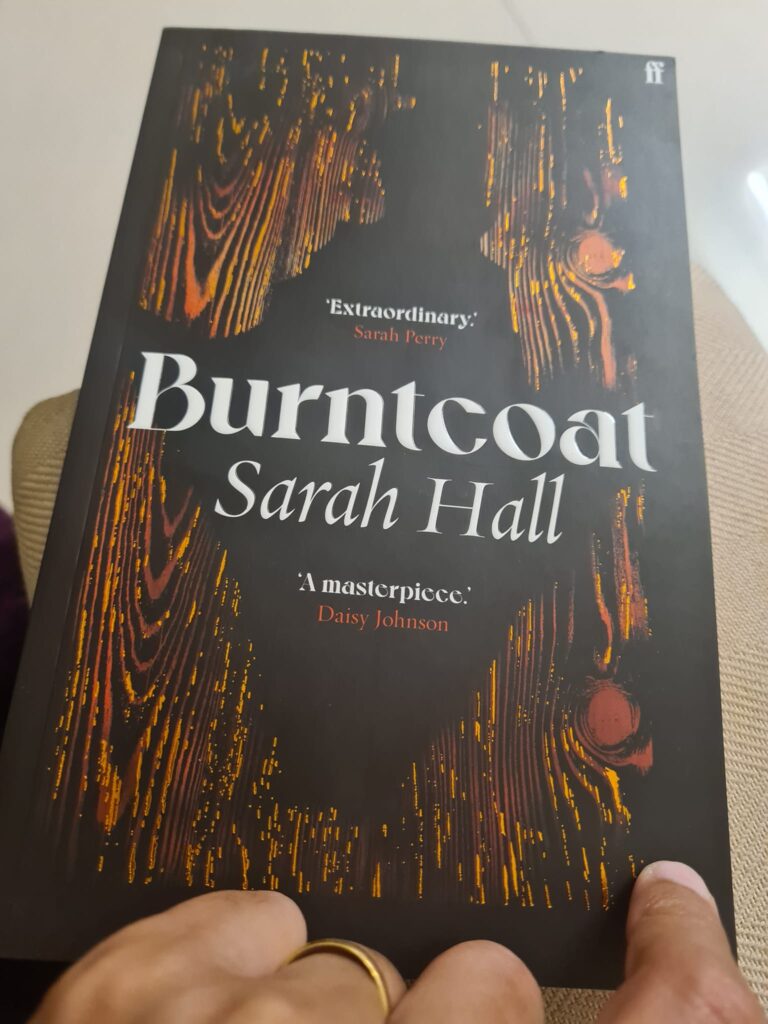
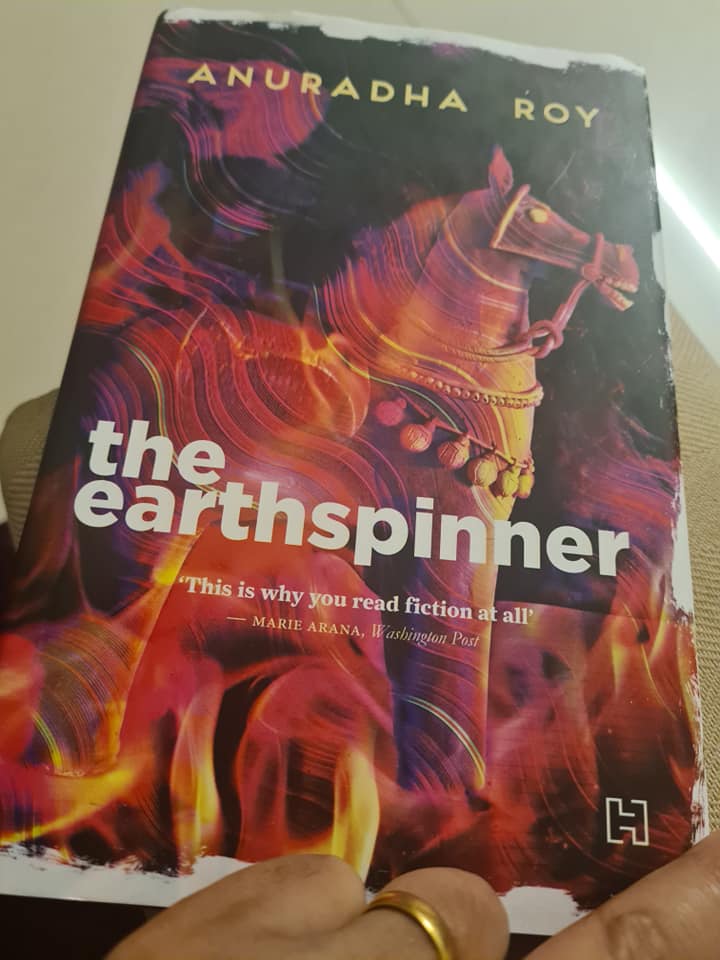
Later, perhaps, I will write at length about these two extraordinary novels — Anuradha Roy’s The Earthspinner ( Hachette India) and Sarah Hall’s Burntcoat ( Faber & Faber). Both, very special in their own way. For now, I find the similarity between the two novels very striking. For instance, both stories raise critical questions about the point of art, significance of an artist, articulating personal sentiments or communicating zeitgeist through their installations and facing the consequences. The hauntingly moving and equally disturbing novel “The Earthspinner” is about the narrator, Sara and the potter, Elango. “Burntcoat” is about the narrator Edith, a sculptor, who writes her life’s testimony as she is dying to an unnamed virus. She reflects upon her work, her mission as an artist and her achievements. One of her last commissioned pieces is a memorial to commemorate those who died in the epidemic.
It was continually miraculous to him that fired clay did not melt back to earth again — it could be broken or weather-beaten but it had a life force that was inextinguishable.
The Earthspinner
…yes, of course, I’m the wood in the fire. I’ve experienced, altered in nature. I am burnt, damaged, more resilient. A life is a bead of water on the black surface, so frail, so strong, its world incredibly held.
Burntcoat
It is a remarkable coincidence that I read these in quick succession. The preoccupation of both novels with the role of the artist in society is truly worth reflecting upon. We need writers to document, interpret, share and preserve their witnessing of history. It survives. It raises important questions.
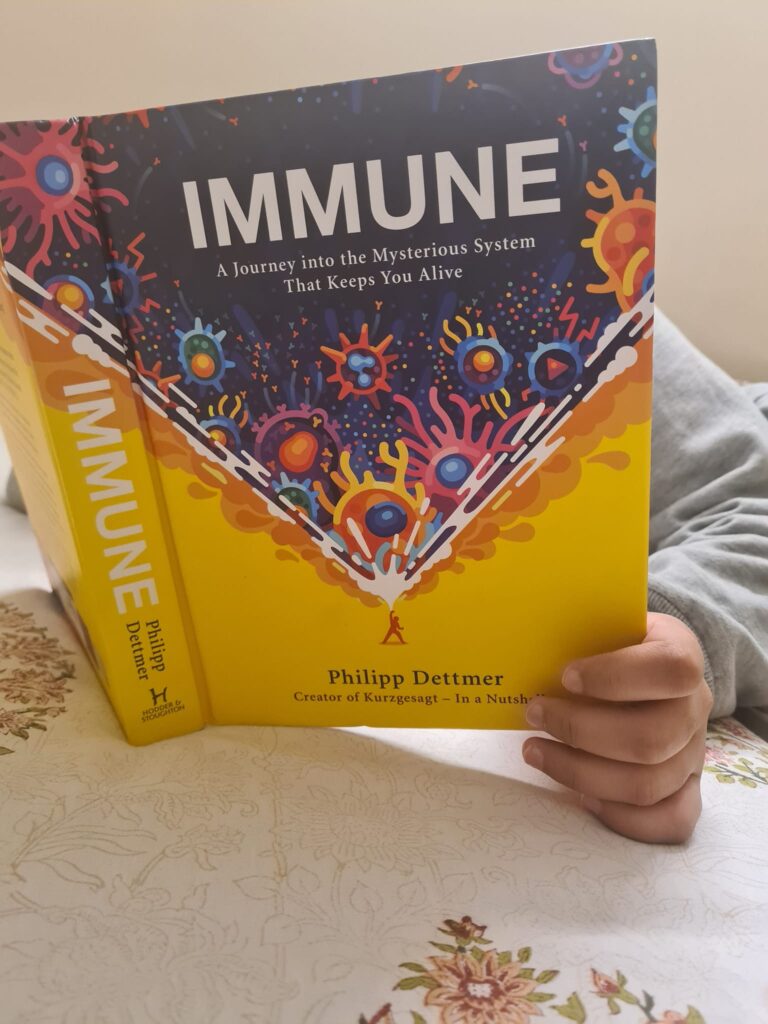
Philip Dettmer’s Immune is really very well written. Beautifully illustrated. Daughter has whisked it away. I don’t know how much she is comprehending but seems to be liking it. Her new found love in academics is science. She is chuckling while reading the descriptions of the immune system. Now this is really making science accessible!This book has been adapted from Dettmer’s very popular YouTube channel — “Kurzgesagt: In a Nutshell”. It has more than 14 million subscribers that reaches over 30 million viewers every month. He has a team of more than 40 people helping him create the content for the channel, while remaining true to science.It is a really fascinating book. A layman can understand it. A scientist will find it useful.
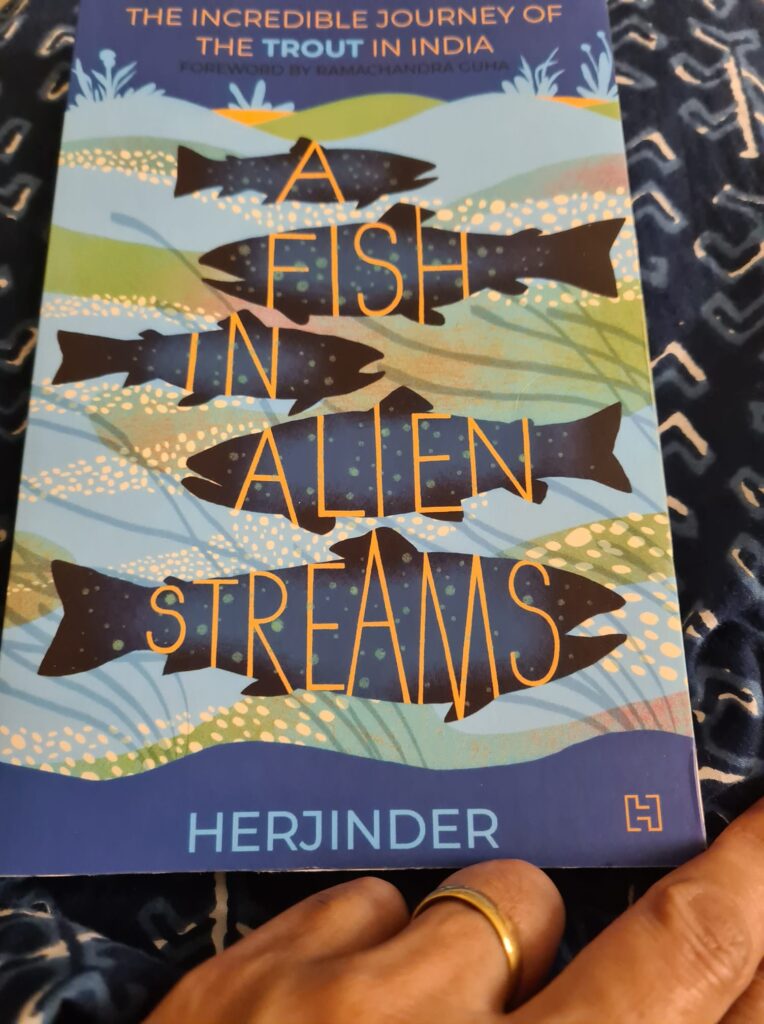
A Fish In Alien Streams by Herjinder is an extraordinary book. An account of the introduction of trout by the British. The colonial rulers missed angling as they did “back home”. So they figured out ways in which to transport ova, by sea, in cold conditions to lands as far as Tasmania and India. The Victorian Age was known for some incredible innovations but to discover a viable method of transporting trout ova from Europe to Tasmania and India was astonishing.
I picked up lovely fun facts. One of them being that the original British owners of Kissan jams and sauces were responsible for introducing trout into the sub-continent. Also, how floods have been responsible for dissemination of the fish into the streams of Kashmir, Nilgiris and Sri Lanka. The last interview in the book is with an eighty-three-year-old Jimmy Johnson, an angler. He is a Himachali / Anglo-Indian, whose father, Lt. Col. C. R. Johnson, was one of these British officers who were deeply involved with trout culture farming. But Jimmy learned angling not from his father but by watching the famous angler of the valley, T. Tyson ( the author of “Trout Fishing in Kulu, 1941”). Jimmy’s school was in Mahili, across the river from Katrain where Tyson used to fish virtually every day. And Jimmy would watch the great angler while playing with his friends on the left bank of the river. He started to like Tyson’s ‘game’ more than his own childish ones, seeing it as ‘an interesting game in which delicious lunch and dinner were also guaranteed’.
But in nearly a century since there was abundance of trout in the rivers, the fish is fast disappearing. One of the prime reasons being the rampant construction in the valley and global warming. There are many occasions that Jimmy goes to fish and returns home empty-handed. Yet he renews his angling license annually. In his lifetime, Jimmy has seen trout-abundant rivers to sparsely populated ones now.
It impossible to recapitulate the essence of A Fish in Alien Streams by Herjinder. Suffice to say that this is a wonderful mix of historical narrative and primary source material such as books and interviews. It is very easy to read even if you are not interested in fishing or trouts.
The book cover by Harshad Marathe deserves a special mention. It is unique.
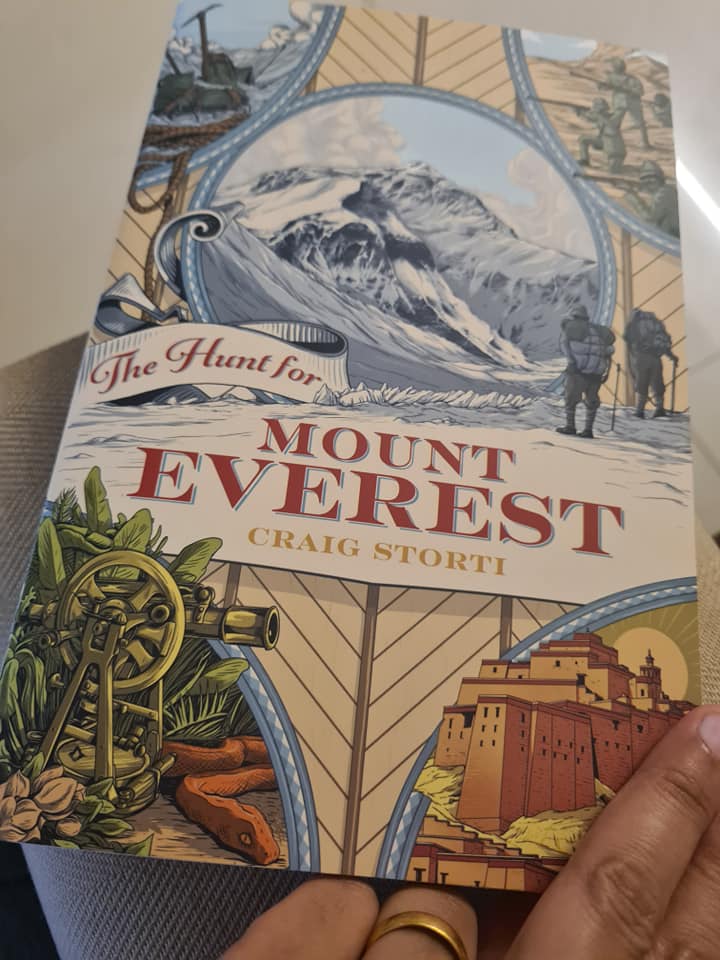
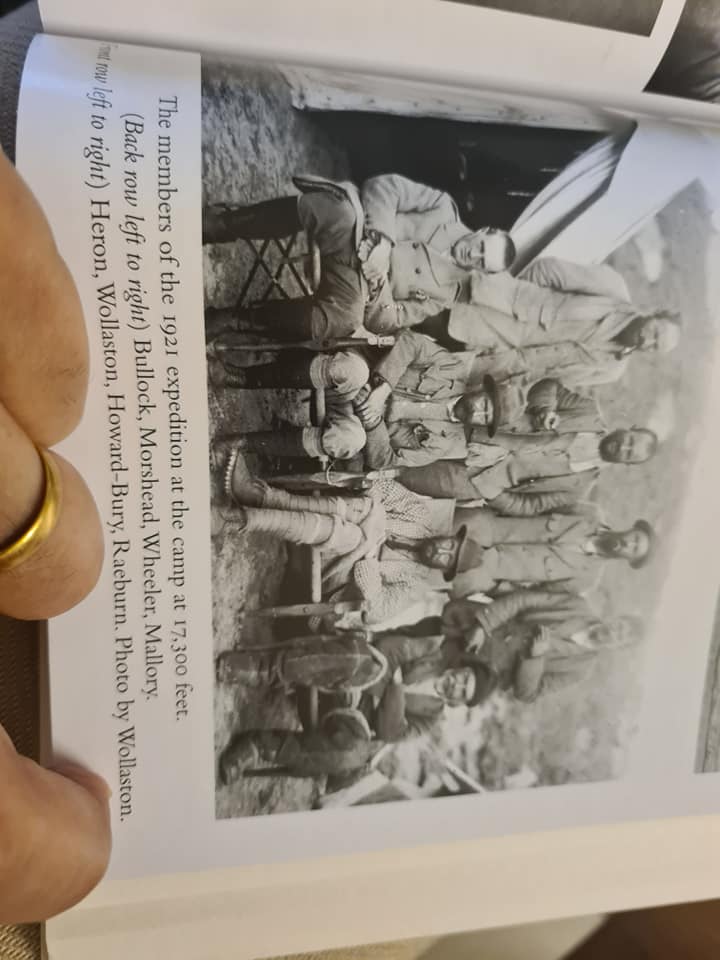
2021 marks the centenary year of the first Everest expedition. The height of the mountain had been first measured in 1850. It took another seventy-one years for an expedition to be arranged. The members were Bullock, Morshead, Wheeler, Mallory, Heron, Wollaston, Howard-Bury, Raeburn. But in June 1921, the two English men, George Mallory and Guy Bullock, became the first people ever to stand at the foot of Mount Everest.
Craig Storti in The Hunt for Mount Everest ( John Murray, Hachette India), commemorates this remarkable expedition. His book begins with the arrival of George Everest as Surveyor General in the early 1800s and concludes with the 1921 event. To quote Storti:
It is a tale of high drama, of larger-than-life characters — George Everest, Francis Young husband, Lords Curzon and Kitchener, George Mallory — and a few quiet heroes: Radanath Sikdhar, Alexander Kellas, the 13th Dalai Lama, Sir Charles Bell. It is a tale of spies, intrigue and beheadings; of war ( two wars, in fact) and massacre; of breath-taking political, diplomatic and military bungling; of derring-do, hair-raising escapes and genuine bravery. The wind is a powerful presence, as are the rains and mud, along with rhododendrons and orchids, leeches and butterflies, mosquitoes, gnats and sandflies. Hundreds of bullocks, yaks and mules are featured, as are thousands of camels, numerous elephants and at least two zebrules ( they were not a success). And it’s setting is some of the most spectacular geography on earth.
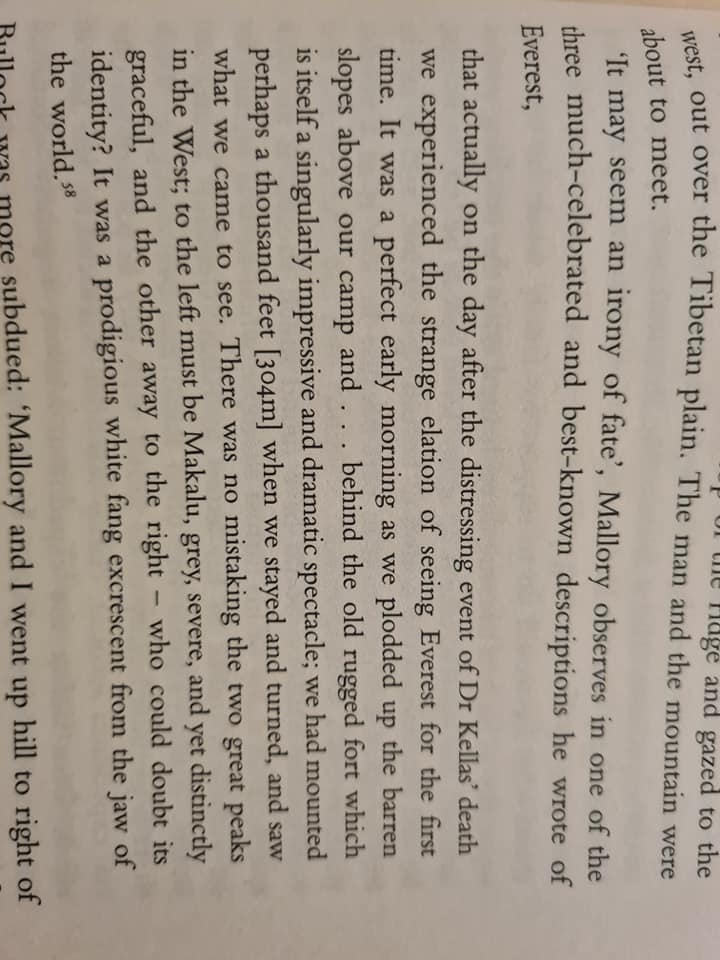
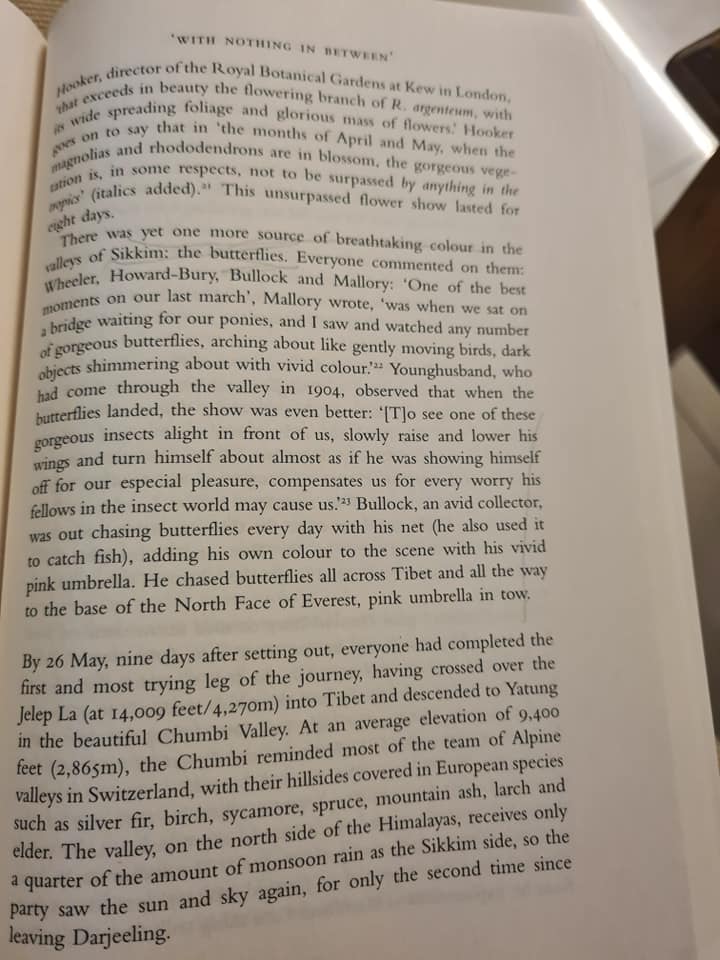
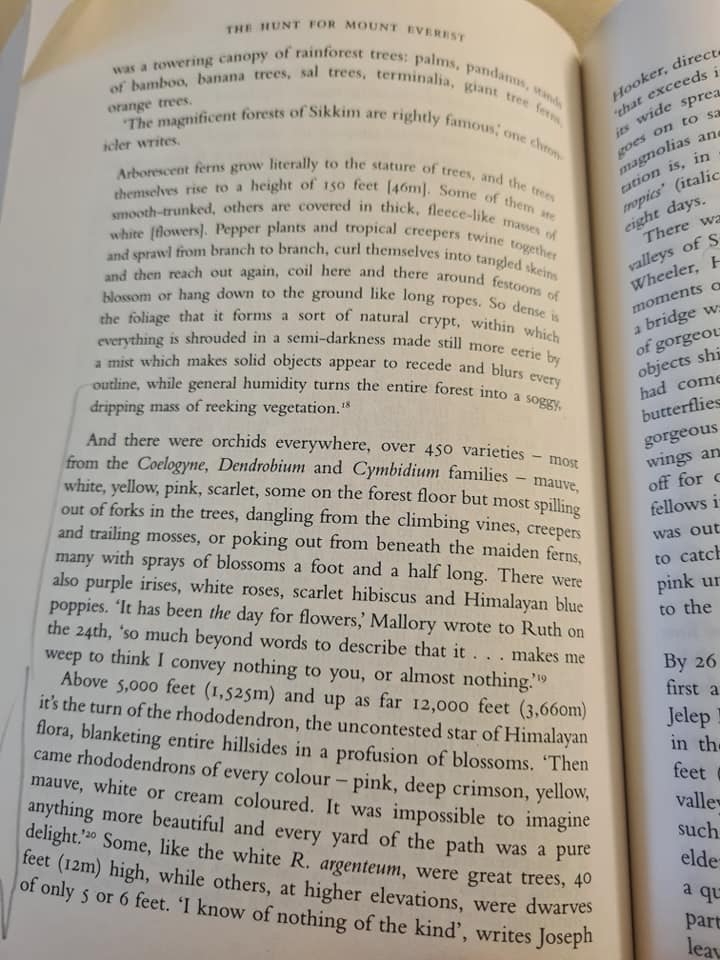
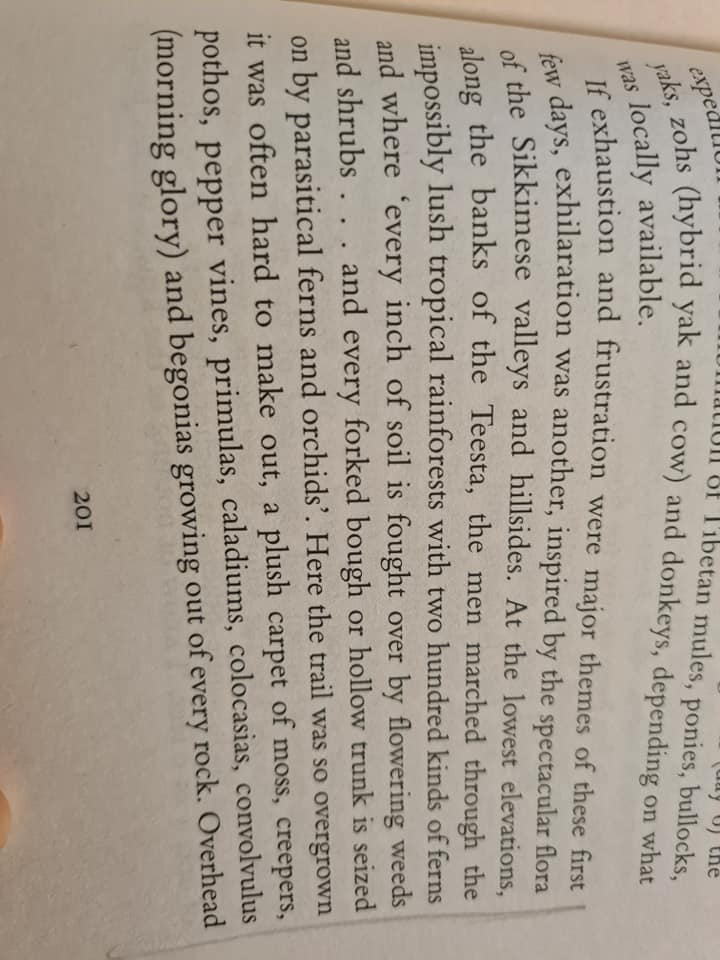
Images from some of the pages from the book attest to the magnificent accounts of rhododendrons, orchids and even butterflies. The descriptions are stunning and are fine examples of nature writing.
The book itself in many instances is an absorbing account of how the mountain was first mapped. There are detailed descriptions of George Everest’s survey tours. Also, an insight into his cantankerous personality which enabled him to overrule any conflict with his authority, including a mutiny of the armed guards. He was a rude man but also very focused on his task. Once the mountain had been identified and named, the goal post shifted to attempting a climb.
Craig Storti first fell in love with this mountain in the late 1970s when he moved to Nepal. It took him nearly four decades to put this book together but he was determined to write an account of the mountain that ended with the 1921 expedition. For a person reading about the survey of India in the nineteenth century, the excitement and thrill of considering mountain climbing as a sport, negotiations with Tibet, the Great Game etc., then from their point of view The Hunt for Mount Everest is a decent book, packed with information.
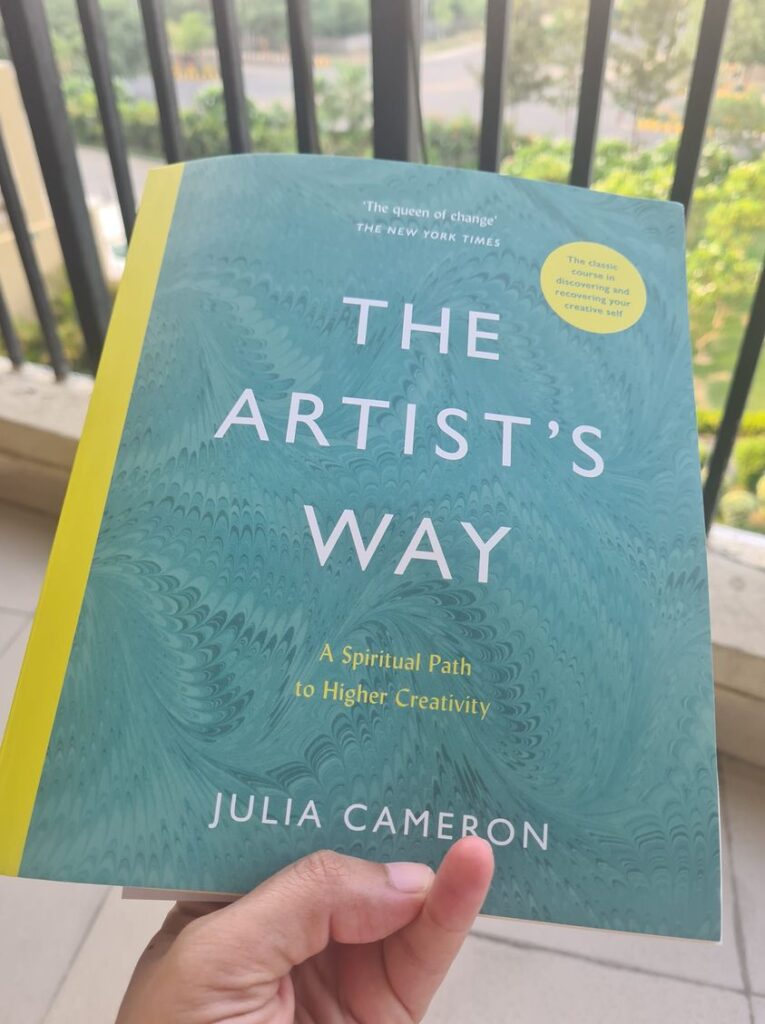
Julia Cameron’s bestselling The Artists Way: A Spiritual Path to Higher Creativity( first published 1991) is celebrating its 30th anniversary. To commemorate it, the publishers, Hachette India, have released a special edition. It helps that the book has sold more than 5 million copies and been translated into more than 40 languages.
Cameron has devised a 12-week course to unleash a person’s creativity, irrespective of whether it is using words or visual mediums. The chapters in the book are structured to be read and used, one ever week, followed by the exercises. If hard pressed for time during the week to complete the exercises, she suggests that the individual attempt the most exciting and the most dull/challenging exercises. The middle rung can be left for some other time. It is rewarding.
Her book’s premise rests on two fundamental principles — the “morning pages” and the “artist’s date”. She recommends that every morning, it is advisable to write in longhand three pages of anything that comes to one’s mind. There is no need to read it, edit or review it. Just write and close the book. Pick it up the next day. Continue. One fine day, a force within will make its presence felt and you will find it your creative juices working. If you are spiritually inclined, you will identify it as God’s blessing, but if you are not, it will be defined as a life force, a creative energy. Terminology is unimportant as long as the individual recognises their potential, their self-worth and firmly believes in their artistic potential. It is not linked to an “appropriate age”, it is not linked to minting money, it is crucial to first being satisfied for oneself then others. Raymond Chandler didn’t publish until the far side of forty. Grandmother Moses began painting once she had completed three score years and ten. There is always time. Artbis the structuring of time.
Our use of age is a block to creative work interlocks with our toxic finished-produxlct thinking. We have set an appropriate age in certain activities: college graduation, going to med school, writing a first book. This artifical requirement asks us to be done when waht we truly yearn for is to start something.
The second principle of artist’s date is that it is a good idea to keep a little time aside every week to spend on nurturing one’s artistic sensibility. So it could be something as simple as taking time to visit a museum but do it. External stimulation is as important for one’s growth as inner creativity.
It is a book full of common sense. She advocates taking baby steps to achieve a goal. She does not believe that there is a concept of a “blocked artist” or that there is a lack of time. It merely requires overcoming one’s fears, better time management and taking the plunge. It is only by confronting oneself in this manner that progress can be made. It requires humility to start something despite one’s ego’s reservations and the ability to recognise when one is making excuses.
The grace to be a beginner is always the best prayer for an artist. The beginner’s humility and openness lead to exploration. Exploration leads to accomplishment. All of it begins at the beginning, with the first small and scary step.
In The Artist’s Way, Julia Cameron has plenty of sensible advice to offer. It is basically a guide to recalibrate one’s life to achieve a little for oneself rather than be sucked into the monotony of existence. Given that this book was first written in the late 1990s, it does not sound dated except for the fact that there is no mention of digital distractions or the need to digitally detox. So how will those at least less than thirty-five figure out how to manage their lives? Dependency on electronic gizmos and the Internet is part and parcel of their lives. Orienting themselves to a discipline as outlined by Cameron may take more than the stipulated 12 weeks. But anything is possible. In this case, it is well worth spending time with yourself and being constructively productive.
If it helps to know, artists like Martin Scorsese, Elizabeth Gilbert, Russell Brand and Reese Whiterspoon swear by it.
Buy it. Use it. Do the exercises diligently. It works.
Steven Bartlett is twenty eight years old. He is a millionaire. When he was eighteen years old, he was living in extreme poverty, scrounging for food and was never sure how the day would pan out. Of course, he had been brought up in relative comfort and his parents were devout Christians, but ever since he chose to drop out of university and forgo his government scholarship, his parents were furious and had distanced themselves from him. One day, he had a 20p coin in his hand. It slipped and fell from his hand and lodged itself in the sofa of the diner he was in. He shoved his hand in to pull out the missing penny and found a one pound coin. He realised that the seats were never cleaned in the cracks, so perhaps if he were in luck, he would find more loose change. Slowly he wound his way through the diner gathering up all the coins he could collect. To his delight he found the princely sum of £13.40. Till date, there is nothing compared to the boundless joy he experienced at discovering this change. Not even the day he received the phone call that his firm, the social media marketing agency, Social Chain, had a market valuation of nearly £200 million.
Happy Sexy Millionaire ( Hachette India) is categorised as a self-help book but it is a fascinating blend of memoir and sharing of business experiences and knowledge. This is a man, like many others before him, who has learned on the job. He had a dream and saw it through. He was focussed and continues to be.
I had no plan. I just had a lot of faith in myself and a lot of faith in the rationale underpinning my decision.
He worked extremely hard at launching a firm. It went bust when he was 21. Then he worked upon Social Chain with his friend, Dominic. It proved to be a resounding success. So much so that one of his dreams of meeting President Barack Obama came true when they were featured on the same panel at an international conference. As a fourteen-year-old, Steven had seen Obama win the US Presidential elections. Barely twelve years later they were on the same stage.
Complicated self-help jargon aside, if you were able to protect your time a little better, become a little more intentional in how you place your chips on the roulette table of your life and develop more clarity on the things that hold long-term, intrinsic value to you, then you probably wouldn’t need to read another self-help personal development book in your life. At the most fundamental level, this isn’t just the most important thing, it’s the only thing. It holds the answer to your mental, emotional and spiritual health, and in my life it’s proved to be the doorway to becoming the happy sexy millionaire I naively aspired to become.
One of his mantras is that time is critical.
Time is both free and priceless. The person you are not is a consequence of how you used your time in the past. The person you’ll become in the future is a consequence of how you use your time in the present. Spend your time wisely, gamble it intrinsically and save it diligently.
He is crystal clear ( one of his favourite phrases) that looking at his “own time habits through a monetary framework” helped him to decide what he should and shouldn’t be doing.
Steven Bartlett highlights portions of his text by enlarging a sentence or a phrase and placing it like an illustration on the facing page of the text. It is an interesting technique but he communicates to be heard clearly. A trait he has honed as a social media strategist but his advice about cyberspace are worth their weight in gold. He emphasizes all that he has learned about social media, the social comparisons, the materialism, the clicks of buttons, the euphoria and the falseness, the gratitude exercises, the neurological impact that gratitude had on dopamine levels, the happiness quotient etc. But he has a warning.
Actively practising gratitude feels so necessary in the modern era because our brains weren’t designed to deal with all this social noise or the algorithms that feed me the prettiest, richest, smartest people on earth every day. Psychologists have often suggested that the slow pace of human evolution and the leap of cultural and technological change have meant that our minds are better adapted to our hunter-gatherer past (where 95 per cent of evolution took place) than to today’s supposedly fast-changing world. In short, digital technology has the capacity to overwhelm our prehistoric brains by exploiting their biases, vulnerabilities and limitations in subconscious, invisible ways. We don’t see it happening, but the astronomical growth of anxiety and other mental health issues in the modern era suggests we’re feeling the consequences.
For him the only worthwhile comparision is “YOU yesterday vs YOU today. If you want to be happy you have to focus on that”.
Happy Sexy Millionaire is an astonishingly gripping tale. It is meant to read in one gulp but remember to keep a pencil handy to underline all the bits and pieces in the text that speak out to you. My copy is dog-eared, top and bottom of the pages, underlined and heavily underlined to highlight text, with commentary scribbled in the margins. This book like many self-help books seems to proselytize but it is not. There is something unique in the manner in which Steven Bartlett writes. It is straight from the heart. He is lucid. He is very sure about what he wishes to share. He shares with a clear conscience and a great deal of faith in one’s abilities. The bibliography he lists at the end of the book is impressive. He probably has honed his skills as a communicator on his very popular podcast, The Diary of a CEO. ( Here is the latest episode where he interviews One Direction band member, Liam Payne. 7 June 2021.)
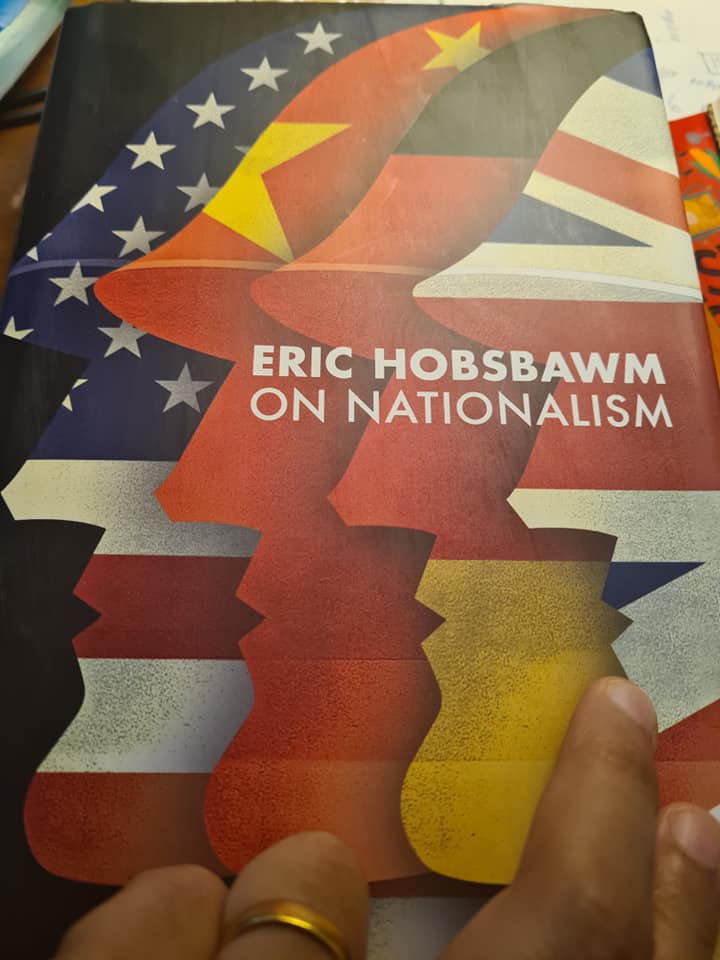
Essential reading. Eric Hobsbawm On Nationalism, edited by Donald Sassoon, published by Hachette India . It is a collection of the eminent Marxist historian’s articles, public lectures and book reviews. Well worth reading given the surreal times we live in. Read it along with the fascinating London Review of Books documentary, “Eric Hobsbawm: The Consolations of History”.
In this documentary, Anthony Wilks traces the connections between the events of Eric Hobsbawm’s life and the history he told, from his teenage years in Germany and his communist membership, to the jazz clubs of 1950s Soho and the makings of New Labour, taking in Italian bandits, Peruvian peasant movements and the development of nationalism in the modern world, with help from the assiduous observations of MI5.
The film features contributions from Frances Stonor Saunders, Richard J. Evans, John Foot, Stefan Collini, Marlene Hobsbawm and Donald Sassoon, as well as Hobsbawm himself in extensive archive footage.
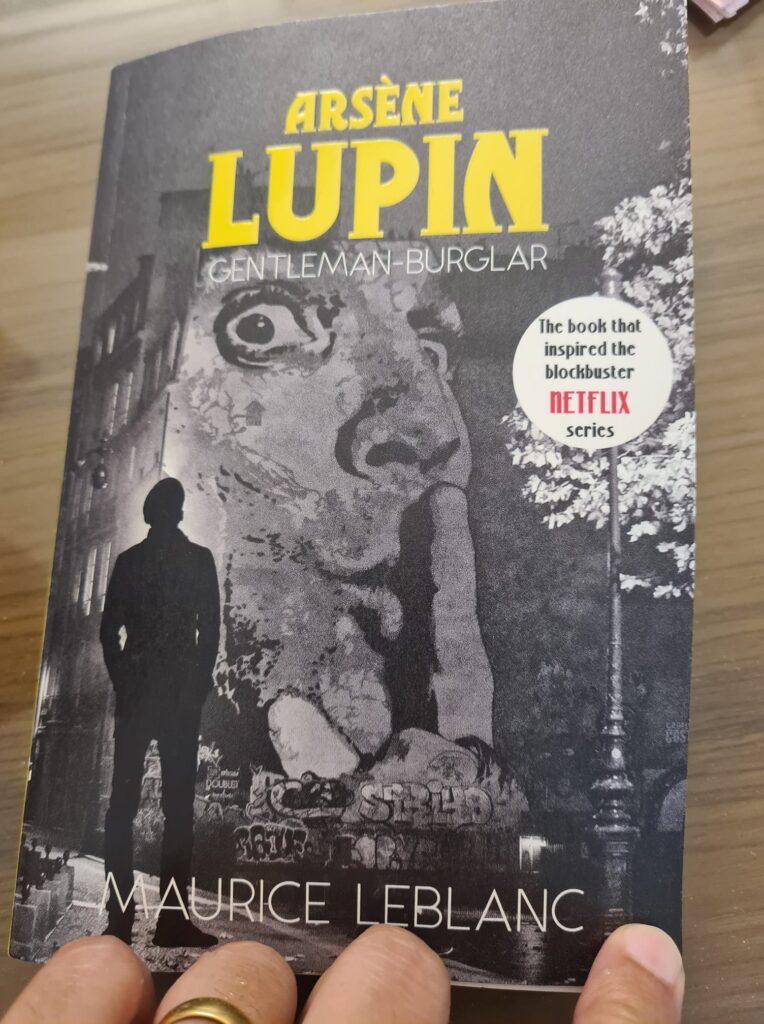
May I just say how much I am enjoying reading these short stories about Arsene Lupin, written by Maurce Leblanc! There is a gentle pace that is calming and restorative, given the hideous pandemic we are witnessing. I read a story a day. It is one of the pleasures to look forward to. BTW, this book inspires the blockbuster NETFLIX series. As always, the #booktofilm adaptation is very different. So while the TV series were fun to watch, the stories are even better.
French novelist Maurice Marie Emile Leblanc ( 1864 – 1941) created the fictional gentleman thief and detective Arsene Lupin, who is often described as the French counterpart of Sherlock Holmes. Lupin features in more than 60 of Leblanc’s crime novels and short stories. The stories in this collection were first published in French as a serial in the magazine “Je sais Tout” and then collected in book form as “Arsene Lupin, Gentleman Cambrioleur” in 1907 as a collection of 9 novellas. Translated into English by Alexander Teixeira de Mattos as “Arsene Lupin, Gentleman Burglar”.
This Chancellor Yellowback edition has been published by Hachette India.
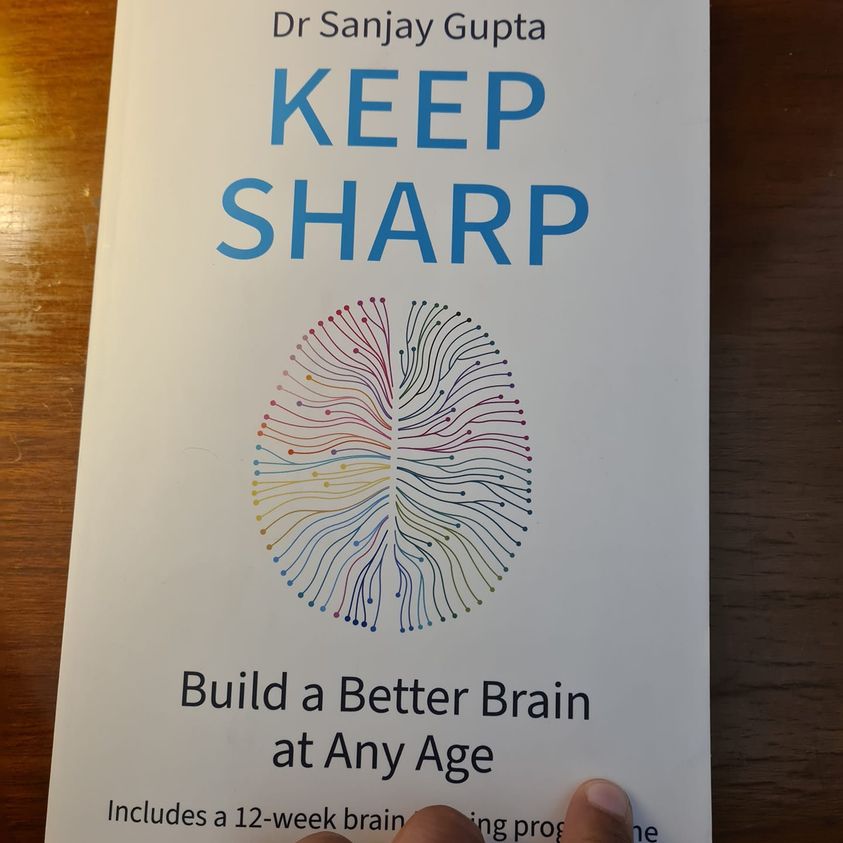
Dr SanjayGupta’s new book, Keep Sharp, is an absorbing read about how to keep oneself fit and healthy, especially our brains. He shares the widely held belief that grey matter stops developing in early adulthood. But now new theories say that that is no longer true. The brain can remain sharp if encouraged to do so by adopting better lifestyle behaviour such as regular exercise, eating home cooked food ( preferably slow cooked and less reliance on takeaways), meditating, reading more, less of digital consumption and definitely hydrating more with regular water than sugar-based drinks. His concern stems from the growing number of people who are diagnosed with dementia, a condition for which no known cure exists as of now, but cannot be ruled out in the near future given the rate at which medical science is advancing. Dr Gupta, who has travelled widely as a reporter with the CNN and continues to practice as a brain surgeon recognises the urgent need to appeal to people while they are healthy to take charge of their lives. He is very keen that folks wrought a change in their life now with the hope that it will mean a better old age. He also focuses on caregivers or as they are defined as now, ” invisible second patients” and the need to understand the stress that they imbibe. Caregiver burnout is very real and hence, self-care is critical. Perhaps it’s design in the book is unintentional but the message that comes across is that devastating impact of caregiving is akin to being in a war zone. But he states often enough in the book that “I’ve noted that the people who live better– and longer — are the ones who hold on to hope.”
I like the way he has likened caregivers to “invisible second patients”. Apparently it is parlance commonly used in the medical fraternity. It has not been coined by him. But at least he has made it visible to the lay reader and I think by doing so, it has been a phenomenal act upon his part. It is almost cathartic for a medical professional to recognise how stressful caregiving can be.
Having been a caregiver myself for many years, it’s heartening to read an experienced doctor confirm many of the practices that one has unwittingly woven as regular practice into one’s life. For example, eating a balanced diet, preferring slow cooked homefood to commercial food, no snacking, water vs juices/sodas, daily exercise, reading etc. Perhaps it happened by witnessing the slow degeneration of a healthy individual. A large part of the cargiving is taken up by creating the right meals and exercise. So basic. As he constantly emphasises in his book that these are some aspects of one’s cargiving that should be non-negotiable. Everyone is busy but not busy enough to fit in some self-care on a daily basis. It helps in the long run as he can affirm from the patients he meets or the autopsies he has conducted and reviewed the state of brains.
Dr Gupta has created as 12-week brain training programme that may sound easy or tough depending on the nature of one’s current lifestyle. But it is doable. Worth exploring.
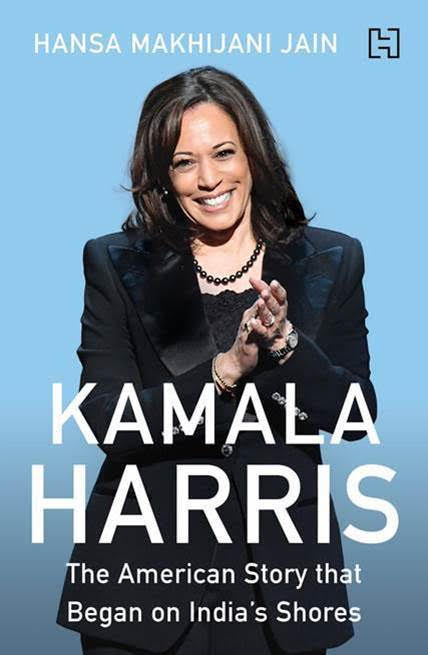
. <I find this interesting. Of all the publishers present in India, Hachette India seems to be the only one so far that has commissioned a biography of the USA VP-elect, Kamala Harris. The publication is timely and the AIS was circulated yesterday. The book has been released. In time for the Inauguration of the new US Presidential team tomorrow, 20 Jan 2021. >
‘Kamala, you may be the first to do many things, but make sure you are not the last.’ –Shyamala Harris
When US presidential candidate Joe Biden chose Kamala Harris, senator and attorney, as his running mate in the race for the President’s post, the world sat up in attention. For the first time in the country’s history, a Black–Asian woman had emerged as a candidate for the most powerful office in the land. And, when the Democratic Party won, the firebrand leader became the first woman vice-president elect in the history of the United States.
Ever since Biden’s announcement, the questions have buzzed on: What is it that makes Kamala Harris perfect for the job? Why does she attribute so much of her success to her Indian immigrant mother? And how did she manage to seize –and hold –the imagination of a nation in one of the most polarized and keenly contested elections in modern America?
Kamala Harris: The American Story that Began on India’s Shores tells the extraordinary and inspirational tale of this courageous and charismatic woman, a pioneer in her own right, who has today become a symbol many look up to in the hope of a more inclusive world. Her inspirational rise to the top holds the promise that she will not be the last woman to conquer this mountain.
KEY POINTS
– A revelatory and inspiring biography of the female icon of the moment, the first woman US vice-president, Kamala Harris. – In this engaging narrative, readers get a glimpse into Kamala Harris’s formative years with her mother and sister, and particularly the considerable influence her mother, Shyamala Gopalan, had on her life and worldview. – Provides insight into the ideas that got Harris interested in law-making and the immense contributions she made in several areas in politics and society in America before entering the presidential race.
ABOUT THE AUTHOR
Hansa Makhijani Jain juggles her time between writing and editing. In the 14 years that she has been in media, she has written prolifically across newspapers, magazines, books and the web. She served as assistant editor at Marie Claire India, and regularly contributed to magazines such as Harper’s Bazaar, Cosmopolitan, L’Officiel, eShe and Prevention. She has also been the deputy editor at Fashion101.